

Pale-bellied Hermit vs Topino
Phaethornis anthophilus contro Riparia riparia
Fai un quiz con Pale-bellied Hermit e Topino
 Pale-bellied Hermit
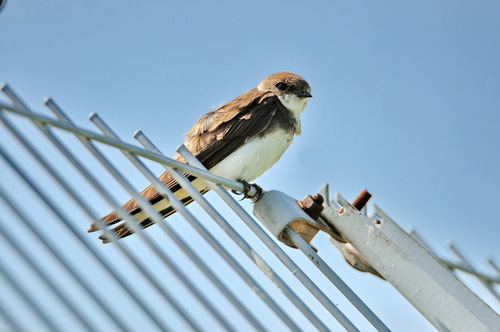 Topino
In breve
Il modo più affidabile per separare il Pale-bellied Hermit dal Topino è la struttura: il hermit è un colibrì di dimensioni medie con un lungo becco quasi dritto o ricurvo e parti superiori verdastre, mentre il topino è una piccola rondine con un becco corto e nero, parti superiori marroni e una distintiva banda pettorale marrone. I giovani topini mostrano punte rugginose sulle copritrici delle ali e sulle secondarie, che non sono mai presenti nei hermit. In volo, il volo rapido e scattoso del topino e le sue ali lunghe e appuntite contrastano fortemente con il volo sospeso o rapido del hermit. Entrambe le specie sono simili in lunghezza, ma il topino è più pesante e massiccio. L'habitat è anche un forte indizio: i topini si trovano sopra acque aperte o banchi sabbiosi, mentre i pale-bellied hermits frequentano i margini delle foreste e il sottobosco.
Consigli di identificazione
- Forma del becco: Il pale-bellied hermit ha sempre un lungo becco quasi dritto (maschio) o ricurvo (femmina); il topino ha un becco corto, nero e conico. La forma del becco è visibile anche a distanza ed è diagnostica.
- Colore delle parti superiori: Il hermit è verde scuro fino a verde oliva sopra; il topino è marrone uniforme sopra. Nessun topino mostra parti superiori verdastre a qualsiasi età.
- Colore delle parti inferiori: Il hermit ha parti inferiori grigie chiare; il topino è bianco sotto con una stretta banda pettorale marrone. La banda pettorale non è mai presente nel hermit.
- Schema facciale: Il hermit ha una maschera nera audace con un sopracciglio color crema e una gola per lo più bianca; il topino ha un volto semplice con una gola bianca e senza maschera o sopracciglio.
- Schema delle ali juvenile: I giovani topini hanno punte rugginose sulle copritrici delle ali e sulle secondarie; i hermit non mostrano mai rugginoso nell'ala.
- Stile di volo: Il topino vola con battiti d'ali rapidi e scattosi e planate, spesso in gruppi; il hermit si libra sui fiori o si muove rapidamente attraverso la vegetazione, di solito da solo o in coppie.
- Postura in perching: Il topino si posa eretto su fili o rami esposti; il hermit si posa basso nella vegetazione, spesso con il becco inclinato verso il basso.
- Dimensione e massa: Il topino è più pesante (11–16 g) e ha ali più larghe; il hermit è più snello e leggero (circa 5.9 g).
- Forma della coda: Non descritta in dettaglio, ma il topino tipicamente ha una coda corta e quadrata; la coda del hermit è più lunga e può essere graduata, tipica dei hermit.
- Habitat: Il topino si trova sopra acque aperte, banchi di sabbia o campi; il hermit è nel margine della foresta, radure o sottobosco.
- Dimensione del gruppo: I topini sono spesso in stormi, specialmente in volo; i hermit sono solitari o in coppie.
- Vocalizzazione: Il topino emette un cinguettio ghiaioso in volo e un allerta aspro; la voce del hermit non è descritta, quindi usa il richiamo del topino come un indizio positivo.
- Differenze sessuali: Le femmine del hermit hanno un becco più ricurvo; non ci sono forti dimorfismi sessuali nel topino visibili sul campo.
- Contesto stagionale: I topini sono migratori e possono essere visti in gran numero durante la migrazione; i hermit sono residenti nel loro areale.
- Trappole comuni: Non confondere il dorso marrone e la banda pettorale del topino con la maschera del hermit; le parti superiori verdastre e lo schema facciale del hermit non sono mai eguagliati dal topino a qualsiasi età.
Taglia
Entrambe le specie sono simili in lunghezza (circa 13 cm), ma il topino è molto più pesante (11–16 g, a volte fino a 19.5 g prima della migrazione) rispetto al pale-bellied hermit (circa 5.9 g). Il topino ha anche un'apertura alare molto più lunga (26.5–29 cm) rispetto alla costruzione più compatta del hermit. In mano o con una buona vista, il topino apparirà più robusto e con ali più larghe, mentre il hermit è più snello e più delicato.
Piumaggio
I giovani topini hanno punte rugginose sulle copritrici delle ali e margini sulle secondarie, una caratteristica mai vista nel pale-bellied hermit di qualsiasi età. I topini adulti sono marroni sopra e bianchi sotto, con una stretta banda pettorale marrone e una gola bianca; il loro dorso è marrone uniforme. I pale-bellied hermits hanno parti superiori verdi scure fino a olive e parti inferiori grigie chiare, con una maschera facciale nera, un sopracciglio color crema e una gola per lo più bianca. Le parti superiori del hermit sono sempre verdastre, mai marroni, e le parti inferiori sono grigie piuttosto che bianche pure. La banda pettorale marrone del topino è un segno distintivo, mentre lo schema facciale del hermit (maschera nera, sopracciglio color crema) è unico. Nessuna età o sesso del topino mostra una maschera facciale o parti superiori verdastre. Le sottospecie del hermit possono mostrare tonalità leggermente diverse (ad esempio, verde bluastro o parti inferiori più chiare), ma sempre all'interno dello spettro verde/grigio.
Comportamento
I topini sono altamente aerei, spesso visti in gruppi, volando rapidamente e con battiti d'ali rapidi e scattosi sopra acque o terreni aperti. Il loro volo è diretto e simile a quello delle rondini, con lunghe planate e rapidi cambi di direzione. I pale-bellied hermits sono tipicamente solitari o in coppie sciolte, librandosi sui fiori o muovendosi rapidamente attraverso i margini delle foreste e il sottobosco. Il loro volo è più fluttuante e comporta frequenti soste in volo. In perching, il topino si siede eretto su fili o rami, mentre il hermit si posa basso nella vegetazione, spesso con il becco inclinato verso il basso.
Habitat
I topini nidificano in colonie in banchi sabbiosi vicino a fiumi, laghi o coste, e sono spesso visti volare sopra acque aperte o campi. Sono raramente trovati in foreste dense o nel profondo sottobosco. I pale-bellied hermits si trovano nei margini delle foreste, radure e sottobosco in Colombia, Panama e Venezuela, e non sono associati ad acque aperte o banchi di sabbia. Se vedi l'uccello in un'area densa e ombreggiata con molti fiori, è quasi certamente un hermit; se sopra acque aperte o in una colonia su un banco di sabbia, è un topino.
Voce
I topini emettono un continuo cinguettio ghiaioso in volo e un tono conversazionale quando sono in perching, con un richiamo di allerta aspro quando sono allarmati. Le vocalizzazioni del pale-bellied hermit non sono descritte nelle note fornite, quindi la voce è solo diagnostica se senti il cinguettio o l'allerta del topino.