

Motmot

シロハラユミハチドリ 対 コモンシギ

Phaethornis anthophilus 対 Calidris subruficollis

シロハラユミハチドリとコモンシギのクイズ

シロハラユミハチドリ (Phaethornis anthophilus) シロハラユミハチドリ
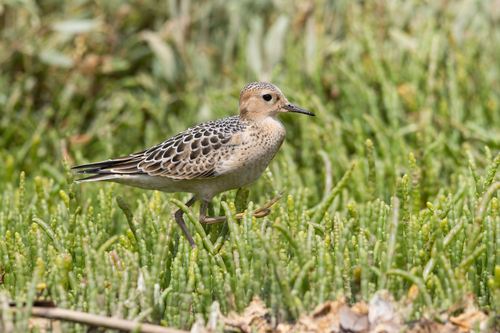
コモンシギ (Calidris subruficollis) コモンシギ

メディア

読み込み中…

要点

シロハラユミハチドリとコモンシギを区別する最も信頼できる方法は、全体的な構造とくちばしの形です:シロハラユミハチドリは小さく、細身のハチドリで、長く、ほぼ真っ直ぐまたは下向きのくちばしを持っていますが、コモンシギは短く、真っ直ぐなくちばしと黄色い脚を持つコンパクトな shorebird です。飛んでいるときや休んでいるとき、シロハラユミハチドリは暗緑色の上面と淡い灰色の下面を示し、特徴的な黒い顔のマスクと淡い眉斑を持っていますが、コモンシギは上面が茶色で下面が淡い色で、顔のマスクはありません。幼鳥のコモンシギは成鳥に似ていますが、下面がより淡い場合があります;シロハラユミハチドリには、コモンシギと混同するような年齢特有の翼の模様はありません。生息地も強い手がかりです:シロハラユミハチドリは南アメリカ北部の森林地域に生息し、コモンシギは開けた草原やツンドラの長距離移動者です。

識別のコツ

  1. くちばしの形と長さ:シロハラユミハチドリは長く、細いくちばしを持っています(オスはほぼ真っ直ぐ、メスは下向き)、一方、コモンシギは短く、真っ直ぐなくちばしを持っています。これは、どの年齢や季節でも彼らを区別する最も迅速な方法です。
  2. 脚の色と長さ:コモンシギは目立つ黄色い脚を持ち、歩いたり立ったりするときに長く見えます。シロハラユミハチドリは、ハチドリに典型的な短く、あまり目立たない脚を持っています。
  3. 顔の模様:シロハラユミハチドリは、淡い眉斑とほぼ白い喉を持つ大胆な黒いマスクを示しますが、これはコモンシギには存在しません。コモンシギの顔は、マスクや強い眉斑のない淡い色です。
  4. 羽毛の色:シロハラユミハチドリは上面が暗緑色からオリーブ色で、下面が淡い灰色ですが、コモンシギは上面が茶色で下面が淡い色です。これらの色合いには重複はありません。
  5. 下面:シロハラユミハチドリは淡い灰色の下面を持ち、コモンシギは淡い色の下面を持っています。幼鳥のコモンシギはより淡い場合がありますが、決して灰色にはなりません。
  6. 上面:シロハラユミハチドリの上面は緑がかっていますが、コモンシギは茶色です。ここに混乱はありません。
  7. サイズと構造:シロハラユミハチドリはコモンシギよりもはるかに小さく、細身で軽いです。コモンシギはより大きく、より水平な姿勢を持っています。
  8. 飛行スタイル:シロハラユミハチドリはホバリングし、急速に動きます;コモンシギは安定した、直接的な羽ばたきで飛び、ホバリングはしません。
  9. 止まっている姿勢:シロハラユミハチドリは細い小枝の上に直立して止まります;コモンシギは地面に立ったり歩いたりし、水平な体を持っています。
  10. 生息地:シロハラユミハチドリは南アメリカ北部の森林またはエッジの生息地に見られます;コモンシギは開けた草原、ツンドラ、または短い草のフィールドに生息し、特に移動中に見られます。
  11. 飛行中の翼の模様:年齢特有の印はありません;コモンシギはディスプレイ中に白い下翼を示すことがありますが、シロハラユミハチドリはそうではありません。
  12. 性差:シロハラユミハチドリのメスはより下向きのくちばしを持っていますが、両性はコモンシギとは構造的に異なります。コモンシギのオスはわずかに大きいですが、その他はメスと似ています。
  13. 幼鳥の混乱:幼鳥のコモンシギは下面がより淡いですが、依然として淡い色で、灰色ではなく、決して顔のマスクを示しません。シロハラユミハチドリの幼鳥は、どの年齢でもコモンシギに似ていません。
  14. 行動:シロハラユミハチドリは花で餌を食べ、しばしばホバリングします;コモンシギは地面から食べ物を拾い、花の近くにいることはめったにありません。
  15. 文脈:森林や花の近くで見られた場合はシロハラユミハチドリを期待し、開けた草原やツンドラで見られた場合はコモンシギを期待します。

大きさ

シロハラユミハチドリはコモンシギよりもはるかに小さく、軽いです。シロハラユミハチドリの体重は約5.9 g [wikidata]で、長さは約13 cm [wikipedia]で、サイズと構造において典型的なハチドリです。コモンシギは、ここで正確な質量は示されていませんが、小型の shorebird ですが、依然としてどのハチドリよりもかなり大きく、重いです。体はより頑丈で、脚は長いです。フィールドでは、コモンシギはより大きく、脚が長く見え、ハチドリのようにホバリングすることは決してありません。

羽色

年齢に関係なく翼の模様で混乱する可能性は低いです:シロハラユミハチドリは暗緑色からオリーブ色の上面と淡い灰色の下面を持ち、黒いマスクと淡い眉斑、ほぼ白い喉を持っています。その翼と尾の羽はハチドリに典型的で、コモンシギのような模様はありません。コモンシギはすべての羽毛で上面が茶色で下面が淡い色で、淡い顔と下面、短いくちばし、黄色い脚を持っています。幼鳥は後部の下面がより淡いですが、その他は成鳥と似ています。コモンシギはシロハラユミハチドリのような顔のマスクや眉斑を決して示しません。飛行中、コモンシギはディスプレイ中に白い下翼を示すことがありますが、これはシロハラユミハチドリの特徴ではありません。これらの2種の間には共有または混乱する年齢特有の翼の模様はありません。

行動

シロハラユミハチドリは典型的なハチドリです:花で餌を食べるためにホバリングし、急速に動き、歩いたり止まったりすることはめったにありません。コモンシギは地面を歩いたり走ったりする shorebird で、視覚で食べ物を拾い、しばしば草原やツンドラのような開けた場所で見られます。ホバリングはせず、しばしばおとなしいと表現され、時には近づくことを許します。コモンシギのディスプレイには、白い下側を示すために翼を上げる行動が含まれ、これはシロハラユミハチドリでは見られません。

生息環境

シロハラユミハチドリはコロンビア、パナマ、ベネズエラの森林地域に生息し、通常は湿った低地の森林や森林のエッジに見られます。コモンシギは北アメリカの開けた北極ツンドラで繁殖し、草原を移動し、しばしば空港やゴルフコースのような短い草の生息地に立ち寄り、南アメリカのパンパスで冬を越します。これらの2種は典型的な生息地で重複しません:シロハラユミハチドリは密な植生の鳥であり、コモンシギは開けた地面の鳥です。

より良い説明を送る

比較と同じ項目を使ってください。文章はすぐに公開されます。

The most reliable way to separate Pale-bellied Hermit from Buff-breasted Sandpiper is by overall structure and bill shape: the hermit is a small, slim hummingbird with a long, nearly straight or decurved bill, while the sandpiper is a compact shorebird with a short, straight bill and yellow legs. In flight or at rest, the hermit shows dark green upperparts and pale gray underparts, with a distinctive black facial mask and buffy supercilium, whereas the sandpiper is brown above and buff below, lacking any facial mask. Juvenile Buff-breasted Sandpipers look similar to adults but may be paler below; Pale-bellied Hermit does not have age-specific wing patterns that would confuse with the sandpiper. Habitat is also a strong clue: hermits are found in forested areas of northern South America, while Buff-breasted Sandpipers are long-distance migrants of open grasslands and tundra.

  1. Bill shape and length: Pale-bellied Hermit has a long, slender bill (almost straight in males, decurved in females), while Buff-breasted Sandpiper has a short, straight bill. This is the quickest way to separate them at any age or season.
  2. Leg color and length: Buff-breasted Sandpiper has conspicuous yellow legs that are long and visible when walking or standing. Pale-bellied Hermit has much shorter, less visible legs (as typical for hummingbirds).
  3. Facial pattern: The hermit shows a bold black mask with a buffy supercilium and mostly white throat, which is never present in Buff-breasted Sandpiper. The sandpiper's face is plain buff without a mask or strong supercilium.
  4. Plumage color: Hermit is dark green to olive above and pale gray below, while Buff-breasted Sandpiper is brown above and buff below. No overlap in these color schemes.
  5. Underparts: Hermit has light gray underparts; sandpiper has buff underparts. Juvenile sandpipers may be paler but never gray.
  6. Upperparts: Hermit upperparts are greenish; sandpiper is brown. No confusion here.
  7. Size and structure: Hermit is much smaller, more slender, and lighter than the sandpiper. Sandpiper is bulkier, with a more horizontal stance.
  8. Flight style: Hermit hovers and darts rapidly; sandpiper flies with steady, direct wingbeats and does not hover.
  9. Perched posture: Hermit perches upright, often on thin twigs; sandpiper stands or walks on the ground with a horizontal body.
  10. Habitat: Hermit is found in forested or edge habitats in northern South America; sandpiper in open grasslands, tundra, or short-grass fields, especially during migration.
  11. Wing pattern in flight: No similar age-specific marks; sandpiper may show white underwings during display, hermit does not.
  12. Sexual dimorphism: Hermit females have a more decurved bill, but both sexes are structurally distinct from sandpiper. Sandpiper males are slightly larger but otherwise similar to females.
  13. Juvenile confusion: Juvenile Buff-breasted Sandpiper is paler below but still buff, not gray, and never shows a facial mask. Hermit juveniles do not resemble sandpipers at any age.
  14. Behavior: Hermit feeds at flowers, often hovering; sandpiper picks food from the ground and is rarely seen near flowers.
  15. Context: If seen in a forest or at a flower, expect hermit; if in open grassland or tundra, expect sandpiper.

Pale-bellied Hermit is much smaller and lighter than Buff-breasted Sandpiper. The hermit weighs about 5.9 g [wikidata], with a length of about 13 cm [wikipedia], and is a typical hummingbird in size and build. Buff-breasted Sandpiper, while not given a precise mass here, is a small shorebird but still substantially larger and heavier than any hummingbird, with a more robust body and longer legs. In the field, the sandpiper will appear bulkier and longer-legged, and will never hover like a hummingbird.

No confusion is likely in wing pattern at any age: Pale-bellied Hermit has dark green to olive upperparts and light gray underparts, with a black mask and buffy supercilium, plus a mostly white throat. Its wing and tail feathers are typical of hermits, lacking any sandpiper-like markings. Buff-breasted Sandpiper is brown above and buff below in all plumages, with a buff face and underparts, short bill, and yellow legs. Juveniles are paler on the rear underparts but otherwise similar to adults. The sandpiper never shows a facial mask or supercilium like the hermit. In flight, the sandpiper may show white underwings during display, but this is not a feature of the hermit. There are no shared or confusing age-specific wing patterns between these two species.

Pale-bellied Hermit is a typical hummingbird: it hovers to feed at flowers, moves rapidly with a darting flight, and is rarely seen walking or perching for long. Buff-breasted Sandpiper is a shorebird that walks or runs on the ground, picking food by sight, and is often seen in open areas such as grasslands or tundra. It does not hover and is often described as tame, sometimes allowing close approach. The sandpiper's display includes raising its wings to show white undersides, a behavior not seen in hermits.

Pale-bellied Hermit is found in forested regions of Colombia, Panama, and Venezuela, typically in humid lowland forests or forest edges. Buff-breasted Sandpiper breeds in the open arctic tundra of North America and migrates through grasslands, often stopping in short-grass habitats like airfields or golf courses, and winters in the pampas of South America. The two species do not overlap in typical habitat: hermits are birds of dense vegetation, while Buff-breasted Sandpipers are birds of open ground.

変更を破棄しますか?

保存していない編集があります。今離れると失われます。

シロハラユミハチドリ · コモンシギ · 苦手な鳥