

Ermitaño Ventripálido vs Correlimos Canelo
Phaethornis anthophilus frente a Calidris subruficollis
Juega un quiz con Ermitaño Ventripálido y Correlimos Canelo
 Ermitaño Ventripálido
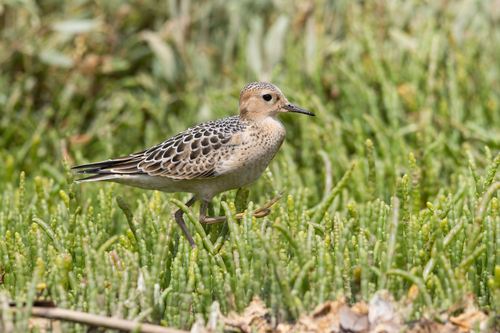 Correlimos Canelo
En breve
La forma más confiable de separar el Ermitaño Ventripálido del Correlimos Canelo es por la estructura general y la forma del pico: el ermitaño es un colibrí pequeño y delgado con un pico largo, casi recto o curvado hacia abajo, mientras que el correlimos es un ave playera compacta con un pico corto y recto y patas amarillas. En vuelo o en reposo, el ermitaño muestra partes superiores de color verde oscuro y partes inferiores de color gris pálido, con una distintiva máscara facial negra y un supercilio canela, mientras que el correlimos es marrón por encima y canela por debajo, careciendo de cualquier máscara facial. Los Correlimos Canelos juveniles se parecen a los adultos pero pueden ser más pálidos por debajo; el Ermitaño Ventripálido no tiene patrones de alas específicos de edad que confundirían con el correlimos. El hábitat también es una pista fuerte: los ermitaños se encuentran en áreas boscosas del norte de Sudamérica, mientras que los Correlimos Canelos son migrantes de larga distancia de praderas abiertas y tundra.
Consejos de identificación
- Forma y longitud del pico: El Ermitaño Ventripálido tiene un pico largo y delgado (casi recto en los machos, curvado hacia abajo en las hembras), mientras que el Correlimos Canelo tiene un pico corto y recto. Esta es la forma más rápida de separarlos a cualquier edad o temporada.
- Color y longitud de las patas: El Correlimos Canelo tiene patas amarillas conspicuas que son largas y visibles al caminar o estar de pie. El Ermitaño Ventripálido tiene patas mucho más cortas y menos visibles (como es típico en los colibríes).
- Patrón facial: El ermitaño muestra una máscara negra audaz con un supercilio canela y una garganta mayormente blanca, que nunca está presente en el Correlimos Canelo. La cara del correlimos es canela simple sin máscara o supercilio fuerte.
- Color del plumaje: El ermitaño es de color verde oscuro a oliva por encima y gris pálido por debajo, mientras que el Correlimos Canelo es marrón por encima y canela por debajo. No hay superposición en estos esquemas de color.
- Partes inferiores: El ermitaño tiene partes inferiores de color gris claro; el correlimos tiene partes inferiores de color canela. Los correlimos juveniles pueden ser más pálidos pero nunca grises.
- Partes superiores: Las partes superiores del ermitaño son verdosas; el correlimos es marrón. No hay confusión aquí.
- Tamaño y estructura: El ermitaño es mucho más pequeño, más delgado y más ligero que el correlimos. El correlimos es más robusto, con una postura más horizontal.
- Estilo de vuelo: El ermitaño se queda suspendido y se mueve rápidamente; el correlimos vuela con aleteos constantes y directos y no se queda suspendido.
- Postura en reposo: El ermitaño se posa erguido, a menudo en ramas delgadas; el correlimos se mantiene o camina en el suelo con un cuerpo horizontal.
- Hábitat: El ermitaño se encuentra en hábitats boscosos o de borde en el norte de Sudamérica; el correlimos en praderas abiertas, tundra o campos de pasto corto, especialmente durante la migración.
- Patrón de alas en vuelo: No hay marcas similares específicas de edad; el correlimos puede mostrar alas inferiores blancas durante la exhibición, el ermitaño no.
- Dimorfismo sexual: Las hembras del ermitaño tienen un pico más curvado hacia abajo, pero ambos sexos son estructuralmente distintos del correlimos. Los machos del correlimos son ligeramente más grandes pero de otro modo similares a las hembras.
- Confusión juvenil: El Correlimos Canelo juvenil es más pálido por debajo pero sigue siendo canela, no gris, y nunca muestra una máscara facial. Los juveniles del ermitaño no se parecen a los correlimos a ninguna edad.
- Comportamiento: El ermitaño se alimenta en flores, a menudo suspendido; el correlimos recoge comida del suelo y rara vez se ve cerca de flores.
- Contexto: Si se ve en un bosque o en una flor, espere un ermitaño; si está en pradera abierta o tundra, espere un correlimos.
Tamaño
El Ermitaño Ventripálido es mucho más pequeño y ligero que el Correlimos Canelo. El ermitaño pesa alrededor de 5.9 g [wikidata], con una longitud de aproximadamente 13 cm [wikipedia], y es un colibrí típico en tamaño y construcción. El Correlimos Canelo, aunque no se le da una masa precisa aquí, es un ave playera pequeña pero aún sustancialmente más grande y pesada que cualquier colibrí, con un cuerpo más robusto y patas más largas. En el campo, el correlimos aparecerá más robusto y con patas más largas, y nunca se quedará suspendido como un colibrí.
Plumaje
No es probable que haya confusión en el patrón de alas a cualquier edad: el Ermitaño Ventripálido tiene partes superiores de color verde oscuro a oliva y partes inferiores de color gris claro, con una máscara negra y un supercilio canela, además de una garganta mayormente blanca. Sus plumas de alas y cola son típicas de los ermitaños, careciendo de cualquier marca similar a la del correlimos. El Correlimos Canelo es marrón por encima y canela por debajo en todos los plumajes, con una cara y partes inferiores canela, pico corto y patas amarillas. Los juveniles son más pálidos en las partes inferiores traseras pero de otro modo similares a los adultos. El correlimos nunca muestra una máscara facial o supercilio como el ermitaño. En vuelo, el correlimos puede mostrar alas inferiores blancas durante la exhibición, pero esta no es una característica del ermitaño. No hay patrones de alas específicos de edad compartidos o confusos entre estas dos especies.
Comportamiento
El Ermitaño Ventripálido es un colibrí típico: se queda suspendido para alimentarse en flores, se mueve rápidamente con un vuelo rápido y rara vez se ve caminando o posándose por mucho tiempo. El Correlimos Canelo es un ave playera que camina o corre en el suelo, recogiendo comida a la vista, y a menudo se ve en áreas abiertas como praderas o tundra. No se queda suspendido y a menudo se describe como manso, a veces permitiendo un acercamiento cercano. La exhibición del correlimos incluye levantar sus alas para mostrar las partes inferiores blancas, un comportamiento que no se observa en los ermitaños.
Hábitat
El Ermitaño Ventripálido se encuentra en regiones boscosas de Colombia, Panamá y Venezuela, típicamente en bosques húmedos de tierras bajas o bordes de bosques. El Correlimos Canelo cría en la tundra ártica abierta de América del Norte y migra a través de praderas, a menudo deteniéndose en hábitats de pasto corto como aeródromos o campos de golf, y pasa el invierno en las pampas de Sudamérica. Las dos especies no se superponen en hábitats típicos: los ermitaños son aves de vegetación densa, mientras que los Correlimos Canelos son aves de terreno abierto.
Ermitaño Ventripálido · Correlimos Canelo · Mis aves difíciles