

Motmot

アカハラコガネゲラ 対 カレハゲラ

Chrysocolaptes validus 対 Meiglyptes tukki

アカハラコガネゲラとカレハゲラのクイズ
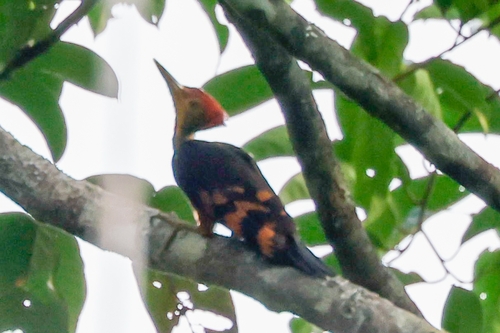
アカハラコガネゲラ (Chrysocolaptes validus) アカハラコガネゲラ
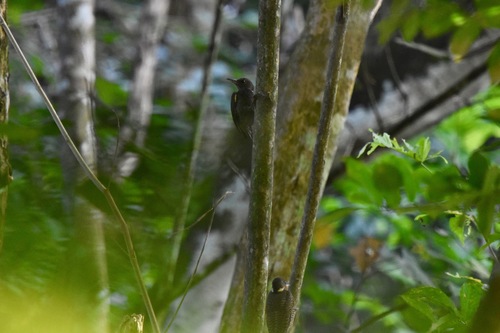
カレハゲラ (Meiglyptes tukki) カレハゲラ

メディア

読み込み中…

要点

オレンジバックコガネゲラとカレハゲラを区別する最も信頼できるフィールドマークは全体の色彩です:オレンジバックははるかに明るく、目を引く一方で、カレハゲラは小さく、暗い茶色で、微妙に縞模様があります。オレンジバックは森林の樹冠の専門家であり、しばしば高い位置で見られますが、カレハゲラは暗く、淡い首の縞模様と明確な翼の縞模様があります。構造的な違いも役立ちます:カレハゲラは尾が長く、尖った曲がったくちばしを持っていますが、オレンジバックはよりコンパクトです。未熟な鳥や飛行中の鳥は、カレハゲラの特徴的な淡い翼の縞模様と汚れたクリーム色の首の縞模様によって最もよく区別され、オレンジバックにはこの特徴がありません。

識別のコツ

  1. 淡い翼の縞模様(カレハゲラ): カレハゲラの翼に明確な淡い縞模様を探してください。これは止まっている時も飛んでいる時も見えます。オレンジバックはすべての年齢でこの特徴がありません。
  2. 汚れたクリーム色の首の縞模様(カレハゲラ): カレハゲラは首の側に汚れたクリーム色の縞模様を示し、すべての羽色での重要なマークです。オレンジバックにはこの縞模様がありません。
  3. 全体の色彩: オレンジバックははるかに明るく、目を引くオレンジ色の背中を持っていますが、カレハゲラは均一に暗い茶色で微妙な淡い縞模様があります。
  4. 尾の長さ: カレハゲラはオレンジバックよりも明らかに尾が長く、止まっている時や飛んでいる時により細長い外観を与えます。
  5. くちばしの形: カレハゲラのくちばしは尖っていて、明らかに曲がっていますが、オレンジバックのくちばしはそれほど曲がっておらず、より典型的なキツツキの形をしています。
  6. 後頭冠: カレハゲラには後頭冠がなく、見える場合は微妙な構造的違いとなることがあります。
  7. 体のサイズ: カレハゲラはオレンジバック(14.9g)に比べてはるかに重く、がっしりしています(平均53g)。両種が一緒に見られる場合や、サイズの基準がある場合はこれを利用してください。
  8. 生息環境の文脈: 鳥が森林の樹冠の高い位置で見られる場合、オレンジバックの可能性が高いです。カレハゲラはさまざまな高さで見られることがあります。
  9. 止まっている時と飛んでいる時: 飛行中、カレハゲラの淡い翼の縞模様と首の縞模様は特に役立ちます。オレンジバックはより均一で明るく見えます。
  10. 幼鳥の混乱: オレンジバックには特定の幼鳥のマークは記載されていませんが、カレハゲラの翼の縞模様と首の縞模様はすべての年齢で存在し、若い鳥を区別するのに信頼できます。
  11. 性別/季節: 利用可能な情報源には、いずれの種においても性別や季節に特有の違いは記載されていないため、上記の構造的および羽色のマークに頼ってください。
  12. 一般的な落とし穴: カレハゲラの淡い首の縞模様を淡い喉や頬と混同しないでください。それはくちばしの下ではなく、首の側の縞模様です。オレンジバックの明るさはこの二種の中で独特です。
  13. くちばしと頭の特徴: カレハゲラのくちばしは尖っていて曲がっており、よく見えれば微妙ですが役立つマークです。
  14. 後頭冠の欠如: 明らかでないこともありますが、カレハゲラの後頭冠の欠如は、類似種との混同を排除するのに役立ちますが、オレンジバックに対してはそれほど役立ちません。
  15. 飛行中の翼のパターン: 特に光が悪い場合や速く動く鳥の場合、カレハゲラの上翼と下翼の淡い縞模様を常に確認してください。

大きさ

カレハゲラはオレンジバックコガネゲラよりも明らかに重く、大きいです。カレハゲラの平均体重は約53g(1978年の調査から)で、オレンジバックは14.9gとかなり軽いです [wikidata]。カレハゲラはまた、著しく長い尾とより頑丈なくちばしを持っています。フィールドでは、カレハゲラはよりがっしりとしていて尾が長く見え、オレンジバックはよりコンパクトで軽い体をしています。

羽色

行動

オレンジバックコガネゲラは森林の樹冠の専門家であり、通常は木の高い位置で見られ、上層で活発に動きます。カレハゲラは特に樹冠の好みはなく、さまざまな森林のレベルで遭遇することがあります。両方ともキツツキであり、似たような採餌行動を示すことがありますが、オレンジバックが樹冠に留まる傾向は行動の手がかりとなることがあります。

生息環境

オレンジバックコガネゲラは厳密な森林の専門家であり、主にタイ南部、マレーシア、ボルネオ、スマトラ、ジャワの成熟した森林の樹冠に見られます。カレハゲラも森林の種ですが、ノートには強い樹冠の関連性は指定されていません。樹冠の高い位置でキツツキを見た場合、オレンジバックの可能性が高いです。カレハゲラは低い位置でも高い位置でも見られることがあります。

より良い説明を送る

比較と同じ項目を使ってください。文章はすぐに公開されます。

The most reliable field mark to separate Orange-backed Woodpecker from Buff-necked Woodpecker is overall coloration: Orange-backed is much brighter and more striking, while Buff-necked is small, dark brown, and subtly barred. Orange-backed is a forest canopy specialist, often seen higher up, whereas Buff-necked is darker, with a pale neck stripe and distinct wing barring. Structural differences also help: Buff-necked has a longer tail and a pointed, curved bill, while Orange-backed is more compact. Immature or in-flight birds are best separated by the Buff-necked's distinctive pale wing barring and dirty-cream neck stripe, which Orange-backed lacks.

  1. Pale wing barring (Buff-necked): Look for clear pale barring on the wings of Buff-necked Woodpecker, visible both perched and in flight. Orange-backed lacks this feature at all ages.
  2. Dirty-cream neck stripe (Buff-necked): Buff-necked shows a dirty-cream colored stripe on the side of the neck, a key mark in all plumages. Orange-backed does not have this stripe.
  3. Overall coloration: Orange-backed is much brighter, with a striking orange back, while Buff-necked is uniformly dark brown with subtle pale barring.
  4. Tail length: Buff-necked has a significantly longer tail than Orange-backed, giving it a more elongated appearance when perched or in flight.
  5. Bill shape: Buff-necked's bill is pointed and noticeably curved along the culmen, while Orange-backed's bill is less curved and appears more typical for a woodpecker.
  6. Nuchal crest: Buff-necked lacks a nuchal crest, which can be a subtle structural difference if visible.
  7. Body size: Buff-necked is much heavier and bulkier (mean 53g) compared to Orange-backed (14.9g). Use this when both species are seen together or with known size references.
  8. Habitat context: If the bird is seen high in the forest canopy, Orange-backed is more likely. Buff-necked may be found at various heights.
  9. Perched vs. in flight: In flight, Buff-necked's pale wing barring and neck stripe are especially useful. Orange-backed will appear more uniform and bright.
  10. Juvenile confusion: No specific juvenile marks are noted for Orange-backed, but Buff-necked's wing barring and neck stripe are present in all ages, making them reliable for separating young birds.
  11. Sex/season: No sex- or season-specific differences are noted in the available sources for either species, so rely on the structural and plumage marks above.
  12. Common pitfalls: Do not confuse Buff-necked's pale neck stripe with a pale throat or malar; it is a stripe on the side of the neck, not under the bill. Orange-backed's brightness is unique among these two.
  13. Bill and head jizz: Buff-necked's bill is both pointed and curved, which can be a subtle but useful mark if seen well.
  14. Absence of nuchal crest: While not always obvious, the lack of a nuchal crest in Buff-necked can help rule out confusion with similar species, but is less useful against Orange-backed.
  15. Wing pattern in flight: Always check for pale barring on the upperwing and underwing in Buff-necked, especially in poor light or fast-moving birds.

Buff-necked Woodpecker is significantly heavier and larger than Orange-backed Woodpecker. The mean body mass for Buff-necked is about 53g (from a 1978 survey), while Orange-backed is much lighter at 14.9g [wikidata]. Buff-necked also has a notably longer tail and a more robust bill. In the field, Buff-necked will appear bulkier and longer-tailed, while Orange-backed is more compact and lighter-bodied.

  • Juvenile/Immature/Flight views: Buff-necked Woodpecker of all ages shows dark brown plumage with clear pale barring on the wings and a dirty-cream stripe on the neck. These features are visible both perched and in flight, and the pale wing barring is especially diagnostic for Buff-necked when seen from below or in motion. Orange-backed Woodpecker, in contrast, is much brighter overall and lacks the combination of dark brown base color and pale barring. No distinctive juvenile or immature upperwing pattern is described for Orange-backed.

  • Adult plumage: Orange-backed Woodpecker is strikingly colored, with a bright orange back, and does not show the pale neck stripe or wing barring of Buff-necked. Buff-necked adults retain the same dark brown and barred appearance, with the pale neck stripe and no nuchal crest. The nuchal crest is absent in Buff-necked but may be present in other similar species, not Orange-backed.

Orange-backed Woodpecker is a forest canopy specialist, typically seen higher in the trees, moving actively in the upper levels. Buff-necked Woodpecker does not have a noted canopy preference and may be encountered at a wider range of forest levels. Both are woodpeckers and may show similar foraging behavior, but Orange-backed's tendency to stay in the canopy can be a behavioral clue.

Orange-backed Woodpecker is a strict forest specialist, found primarily in the canopy of mature forests in southern Thailand, Malaya, Borneo, Sumatra, and Java. Buff-necked Woodpecker is also a forest species, but the notes do not specify a strong canopy association. If you see a woodpecker high in the canopy, Orange-backed is more likely; Buff-necked may be found lower as well as higher up.

変更を破棄しますか?

保存していない編集があります。今離れると失われます。

アカハラコガネゲラ · カレハゲラ · 苦手な鳥