

Orange-backed Woodpecker vs Buff-necked Woodpecker
Chrysocolaptes validus contro Meiglyptes tukki
Fai un quiz con Orange-backed Woodpecker e Buff-necked Woodpecker
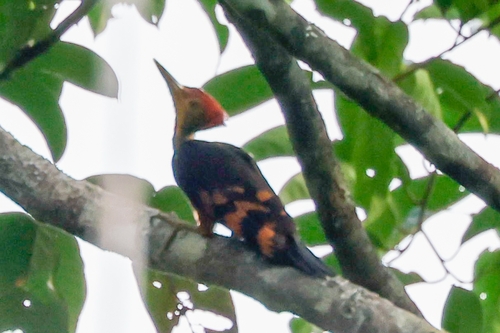 Orange-backed Woodpecker
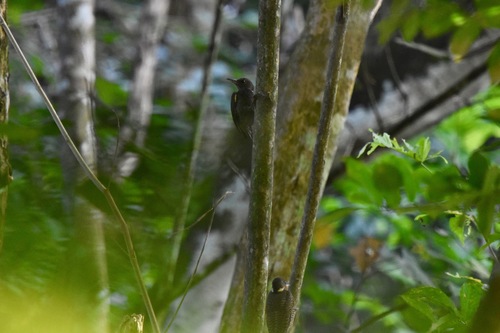 Buff-necked Woodpecker
In breve
Il segno di campo più affidabile per separare il Picchio dal collo buffo dal Picchio dal dorso arancione è la colorazione generale: il Picchio dal dorso arancione è molto più luminoso e appariscente, mentre il Picchio dal collo buffo è piccolo, marrone scuro e leggermente barrato. Il Picchio dal dorso arancione è uno specialista della chioma forestale, spesso visto più in alto, mentre il Picchio dal collo buffo è più scuro, con una striscia chiara sul collo e barrature distintive sulle ali. Anche le differenze strutturali aiutano: il Picchio dal collo buffo ha una coda più lunga e un becco appuntito e curvo, mentre il Picchio dal dorso arancione è più compatto. Gli uccelli immaturi o in volo sono meglio separati dalla distintiva barratura chiara delle ali del Picchio dal collo buffo e dalla striscia chiara sul collo, che il Picchio dal dorso arancione non ha.
Consigli di identificazione
- Barratura chiara delle ali (Buff-necked): Cerca una chiara barratura chiara sulle ali del Picchio dal collo buffo, visibile sia in posizione percheggiata che in volo. Il Picchio dal dorso arancione non ha questa caratteristica in nessuna età.
- Striscia chiara sul collo (Buff-necked): Il Picchio dal collo buffo mostra una striscia di colore crema sporco sul lato del collo, un segno chiave in tutte le livree. Il Picchio dal dorso arancione non ha questa striscia.
- Colorazione generale: Il Picchio dal dorso arancione è molto più luminoso, con un colpo d'occhio arancione, mentre il Picchio dal collo buffo è uniformemente marrone scuro con una sottile barratura chiara.
- Lunghezza della coda: Il Picchio dal collo buffo ha una coda significativamente più lunga rispetto al Picchio dal dorso arancione, conferendogli un aspetto più allungato quando è percheggiato o in volo.
- Forma del becco: Il becco del Picchio dal collo buffo è appuntito e visibilmente curvo lungo il culmine, mentre il becco del Picchio dal dorso arancione è meno curvo e appare più tipico per un picchio.
- Cresta nucale: Il Picchio dal collo buffo non ha una cresta nucale, che può essere una sottile differenza strutturale se visibile.
- Dimensioni del corpo: Il Picchio dal collo buffo è molto più pesante e massiccio (media 53g) rispetto al Picchio dal dorso arancione (14.9g). Usa questo quando entrambe le specie sono viste insieme o con riferimenti di dimensione noti.
- Contesto dell'habitat: Se l'uccello è visto in alto nella chioma forestale, è più probabile che sia un Picchio dal dorso arancione. Il Picchio dal collo buffo può essere trovato a varie altezze.
- Percheggiato vs. in volo: In volo, la barratura chiara delle ali e la striscia sul collo del Picchio dal collo buffo sono particolarmente utili. Il Picchio dal dorso arancione apparirà più uniforme e luminoso.
- Confusione giovanile: Non sono notati segni giovanili specifici per il Picchio dal dorso arancione, ma la barratura delle ali e la striscia sul collo del Picchio dal collo buffo sono presenti in tutte le età, rendendoli affidabili per separare i giovani uccelli.
- Sesso/stagione: Non sono notate differenze specifiche per sesso o stagione nelle fonti disponibili per entrambe le specie, quindi fai riferimento ai segni strutturali e di livrea sopra.
- Trappole comuni: Non confondere la striscia chiara sul collo del Picchio dal collo buffo con una gola o malare chiara; è una striscia sul lato del collo, non sotto il becco. La luminosità del Picchio dal dorso arancione è unica tra questi due.
- Becco e impressione della testa: Il becco del Picchio dal collo buffo è sia appuntito che curvo, il che può essere un segno sottile ma utile se visto bene.
- Assenza di cresta nucale: Anche se non sempre ovvio, l'assenza di una cresta nucale nel Picchio dal collo buffo può aiutare a escludere confusione con specie simili, ma è meno utile rispetto al Picchio dal dorso arancione.
- Schema delle ali in volo: Controlla sempre la barratura chiara sulla parte superiore e inferiore dell'ala nel Picchio dal collo buffo, specialmente in condizioni di scarsa illuminazione o con uccelli in rapido movimento.
Taglia
Il Picchio dal collo buffo è significativamente più pesante e più grande rispetto al Picchio dal dorso arancione. La massa corporea media per il Picchio dal collo buffo è di circa 53g (da un'indagine del 1978), mentre il Picchio dal dorso arancione è molto più leggero a 14.9g [wikidata]. Il Picchio dal collo buffo ha anche una coda notevolmente più lunga e un becco più robusto. Sul campo, il Picchio dal collo buffo apparirà più massiccio e con una coda più lunga, mentre il Picchio dal dorso arancione è più compatto e leggero.
Piumaggio
-
Giovanile/Immature/Viste in volo: Il Picchio dal collo buffo di tutte le età mostra una livrea marrone scuro con chiara barratura chiara sulle ali e una striscia di crema sporco sul collo. Queste caratteristiche sono visibili sia in posizione percheggiata che in volo, e la barratura chiara delle ali è particolarmente diagnostica per il Picchio dal collo buffo quando vista dal basso o in movimento. Il Picchio dal dorso arancione, al contrario, è molto più luminoso nel complesso e manca della combinazione di colore di base marrone scuro e barratura chiara. Non è descritto alcun schema distintivo di ala superiore giovanile o immaturo per il Picchio dal dorso arancione.
-
Livrea adulta: Il Picchio dal dorso arancione è colorato in modo sorprendente, con un dorso arancione brillante, e non mostra la striscia chiara sul collo o la barratura delle ali del Picchio dal collo buffo. Gli adulti del Picchio dal collo buffo mantengono lo stesso aspetto marrone scuro e barrato, con la striscia chiara sul collo e senza cresta nucale. La cresta nucale è assente nel Picchio dal collo buffo ma può essere presente in altre specie simili, non nel Picchio dal dorso arancione.
Comportamento
Il Picchio dal dorso arancione è uno specialista della chioma forestale, tipicamente visto più in alto negli alberi, muovendosi attivamente nei livelli superiori. Il Picchio dal collo buffo non ha una preferenza nota per la chioma e può essere incontrato a un'ampia gamma di livelli forestali. Entrambi sono picchi e possono mostrare comportamenti di foraggiamento simili, ma la tendenza del Picchio dal dorso arancione a rimanere nella chioma può essere un indizio comportamentale.
Habitat
Il Picchio dal dorso arancione è uno specialista forestale rigoroso, trovato principalmente nella chioma di foreste mature nel sud della Thailandia, Malaya, Borneo, Sumatra e Giava. Il Picchio dal collo buffo è anche una specie forestale, ma le note non specificano un forte legame con la chioma. Se vedi un picchio in alto nella chioma, è più probabile che sia un Picchio dal dorso arancione; il Picchio dal collo buffo può essere trovato più in basso così come più in alto.
Orange-backed Woodpecker · Buff-necked Woodpecker · I miei uccelli difficili