

Motmot

オカリトキーウィ 対 オオマダラキーウィ

Apteryx rowi 対 Apteryx maxima

オカリトキーウィとオオマダラキーウィのクイズ

オカリトキーウィ (Apteryx rowi) オカリトキーウィ
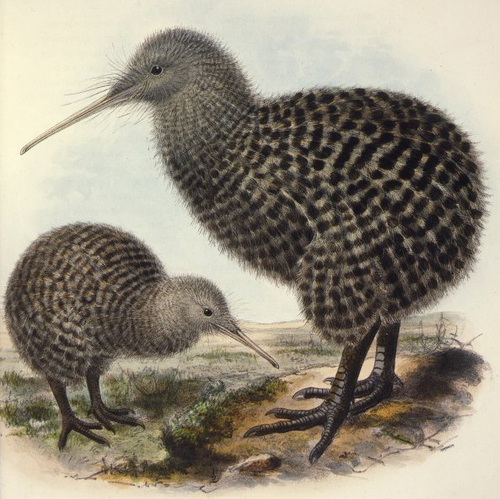
オオマダラキーウィ (Apteryx maxima) オオマダラキーウィ

メディア

読み込み中…

要点

オカリトキーウィ(ロウィ)とオオマダラキーウィ(ロロア)を区別する最も信頼できるフィールドマークは羽毛のパターンです:オオマダラキーウィは常に灰色から茶色の羽毛に明確な黒い斑点を示しますが、オカリトキーウィはこれらの斑点がなく、より均一に茶色に見えます。両種は飛べず、夜行性で、構造的に似ていますが、オオマダラキーウィは明らかに大きくてがっしりしています。フィールドでは、生息地と範囲も強い手がかりです:オカリトキーウィはŌkāritoの森林地域に限定されているのに対し、オオマダラキーウィは南島の高地の森林に広く分布しています。もしŌkāritoの外で斑点のある大きなキーウィを見たら、それはほぼ確実にオオマダラキーウィです。

識別のコツ

  1. 斑点のある羽毛 vs. 均一な羽毛: オオマダラキーウィは常に灰色-茶色の羽毛に黒い斑点を示します;オカリトキーウィは斑点のない均一な茶色です。これはすべての年齢で最も信頼できるフィールドマークです。
  2. サイズと体格: オオマダラキーウィは最も大きなキーウィで、オカリトキーウィよりも明らかに大きくてがっしりしています。スケール感があればそれを使ってくださいが、孤立した鳥や視界が悪い場合には注意が必要です。
  3. くちばしの長さ: オオマダラキーウィは長くて細い象牙色のくちばし(9–12 cm)を持ち、オカリトキーウィよりも相対的に長く見えることがありますが、これは微妙で直接比較しないと判断が難しいです。
  4. 生息地と範囲: オカリトキーウィはŌkāritoの森林にのみ見られます;南島の高地で他の場所に見られるキーウィはほぼ確実にオオマダラキーウィです。
  5. テリトリー行動: オオマダラキーウィは広い範囲でテリトリーを守るペアで見られることがあります;オカリトキーウィはノートではテリトリーを持つと記述されることは少ないです。
  6. 尾がない: 両種は尾がないため、尾の形は区別に役立ちません。
  7. 飛べない構造: 両者は飛べず、退化した翼を持っているため、翼の形状や飛行パターンは識別に役立ちません。
  8. 羽毛の質感: 両者は後羽軸のない毛のような柔らかい羽毛を持ち、これも区別には役立ちません。
  9. 脚と足: 両者は短い脚を持ち、足ごとに3本の指があります;これらの間での診断には役立ちません。
  10. 目に見える性的二形性がない: 両種はフィールドで性別間にほとんど違いを示しません。
  11. 幼鳥 vs. 成鳥: 幼鳥は両種で成鳥に似ています;斑点の有無はすべての年齢で信頼できます。
  12. 夜行性の活動: 両者は夜行性ですが、オオマダラキーウィは捕食者のいない地域で昼間に活動することがあります—フィールドでの区別にはほとんど役立ちません。
  13. 鳴き声: ノートには診断的な鳴き声の違いは記述されていません;区別には声を使用しないでください。
  14. 保全の文脈: オカリトキーウィは非常に希少(約600羽)で、保護地域や夜間のウォークスルーでのみ見られます;オオマダラキーウィはより数が多く、広く分布していますが、依然として脆弱です。
  15. コミュニティの文脈: 地元のガイドや野生動物センターでバードウォッチングをしている場合は、地元の種について尋ねてください—オカリトキーウィはŌkāritoと特定のセンターにのみいます。

大きさ

オオマダラキーウィは最も大きなキーウィ種で、オスは約45 cm、メスは最大50 cmに達し、体重は1.2–2.6 kg(オス)および1.5–3.3 kg(メス)です。オカリトキーウィはより小さく、頑丈さも劣りますが、ノートには正確な測定値は記載されていませんが、常にオオマダラキーウィよりも小さいと記述されています。直接比較すると、オオマダラキーウィはよりがっしりしていて高く見え、くちばしも長くなります。

羽色

羽毛は最も診断的な特徴です:すべての年齢のオオマダラキーウィは羽毛に黒い斑点を示し、チャコールグレーから淡い茶色の背景に斑点模様を与えます。オカリトキーウィはこれらの斑点が全くなく、均一な茶色の羽毛を呈します。両者は後羽軸のない毛のような柔らかい羽毛を持ち、尾はありません。どちらの種にも年齢特有の上翼や飛行マークは記述されていません。両者は飛べず、翼は退化していてフィールドでは見えません。幼鳥と成鳥の羽毛は各種内で似ているため、斑点の有無はすべての年齢で信頼できます。

行動

両種は夜行性で秘密主義的で、夜間に餌を探し、嗅覚に頼っています。オオマダラキーウィは非常にテリトリー意識が強いことで知られ、ペアで広いテリトリー(最大25ヘクタール)を守ります。両種は飛べず、シャッフルするように移動します。捕食者のいない地域では、オオマダラキーウィは昼間に活動することがありますが、これは稀です。オカリトキーウィはノートでは特に攻撃的またはテリトリー意識が強いとは記述されていません。

生息環境

オカリトキーウィはニュージーランド南島の西海岸のŌkārito森林に限定されており、その位置は非常に診断的です。オオマダラキーウィは南島全体に広く分布しており、特に高地や高所の森林に見られ、Ōkārito地域には存在しません。もしŌkārito森林の外でキーウィに出会った場合、特に高地や山岳地帯では、ほぼ確実にオオマダラキーウィです。

より良い説明を送る

比較と同じ項目を使ってください。文章はすぐに公開されます。

The most reliable field mark to separate Okarito Brown Kiwi (Rowi) from Great Spotted Kiwi (Roroa) is the plumage pattern: Great Spotted Kiwi always shows distinct black spots on its otherwise grey to brown feathers, while Okarito Brown Kiwi lacks these spots and appears more uniformly brown. Both species are flightless, nocturnal, and structurally similar, but Great Spotted Kiwi is noticeably larger and bulkier. In the field, habitat and range are also strong clues: Okarito Brown Kiwi is restricted to the Ōkārito forest area, while Great Spotted Kiwi is more widespread in upland South Island forests. If you see a spotted, large kiwi in the South Island outside Ōkārito, it's almost certainly Great Spotted Kiwi.

  1. Spotted vs. Uniform Plumage: Great Spotted Kiwi always shows black spots on grey-brown feathers; Okarito Brown Kiwi is plain brown with no spots. This is the most reliable field mark at all ages.
  2. Size and Bulk: Great Spotted Kiwi is the largest kiwi, appearing noticeably bigger and bulkier than Okarito Brown Kiwi. If you have a sense of scale, use it, but beware of lone birds or poor views.
  3. Bill Length: Great Spotted Kiwi has a long, slender, ivory bill (9–12 cm), which may appear proportionally longer than in Okarito Brown Kiwi, but this is subtle and hard to judge without direct comparison.
  4. Habitat and Range: Okarito Brown Kiwi is only found in the Ōkārito forest; any kiwi seen elsewhere in the South Island uplands is almost certainly Great Spotted Kiwi.
  5. Territorial Behavior: Great Spotted Kiwi may be seen defending territory or in pairs over large areas; Okarito Brown Kiwi is less often described as territorial in the notes.
  6. No Tail: Both species lack a tail, so tail shape is not helpful for separation.
  7. Flightless Structure: Both are flightless with vestigial wings, so wing formula and flight patterns are not useful for ID.
  8. Feather Texture: Both have hair-like, soft feathers lacking aftershafts; this is not helpful for separation.
  9. Legs and Feet: Both have short legs with three toes per foot; not diagnostic between these two.
  10. No Visible Sexual Dimorphism: Both species show little to no difference between sexes in the field.
  11. Juvenile vs. Adult: Juveniles look similar to adults in both species; the presence or absence of spots is reliable for all ages.
  12. Nocturnal Activity: Both are nocturnal, but Great Spotted Kiwi may be active in daylight in predator-free areas—rarely useful for field separation.
  13. Vocalization: No diagnostic vocal differences are described in the notes; do not use voice for separation.
  14. Conservation Context: Okarito Brown Kiwi is much rarer (about 600 birds) and only seen in conservation areas or nocturnal walkthroughs; Great Spotted Kiwi is more numerous and widespread, though still vulnerable.
  15. Community Context: If birding with local guides or at a wildlife center, ask about the local species—Okarito Brown Kiwi is only at Ōkārito and specific centers.

Great Spotted Kiwi is the largest kiwi species, with males reaching about 45 cm tall and females up to 50 cm, and weights ranging from 1.2–2.6 kg (males) and 1.5–3.3 kg (females). Okarito Brown Kiwi is smaller and less robust, though exact measurements are not given in the notes, it is consistently described as smaller than Great Spotted Kiwi. In direct comparison, Great Spotted Kiwi will look bulkier and taller, with a longer bill.

Plumage is the most diagnostic feature: Great Spotted Kiwi of all ages shows black spots on the feathers, giving a speckled or mottled appearance over a charcoal grey to light brown background. Okarito Brown Kiwi lacks these spots entirely, presenting a uniform brown plumage. Both have hair-like, soft feathers without aftershafts, and neither has a tail. There are no described age-specific upperwing or flight marks for either species, as both are flightless and their wings are vestigial and not visible in the field. Juvenile and adult plumages are similar within each species, so the presence or absence of spots is reliable at all ages.

Both species are nocturnal and secretive, foraging at night and relying on their sense of smell. Great Spotted Kiwi is noted for being fiercely territorial, with pairs defending large territories (up to 25 hectares). Both species are flightless and move with a shuffling gait. In areas without predators, Great Spotted Kiwi may be active during the day, but this is rare. Okarito Brown Kiwi is not described as being particularly aggressive or territorial in the notes.

Okarito Brown Kiwi is restricted to the Ōkārito forest on the West Coast of New Zealand's South Island, making its location highly diagnostic. Great Spotted Kiwi is more widespread in the South Island, especially in upland and high-altitude forests, and is absent from the Ōkārito area. If you encounter a kiwi outside the Ōkārito forest, especially in upland or mountainous terrain, it is almost certainly Great Spotted Kiwi.

変更を破棄しますか?

保存していない編集があります。今離れると失われます。

オカリトキーウィ · オオマダラキーウィ · 苦手な鳥