

Okarito Brown Kiwi vs Great Spotted Kiwi
Apteryx rowi contro Apteryx maxima
Fai un quiz con Okarito Brown Kiwi e Great Spotted Kiwi
 Okarito Brown Kiwi
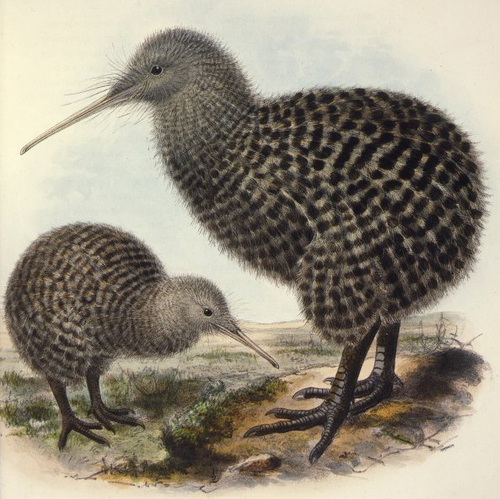 Great Spotted Kiwi
In breve
Il segno distintivo più affidabile per separare Okarito Brown Kiwi (Rowi) da Great Spotted Kiwi (Roroa) è il modello del piumaggio: Great Spotted Kiwi mostra sempre distinti punti neri sulle sue piume altrimenti grigie o marroni, mentre Okarito Brown Kiwi non ha questi punti e appare più uniformemente marrone. Entrambe le specie sono incapaci di volare, notturne e strutturalmente simili, ma Great Spotted Kiwi è notevolmente più grande e massiccio. Sul campo, l'habitat e l'areale sono anche indizi forti: Okarito Brown Kiwi è limitato all'area forestale di Ōkārito, mentre Great Spotted Kiwi è più diffuso nelle foreste montane dell'Isola del Sud. Se vedi un kiwi maculato e grande nell'Isola del Sud al di fuori di Ōkārito, è quasi certamente un Great Spotted Kiwi.
Consigli di identificazione
- Piumaggio Maculato vs. Uniforme: Great Spotted Kiwi mostra sempre punti neri su piume grigio-marroni; Okarito Brown Kiwi è marrone uniforme senza punti. Questo è il segno distintivo più affidabile a tutte le età.
- Dimensione e Massa: Great Spotted Kiwi è il kiwi più grande, apparendo notevolmente più grande e massiccio rispetto a Okarito Brown Kiwi. Se hai una percezione della scala, usala, ma fai attenzione a uccelli solitari o visioni scadenti.
- Lunghezza del Becco: Great Spotted Kiwi ha un becco lungo e sottile di avorio (9–12 cm), che può apparire proporzionalmente più lungo rispetto a Okarito Brown Kiwi, ma questo è sottile e difficile da giudicare senza un confronto diretto.
- Habitat e Areale: Okarito Brown Kiwi si trova solo nella foresta di Ōkārito; qualsiasi kiwi visto altrove nelle zone montane dell'Isola del Sud è quasi certamente un Great Spotted Kiwi.
- Comportamento Territoriale: Great Spotted Kiwi può essere visto difendere il territorio o in coppie su grandi aree; Okarito Brown Kiwi è meno spesso descritto come territoriale nelle note.
- Nessuna Coda: Entrambe le specie mancano di coda, quindi la forma della coda non è utile per la separazione.
- Struttura Incapace di Volare: Entrambi sono incapaci di volare con ali vestigiali, quindi la formula delle ali e i modelli di volo non sono utili per l'ID.
- Texture delle Piume: Entrambi hanno piume morbide simili a peli senza aftershafts; questo non è utile per la separazione.
- Zampe e Piedi: Entrambi hanno zampe corte con tre dita per piede; non diagnostico tra questi due.
- Nessun Dimorfismo Sessuale Visibile: Entrambe le specie mostrano poche o nessuna differenza tra i sessi sul campo.
- Giovanile vs. Adulto: I giovanili sembrano simili agli adulti in entrambe le specie; la presenza o l'assenza di punti è affidabile a tutte le età.
- Attività Notturna: Entrambi sono notturni, ma Great Spotted Kiwi può essere attivo durante il giorno in aree prive di predatori—raramente utile per la separazione sul campo.
- Vocalizzazione: Non ci sono differenze vocali diagnostiche descritte nelle note; non usare la voce per la separazione.
- Contesto di Conservazione: Okarito Brown Kiwi è molto più raro (circa 600 uccelli) e visto solo in aree di conservazione o passeggiate notturne; Great Spotted Kiwi è più numeroso e diffuso, anche se ancora vulnerabile.
- Contesto Comunitario: Se osservi uccelli con guide locali o in un centro di fauna selvatica, chiedi delle specie locali—Okarito Brown Kiwi si trova solo a Ōkārito e in centri specifici.
Taglia
Great Spotted Kiwi è la specie di kiwi più grande, con maschi che raggiungono circa 45 cm di altezza e femmine fino a 50 cm, e pesi che variano da 1.2 a 2.6 kg (maschi) e da 1.5 a 3.3 kg (femmine). Okarito Brown Kiwi è più piccolo e meno robusto, anche se le misure esatte non sono fornite nelle note, è costantemente descritto come più piccolo di Great Spotted Kiwi. In un confronto diretto, Great Spotted Kiwi apparirà più massiccio e alto, con un becco più lungo.
Piumaggio
Il piumaggio è la caratteristica più diagnostica: Great Spotted Kiwi di tutte le età mostra punti neri sulle piume, dando un aspetto maculato o screziato su uno sfondo grigio carbone a marrone chiaro. Okarito Brown Kiwi manca completamente di questi punti, presentando un piumaggio marrone uniforme. Entrambi hanno piume morbide simili a peli senza aftershafts, e nessuno ha una coda. Non ci sono segni specifici per età descritti per nessuna delle due specie, poiché entrambe sono incapaci di volare e le loro ali sono vestigiali e non visibili sul campo. I piumaggi giovanili e adulti sono simili all'interno di ciascuna specie, quindi la presenza o l'assenza di punti è affidabile a tutte le età.
Comportamento
Entrambe le specie sono notturne e segrete, foraggiando di notte e facendo affidamento sul loro senso dell'olfatto. Great Spotted Kiwi è noto per essere estremamente territoriale, con coppie che difendono grandi territori (fino a 25 ettari). Entrambe le specie sono incapaci di volare e si muovono con un passo strascicato. In aree senza predatori, Great Spotted Kiwi può essere attivo durante il giorno, ma questo è raro. Okarito Brown Kiwi non è descritto come particolarmente aggressivo o territoriale nelle note.
Habitat
Okarito Brown Kiwi è limitato alla foresta di Ōkārito sulla costa occidentale dell'Isola del Sud della Nuova Zelanda, rendendo la sua posizione altamente diagnostica. Great Spotted Kiwi è più diffuso nell'Isola del Sud, specialmente nelle foreste montane e ad alta quota, ed è assente dall'area di Ōkārito. Se incontri un kiwi al di fuori della foresta di Ōkārito, specialmente in terreni montani o montuosi, è quasi certamente un Great Spotted Kiwi.
Okarito Brown Kiwi · Great Spotted Kiwi · I miei uccelli difficili