

Motmot

スナイロマユカマドドリ 対 キマユカマドドリ

Anabacerthia lichtensteini 対 Syndactyla rufosuperciliata

スナイロマユカマドドリとキマユカマドドリのクイズ
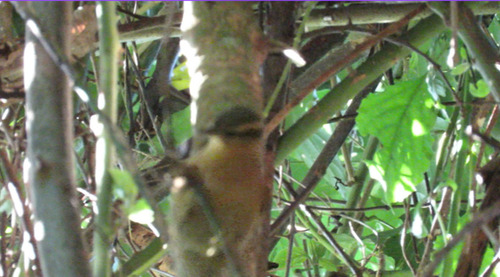
スナイロマユカマドドリ (Anabacerthia lichtensteini) スナイロマユカマドドリ
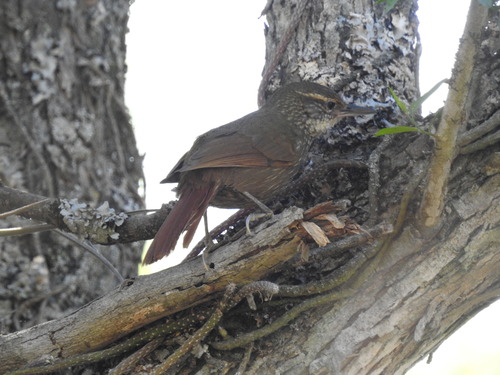
キマユカマドドリ (Syndactyla rufosuperciliata) キマユカマドドリ

メディア

読み込み中…

要点

キマユカマドドリとスナイロマユカマドドリを区別するには、顔の模様と腹部の色合いに注目してください。スナイロマユカマドドリは、はっきりとしたオクラ色のスーパシリウムとアイリングを持ち、明るいオクラ色の喉と均一なバフィーの腹部を示します。一方、キマユカマドドリは、より淡い、広がったスーパシリウム、茶色の先端を持つ白っぽい喉、そして重く縞模様または波状のオリーブブラウンの腹部を持っています。くちばしの構造も異なります:スナイロマユカマドドリは短くてくさび型のくちばしを持ち、キマユカマドドリのくちばしはより太く、わずかに上向きです。幼鳥の腹部も異なります:スナイロマユカマドドリの幼鳥は灰色の先端を持ち、あまり均一ではないバフ色を示し、キマユカマドドリの幼鳥は斑点のある腹部を示します。両種は範囲と生息地が重なるため、これらの詳細に注意を払うことが重要です。

識別のコツ

  1. Supercilium and Eye Ring: スナイロマユカマドドリは、はっきりとしたオクラ色のスーパシリウムとアイリングを示し、暗い後眼帯と赤褐色の耳羽と対照的です。キマユカマドドリのスーパシリウムはより淡く、より黄褐色で、さらに後方に伸び(時にはうなじまで)、全体的に顔の対比が少ないです。
  2. Throat and Malar: スナイロマユカマドドリは明るいオクラ色のバフの喉とマラー領域を持ち、顔の他の部分と対照的に目立ちます。キマユカマドドリの喉は白っぽく、茶色の羽の先端を持ち、しばしば波状または汚れたように見え、豊かなオクラ色のトーンが欠けています。
  3. Underparts: スナイロマユカマドドリの腹部は均一なオクラ色のバフ(上胸部はより豊かで、下部は鈍い)で、ほとんど縞模様がありません。キマユカマドドリの腹部はバフ色の白っぽさで、特に胸部と腹部に強いオリーブブラウンの波状または縞模様があり、後方に向かって薄くなります。この縞模様はキマユカマドドリの重要な特徴です。
  4. Juvenile Underparts: 幼鳥のスナイロマユカマドドリは灰色の先端を持ち、あまり均一ではないバフの腹部を示します。キマユカマドドリの幼鳥は斑点のある(縞模様ではない)腹部を持ちます。下に明確な斑点が見えた場合は、キマユカマドドリを優先してください。
  5. Bill Structure: スナイロマユカマドドリは、属内で最も短く、くさび型のくちばしを持ち、コンパクトで真っ直ぐに見えます。キマユカマドドリのくちばしは太く、長く、わずかに上向きで、重い頭の印象を与えます。
  6. Crown and Back: スナイロマユカマドドリは、ぼんやりとした淡い縞模様のある鈍い灰褐色の冠と赤褐色の背中を持っています。キマユカマドドリの冠は鈍いオリーブブラウンで、後方にぼんやりとした白っぽい縞模様があり、背中は単色のオリーブブラウン(亜種によってはより茶色または栗色になることがあります)。
  7. Tail Color: スナイロマユカマドドリの尾は主に赤褐色で、最も内側の羽の外側には赤褐色の外縁があります。キマユカマドドリの尾は鈍い赤褐色で、亜種によっては栗色の洗いがかかることがありますが、一般的にはスナイロマユカマドドリよりも明るさが少ないです。
  8. Wing Color: スナイロマユカマドドリの翼は赤褐色で、飛行羽の先端はより暗いです。キマユカマドドリの翼は豊かなオリーブブラウンで、背中により密接に一致します。
  9. Face Pattern: スナイロマユカマドドリの顔はよりはっきりとした模様があり、目の後ろに暗い茶色の帯と鈍い赤褐色の耳羽があります。キマユカマドドリの顔はより茶色で、小さなバフの模様があり、全体的に対比が少ないです。
  10. Leg and Bill Color: 両者は似たような脚の色(緑がかった灰色からオリーブ)を持っていますが、スナイロマユカマドドリのくちばしは上部が茶色がかった灰色で、下部が明るい灰色です。キマユカマドドリのくちばしは上部がより暗く、下部がより淡いことがあり、時には青灰色です。
  11. Size and Structure: キマユカマドドリは明らかに大きく、重く、体がよりがっしりしており、尾も長いです。直接比較すると、スナイロマユカマドドリはよりコンパクトに見えます。
  12. Plumage Pitfalls: キマユカマドドリの亜種は、よりオクラ色や栗色のトーンを示すことがありますが、常にスナイロマユカマドドリよりも下部により多くの縞模様や波状模様があります。全体の色調だけに頼らないでください。
  13. Habitat/Range: 両種はその範囲と生息地の多くで重なっているため、両者が存在する場所での位置や森林の種類を主要な区別要因として使用しないでください。
  14. Flight and Perched Views: 飛行中は、腹部の縞模様(キマユカマドドリ)と均一なオクラ色(スナイロマユカマドドリ)に注目してください。止まっているときは、顔の模様とくちばしの形を確認してください。
  15. Sex and Season: 両種は性別による形態的差が少なく、成鳥の羽毛に季節的変化はほとんどありません。年齢に関連する腹部の模様が主な季節的/年齢的手がかりです。

大きさ

キマユカマドドリは常に大きく、重い(17–18 cm、22–33 g; 平均質量 25.6 g)で、スナイロマユカマドドリ(15–17 cm、18–24 g; 平均質量 21.0 g)よりも大きいです [wikidata]。フィールドでは、この違いは微妙かもしれませんが、キマユカマドドリはしばしばよりがっしりとしており、尾も長く見えます。くちばしのサイズも手がかりです:キマユカマドドリのくちばしは明らかに太く、長く、わずかに上向きで、スナイロマユカマドドリの短くてくさび型のくちばしと比較されます。

羽色

行動

両種は活発なカマドドリであり、通常は中層から樹冠で採餌します。情報源には大きな行動の違いは記載されていません。両者は混合種の群れに参加し、密な葉の中を体系的に移動し、長時間オープンに止まることはほとんどありません。

生息環境

両種はその範囲の多く(アルゼンチン、ブラジル、パラグアイ)で重なり、類似の森林生息地に見られます。キマユカマドドリはボリビア、エクアドル、ペルー、ウルグアイにまで範囲が広がっています。生息地だけでは、範囲が重なる場所での診断にはなりません。

より良い説明を送る

比較と同じ項目を使ってください。文章はすぐに公開されます。

To separate Ochre-breasted Foliage-gleaner from Buff-browed Foliage-gleaner, focus on the face pattern and underpart coloration. Ochre-breasted shows a sharply defined ochraceous supercilium and eye ring with a bright ochraceous throat and uniform buffy underparts, while Buff-browed has a paler, more extended supercilium, a whitish throat with brownish tips, and heavily streaked or scalloped, olive-brownish underparts. Bill structure also differs: Ochre-breasted has a shorter, wedge-shaped bill, while Buff-browed's is thicker and slightly upcurved. Juvenile underparts differ: Ochre-breasted juveniles have grayish-tipped, less uniform buff, while Buff-browed juveniles show spotted underparts. Both species overlap in range and habitat, so careful attention to these details is essential.

  1. Supercilium and Eye Ring: Ochre-breasted shows a sharply defined, ochraceous supercilium and eye ring, contrasting with a dark post-ocular band and rufous-ochre ear coverts. Buff-browed's supercilium is paler, more tawny-buff, and extends farther back (sometimes to the nape), with a less contrasting face overall.
  2. Throat and Malar: Ochre-breasted has a bright ochraceous buff throat and malar area, standing out against the rest of the face. Buff-browed's throat is whitish with brownish feather tips, often appearing scalloped or dirty, and lacks the rich ochraceous tone.
  3. Underparts: Ochre-breasted's underparts are uniform ochraceous buff (richer on the upper breast, duller below), with little or no streaking. Buff-browed's underparts are buffy whitish with strong olive-brown scalloping or streaks, especially on the breast and belly, fading toward the rear. This streaking is a key mark for Buff-browed.
  4. Juvenile Underparts: Juvenile Ochre-breasted shows grayish-tipped, less uniform buff underparts; Buff-browed juveniles have spotted (not streaked) underparts. If you see clear spots below, favor Buff-browed.
  5. Bill Structure: Ochre-breasted has the shortest, wedge-shaped bill in its genus, appearing compact and straight. Buff-browed's bill is thicker, longer, and slightly upcurved, giving a heavier-headed look.
  6. Crown and Back: Ochre-breasted has a dull gray-brown crown with vague pale streaks and a rufescent brown back. Buff-browed's crown is dull olive-brown with vague whitish streaks at the rear, and the back is plain olive-brown (sometimes browner or more chestnut in subspecies).
  7. Tail Color: Ochre-breasted's tail is mostly rufous with rufescent brown outer webs on the innermost feathers. Buff-browed's tail is dull rufous, sometimes with a chestnut wash in some subspecies, but generally less bright than Ochre-breasted.
  8. Wing Color: Ochre-breasted's wings are rufous brown with duskier tips on the flight feathers. Buff-browed's wings are rich olivaceous brown, matching the back more closely.
  9. Face Pattern: Ochre-breasted's face is more sharply marked, with a dark brownish band behind the eye and dull rufous-ochre ear coverts. Buff-browed's face is browner with small buff markings and less contrast overall.
  10. Leg and Bill Color: Both have similar leg colors (greenish gray to olive), but Ochre-breasted's bill is brownish gray above, light gray below; Buff-browed's is darker above, paler below, sometimes blue-gray.
  11. Size and Structure: Buff-browed is noticeably larger and heavier, with a bulkier body and longer tail. In direct comparison, Ochre-breasted looks more compact.
  12. Plumage Pitfalls: Subspecies of Buff-browed may show more ochraceous or chestnut tones, but always with more streaking or scalloping below than Ochre-breasted. Do not rely on overall color tone alone.
  13. Habitat/Range: Both species overlap in much of their range and habitat, so do not use location or forest type as a primary separator where both occur.
  14. Flight and Perched Views: In flight, focus on underpart streaking (Buff-browed) versus uniform ochraceous (Ochre-breasted). Perched, check the face pattern and bill shape.
  15. Sex and Season: Both species are sexually monomorphic and show little seasonal change in adult plumage. Age-related underpart pattern is the main seasonal/age clue.

Buff-browed Foliage-gleaner is consistently larger and heavier (17–18 cm, 22–33 g; mean mass 25.6 g) than Ochre-breasted (15–17 cm, 18–24 g; mean mass 21.0 g) [wikidata]. In the field, this difference may be subtle, but Buff-browed often appears bulkier and longer-tailed. Bill size is also a clue: Buff-browed's bill is noticeably thicker and longer, with a slight upcurve, compared to the shorter, wedge-shaped bill of Ochre-breasted.

  • Juveniles: Ochre-breasted juveniles have less uniformly colored underparts with grayish tips, while Buff-browed juveniles show spotted (not streaked) underparts. This difference is subtle but can be useful if seen well.
  • Adults: Ochre-breasted has a sharply defined ochraceous supercilium and eye ring, a bright ochraceous throat and malar, and uniform ochraceous-buff underparts. Its back and wings are rufescent brown, and the tail is mostly rufous. Buff-browed, in contrast, has a paler, longer supercilium (tawny-buff to pale, sometimes extending to the nape), a whitish throat with brownish tips, and underparts that are buffy whitish with olive-brown feather edges, creating a scalloped or streaked effect. The back and wings are olive-brown, and the tail is dull rufous. Subspecies of Buff-browed may show more chestnut or ochraceous tones, but always with more streaking or scalloping below than Ochre-breasted.

Both species are active foliage-gleaners, typically foraging in the midstory to canopy. No major behavioral differences are noted in the sources. Both may join mixed-species flocks and move methodically through dense foliage, rarely perching in the open for long.

Both species overlap in much of their range (Argentina, Brazil, Paraguay) and are found in similar forested habitats. Buff-browed has a wider range, extending into Bolivia, Ecuador, Peru, and Uruguay. Habitat alone is not diagnostic where their ranges overlap.

変更を破棄しますか?

保存していない編集があります。今離れると失われます。

スナイロマユカマドドリ · キマユカマドドリ · 苦手な鳥