

Motmot

ハシグロヒタキ 対 アトラスハシグロヒタキ

Oenanthe oenanthe 対 Oenanthe seebohmi

ハシグロヒタキとアトラスハシグロヒタキのクイズ
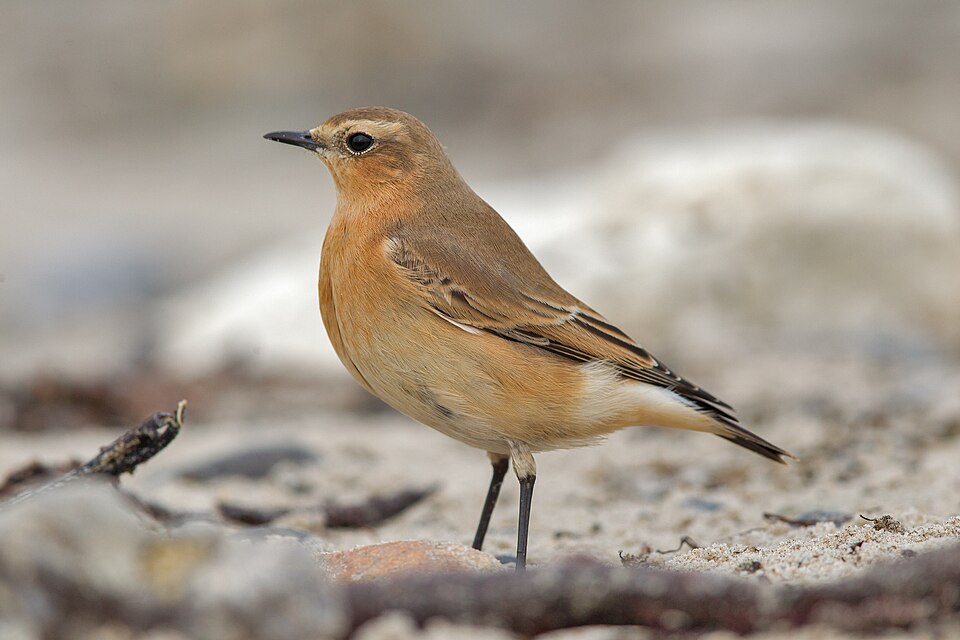
ハシグロヒタキ (Oenanthe oenanthe) ハシグロヒタキ
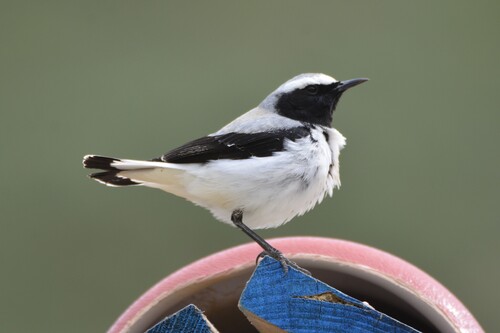
アトラスハシグロヒタキ (Oenanthe seebohmi) アトラスハシグロヒタキ

メディア

読み込み中…

要点

アトラスハシグロヒタキとハシグロヒタキを区別する最も信頼できるフィールドマークは、繁殖羽衣の成鳥オスの目を引く黒い喉、顔、耳羽です。これはハシグロヒタキには見られません。メスや非繁殖の個体はより難しいですが、アトラスは額により多くの白を示し、尾の先端には黒が少ない傾向があります。腹部はしばしばより白く、翼の下の羽は黒っぽいことが多いです。両種は白い尾羽と黒いT字型の尾のパターンを共有しているため、オスの頭部と喉の色、他の羽衣における微妙な尾と腹部の違いに注目してください。幼鳥と初冬の鳥は非常に似ており、フィールドでほぼ区別できません。

識別のコツ

  1. 繁殖羽衣の成鳥オス: 固体の黒い喉、顔、ロア、耳羽を探してください。これがあればアトラスハシグロヒタキです。ハシグロヒタキのオスは黒い喉や顔を示すことはなく、黒いマスクと翼のみです。
  2. 尾の黒の範囲: アトラスハシグロヒタキは尾の先端に黒が少ないことがあり、白が外側の尾羽に沿ってさらに伸びることがあります。ハシグロヒタキは尾の先端により顕著な黒い逆T字があります。これは微妙で、他のマークと組み合わせて使用するのが最適です。
  3. 額の色: アトラスハシグロヒタキはハシグロヒタキよりも額により多くの白を示すことがあります、特にオスの場合。
  4. 腹部: アトラスハシグロヒタキはハシグロヒタキのより茶色がかったトーンに比べて、しばしば腹部がより白いです、特にオスの場合。
  5. 翼の下の羽と腋羽: アトラスハシグロヒタキは黒い翼の下の羽と腋羽を持ち、飛んでいる時や羽繕いの時に見られると有用なマークになります。ハシグロヒタキはこの特徴を示しません。
  6. メスと非繁殖の鳥: アトラスハシグロヒタキのメスと非繁殖のオスは、あごやロアに変動する黒または黒っぽい茶色を示すことがあり、時には茶色、灰色、または砂色で先端が飾られています。ハシグロヒタキのメスは喉や顔に黒を示すことはありません。
  7. 繁殖後の換羽: アトラスハシグロヒタキのオスは換羽後も斑点のある黒い喉を保持しますが、ハシグロヒタキのオスは黒いマスクを失い、メスに似てきます。
  8. 幼鳥/初冬の鳥: 両種はこの年齢で非常に似ており、白い尾羽と黒いT尾のパターンを共有しています。この羽衣では信頼できるフィールドマークはありません。
  9. 歌: よく聞こえれば、アトラスハシグロヒタキの歌は遅く、低音で、より明確なフレーズがありますが、これは微妙で、常に役立つわけではありません。
  10. 生息地と分布: ヨーロッパ、アジア、またはアメリカでは、どのハシグロヒタキもほぼ確実にハシグロヒタキです。北アフリカのマグレブ地域では繁殖期にアトラスが可能で、オスは特徴的です。北アフリカの移動中には両方が発生する可能性があるため、羽衣のマークが重要です。
  11. サイズと構造: 両種はサイズと構造が似ており、直立した姿勢と似たような印象を持っています。サイズや形状に頼って区別しないでください。
  12. 尾のパターン: 両方とも白い尾羽と黒い逆T字型の尾のパターンを示します。これは区別にはなりません。
  13. 行動: 両種は似たように行動し、しばしば岩の上や低いポストに直立して止まり、尾を振ります。
  14. 落とし穴: 非繁殖のアトラスハシグロヒタキやメスは、ハシグロヒタキのメスに非常に似ることがあります。喉とあごの色の微妙な違いだけが役立つかもしれませんが、これらも変動する可能性があります。
  15. 疑わしい場合: 黒い喉や顔が見えず、アトラスハシグロヒタキの限られた繁殖範囲の外にいる場合は、ハシグロヒタキにデフォルトしてください。

大きさ

両種はサイズが非常に似ており、ハシグロヒタキは長さ14.5〜16 cm、翼幅26〜32 cm、体重17〜30 g [wikipedia]です。アトラスハシグロヒタキは小型の雀類として説明されており、大きいとも小さいとも言及されていないため、フィールドでは本質的に同じサイズであると期待してください。サイズは信頼できる区別要因ではありません。

羽色

行動

両種は地面に住み、直立しており、しばしば岩や低いポストに止まり、頻繁に尾を振ります。フィールドでの区別に役立つ行動の違いは記載されていません。両方とも昆虫食性で、開けた石の多い生息地で餌を探します。

生息環境

ハシグロヒタキはヨーロッパ、アジア、北アメリカの一部で開けた石の多い地域で繁殖しますが、アトラスハシグロヒタキは繁殖のために北アフリカのマグレブ地域に制限され、西サヘルで冬を越します。繁殖期に北アフリカの外にいる場合、ほぼ確実にハシグロヒタキを見ていることになります。重複は北アフリカの移動中にのみ可能であり、それでもハシグロヒタキははるかに広範囲に分布しています。

声

両種は似たような鳴き声を持っていますが、アトラスハシグロヒタキの歌はわずかに遅く、低音で、ハシグロヒタキの笛のような、パリパリした歌に比べて、より明確な上昇と下降のフレーズがあります。それ以外の鳴き声は非常に似ており、フィールドで信頼できる区別はできません。

より良い説明を送る

比較と同じ項目を使ってください。文章はすぐに公開されます。

The most reliable field mark to separate Atlas Wheatear from Northern Wheatear is the adult male's striking black throat, face, and ear coverts in breeding plumage—features never shown by Northern Wheatear. Females and non-breeding birds are trickier, but Atlas tends to show more white on the forehead and less black at the tail tip, with underparts often whiter and underwing coverts blackish. Both species share a white rump and black T-shaped tail pattern, so focus on head and throat color in males, and subtle tail and underpart differences in other plumages. Juvenile and first-winter birds are very similar and can be nearly inseparable in the field.

  1. Adult male in breeding plumage: Look for a solid black throat, face, lores, and ear coverts—if present, you have Atlas Wheatear. Northern Wheatear males never show a black throat or face, only a black mask and wings.
  2. Extent of black on tail: Atlas Wheatear may show less extensive black at the tail tip, with white extending further along the outer tail feathers. Northern Wheatear has a more pronounced black inverted T at the tail tip. This is subtle and best used in combination with other marks.
  3. Forehead color: Atlas Wheatear can show more white on the forehead than Northern Wheatear, especially in males.
  4. Underparts: Atlas Wheatear often has whiter underparts compared to the buffier tones of Northern Wheatear, especially in males.
  5. Underwing coverts and axillaries: Atlas Wheatear has black underwing coverts and axillaries, which can be a useful mark if seen in flight or when preening. Northern Wheatear does not show this feature.
  6. Females and non-breeding birds: Atlas Wheatear females and non-breeding males may show variable black or blackish-brown on the chin and lores, sometimes tipped with buff, grey, or sandy. Northern Wheatear females never show black on the throat or face.
  7. Post-breeding molt: Atlas Wheatear males retain a spotted black throat after molt, while Northern Wheatear males lose their black mask and become more like females.
  8. Juvenile/first-winter birds: Both species are extremely similar at this age, sharing the white rump and black T tail pattern. No reliable field marks separate them in this plumage.
  9. Song: If heard well, Atlas Wheatear's song is slower and lower-pitched with more distinct phrasing, but this is subtle and not always helpful.
  10. Habitat and range: In Europe, Asia, or the Americas, any wheatear is almost certainly Northern. In the Maghreb region of North Africa during the breeding season, Atlas is possible and males are distinctive. On migration in North Africa, both may occur, so plumage marks are essential.
  11. Size and structure: Both species are similar in size and structure, with upright stance and similar jizz; do not rely on size or shape for separation.
  12. Tail pattern: Both show a white rump and black inverted T tail pattern; this is not a separator.
  13. Behavior: Both species behave similarly, often perching upright on rocks and flicking their tails.
  14. Pitfalls: Beware of non-breeding and female Atlas Wheatears, which can closely resemble Northern Wheatear females. Only subtle differences in throat and chin coloration may help, and even these can be variable.
  15. When in doubt: If you cannot see a black throat or face, and are outside the Atlas Wheatear's limited breeding range, default to Northern Wheatear.

Both species are very similar in size, with Northern Wheatear measuring 14.5–16 cm in length and having a wingspan of 26–32 cm, weighing 17–30 g [wikipedia]. Atlas Wheatear is described as a small passerine and is not noted as being larger or smaller, so expect them to be essentially the same size in the field. Size is not a reliable separator.

  • Adult breeding males: Atlas Wheatear stands out with a solid black throat, face, lores, and ear coverts, sometimes extending onto the upper breast. Northern Wheatear males never show a black throat or face; instead, they have a black mask and wings, with a buff throat and pale underparts. Atlas males may also show more white on the forehead and a less extensive black tip to the tail, with white sometimes extending along the outer tail feathers.
  • Females and non-breeding birds: Both species are pale brown above and buff below, but Atlas females can be greyer above, sometimes with brown ear coverts and variable black or blackish-brown on the chin and lores, tipped with buff or sandy. Northern Wheatear females lack any black on the throat or face. After molt, Atlas males and females both become paler brown, but the black throat of males is still often visible, though spotted with pale tips.
  • Juvenile/first-winter: No distinctive upperwing or flight pattern differences are described; both are very similar and can be nearly impossible to separate reliably in the field at this age. Both show the characteristic white rump and black T-shaped tail pattern.

Both species are ground-dwelling, upright, and often perch on rocks or low posts, frequently flicking their tails. No behavioral differences are noted that would help in field separation. Both are insectivorous and forage in open, stony habitats.

Northern Wheatear breeds across open stony country in Europe, Asia, and parts of North America, while Atlas Wheatear is restricted to the Maghreb region of North Africa for breeding and winters in the western Sahel. If you are outside North Africa in the breeding season, you are almost certainly seeing a Northern Wheatear. Overlap is possible only on migration in North Africa, and even then, Northern is much more widespread.

Both species have similar calls, but Atlas Wheatear's song is slightly slower and lower-pitched, with more distinct rising and falling phrases compared to Northern Wheatear's whistling, crackly song. Calls are otherwise very similar and not reliably separable in the field.

変更を破棄しますか?

保存していない編集があります。今離れると失われます。

ハシグロヒタキ · アトラスハシグロヒタキ · 苦手な鳥