

Motmot

ハシビロガモ 対 マミジロカルガモ

Spatula clypeata 対 Anas superciliosa

ハシビロガモとマミジロカルガモのクイズ
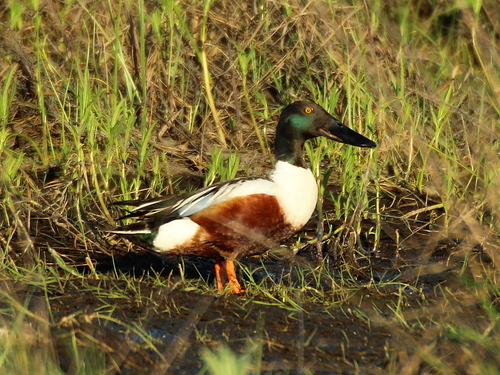
ハシビロガモ (Spatula clypeata) ハシビロガモ
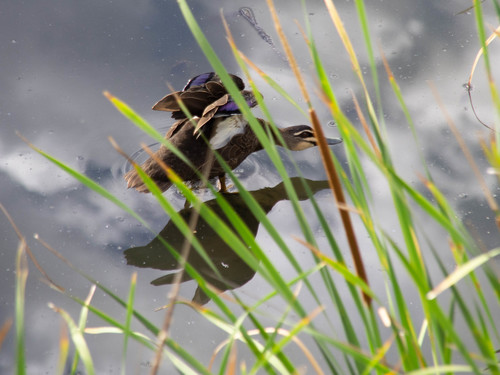
マミジロカルガモ (Anas superciliosa) マミジロカルガモ

メディア

読み込み中…

要点

ハシビロガモとマミジロカルガモを区別するための最も信頼できるフィールドマークは、ハシビロガモの独特で広いスプーン状のくちばしです。これはマミジロカルガモの標準的なくちばしよりも明らかに長く、幅が広く、遠くからでも目立ちます。飛行中、成鳥のオスのハシビロガモは、特徴的な淡い青色の前羽と白で縁取られた緑のスペキュラムを示しますが、マミジロカルガモは緑のスペキュラムを示すものの、青と白の羽のパネルはありません。メスとエクリプスのオスのハシビロガモは、止まっているときにマミジロカルガモと混同されることがありますが、くちばしの形状と(飛行中の)青い前羽は依然として特徴的です。両種はダブリングダックですが、その構造、羽のパターン、顔のマーキングは、注意深い観察によって明確に区別できます。

識別のコツ

  1. Bill shape is the single most reliable mark: ハシビロガモは長く、広いスプーン状の(スプラチュレート)くちばしを持ち、基部よりも先端がはるかに広く、遠くからでもシルエットで見えるほどです。マミジロカルガモは標準的なくちばしを持ち、まっすぐで均等にテーパーしています。
  2. In flight, look for the forewing color: 成鳥のオスとメスのハシビロガモは、緑のスペキュラムから白い縁で分けられた淡い青色の前羽のパッチを示します。マミジロカルガモは上羽に青や白を示すことはなく、緑のスペキュラムと淡い下羽のみです。
  3. Facial pattern: マミジロカルガモは大胆な淡いスーペリシリウム(眉のストライプ)と暗いアイストライプを持ち、すべての羽衣で顔に強いストライプの外観を与えます。ハシビロガモ(メス/エクリプスのオス)は強いストライプのない平坦な顔を持ち、繁殖期のオスは清潔な白い胸と暗緑の頭を持っています。
  4. Male breeding plumage: ハシビロガモのオスは暗緑の頭、白い胸、栗色の側面を持ち、マミジロカルガモにはこれらは示されません。
  5. Female/eclipsed male confusion: 両者はまだらな茶色に見えることがありますが、ハシビロガモのくちばしは常に広くスプラチュレートで、顔は平坦です。マミジロカルガモの顔は常に大胆にパターン化されています。
  6. Leg color: ハシビロガモは明るいオレンジ色の脚を持ち、よく見える場合は支持的なマークとなることがあります。
  7. Feeding behavior: もしくちばしを左右に振りながら水から食物を濾し取っているカモを見たら、それはおそらくハシビロガモです。マミジロカルガモはこの特化した採餌行動を示しません。
  8. Size and structure: マミジロカルガモはより大きく、がっしりしていますが、重なりがあります。サイズは二次的な手がかりとしてのみ使用してください。
  9. Habitat and context: オーストラリア/ニュージーランドでは、マミジロカルガモは一般的で期待される存在ですが、ハシビロガモは珍しい漂流者です。フィールドマークが明確な場合のみハシビロガモを考慮してください。
  10. Eclipse plumage pitfalls: エクリプスのハシビロガモのオスはメスに似ていますが、飛行中に青い前羽とスプラチュレートのくちばしを保持します。
  11. Juvenile/immature confusion: 幼鳥のハシビロガモは、飛行中にスプラチュレートのくちばしと青い前羽を示します。マミジロカルガモの幼鳥は成鳥と同じ顔のストライプを持ち、羽に青を欠いています。
  12. Mixed flocks: 両種が一緒にいるのを見た場合、ハシビロガモはくちばしの形と飛行パターンで際立ちます。
  13. Vocalizations: これらの二種の間で信頼できる診断にはなりません。
  14. Hybrid confusion: マミジロカルガモはマガモと交雑しますが、ハシビロガモとは交雑しません。ここでの交雑は混乱の可能性が低いです。
  15. When in doubt: 飛行中のくちばしの形と羽のパターンに焦点を当ててください。これらはすべての年齢と性別にわたって最も一貫した観察可能な違いです。

大きさ

マミジロカルガモはより大きく、重い種で、典型的な体重は約1035 g [wikidata]で、ハシビロガモの範囲は500–800 g(時には1000 gまで)[wikipedia]です。マミジロカルガモはまた、ハシビロガモ(44–52 cm)よりも平均して長く(54–61 cm)なります。フィールドでは、マミジロカルガモはがっしりとして重い体に見え、ハシビロガモはより細身で全体的にやや小さいです。しかし、特に大きなハシビロガモや小さなマミジロカルガモと重なりが発生する可能性があるため、サイズだけに頼って識別するべきではありません。

羽色

行動

両種はダブリングダックで、水面で逆さになったり、ダブリングしたりして餌を食べます。ハシビロガモはフィルター採餌に特化しており、くちばしを左右に振って小さな無脊椎動物や植物性物質を濾し取ります。この採餌スタイルは特徴的で、観察された場合は行動の手がかりとなることがあります。マミジロカルガモは典型的なダブリングダックのように餌を食べ、逆さになったり、草を食べたりします。ハシビロガモは繁殖期以外はあまり群れを作らず、小さな群れで見られることが多いのに対し、マミジロカルガモは社交的であるとされています。両種は湿地、湖、湿地帯によく出没します。

生息環境

ハシビロガモは北半球全体に広がっており、北ユーラシアと北アメリカで繁殖し、さらに南で越冬します。オーストラリアとニュージーランドでは、珍しい漂流者です。マミジロカルガモはオーストラリア、ニュージーランド、ニューギニア、そして多くの太平洋の島々に常駐し、一般的です。オーストラレーシアでは、マミジロカルガモはほとんどの湿地でのデフォルトのダブリングダックですが、ハシビロガモは例外的であり、強いフィールドマークがある場合のみ考慮されるべきです。オーストラリア/ニュージーランドでは漂流者のハシビロガモとの重なりが可能ですが、混乱が最も起こりやすいです。

声

マミジロカルガモはマガモのように、大きくて騒々しいクワック音を出します。特にメスがそうです。ハシビロガモの声はメモに記載されておらず、これらの二種を区別するための主要なフィールドマークではありません。声はほとんどのフィールド状況で診断的である可能性は低いです。

より良い説明を送る

比較と同じ項目を使ってください。文章はすぐに公開されます。

The most reliable field mark for separating Northern Shoveler from Pacific Black Duck is the shoveler’s unique, broad, spatulate bill—noticeably longer and wider than the Pacific Black Duck’s standard duck bill, and obvious even at a distance. In flight, adult male shovelers show a distinctive pale blue forewing and a green speculum bordered by white, while Pacific Black Ducks show a green speculum but lack the blue and white wing paneling. Female and eclipse male shovelers can be confused with Pacific Black Ducks when perched, but the bill shape and (in flight) the blue forewing remain distinctive. Both species are dabbling ducks, but their structure, wing pattern, and facial markings provide clear separation with careful observation.

  1. Bill shape is the single most reliable mark: Northern Shoveler has a long, broad, spoon-shaped (spatulate) bill, much wider at the tip than the base, visible even at a distance or in silhouette. Pacific Black Duck has a standard duck bill, straight and evenly tapered.
  2. In flight, look for the forewing color: Adult male and female Northern Shovelers show a pale blue forewing patch, separated from the green speculum by a white border. Pacific Black Duck never shows blue or white on the upperwing—only a green speculum and pale underwing.
  3. Facial pattern: Pacific Black Duck has a bold pale supercilium (eyebrow stripe) and a dark eye-stripe, giving the face a strongly striped look in all plumages. Northern Shoveler (female/eclipsed male) has a plain face with no strong stripes, and breeding males have a clean white breast and dark green head.
  4. Male breeding plumage: Northern Shoveler drake has a dark green head, white breast, and chestnut flanks—none of which are shown by Pacific Black Duck.
  5. Female/eclipsed male confusion: Both can appear mottled brown, but the shoveler’s bill is always broad and spatulate, and the face is plain. Pacific Black Duck’s face is always boldly patterned.
  6. Leg color: Northern Shoveler has bright orange-red legs, which can be a supporting mark if seen well.
  7. Feeding behavior: If you see a duck swinging its bill side-to-side and straining food from the water, it is likely a Northern Shoveler. Pacific Black Duck does not show this specialized feeding action.
  8. Size and structure: Pacific Black Duck is larger and bulkier, but there is overlap. Use size only as a secondary clue.
  9. Habitat and context: In Australia/New Zealand, Pacific Black Duck is common and expected; Northern Shoveler is a rare vagrant. Only consider shoveler if the field marks are clear.
  10. Eclipse plumage pitfalls: Male Northern Shovelers in eclipse resemble females but retain the blue forewing in flight and the spatulate bill.
  11. Juvenile/immature confusion: Juvenile shovelers still show the spatulate bill and blue forewing in flight; Pacific Black Duck juveniles have the same facial stripes as adults and lack blue in the wing.
  12. Mixed flocks: If you see both species together, the shoveler will stand out by bill shape and flight pattern.
  13. Vocalizations: Not reliably diagnostic between these two species.
  14. Hybrid confusion: Pacific Black Duck hybridizes with Mallard, but not with Northern Shoveler; hybrids are not a likely confusion here.
  15. When in doubt: Focus on bill shape and wing pattern in flight—these are the most consistent and observable differences across all ages and sexes.

Pacific Black Duck is the larger and heavier species, with a typical body mass of about 1035 g [wikidata], compared to the Northern Shoveler’s range of 500–800 g (occasionally up to 1000 g) [wikipedia]. Pacific Black Duck also averages longer (54–61 cm) than Northern Shoveler (44–52 cm). In the field, Pacific Black Duck appears bulkier and heavier-bodied, while Northern Shoveler is more slender and slightly smaller overall. However, size overlap can occur, especially with large shovelers or small Pacific Black Ducks, so size alone should not be relied upon for identification.

  • Juvenile/immature/flight views: For all ages, Northern Shoveler in flight (especially males) shows a pale blue forewing (shoulder) patch, separated from the green speculum by a white border. Females and eclipse males retain the blue forewing, though less vivid. Pacific Black Duck, in all plumages, lacks the blue forewing and white border, showing instead a green speculum and pale underwing, with no blue or white paneling. The Pacific Black Duck’s upperwing is otherwise dark, and the speculum is not bordered by white.

  • Adult male (breeding): Northern Shoveler drake has an iridescent dark green head (less intense than a Mallard), white breast, chestnut flanks, and a black or dark grey bill. Pacific Black Duck is overall dark brown with a paler face, dark crown, and bold pale supercilium (eyebrow stripe), with no white breast or chestnut flanks.

  • Female/eclipsed male: Female Northern Shoveler is mottled brown, similar to female Mallard, but always with a large, broad, spatulate bill (grey tinged with orange). Pacific Black Duck female is also brown but with a distinctive pale face and strong facial stripes (supercilium and dark eye-stripe), and a normal duck bill. In all plumages, Pacific Black Duck’s face is more strongly patterned than the shoveler’s.

  • Leg color: Northern Shoveler has bright orange-red legs; Pacific Black Duck’s leg color is not specified as a field mark in the sources.

Both species are dabbling ducks, feeding by upending or dabbling at the water’s surface. Northern Shoveler is specialized for filter-feeding, swinging its bill side-to-side to strain small invertebrates and plant matter, thanks to its comb-like lamellae. This feeding style is distinctive and can be a behavioral clue if observed. Pacific Black Duck feeds more like a typical dabbling duck, upending and grazing. Northern Shoveler is less gregarious outside the breeding season, often in small flocks, while Pacific Black Duck is described as sociable. Both species frequent marshes, lakes, and wetlands.

Northern Shoveler is widespread across the Northern Hemisphere, breeding in northern Eurasia and North America, and wintering further south. In Australia and New Zealand, it is a rare vagrant. Pacific Black Duck is resident and common throughout Australia, New Zealand, New Guinea, and many Pacific islands. In Australasia, Pacific Black Duck is the default dabbling duck in most wetlands, while Northern Shoveler is exceptional and should be considered only with strong field marks. Overlap is possible only with vagrant shovelers in Australia/New Zealand, where confusion is most likely.

Pacific Black Duck, like Mallard, produces a loud, raucous quack, especially the female. Northern Shoveler’s voice is not described in the notes, and is not a primary field mark for separation between these two species. Voice is not likely to be diagnostic in most field situations.

変更を破棄しますか?

保存していない編集があります。今離れると失われます。

ハシビロガモ · マミジロカルガモ · 苦手な鳥