

Mestolone vs Pacific Black Duck
Spatula clypeata contro Anas superciliosa
Fai un quiz con Mestolone e Pacific Black Duck
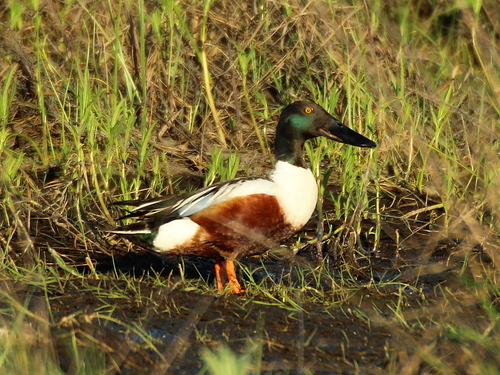 Mestolone
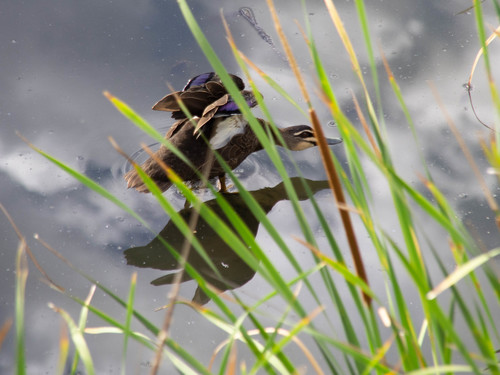 Pacific Black Duck
In breve
Il segno di campo più affidabile per separare il Mestolone dal Pacific Black Duck è il becco unico, largo e spatolato del mestolone—notevolmente più lungo e più largo rispetto al becco standard del Pacific Black Duck, e ovvio anche a distanza. In volo, i mestoloni maschi adulti mostrano un distintivo avannoto blu pallido e uno speculum verde bordato di bianco, mentre i Pacific Black Ducks mostrano uno speculum verde ma mancano del pannello blu e bianco sulle ali. Le femmine e i maschi in eclipse del mestolone possono essere confusi con i Pacific Black Ducks quando sono posati, ma la forma del becco e (in volo) l'avannoto blu rimangono distintivi. Entrambe le specie sono anatre di superficie, ma la loro struttura, il motivo delle ali e le marcature facciali forniscono una chiara separazione con un'attenta osservazione.
Consigli di identificazione
- La forma del becco è il segno più affidabile: Il Mestolone ha un becco lungo, largo e a forma di cucchiaio (spatolato), molto più largo alla punta che alla base, visibile anche a distanza o in silhouette. Il Pacific Black Duck ha un becco standard da anatra, dritto e uniformemente affusolato.
- In volo, cerca il colore dell'avannoto: I mestoloni maschi e femmine adulti mostrano una macchia di avannoto blu pallido, separata dallo speculum verde da un bordo bianco. Il Pacific Black Duck non mostra mai blu o bianco sull'ala superiore—solo uno speculum verde e un sottogola pallido.
- Motivo facciale: Il Pacific Black Duck ha un audace supercilium pallido (striscia sopra l'occhio) e una striscia scura attorno all'occhio, dando al viso un aspetto fortemente striato in tutte le livree. Il Mestolone (femmina/maschio in eclipse) ha un viso semplice senza forti strisce, e i maschi in riproduzione hanno un petto bianco pulito e una testa verde scuro.
- Livrea di riproduzione maschile: Il maschio Mestolone ha una testa verde scuro, un petto bianco e fianchi castani—nessuno dei quali è mostrato dal Pacific Black Duck.
- Confusione femmina/maschio in eclipse: Entrambi possono apparire macchiati di marrone, ma il becco del mestolone è sempre largo e spatolato, e il viso è semplice. Il viso del Pacific Black Duck è sempre audacemente decorato.
- Colore delle gambe: Il Mestolone ha gambe di un brillante rosso-arancio, che possono essere un segno di supporto se viste bene.
- Comportamento alimentare: Se vedi un'anatra che muove il becco da un lato all'altro e filtra il cibo dall'acqua, è probabile che sia un Mestolone. Il Pacific Black Duck non mostra questa azione alimentare specializzata.
- Dimensioni e struttura: Il Pacific Black Duck è più grande e massiccio, ma c'è sovrapposizione. Usa le dimensioni solo come indizio secondario.
- Habitat e contesto: In Australia/Nuova Zelanda, il Pacific Black Duck è comune e atteso; il Mestolone è un raro vagabondo. Considera il mestolone solo se i segni di campo sono chiari.
- Insidie della livrea in eclipse: I maschi Mestoloni in eclipse somigliano alle femmine ma mantengono l'avannoto blu in volo e il becco spatolato.
- Confusione giovanile/immatura: I mestoloni giovani mostrano ancora il becco spatolato e l'avannoto blu in volo; i giovani Pacific Black Duck hanno le stesse strisce facciali degli adulti e mancano di blu nell'ala.
- Fagotti misti: Se vedi entrambe le specie insieme, il mestolone si distinguerà per la forma del becco e il motivo di volo.
- Vocalizzazioni: Non sono affidabilmente diagnostiche tra queste due specie.
- Confusione ibrida: Il Pacific Black Duck si ibrida con il Germano reale, ma non con il Mestolone; gli ibridi non sono una confusione probabile qui.
- Quando hai dubbi: Concentrati sulla forma del becco e sul motivo delle ali in volo—questi sono le differenze più consistenti e osservabili in tutte le età e i sessi.
Taglia
Il Pacific Black Duck è la specie più grande e pesante, con una massa corporea tipica di circa 1035 g [wikidata], rispetto al range del Mestolone di 500–800 g (occasionale fino a 1000 g) [wikipedia]. Il Pacific Black Duck è anche mediamente più lungo (54–61 cm) rispetto al Mestolone (44–52 cm). Sul campo, il Pacific Black Duck appare più massiccio e pesante, mentre il Mestolone è più snello e leggermente più piccolo nel complesso. Tuttavia, può verificarsi sovrapposizione di dimensioni, specialmente con mestoloni grandi o piccoli Pacific Black Ducks, quindi le dimensioni da sole non dovrebbero essere utilizzate per l'identificazione.
Piumaggio
-
Giovanile/immaturo/viste in volo: Per tutte le età, il Mestolone in volo (soprattutto i maschi) mostra una macchia di avannoto blu pallido (spalla), separata dallo speculum verde da un bordo bianco. Le femmine e i maschi in eclipse mantengono l'avannoto blu, anche se meno vivido. Il Pacific Black Duck, in tutte le livree, manca dell'avannoto blu e del bordo bianco, mostrando invece uno speculum verde e un sottogola pallido, senza pannellatura blu o bianca. L'ala superiore del Pacific Black Duck è altrimenti scura, e lo speculum non è bordato di bianco.
-
Maschio adulto (riproduzione): Il maschio Mestolone ha una testa verde scuro iridescente (meno intensa di un Germano reale), un petto bianco, fianchi castani e un becco nero o grigio scuro. Il Pacific Black Duck è complessivamente marrone scuro con un viso più chiaro, una corona scura e un audace supercilium pallido (striscia sopra l'occhio), senza petto bianco o fianchi castani.
-
Femmina/maschio in eclipse: La femmina Mestolone è macchiata di marrone, simile alla femmina Germano reale, ma sempre con un becco grande, largo e spatolato (grigio con sfumature arancioni). La femmina Pacific Black Duck è anch'essa marrone ma con un viso distintivo pallido e forti strisce facciali (supercilium e striscia scura attorno all'occhio), e un becco normale da anatra. In tutte le livree, il viso del Pacific Black Duck è più fortemente decorato di quello del mestolone.
-
Colore delle gambe: Il Mestolone ha gambe di un brillante rosso-arancio; il colore delle gambe del Pacific Black Duck non è specificato come segno di campo nelle fonti.
Comportamento
Entrambe le specie sono anatre di superficie, alimentandosi capovolgendosi o grufolando sulla superficie dell'acqua. Il Mestolone è specializzato per l'alimentazione per filtraggio, muovendo il becco da un lato all'altro per filtrare piccoli invertebrati e materia vegetale, grazie alle sue lamelle a forma di pettine. Questo stile alimentare è distintivo e può essere un indizio comportamentale se osservato. Il Pacific Black Duck si alimenta più come un'anatra di superficie tipica, capovolgendosi e pascolando. Il Mestolone è meno gregario al di fuori della stagione di riproduzione, spesso in piccoli gruppi, mentre il Pacific Black Duck è descritto come socievole. Entrambe le specie frequentano paludi, laghi e zone umide.
Habitat
Il Mestolone è diffuso nell'emisfero settentrionale, riproducendosi nell'Eurasia settentrionale e in Nord America, e svernando più a sud. In Australia e Nuova Zelanda, è un raro vagabondo. Il Pacific Black Duck è residente e comune in tutta l'Australia, Nuova Zelanda, Nuova Guinea e molte isole del Pacifico. In Australasia, il Pacific Black Duck è l'anatra di superficie predefinita nella maggior parte delle zone umide, mentre il Mestolone è eccezionale e dovrebbe essere considerato solo con segni di campo forti. La sovrapposizione è possibile solo con mestoloni vagabondi in Australia/Nuova Zelanda, dove la confusione è più probabile.
Voce
Il Pacific Black Duck, come il Germano reale, produce un forte e rauco quack, soprattutto la femmina. La voce del Mestolone non è descritta nelle note, e non è un segno di campo primario per la separazione tra queste due specie. La voce non è probabile che sia diagnostica nella maggior parte delle situazioni di campo.