

Motmot

Northern Royal Albatross 対 Southern Royal Albatross

Diomedea sanfordi 対 Diomedea epomophora

Northern Royal AlbatrossとSouthern Royal Albatrossのクイズ
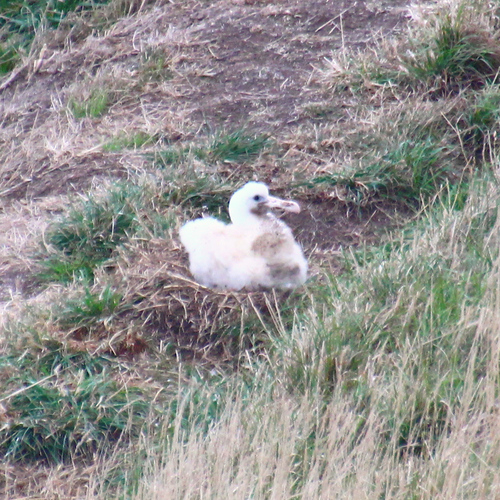
Northern Royal Albatross (Diomedea sanfordi) Northern Royal Albatross
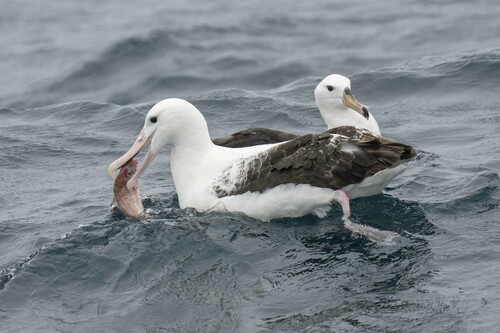
Southern Royal Albatross (Diomedea epomophora) Southern Royal Albatross

メディア

読み込み中…

要点

ノーザンロイヤルアルバトロスとサザンロイヤルアルバトロスを区別する最も信頼できる方法は、特に飛行中や翼を広げた止まっている鳥での上翼のパターンによるものです。成鳥および若成鳥のサザンは上翼に広範囲に白が見られますが、ノーザンは年齢に関係なくほぼ完全に暗いままです。両者の幼鳥は似て見えることがありますが、サザンは成熟するにつれて上翼の覆羽や先端に白い斑点が現れ始めますが、ノーザンはそうなりません。サイズは安全なフィールドマークではなく、両者は最大のアルバトロスの中にあり、広範囲に重なっています。特に若成鳥や成鳥で翼のパターンに注目し、構造やくちばしの色は補助的な手がかりとしてのみ使用してください。

識別のコツ

  1. 上翼のパターンが重要: 飛行中または翼を広げた状態で、上翼の白を探してください。サザンロイヤルアルバトロス(特に成鳥や年長の幼鳥)は、上翼に広範囲に白い斑点やパネルを示し、先端から始まり年齢とともに広がります。ノーザンロイヤルアルバトロスは常に暗い上翼を持ち、散発的な白い斑点のみで、大きな白い部分は決してありません。これは最も信頼できるフィールドマークで、最も若い幼鳥を除いてすべてに当てはまります。
  2. 幼鳥の混同: 非常に若いサザンロイヤルアルバトロスはノーザンに似て見えることがあり、両者ともにほぼ暗い上翼を示し、いくつかの斑点があります。サザンが年齢とともに先端に沿って白が現れるのを注意してください; ノーザンはこれを発展させません。
  3. 尾のパターン: 両者ともに白い尾の先が黒で始まりますが、サザンロイヤルアルバトロスは成熟するにつれて黒い尾の先を早く失います。これは微妙で信頼できないマークで、よく見ないとわかりません。
  4. 頭部と体の羽毛: 両種はすべての年齢で白い頭、首、腹部を持っています。分離のために頭部や腹部の色を使用しないでください。
  5. くちばしの色: 両者ともに黒い切断縁を持つピンクのくちばしを持っています。くちばしの色は有用な区別ではありません。
  6. 脚の色: 両者ともに淡いまたは肉色の脚を持っています; これは区別にはなりません。
  7. サイズと体格: サザンロイヤルは平均的に重いですが、重なりが広範囲にあり、サイズは安全なフィールドマークではありません。
  8. 飛行スタイル: 両種は同様の方法で滑空し、グライドします; 飛行の特徴は診断的ではありません。
  9. 繁殖地: 知られたコロニーで観察された場合、場所が役立つことがあります(例: ノーザンのためのタイアロアヘッド、サザンのためのキャンベル島)ですが、海上では信頼できません。
  10. 性差: サザンロイヤルのオスはメスよりも重いですが、これはフィールドでは見えず、種の同定には役立ちません。
  11. 季節的変動: 主要な翼のパターンの違いは年間を通じて持続します; 季節的な羽毛の変化は主要なフィールドマークに影響を与えません。
  12. 迷惑なワンダリングアルバトロスとの混同: 両方のロイヤルはワンダリングアルバトロスと混同されることがありますが、2つのロイヤルの間では、上翼のパターンに焦点を当ててください。
  13. 行動や鳴き声を使用しないでください: 求愛やその他の行動は似ており、分離には役立ちません。
  14. 海上の生息地を使用しないでください: 両種は深海で一緒に発生することができます; コロニーから離れた生息地は区別にはなりません。
  15. 要約のヒント: 上翼に大きな白い部分があるロイヤルアルバトロスを見た場合、それはサザンロイヤルです; 上翼がほぼ完全に暗い場合、それはノーザンロイヤルです。

大きさ

両種は最大の飛ぶ鳥の中にあり、サイズだけでは信頼できる区別にはなりません。サザンロイヤルアルバトロスは平均的に重い(平均成鳥の質量約9 kg、一部のオスは10 kgを超える)[wikidata]、一方ノーザンロイヤルアルバトロスはわずかに軽い(6.2–8.2 kgと記載されていますが、AVONETの値はありません)。両者の翼幅は2.7–3.3 mの範囲で、サザンは最大3.5 mに達する可能性があります。フィールドでは、これらの違いは明らかではなく、重なりがかなりあります。同定のためにサイズや体格に依存しないでください。

羽色

行動

行動はフィールドでこれら2種を区別する信頼できる方法ではありません。両者は典型的な大型アルバトロスの飛行(遅く、力強い滑空とソアリング)を示し、両者は似たような求愛行動(くちばしを鳴らす、空に呼ぶなど)を使用します。行動の違いは微妙で、フィールドでの同定には役立ちません。

生息環境

両種は亜南極の島で繁殖し、海で広く餌を探します。繁殖コロニーには地理的な分離があります(例: ノーザンはチャタム諸島とタイアロアヘッド、サザンはキャンベル島)、しかし海上ではその範囲は重なり、生息地の使用は似ています。生息地は、知られた繁殖コロニーにいる場合を除いて、信頼できる区別にはなりません。

より良い説明を送る

比較と同じ項目を使ってください。文章はすぐに公開されます。

The most reliable way to separate Northern Royal Albatross from Southern Royal Albatross is by the upperwing pattern, especially in flight or on perched birds with spread wings. Adult and near-adult Southerns show extensive white on the upperwings, while Northerns remain almost entirely dark above regardless of age. Juveniles of both can look similar, but Southerns begin to develop white patches on the upperwing coverts and leading edge as they mature, whereas Northerns do not. Size is not a safe field mark, as both are among the largest albatrosses and overlap extensively. Focus on wing pattern, especially in subadults and adults, and use structure and bill color only as supporting clues.

  1. Upperwing pattern is key: In flight or with wings spread, look for white on the upperwing. Southern Royal Albatross (especially adults and older immatures) shows extensive white patches or panels on the upperwing, starting from the leading edge and expanding with age. Northern Royal Albatross always has dark upperwings with only scattered white flecks, never large white areas. This is the most reliable field mark for all but the youngest juveniles.
  2. Juvenile confusion: Very young Southern Royal Albatross can look similar to Northern, both showing mostly dark upperwings with some flecking. Watch for the early appearance of white along the leading edge in Southerns as they age; Northerns will not develop this.
  3. Tail pattern: Both start with white tails tipped black, but Southern Royal Albatross loses the black tail tip sooner as it matures. This is a subtle and unreliable mark unless seen well.
  4. Head and body plumage: Both species have white heads, necks, and underparts at all ages. Do not use head or underpart color for separation.
  5. Bill color: Both have pink bills with a black cutting edge. Bill color is not a useful separator.
  6. Leg color: Both have pale or flesh-colored legs; not a separator.
  7. Size and bulk: Southern Royal averages heavier, but overlap is extensive and size is not a safe field mark.
  8. Flight style: Both species soar and glide in a similar manner; flight jizz is not diagnostic.
  9. Breeding location: If observed at a known colony, location can help (e.g., Taiaroa Head for Northern, Campbell Island for Southern), but at sea this is not reliable.
  10. Sex differences: Southern Royal males are heavier than females, but this is not visible in the field and does not help with species ID.
  11. Seasonal variation: The key wing pattern differences persist year-round; no seasonal plumage change affects the main field marks.
  12. Confusion with Wandering Albatross: Both royals can be confused with Wandering Albatross, but between the two royals, focus on upperwing pattern as described above.
  13. Do not use behavior or vocalization: Courtship and other behaviors are similar and not useful for separation.
  14. Do not use habitat at sea: Both species can occur together over deep ocean waters; habitat is not a separator away from colonies.
  15. Summary tip: If you see a royal albatross with large white areas on the upperwing, it is a Southern Royal; if the upperwing is almost entirely dark, it is a Northern Royal.

Both species are among the largest flying birds, and size alone is not a reliable separator. Southern Royal Albatross averages heavier (mean adult mass ~9 kg, with some males over 10 kg) [wikidata], while Northern Royal Albatross is slightly lighter (6.2–8.2 kg cited, but no AVONET value). Both have wingspans in the 2.7–3.3 m range, with Southerns possibly reaching up to 3.5 m. In the field, these differences are not obvious, and overlap is substantial. Do not rely on size or bulk for identification.

  • Juveniles/Immatures: Both start with mostly white heads, necks, underparts, and dark upperwings with some white flecking on coverts. However, Southern Royal Albatross juveniles soon begin to develop white speckling on the upperwing, starting at the leading edge and expanding with age. Northern Royal Albatross retains an almost entirely dark upperwing throughout all ages, with only scattered white flecks on coverts, never forming large white areas.
  • Adults: Southern Royal Albatross adults show extensive white on the upperwing, often forming large panels or blotches, especially from the leading edge. Northern Royal Albatross adults remain dark above, with little to no white except for small flecks. Both have white tails with black tips as juveniles, but Southerns lose the black tail tip sooner.
  • Bills and Legs: Both have pink bills with a black cutting edge and pale/flesh-colored legs; these are not reliable for separation.

Behavior is not a reliable separator between these two species in the field. Both display typical large albatross flight (slow, powerful glides and soaring), and both use similar courtship displays (bill-snapping, sky-calling, etc.). Any behavioral differences are subtle and not useful for field identification.

Both species breed on subantarctic islands and forage widely at sea. There is some geographic separation in breeding colonies (e.g., Northerns at Chatham Islands and Taiaroa Head, Southerns at Campbell Island), but at sea their ranges overlap and habitat use is similar. Habitat is not a reliable separator unless you are at a known breeding colony.

変更を破棄しますか?

保存していない編集があります。今離れると失われます。

Northern Royal Albatross · Southern Royal Albatross · 苦手な鳥