

Motmot

オナガフクロウ 対 ロッキースズメフクロウ

Surnia ulula 対 Glaucidium gnoma

オナガフクロウとロッキースズメフクロウのクイズ
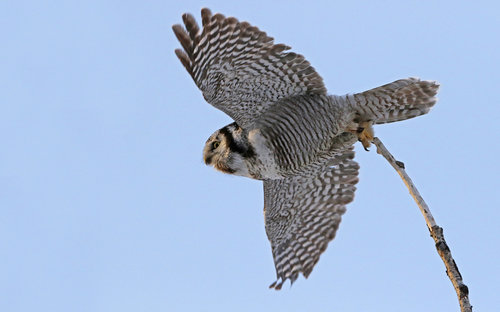
オナガフクロウ (Surnia ulula) オナガフクロウ
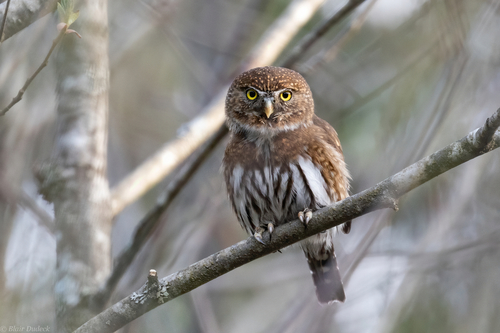
ロッキースズメフクロウ (Glaucidium gnoma) ロッキースズメフクロウ

メディア

読み込み中…

要点

オナガフクロウとロッキースズメフクロウを区別する最も信頼できるフィールドマークはサイズです:オナガフクロウは劇的に大きく、長く帯状の尾と鷹のようなシルエットを持ち、ロッキースズメフクロウは小さく、コンパクトで、しばしば歌鳥と間違えられます。飛んでいる時や止まっている時、オナガフクロウは大胆に斑点のある茶色と白のパターンを示し、明確な黒い縁取りのある白い顔を持っていますが、ロッキースズメフクロウはより均一に茶色、灰色、または赤褐色で、2つの際立った黒と白の後頭部の「アイスポット」を持っています。幼鳥のオナガフクロウは尖った尾の先を持ち、ロッキースズメフクロウの尾は常に四角です。両者は黄色い目と丸い頭を持っていますが、オナガフクロウの顔の円盤ははるかに明確に定義されています。昼間に狩りをしているフクロウを見かけて、それが鷹のように見える場合は、まず尾の長さと全体のサイズを確認してください。

識別のコツ

  1. Size is the first check: フクロウがカラスやカケスのサイズに近い場合、それはオナガフクロウです。もしそれがツグミや大きなスズメに近い場合、それはロッキースズメフクロウです。これはすべての年齢と季節で機能します。
  2. Tail length and shape: オナガフクロウは非常に長い帯状の尾を持ち、止まっている時には翼の先を大きく超えます;ロッキースズメフクロウの尾はそのサイズに対して比例的に長いですが、全体的にははるかに短く、常に先が四角です。幼鳥のオナガフクロウは尖った尾の先を持ち、ロッキースズメフクロウの尾は四角です。
  3. Facial pattern: オナガフクロウは大胆な黒い縁取りのある印象的な白い顔と丸い頭を持っています;ロッキースズメフクロウの顔の円盤は弱く定義されており、頭に溶け込み、顔のコントラストは少ないです。
  4. Nape spots: ロッキースズメフクロウだけが後頭部に白で縁取られた2つの黒い「アイスポット」を持ち、後ろや横から見ることができます。オナガフクロウにはこれがなく、代わりに後頭部に黒いVを示します。
  5. Upperparts spotting: オナガフクロウは暗い茶色の背景にオフホワイトの斑点が多く見られます;ロッキースズメフクロウはより均一で、頭に細かい白い斑点があるだけで、翼や背中のコントラストは少ないです。
  6. Underparts: オナガフクロウは胸と腹に茶色の縞模様がある白またはオフホワイトの下部を示します;ロッキースズメフクロウは上胸が暗く、下胸が白で縦の筋があり、縞模様ではありません。
  7. Bill color: 両者は黄色がかったくちばしを持っていますが、オナガフクロウのくちばしはより強く曲がり、黄色です。一方、ロッキースズメフクロウのくちばしは黄色がかった緑で、目立ちません。
  8. Eye color: 両者は黄色い目を持っているため、これは有用な区別にはなりません。
  9. Perching behavior: 両者は高いところに止まりますが、オナガフクロウはしばしば非常に露出した場所に座り、鷹のように周囲を見渡します;ロッキースズメフクロウはそのサイズと溶け込む傾向のため、見つけにくいかもしれません。
  10. Flight style: オナガフクロウは鷹のような直接的な飛行と長い滑空をします;ロッキースズメフクロウの飛行はよりひらひらしており、翼がブンブンという音を立てます。
  11. Activity: 両者は昼間に活動することができますが、オナガフクロウは開けた場所で完全な日中に狩りをしているのが見られる可能性が高いです。
  12. Habitat context: あなたが極北や開けた北方の森林にいる場合、オナガフクロウがより可能性が高いです;北アメリカの西部の密な針葉樹の中では、ロッキースズメフクロウがより可能性が高いです。
  13. Juvenile tail tip: 尖った尾の先を見た場合、それは幼鳥のオナガフクロウです;ロッキースズメフクロウは決して尖った尾の先を持ちません。
  14. Facial border: 顔の周りの大胆な黒い縁取りはオナガフクロウに特有です;ロッキースズメフクロウの顔は頭に溶け込みます。
  15. Nape pattern: 後頭部に黒いVが見えた場合、それはオナガフクロウです;2つの黒い「アイスポット」が見えた場合、それはロッキースズメフクロウです。

大きさ

オナガフクロウははるかに大きいです:オスは35–42.5 cm、メスは37.2–44.7 cmで、翼幅は69–82 cm、体重は約300–340 gです [wikipedia][avonet]。ロッキースズメフクロウは比較的小さく、長さはわずか15–17 cmで、はるかに軽い体型です [wikipedia]。距離があっても、オナガフクロウはカラスのサイズに見え、ロッキースズメフクロウは大きなスズメや小さなツグミに近いです。このサイズの違いは、直接的な比較がなくてもしばしば明らかです。

羽色

幼鳥のオナガフクロウは尖った尾の先で区別でき、成鳥は丸い尾の先を持っています;ロッキースズメフクロウの尾は年齢に関係なく常に四角です [wikipedia]。オナガフクロウの上面は暗い茶色でオフホワイトの斑点があり、後頭部には黒いVがあり、印象的な白い顔が黒で縁取られています。下部は白で茶色の縞模様があります。ロッキースズメフクロウは色がより均一(灰色、茶色がかった灰色、または赤褐色)で、顔の円盤は弱く定義され、白い斑点のある頭と白で縦の筋のある暗い上胸を持っています。飛行中、オナガフクロウの長く帯状の尾と大胆な背中の斑点が目立ち、ロッキースズメフクロウは比較的平坦な上翼と尾を示し、後頭部の斑点は時々後ろから見えることがあります。オナガフクロウの亜種の変異は下部の色合いや縞模様に影響を与えますが、ロッキースズメフクロウとの全体的なコントラストには影響しません。

行動

オナガフクロウはしばしば高く露出した場所に止まり、鷹のように獲物を探し、昼間に活動します(部分的に日中性) [wikipedia]。その飛行は直接的で鷹のようで、長い滑空と長い尾を持っています。ロッキースズメフクロウも高いところに止まりますが、特に針葉樹の頂上で、サイズが小さく、擬態の色合いのため、見つけにくいです。ロッキースズメフクロウは静かな飛行者ではなく、翼がブンブンまたはヒューヒューという音を立てます。両種は昼間に狩りをしているのが見られますが、オナガフクロウのサイズと飛行スタイルは小型の猛禽類を思い起こさせます。

生息環境

オナガフクロウは北方の種で、通常は開けた針葉樹林や極北の森林の端に見られ、一般的には移動性がなく、時折の突発的な出現を除きます [wikipedia]。ロッキースズメフクロウは北アメリカの西部に生息し、針葉樹林を好み、オナガフクロウよりも低い標高で見られることが多いです。両者は樹木の頂上に止まることがありますが、オナガフクロウは開けた北方の風景にいる可能性が高く、ロッキースズメフクロウは密な混合林や針葉樹林にいることが多いです。

より良い説明を送る

比較と同じ項目を使ってください。文章はすぐに公開されます。

The most reliable field mark to separate Northern Hawk Owl from Northern Pygmy-Owl is size: Hawk Owl is dramatically larger, with a long, banded tail and a hawk-like silhouette, while Pygmy-Owl is tiny, compact, and often mistaken for a songbird. In flight or perched, Hawk Owl shows a boldly spotted brown-and-white pattern with a distinct black-bordered white face, whereas Pygmy-Owl is more uniformly brown, gray, or rufous with two striking black-and-white nape 'eyespots.' Juvenile Hawk Owls have pointed tail tips, while Pygmy-Owls' tails are always squared. Both have yellow eyes and rounded heads, but Hawk Owl's facial disc is much more sharply defined. If you see an owl hunting in broad daylight and it looks hawk-like, check the tail length and overall size first.

  1. Size is the first check: If the owl is anywhere near the size of a crow or jay, it's a Northern Hawk Owl. If it's closer to a thrush or large sparrow, it's a Northern Pygmy-Owl. This works at all ages and seasons.
  2. Tail length and shape: Hawk Owl has a very long, banded tail that extends well past the wingtips when perched; Pygmy-Owl's tail is proportionally long for its size but much shorter overall, and always squared at the tip. Juvenile Hawk Owls have pointed tail tips, while Pygmy-Owls' are squared.
  3. Facial pattern: Hawk Owl has a striking white face with a bold black border and a rounded head; Pygmy-Owl's facial disc is weakly defined, blending into the head, and the face is less contrasting.
  4. Nape spots: Only Pygmy-Owl has two black 'eyespots' outlined in white on the nape, visible from behind or in side view. Hawk Owl lacks these, instead showing a black V on the nape.
  5. Upperparts spotting: Hawk Owl is heavily spotted with off-white on a dark brown background; Pygmy-Owl is more uniform, with only fine white spots on the head and less contrast on the wings and back.
  6. Underparts: Hawk Owl shows white or off-white underparts with brown barring across the breast and belly; Pygmy-Owl has a dark upper breast and white lower breast with vertical streaks, not bars.
  7. Bill color: Both have yellowish bills, but Hawk Owl's is more strongly curved and yellow, while Pygmy-Owl's is yellowish-green and less prominent.
  8. Eye color: Both have yellow eyes, so this is not a useful separator.
  9. Perching behavior: Both perch high, but Hawk Owl often sits very exposed, scanning like a hawk; Pygmy-Owl may be harder to spot due to its size and tendency to blend in.
  10. Flight style: Hawk Owl flies with a hawk-like, direct flight and long glides; Pygmy-Owl's flight is more fluttery and its wings make a buzzing sound.
  11. Activity: Both can be active during the day, but Hawk Owl is more likely to be seen hunting in open areas in full daylight.
  12. Habitat context: If you are in the far north or in open boreal forest, Hawk Owl is more likely; in western North America in dense conifers, Pygmy-Owl is more likely.
  13. Juvenile tail tip: If you see a pointed tail tip, it's a juvenile Hawk Owl; Pygmy-Owl never has pointed tail tips.
  14. Facial border: The bold black border around the face is unique to Hawk Owl; Pygmy-Owl's face blends into the head.
  15. Nape pattern: If you see a black V on the nape, it's Hawk Owl; if you see two black 'eyespots,' it's Pygmy-Owl.

Northern Hawk Owl is much larger: males are 35–42.5 cm long and females 37.2–44.7 cm, with a wingspan of 69–82 cm and weight around 300–340 g [wikipedia][avonet]. Northern Pygmy-Owl is tiny by comparison, at only 15–17 cm in length, with a much lighter build [wikipedia]. Even at a distance, Hawk Owl appears crow-sized, while Pygmy-Owl is closer to a large sparrow or a small thrush. This size difference is often apparent even without a direct comparison.

Juvenile Northern Hawk Owls can be separated by their pointed tail tips, while adults have rounded tail tips; Pygmy-Owl tails are always squared off, regardless of age [wikipedia]. Hawk Owl upperparts are dark brown with off-white spotting, a black V on the nape, and a striking white face bordered in black. Underparts are white with brown barring. Pygmy-Owl is more uniform in color (gray, brownish-gray, or rufous), with a weakly defined facial disc, white-spotted head, and two black nape 'eyespots' outlined in white. Its breast is dark above, with white below and vertical streaks. In flight, Hawk Owl's long, banded tail and bold dorsal spotting stand out, while Pygmy-Owl shows a relatively plain upperwing and tail, with the nape spots sometimes visible from behind. Subspecies variation in Hawk Owl affects the tone and barring of the underparts, but not the overall contrast with Pygmy-Owl.

Northern Hawk Owl often perches high and exposed, scanning for prey in a hawk-like manner, and is active during the day (partially diurnal) [wikipedia]. Its flight is direct and hawk-like, with long glides and a long tail. Northern Pygmy-Owl also perches high, especially at the tops of conifers, but is much harder to spot due to its small size and cryptic coloration. Pygmy-Owl is not a silent flyer—its wings make a buzzing or whirring sound, unlike most owls. Both species can be seen hunting in daylight, but Hawk Owl's size and flight style are much more reminiscent of a small raptor.

Hawk Owl is a boreal species, typically found in open coniferous forests or forest edges of the far north, and is generally non-migratory except for occasional irruptions [wikipedia]. Pygmy-Owl is native to western North America, favoring coniferous forests, often at lower elevations than Hawk Owl. Both may perch at treetops, but Hawk Owl is more likely in open, northern landscapes, while Pygmy-Owl is more often in dense, mixed or coniferous woods.

変更を破棄しますか?

保存していない編集があります。今離れると失われます。

オナガフクロウ · ロッキースズメフクロウ · 苦手な鳥