

Northern Hawk Owl vs Northern Pygmy-Owl
Surnia ulula contro Glaucidium gnoma
Fai un quiz con Northern Hawk Owl e Northern Pygmy-Owl
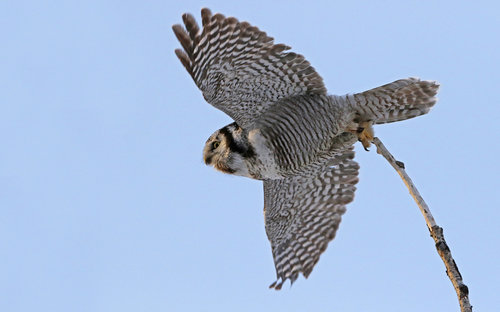 Northern Hawk Owl
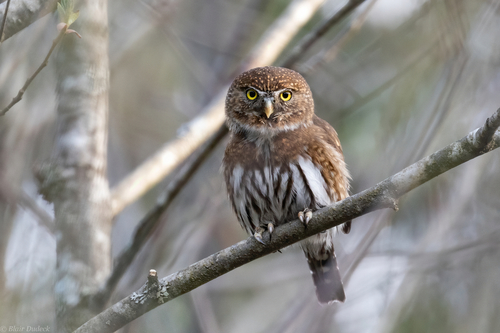 Northern Pygmy-Owl
In breve
Il segno distintivo più affidabile per separare il Northern Hawk Owl dal Northern Pygmy-Owl è la dimensione: il Northern Hawk Owl è drammaticamente più grande, con una lunga coda a bande e una silhouette simile a quella di un falco, mentre il Northern Pygmy-Owl è piccolo, compatto e spesso scambiato per un uccello canoro. In volo o posato, il Northern Hawk Owl mostra un motivo marrone e bianco con macchie audaci e un volto bianco con un bordo nero ben definito, mentre il Northern Pygmy-Owl è più uniformemente marrone, grigio o rugginoso con due sorprendenti 'macchie oculari' nere e bianche sulla nuca. I giovani Northern Hawk Owls hanno punte di coda appuntite, mentre le code dei Northern Pygmy-Owls sono sempre squadrate. Entrambi hanno occhi gialli e teste arrotondate, ma il disco facciale del Northern Hawk Owl è molto più nettamente definito. Se vedi un gufo cacciare in pieno giorno e sembra simile a un falco, controlla prima la lunghezza della coda e la dimensione complessiva.
Consigli di identificazione
- La dimensione è il primo controllo: Se il gufo è in qualche modo vicino alla dimensione di un corvo o di una ghiandaia, è un Northern Hawk Owl. Se è più vicino a un tordo o a un grande passero, è un Northern Pygmy-Owl. Questo funziona in tutte le età e stagioni.
- Lunghezza e forma della coda: Il Northern Hawk Owl ha una coda molto lunga e a bande che si estende ben oltre le punte delle ali quando è posato; la coda del Northern Pygmy-Owl è proporzionalmente lunga per la sua dimensione ma molto più corta nel complesso, e sempre squadrata all'estremità. I giovani Northern Hawk Owls hanno punte di coda appuntite, mentre quelle dei Northern Pygmy-Owls sono squadrate.
- Motivo facciale: Il Northern Hawk Owl ha un volto bianco sorprendente con un bordo nero audace e una testa arrotondata; il disco facciale del Northern Pygmy-Owl è debolmente definito, fondendosi nella testa, e il volto è meno contrastante.
- Macchie sulla nuca: Solo il Northern Pygmy-Owl ha due 'macchie oculari' nere contornate di bianco sulla nuca, visibili da dietro o di lato. Il Northern Hawk Owl non ha queste, mostrando invece una V nera sulla nuca.
- Macchie sulle parti superiori: Il Northern Hawk Owl è pesantemente macchiato di bianco sporco su uno sfondo marrone scuro; il Northern Pygmy-Owl è più uniforme, con solo piccole macchie bianche sulla testa e meno contrasto sulle ali e sulla schiena.
- Parti inferiori: Il Northern Hawk Owl mostra parti inferiori bianche o bianco sporco con bande marroni sul petto e sull'addome; il Northern Pygmy-Owl ha un petto superiore scuro e un petto inferiore bianco con strisce verticali, non barre.
- Colore del becco: Entrambi hanno becchi giallastri, ma quello del Northern Hawk Owl è più fortemente curvato e giallo, mentre quello del Northern Pygmy-Owl è giallo-verde e meno prominente.
- Colore degli occhi: Entrambi hanno occhi gialli, quindi questo non è un separatore utile.
- Comportamento di posarsi: Entrambi si posano in alto, ma il Northern Hawk Owl spesso si siede molto esposto, scrutando come un falco; il Northern Pygmy-Owl può essere più difficile da individuare a causa della sua dimensione e della tendenza a mimetizzarsi.
- Stile di volo: Il Northern Hawk Owl vola con un volo diretto e simile a quello di un falco e lunghe planate; il volo del Northern Pygmy-Owl è più tremolante e le sue ali producono un suono ronzante.
- Attività: Entrambi possono essere attivi durante il giorno, ma il Northern Hawk Owl è più probabile che venga visto cacciare in aree aperte in pieno giorno.
- Contesto dell'habitat: Se ti trovi nel lontano nord o in una foresta boreale aperta, è più probabile che tu veda un Northern Hawk Owl; nel nord-ovest dell'America, in conifere dense, è più probabile che tu veda un Northern Pygmy-Owl.
- Punta della coda giovanile: Se vedi una punta di coda appuntita, è un giovane Northern Hawk Owl; il Northern Pygmy-Owl non ha mai punte di coda appuntite.
- Bordo facciale: Il bordo nero audace attorno al volto è unico per il Northern Hawk Owl; il volto del Northern Pygmy-Owl si fonde nella testa.
- Motivo sulla nuca: Se vedi una V nera sulla nuca, è un Northern Hawk Owl; se vedi due 'macchie oculari' nere, è un Northern Pygmy-Owl.
Taglia
Il Northern Hawk Owl è molto più grande: i maschi misurano 35–42,5 cm di lunghezza e le femmine 37,2–44,7 cm, con un'apertura alare di 69–82 cm e un peso di circa 300–340 g [wikipedia][avonet]. Il Northern Pygmy-Owl è piccolo in confronto, con una lunghezza di soli 15–17 cm, e una struttura molto più leggera [wikipedia]. Anche a distanza, il Northern Hawk Owl appare delle dimensioni di un corvo, mentre il Northern Pygmy-Owl è più vicino a un grande passero o a un piccolo tordo. Questa differenza di dimensione è spesso evidente anche senza un confronto diretto.
Piumaggio
I giovani Northern Hawk Owls possono essere separati dalle loro punte di coda appuntite, mentre gli adulti hanno punte di coda arrotondate; le code del Northern Pygmy-Owl sono sempre squadrate, indipendentemente dall'età [wikipedia]. Le parti superiori del Northern Hawk Owl sono marrone scuro con macchie bianco sporco, una V nera sulla nuca e un volto bianco sorprendente bordato di nero. Le parti inferiori sono bianche con bande marroni. Il Northern Pygmy-Owl è più uniforme nel colore (grigio, marrone-grigiastro o rugginoso), con un disco facciale debolmente definito, testa macchiata di bianco e due 'macchie oculari' nere sulla nuca contornate di bianco. Il suo petto è scuro sopra, con bianco sotto e strisce verticali. In volo, la lunga coda a bande del Northern Hawk Owl e le audaci macchie dorsali si distinguono, mentre il Northern Pygmy-Owl mostra un'ala superiore e una coda relativamente semplici, con le macchie sulla nuca a volte visibili da dietro. La variazione delle sottospecie nel Northern Hawk Owl influisce sul tono e sulle bande delle parti inferiori, ma non sul contrasto complessivo con il Northern Pygmy-Owl.
Comportamento
Il Northern Hawk Owl spesso si posiziona in alto e in modo esposto, scrutando la preda in modo simile a un falco, ed è attivo durante il giorno (parzialmente diurno) [wikipedia]. Il suo volo è diretto e simile a quello di un falco, con lunghe planate e una lunga coda. Anche il Northern Pygmy-Owl si posiziona in alto, specialmente in cima alle conifere, ma è molto più difficile da individuare a causa della sua piccola dimensione e della colorazione criptica. Il Northern Pygmy-Owl non è un volatore silenzioso: le sue ali producono un suono ronzante o fruscio, a differenza della maggior parte dei gufi. Entrambe le specie possono essere viste cacciare in pieno giorno, ma la dimensione e lo stile di volo del Northern Hawk Owl ricordano molto di più un piccolo rapace.
Habitat
Il Northern Hawk Owl è una specie boreale, tipicamente trovata in foreste conifere aperte o ai margini delle foreste del lontano nord, ed è generalmente non migratoria, eccetto per occasionali irruzioni [wikipedia]. Il Northern Pygmy-Owl è nativo del nord-ovest dell'America, preferendo le foreste di conifere, spesso a quote più basse rispetto al Northern Hawk Owl. Entrambi possono posarsi in cima agli alberi, ma il Northern Hawk Owl è più probabile in paesaggi aperti e settentrionali, mentre il Northern Pygmy-Owl è più spesso in boschi densi, misti o di conifere.
Northern Hawk Owl · Northern Pygmy-Owl · I miei uccelli difficili