

Motmot

ニカラグアオオコメワリ 対 カワリヒメウソ

Sporophila nuttingi 対 Sporophila corvina

ニカラグアオオコメワリとカワリヒメウソのクイズ
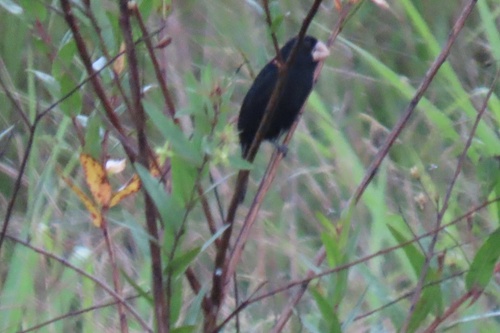
ニカラグアオオコメワリ (Sporophila nuttingi) ニカラグアオオコメワリ
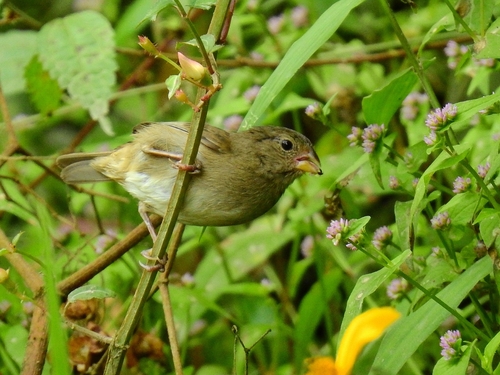
カワリヒメウソ (Sporophila corvina) カワリヒメウソ

メディア

読み込み中…

要点

ニカラグアオオコメワリとカワリヒメウソの最も信頼できるフィールドマークはくちばしです:ニカラグアオオコメワリは成鳥のオスにおいて巨大で深い基部を持つ淡い(象牙色からピンク色)なくちばしを持ち、カワリヒメウソは常に両性ともに小さく、深さの少ない暗いくちばしを示します。成鳥のオスのニカラグアオオコメワリは全体が黒で、目を引く淡いくちばしを持ちますが、カワリヒメウソのオスは亜種によって異なりますが、しばしば翼や腹部に白を示し、常に暗いくちばしを持っています。両種の雌と幼鳥は茶色がかっていますが、ニカラグアオオコメワリはより豊かな茶色で体が大きく、カワリヒメウソの雌はより淡くオリーブ色で、時には黄色がかった色合いを持っています。未熟な鳥は特に難しいですが、くちばしのサイズと色、微妙な羽毛や構造の手がかりが重要です。

識別のコツ

  1. くちばしのサイズと色(すべての年齢): ニカラグアオオコメワリは成鳥のオスにおいて非常に大きく、深い基部を持つ淡い(象牙色からピンク色)なくちばしを持ち、雌は黒っぽいくちばしにピンクがかった象牙色の基部を持っています。カワリヒメウソは常に両性ともにすべての年齢で小さく、深さの少ない暗いくちばしを持っています。これはすべての季節で最も信頼できるフィールドマークです。
  2. 翼の白(すべての年齢): カワリヒメウソ(すべての亜種、両性、すべての年齢)は飛行中に白い翼の縁を示し、多くのオスでは小さな白い翼のスペキュラム(斑点)が止まっているときにも見えます。ニカラグアオオコメワリは翼や翼の縁に白を示すことは決してありません—その翼は均一に暗いです。
  3. 成鳥のオスの羽毛: ニカラグアオオコメワリのオスは全体が黒で、淡いくちばしを持ち、どこにも白はありません。カワリヒメウソのオスは亜種によって異なります:S. c. corvinaは全体が黒ですが、暗いくちばしと白があります。常に白とくちばしの色を確認してください。
  4. 雌/幼鳥の色: ニカラグアオオコメワリの雌と幼鳥は上も下も暗く、より豊かな茶色で、時には深いシナモン色で、より重いくちばしを持っています。カワリヒメウソの雌と幼鳥はより淡く、オリーブ色がかった茶色で、しばしば下にかすかな黄色がかった色合いを示します。彼らのくちばしは常に小さく、暗いです。
  5. サイズと構造: ニカラグアオオコメワリは明らかに大きく、体が重く、重い深い基部を持つくちばしと頑丈な体を持っています。カワリヒメウソは小さく、より繊細で、コンパクトで、相対的に小さなくちばしを持っています。
  6. 飛行中の視点: カワリヒメウソが飛ぶときや翼をひらひらさせるときに白い翼の縁や白い翼の斑点を探してください。ニカラグアオオコメワリは翼に白を持っていません—これは特に未熟な個体や雌にとって有用です。
  7. 止まっている姿勢: ニカラグアオオコメワリはその巨大なくちばしのために上重心または前重心に見えることが多いですが、カワリヒメウソはより均等にプロポーションが取れています。
  8. カワリヒメウソの亜種の変異: 一部のカワリヒメウソのオスは腹部や喉に広範な白を示すことがありますが、これはニカラグアオオコメワリでは見られません。しかし、S. c. corvinaのオスは全て黒なので、くちばしの色と翼のパターンが重要になります。
  9. 幼鳥の混乱: 両種の幼鳥は茶色がかっていますが、くちばしのサイズと色を確認し、翼に白があるかどうかを探してください(これはカワリヒメウソにのみ存在します)。ニカラグアオオコメワリの幼鳥は常により大きく、豊かな茶色です。
  10. 性差の二形性: 両種は性差があり、しかしニカラグアオオコメワリの方が対比がはっきりしています(全黒のオス、茶色の雌)カワリヒメウソでは、雌は常により淡く、オリーブ色です。
  11. 地域の豊富さ/文脈: 両方が生息する場所では、カワリヒメウソは通常より多く、広範囲に分布していますが、これを識別に頼らないでください。
  12. 分類学的混乱: 両種は複雑な分類学的歴史を持ち、特に未熟な羽毛では似て見えることがあります。常に全体の色の印象よりもくちばしのサイズ/色と翼のパターンを優先してください。
  13. 情報源に強い声の違いは記載されていない: まず視覚的手がかりを使用してください。
  14. 落とし穴: 全黒のカワリヒメウソのオスはニカラグアオオコメワリのオスと混同されることがありますが、カワリヒメウソのくちばしは常に暗く小さく、白い翼のマーキングが存在します。逆に、ニカラグアオオコメワリは翼や腹部に白を示さず、成鳥のオスでは常に淡いくちばしを持っています。
  15. 疑わしい場合: 鳥が茶色がかっていて翼に明らかな白がない場合は、くちばしのサイズと色に焦点を当ててください。くちばしが巨大で淡い基部を持っている場合はニカラグアオオコメワリです;小さくて暗い場合はカワリヒメウソです。

大きさ

ニカラグアオオコメワリはカワリヒメウソよりも明らかに大きく重い(14–14.5 cm、約24 g)です。カワリヒメウソは小さく軽い(ここでは指定されていませんが、直接比較では常に目立って小さいです)[wikipedia]。ニカラグアオオコメワリは全体的により大きく頑丈に見え、特にその巨大なくちばしのために、カワリヒメウソはより繊細でコンパクトな体型を持っています。

羽色

行動

両種は種子食性で、しばしば似たような雑草や草地の生息地で採餌し、時には小さな群れで見られます。ニカラグアオオコメワリはその体が大きいため、動きがより慎重で重いように見えることがありますが、カワリヒメウソはより活発で機敏です。情報源には強い行動の違いは記載されていません。

生息環境

両種はコスタリカとパナマで生息域が重なり、開けた草地や雑草の生息地を好み、しばしば水や乱れた地域の近くに生息します [wikipedia]。ニカラグアオオコメワリはより局所的で、主にニカラグアと隣接する地域に生息していますが、カワリヒメウソは南メキシコから中央アメリカを経て南米北西部に広く分布しています。生息地だけでは重なり合う範囲では診断的ではありません。

より良い説明を送る

比較と同じ項目を使ってください。文章はすぐに公開されます。

The most reliable field mark between Nicaraguan Seed-Finch and Variable Seedeater is the bill: Nicaraguan Seed-Finch has a massive, deep-based, pale (ivory to pink) bill in adult males, while Variable Seedeater always shows a smaller, less deep bill that is dark in both sexes. Adult male Nicaraguan Seed-Finch is all-black with a striking pale bill, whereas Variable Seedeater males vary by subspecies but often show white in the wings or underparts and always have a dark bill. Females and juveniles of both species are brownish, but the Seed-Finch is richer brown and bulkier, while Variable Seedeater females are paler and more olive, sometimes with a yellowish tinge. Immature birds are especially tricky, but bill size and color, along with subtle plumage and structure clues, are key.

  1. Bill size and color (all ages): Nicaraguan Seed-Finch has a very large, deep-based, pale (ivory to pink) bill in adult males; females have a blackish bill with a pinkish ivory base. Variable Seedeater always has a smaller, less deep, dark bill in both sexes and all ages. This is the most reliable field mark at all seasons.
  2. White in wings (all ages): Variable Seedeater (all subspecies, both sexes, all ages) shows white wing linings in flight, and in many males, a small white wing speculum (patch) is visible even when perched. Nicaraguan Seed-Finch never shows white in the wings or wing linings—its wings are uniformly dark.
  3. Adult male plumage: Nicaraguan Seed-Finch males are entirely black with a pale bill and no white anywhere. Variable Seedeater males vary: S. c. corvina is all black but with a dark bill and white in the wings; other subspecies have white on the belly, rump, or throat. Always check for white and bill color.
  4. Female/juvenile color: Nicaraguan Seed-Finch females and juveniles are darker, richer brown above and below, sometimes deep cinnamon, with a heavier bill. Variable Seedeater females and juveniles are paler, more olive-brown, and often show a faint yellow tinge below (especially in S. c. hoffmannii, hicksii, ophthalmica). Their bill is always smaller and dark.
  5. Size and structure: Seed-Finch is noticeably larger and bulkier, with a heavy, deep-based bill and a robust body. Variable Seedeater is smaller, more delicate, and compact, with a proportionally smaller bill.
  6. Flight views: Watch for white wing linings or a white wing patch in Variable Seedeater when the bird flies or flicks its wings. Nicaraguan Seed-Finch lacks any white in the wings—this is especially useful for immatures and females.
  7. Perched posture: Seed-Finch often looks top-heavy or front-heavy due to its massive bill, while Variable Seedeater is more evenly proportioned.
  8. Subspecies variation in Variable Seedeater: Be aware that some Variable Seedeater males (hoffmannii, hicksii, ophthalmica) show extensive white on the underparts or throat, never matched by Seed-Finch. However, S. c. corvina males are all black, so bill color and wing pattern become critical.
  9. Juvenile confusion: Both species' juveniles are brownish, but check bill size and color, and look for white in the wings (present only in Variable Seedeater). Seed-Finch juveniles are always bulkier and richer brown.
  10. Sexual dimorphism: Both species are sexually dimorphic, but the contrast is sharper in Seed-Finch (all-black male, brown female) than in Variable Seedeater, where female is always paler and more olive.
  11. Local abundance/context: Where both occur, Variable Seedeater is usually more numerous and widespread, but do not rely on this for identification.
  12. Taxonomic confusion: Both species have complex taxonomic histories and can look similar, especially in immature plumages. Always prioritize bill size/color and wing pattern over overall color impression.
  13. No strong vocal differences noted in sources: Use visual clues first.
  14. Pitfalls: All-black Variable Seedeater males (S. c. corvina) can be confused with male Seed-Finch, but the bill is always dark and smaller in Variable Seedeater, and white wing markings are present. Conversely, Seed-Finch never shows white in wings or underparts, and its bill is always pale in adult males.
  15. When in doubt: If the bird is brownish and lacks obvious white in the wings, focus on bill size and color. If the bill looks massive and pale-based, it's Seed-Finch; if it's small and dark, it's Variable Seedeater.

Nicaraguan Seed-Finch is distinctly larger and heavier (14–14.5 cm, ~24 g) than Variable Seedeater, which is smaller and lighter (not specified here, but always noticeably more petite in direct comparison) [wikipedia]. The Seed-Finch appears bulkier and more robust overall, especially due to its massive bill, while Variable Seedeater has a more delicate, compact build.

  • Juveniles/immatures: Both species' juveniles resemble their respective females, but Nicaraguan Seed-Finch juveniles are richer brown overall, with a darker head and upperparts, and a heavier, paler-based bill (blackish with pinkish ivory base). Variable Seedeater juveniles are paler, more olive-brown, and have a smaller, darker bill. In flight, Variable Seedeater (all ages) shows white wing linings and, in some subspecies, a small white wing patch; Nicaraguan Seed-Finch lacks these white wing features, showing uniform dark wings with only dusky grayish inner webs on primaries in males.
  • Adult males: Nicaraguan Seed-Finch is entirely black with an ivory to pink bill. Variable Seedeater males vary: S. c. corvina is all black with a dark bill and a small white wing speculum and white wing linings; other subspecies have white on the belly, rump, or throat, but always retain a dark bill. The Seed-Finch never shows white in the wings or underparts.
  • Adult females: Seed-Finch females are dark brown above and below, sometimes deep cinnamon, with a blackish bill and pinkish ivory base. Variable Seedeater females are olive-brown above, paler below, and usually have a faint yellow tinge below in some subspecies; their bill is always dark and smaller.
  • Key in flight: White wing linings and/or white wing patch in Variable Seedeater (all ages/sexes) are absent in Nicaraguan Seed-Finch.

Both species are seedeaters and often forage in similar weedy or grassy habitats, sometimes in small groups. Nicaraguan Seed-Finch may appear more deliberate and heavy in its movements, matching its bulkier build, while Variable Seedeater is more active and agile. No strong behavioral separation is noted in the sources.

Both species overlap in range in Costa Rica and Panama, favoring open, grassy, or weedy habitats, often near water or disturbed areas [wikipedia]. Nicaraguan Seed-Finch is more localized, mainly in Nicaragua and adjacent regions, while Variable Seedeater is widespread from southern Mexico through Central America to northwestern South America. Habitat alone is not diagnostic where ranges overlap.

変更を破棄しますか?

保存していない編集があります。今離れると失われます。

ニカラグアオオコメワリ · カワリヒメウソ · 苦手な鳥