

Semillero Nicaragüense vs Semillero Variable
Sporophila nuttingi frente a Sporophila corvina
Juega un quiz con Semillero Nicaragüense y Semillero Variable
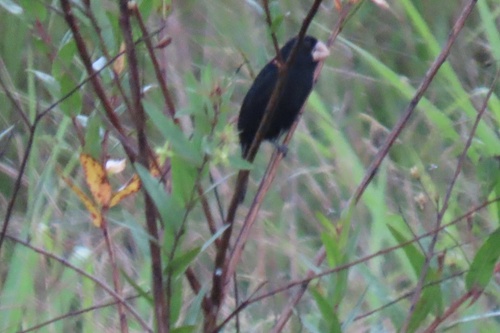 Semillero Nicaragüense
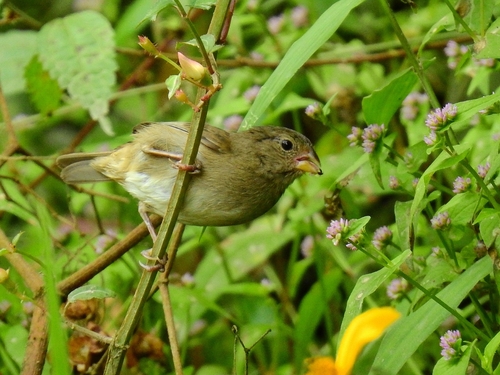 Semillero Variable
En breve
La marca de campo más confiable entre el Semillero Nicaragüense y el Semillero Variable es el pico: el Semillero Nicaragüense tiene un pico masivo, de base profunda y pálido (de marfil a rosa) en los machos adultos, mientras que el Semillero Variable siempre muestra un pico más pequeño y menos profundo que es oscuro en ambos sexos. El macho adulto del Semillero Nicaragüense es completamente negro con un pico pálido llamativo, mientras que los machos del Semillero Variable varían por subespecie, pero a menudo muestran blanco en las alas o en las partes inferiores y siempre tienen un pico oscuro. Las hembras y los juveniles de ambas especies son marrones, pero el Semillero es de un marrón más rico y más robusto, mientras que las hembras del Semillero Variable son más pálidas y más olivas, a veces con un tinte amarillento. Los pájaros inmaduros son especialmente difíciles, pero el tamaño y color del pico, junto con pistas sutiles de plumaje y estructura, son clave.
Consejos de identificación
- Tamaño y color del pico (todas las edades): El Semillero Nicaragüense tiene un pico muy grande, de base profunda y pálido (de marfil a rosa) en los machos adultos; las hembras tienen un pico negruzco con una base de marfil rosado. El Semillero Variable siempre tiene un pico más pequeño, menos profundo y oscuro en ambos sexos y todas las edades. Esta es la marca de campo más confiable en todas las estaciones.
- Blanco en las alas (todas las edades): El Semillero Variable (todas las subespecies, ambos sexos, todas las edades) muestra forros alares blancos en vuelo, y en muchos machos, un pequeño especulo alar blanco (mancha) es visible incluso cuando está posado. El Semillero Nicaragüense nunca muestra blanco en las alas o en los forros alares; sus alas son uniformemente oscuras.
- Plumaje del macho adulto: Los machos del Semillero Nicaragüense son completamente negros con un pico pálido y sin blanco en ninguna parte. Los machos del Semillero Variable varían: S. c. corvina es completamente negro pero con un pico oscuro y blanco en las alas; otras subespecies tienen blanco en el vientre, la rabadilla o la garganta. Siempre verifica el blanco y el color del pico.
- Color de hembras/juveniles: Las hembras y los juveniles del Semillero Nicaragüense son más oscuros, de un marrón más rico arriba y abajo, a veces canela profunda, con un pico más pesado. Las hembras y los juveniles del Semillero Variable son más pálidos, de un marrón oliva más claro, y a menudo muestran un leve tinte amarillo abajo (especialmente en S. c. hoffmannii, hicksii, ophthalmica). Su pico siempre es más pequeño y oscuro.
- Tamaño y estructura: El Semillero es notablemente más grande y robusto, con un pico pesado y de base profunda y un cuerpo robusto. El Semillero Variable es más pequeño, más delicado y compacto, con un pico proporcionalmente más pequeño.
- Vistas en vuelo: Observa los forros alares blancos o una mancha alar blanca en el Semillero Variable cuando el pájaro vuela o agita sus alas. El Semillero Nicaragüense carece de cualquier blanco en las alas; esto es especialmente útil para inmaduros y hembras.
- Postura posada: El Semillero a menudo parece tener un peso desproporcionado en la parte superior o delantera debido a su pico masivo, mientras que el Semillero Variable está más equilibrado.
- Variación de subespecies en el Semillero Variable: Ten en cuenta que algunos machos del Semillero Variable (hoffmannii, hicksii, ophthalmica) muestran blanco extenso en las partes inferiores o la garganta, nunca igualado por el Semillero. Sin embargo, los machos de S. c. corvina son completamente negros, por lo que el color del pico y el patrón de las alas se vuelven críticos.
- Confusión juvenil: Los juveniles de ambas especies son marrones, pero verifica el tamaño y color del pico, y busca blanco en las alas (presente solo en el Semillero Variable). Los juveniles del Semillero son siempre más robustos y de un marrón más rico.
- Dimorfismo sexual: Ambas especies son dimórficas sexualmente, pero el contraste es más agudo en el Semillero (macho completamente negro, hembra marrón) que en el Semillero Variable, donde la hembra siempre es más pálida y más oliva.
- Abundancia/contexto local: Donde ambas ocurren, el Semillero Variable es generalmente más numeroso y extendido, pero no confíes en esto para la identificación.
- Confusión taxonómica: Ambas especies tienen historias taxonómicas complejas y pueden parecer similares, especialmente en plumajes inmaduros. Siempre prioriza el tamaño/color del pico y el patrón de las alas sobre la impresión de color general.
- No se notaron diferencias vocales fuertes en las fuentes: Usa pistas visuales primero.
- Trampas: Los machos del Semillero Variable completamente negros (S. c. corvina) pueden confundirse con el macho del Semillero, pero el pico siempre es oscuro y más pequeño en el Semillero Variable, y hay marcas alares blancas presentes. Por el contrario, el Semillero nunca muestra blanco en las alas o partes inferiores, y su pico siempre es pálido en los machos adultos.
- Cuando tengas dudas: Si el pájaro es marrón y carece de blanco obvio en las alas, concéntrate en el tamaño y color del pico. Si el pico parece masivo y de base pálida, es el Semillero; si es pequeño y oscuro, es el Semillero Variable.
Tamaño
El Semillero Nicaragüense es claramente más grande y pesado (14–14.5 cm, ~24 g) que el Semillero Variable, que es más pequeño y ligero (no especificado aquí, pero siempre notablemente más pequeño en comparación directa) [wikipedia]. El Semillero parece más robusto y robusto en general, especialmente debido a su pico masivo, mientras que el Semillero Variable tiene una construcción más delicada y compacta.
Plumaje
- Juveniles/inmaduros: Los juveniles de ambas especies se asemejan a sus respectivas hembras, pero los juveniles del Semillero Nicaragüense son de un marrón más rico en general, con una cabeza y partes superiores más oscuras, y un pico más pesado y de base más pálida (negruzco con base de marfil rosado). Los juveniles del Semillero Variable son más pálidos, de un marrón oliva más claro, y tienen un pico más pequeño y oscuro. En vuelo, el Semillero Variable (todas las edades) muestra forros alares blancos y, en algunas subespecies, una pequeña mancha alar blanca; el Semillero Nicaragüense carece de estas características alares blancas, mostrando alas oscuras uniformes con solo webs internas grisáceas en las primarias en machos.
- Machos adultos: El Semillero Nicaragüense es completamente negro con un pico de marfil a rosa. Los machos del Semillero Variable varían: S. c. corvina es completamente negro con un pico oscuro y un pequeño especulo alar blanco y forros alares blancos; otras subespecies tienen blanco en el vientre, la rabadilla o la garganta, pero siempre mantienen un pico oscuro. El Semillero nunca muestra blanco en las alas o partes inferiores.
- Hembras adultas: Las hembras del Semillero son de un marrón oscuro arriba y abajo, a veces canela profunda, con un pico negruzco y base de marfil rosado. Las hembras del Semillero Variable son de un marrón oliva arriba, más pálidas abajo, y generalmente tienen un leve tinte amarillo abajo en algunas subespecies; su pico siempre es oscuro y más pequeño.
- Clave en vuelo: Los forros alares blancos y/o la mancha alar blanca en el Semillero Variable (todas las edades/sexis) están ausentes en el Semillero Nicaragüense.
Comportamiento
Ambas especies son comederos de semillas y a menudo forrajean en hábitats similares de maleza o hierba, a veces en pequeños grupos. El Semillero Nicaragüense puede parecer más deliberado y pesado en sus movimientos, coincidiendo con su construcción más robusta, mientras que el Semillero Variable es más activo y ágil. No se nota una fuerte separación conductual en las fuentes.
Hábitat
Ambas especies se superponen en rango en Costa Rica y Panamá, favoreciendo hábitats abiertos, herbosos o de maleza, a menudo cerca de agua o áreas perturbadas [wikipedia]. El Semillero Nicaragüense es más localizado, principalmente en Nicaragua y regiones adyacentes, mientras que el Semillero Variable es ampliamente distribuido desde el sur de México a través de América Central hasta el noroeste de América del Sur. El hábitat por sí solo no es diagnóstico donde las distribuciones se superponen.
Semillero Nicaragüense · Semillero Variable · Mis aves difíciles