

Motmot

マミジロオニキバシリ 対 Plain Xenops

Lepidocolaptes angustirostris 対 Xenops minutus

マミジロオニキバシリとPlain Xenopsのクイズ
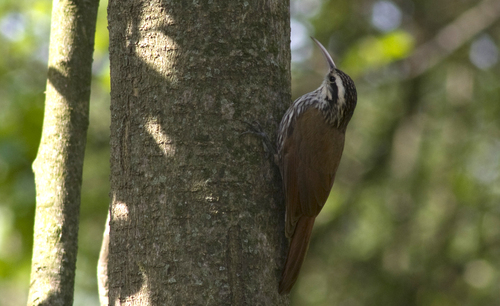
マミジロオニキバシリ (Lepidocolaptes angustirostris) マミジロオニキバシリ
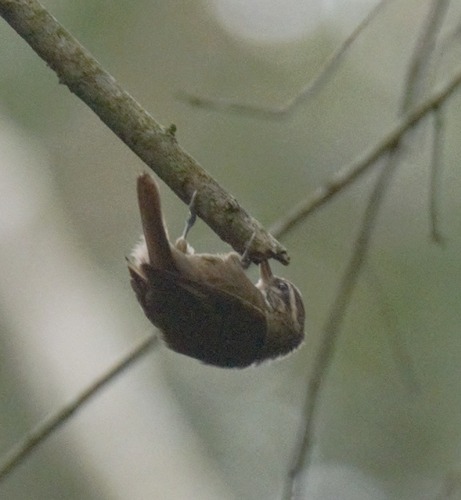
Plain Xenops (Xenops minutus) Plain Xenops

メディア

読み込み中…

要点

マミジロオニキバシリとPlain Xenopsを区別する最も信頼できるフィールドマークは全体の構造です:木登り鳥ははるかに大きく、長くて細く、下向きのくちばしを持ち、一方でゼノプスは小さく、コンパクトで、短くて太く、わずかに上向きのくちばしを持っています。すべての羽色において、木登り鳥は縞模様のある頭部と上面を示しますが、ゼノプスはほとんど縞模様がなく、わずかに縞模様のある頭部を除いては平坦です。飛んでいるときや止まっているとき、木登り鳥の細長い体と長い尾は、ゼノプスの短く丸みを帯びた体形や特徴的なシナモン色の尾と黒との対比が際立っています。両種は淡い眉斑を示すことがありますが、ゼノプスは大胆な白い頬線と平坦な灰褐色の腹部を持ち、木登り鳥の腹部は縞模様または斑点があります。幼鳥の木登り鳥は下部が暗く、より縞模様が多いですが、ゼノプスよりも依然として大きく、くちばしが長いです。

識別のコツ

  1. Size and shape: 木登り鳥はゼノプスよりもはるかに大きく、長いです。もし鳥が小さく、コンパクトで、短い尾を持っている場合、それはほぼ確実にゼノプスです。
  2. Bill shape: 木登り鳥は長く、細く、明確に下向きのくちばしを持っています;ゼノプスは短く、太く、わずかに上向きのくちばしを持っています。くちばしの形は中距離でも見え、診断的です。
  3. Crown and upperparts streaking: 木登り鳥(すべての年齢)は暗い頭部と後頭部、しばしば上背に強い白っぽいバフの縞模様を示します。ゼノプスはわずかな頭部の縞模様しかなく、他は平坦な上面です。
  4. Supercilium and malar: 両種は淡い眉斑を持っていますが、ゼノプスのものはより大胆で、広い純白の頬線と組み合わさり、強い顔のコントラストを形成します。木登り鳥の眉斑はバフ色の白で、後方に広がり、上部は黒っぽい頭部に、後ろは黒い縞で囲まれていますが、ゼノプスの頬線はありません。
  5. Underparts: 木登り鳥はバフ色の白い下部に暗い斑点や縞模様を持っています(胸部と尾羽の覆羽でより明らかで、腹部では薄れます)。ゼノプスは平坦な鈍い灰褐色の下部を持ち、淡い、ほとんど縞模様のない喉を持っています。
  6. Tail and wing pattern: ゼノプスは多くの黒を含むシナモン色の尾を持ち、翼には飛翔羽に広い黄褐色またはオクラ色の帯があります—これは飛んでいるときや翼が広げられたときに見えます。木登り鳥の尾と翼は赤褐色で、外側の羽はより茶色く、初列羽の先端は黒っぽいですが、ゼノプスの大胆な翼の帯はありません。
  7. Juvenile plumage: 幼鳥の木登り鳥は上部がより暗く、よりオクラ色の眉斑と下部を持ち、下部の縞模様がより重いです—それでもゼノプスよりも大きく、より縞模様があります。幼鳥のゼノプスは成鳥に似ています。
  8. Leg color: 木登り鳥の脚と足は緑がかった灰色から暗い灰色;ゼノプスのは青みがかった灰色です。これは微妙ですが、近距離で役立つことがあります。
  9. Foraging behavior: 木登り鳥は幹や大きな枝を登り、垂直に移動します;ゼノプスは細い枝で採餌し、しばしばアクロバティックにぶら下がったり、腐った木やつるで作業します。
  10. Posture and movement: 木登り鳥は直立していて、細長く、意図的です;ゼノプスはより水平で、速く、敏捷で、しばしば翼や尾をひらひらさせます。
  11. Habitat context: 開けた森林やサバンナでは木登り鳥を期待し、密で湿った森林ではゼノプスがより可能性が高いです。
  12. Iris color: 両者は茶色から栗色の虹彩を持ち、強い区別要因ではありません。
  13. Sex differences: 両種は羽色において性別による形態的差異はありません。
  14. Flight style: 木登り鳥の飛行は強くて直接的です;ゼノプスは速くてひらひらし、しばしば枝の間を短いホップで移動します。
  15. Pitfalls: 遠くから見ると、両者は淡い眉斑と茶色がかった上面を示すことがありますが、サイズ、くちばしの形、下部の模様の組み合わせは、しっかり見れば常に彼らを区別します。

大きさ

マミジロオニキバシリはPlain Xenopsよりもかなり大きい(18–22 cm、オスは23–37.5 g、メスは21.5–33.5 g)です(約12 cm、8.5–13 g)[wikipedia][wikidata]。木登り鳥のサイズは遠くからでも明らかで、細長く見え、ゼノプスは明らかに小さくてコンパクトです。混合群れでは、木登り鳥はゼノプスの上にそびえ立ち、ゼノプスは最も小さなオーブンバードの一つです。

羽色

幼鳥のマミジロオニキバシリは成鳥よりも全体的に暗く、黒っぽい頭、よりオクラ色の眉斑と下部、より明確な下部の縞模様を持っています。この年齢は依然としてゼノプスよりも大きく、より縞模様があります。成鳥の木登り鳥は淡いバフ色の眉斑(後方に広がる)、黒褐色の頭部と後頭部に白っぽいバフの縞模様、赤褐色の背中と覆羽にわずかなオリーブ色、赤褐色の翼と尾を持っています。下部はバフ色の白で、暗い斑点や縞模様があり、腹部では薄れますが、尾羽の覆羽で再び現れます。それに対して、Plain Xenopsの成鳥と幼鳥は、わずかに縞模様のある頭部を除いて上面は縞模様がなく、鈍い茶色から赤褐色の上面、太いバフまたは白の眉斑、広い純白の頬線を持っています。尾はシナモン色で多くの黒を含み、翼は飛翔羽に広い黄褐色またはオクラ色の帯を示します。下部は平坦な鈍い灰褐色で、淡い、ほとんど縞模様のない喉を持っています。ゼノプスのくちばしは上部が黒っぽく、下部が淡く、短くてわずかに上向きで、木登り鳥のくちばしは長く、細く、下向きで、淡い灰色からピンクがかった角です。

行動

マミジロオニキバシリは通常、幹や大きな枝を登り、長いくちばしを使って樹皮や隙間を探ります。通常は単独またはペアで見られ、時々混合種の群れに加わりますが、幹や主な枝に留まります。Plain Xenopsははるかに活発でアクロバティックで、細い、しばしば死んだり落ちた枝、つる、そして下層から中層で採餌します。上向きのくちばしで叩いたり、こじ開けたり、採取したりし、しばしば混合群れに加わり、逆さまになって採餌することもあります。飛行中、木登り鳥は直接的で強いですが、ゼノプスは速くてひらひらしています。

生息環境

両種はアルゼンチン、ブラジル、パラグアイの重複する地域に出現することがありますが、彼らのマイクロハビタットの好みは異なります。マミジロオニキバシリは開けた森林、ギャラリーフォレスト、サバンナ、森林の縁を好み、しばしば乾燥したり開けたハビタットに生息します。Plain Xenopsは湿った森林、特に下層と中層に密接に関連しており、しばしばより密な閉じた樹冠の環境に見られます。乾燥した開けた森林で見られた場合、木登り鳥の可能性が高く、密で湿った森林ではゼノプスがより期待されます。

より良い説明を送る

比較と同じ項目を使ってください。文章はすぐに公開されます。

The most reliable field mark to separate Narrow-billed Woodcreeper from Plain Xenops is overall structure: the woodcreeper is much larger, with a long, slender, and decurved bill, while the xenops is small, compact, and has a short, stubby, slightly upturned bill. In all plumages, the woodcreeper shows a streaked crown and upperparts, while the xenops is mostly unstreaked above except for a faintly streaked crown. In flight or perched, the woodcreeper’s slim, elongated body and long tail contrast sharply with the xenops’ short, rounded jizz and distinctive cinnamon tail with black. Both species can show a pale supercilium, but the xenops has a bold white malar stripe and a plain grayish-brown belly, while the woodcreeper’s underparts are streaked or spotted. Juvenile woodcreepers are darker and more streaked below, but still larger and longer-billed than any xenops.

  1. Size and shape: The woodcreeper is much larger and longer than the xenops. If the bird appears small, compact, and short-tailed, it is almost certainly a xenops.
  2. Bill shape: Woodcreeper has a long, slim, and distinctly decurved bill; xenops has a short, stubby, and slightly upturned bill. Bill shape is visible even at moderate range and is diagnostic.
  3. Crown and upperparts streaking: Woodcreeper (all ages) shows strong whitish buff streaks on a dark crown and nape, and often on the upper back. Xenops has only faint crown streaking and otherwise plain upperparts.
  4. Supercilium and malar: Both species have a pale supercilium, but xenops’ is bolder and paired with a wide, pure white malar stripe, forming a strong facial contrast. Woodcreeper’s supercilium is buffy white, widens rearward, and is bordered above by a blackish crown and behind by a black stripe, but lacks the xenops’ malar.
  5. Underparts: Woodcreeper has buffy-white underparts with dusky spots or streaks (more obvious on breast and undertail coverts, fading on belly). Xenops is plain dull grayish brown below, with a pale, mostly unstreaked throat.
  6. Tail and wing pattern: Xenops has a cinnamon tail with much black, and wings with a wide tawny or ochraceous band on the flight feathers—this is visible in flight or when the wings are spread. Woodcreeper’s tail and wings are rufous-chestnut, with browner outer webs and blackish tips on the primaries, but lack the xenops’ bold wing band.
  7. Juvenile plumage: Juvenile woodcreepers are darker above, with more ochraceous supercilium and underparts, and heavier streaking below—still larger and more streaked than any xenops. Juvenile xenops resemble adults.
  8. Leg color: Woodcreeper’s legs and feet are greenish gray to dark gray; xenops’ are bluish gray. This is subtle but can help at close range.
  9. Foraging behavior: Woodcreeper climbs trunks and large limbs, moving vertically; xenops forages on thin branches, often hanging acrobatically or working on rotten wood and vines.
  10. Posture and movement: Woodcreeper is upright, elongated, and deliberate; xenops is more horizontal, quick, and agile, often flicking wings and tail.
  11. Habitat context: In open woodland or savanna, expect woodcreeper; in dense, humid forest, xenops is more likely.
  12. Iris color: Both have brown to chestnut irides, not a strong separator.
  13. Sex differences: Both species are sexually monomorphic in plumage.
  14. Flight style: Woodcreeper’s flight is strong and direct; xenops is quick and fluttery, often making short hops between branches.
  15. Pitfalls: At a distance, both can show a pale supercilium and brownish upperparts, but the combination of size, bill shape, and underpart pattern will always separate them if seen well.

Narrow-billed Woodcreeper is substantially larger (18–22 cm long; males 23–37.5 g, females 21.5–33.5 g) than Plain Xenops (about 12 cm, 8.5–13 g) [wikipedia][wikidata]. The woodcreeper’s size is obvious even at a distance, appearing slim and elongated, while xenops is noticeably small and compact. In mixed flocks, the woodcreeper will tower over the xenops, which is one of the smallest ovenbirds.

Juvenile Narrow-billed Woodcreeper is darker overall than adults, with a blackish head, more ochraceous supercilium and underparts, and more distinct streaking below. This age is still larger and more streaked than any xenops. Adult woodcreepers have a pale buffy supercilium (widening rearward), blackish-brown crown and nape with whitish buff streaks, rufous-brown back and coverts with faint olive, and rufous-chestnut wings and tail. Underparts are buffy-white with dusky spots or streaks, fading on the belly but reappearing on undertail coverts. In contrast, Plain Xenops adults and juveniles are unstreaked above except for a lightly streaked crown, with dull brown to rufous-brown upperparts, a bold buff or white supercilium, and a wide pure white malar stripe. The tail is cinnamon with much black, and the wings show a wide tawny or ochraceous band on the flight feathers. Underparts are plain dull grayish brown, with a pale, mostly unstreaked throat. The xenops’ bill is blackish above and pale below, short and slightly upturned, while the woodcreeper’s is long, slim, and decurved, pale gray to pinkish horn.

Narrow-billed Woodcreeper typically forages by hitching up trunks and large branches, using its long bill to probe bark and crevices, often moving vertically. It is usually seen singly or in pairs, sometimes joining mixed-species flocks but keeping to trunks and main limbs. Plain Xenops is much more active and acrobatic, foraging on thin, often dead or fallen branches, vines, and in the understory to mid-levels. It hammers, pries, and gleans with its upturned bill, often joining mixed flocks and using a wider range of foraging substrates, including hanging upside down. In flight, the woodcreeper is direct and strong, while the xenops is quick and fluttery.

Both species can occur in overlapping regions of Argentina, Brazil, and Paraguay, but their microhabitat preferences differ. Narrow-billed Woodcreeper favors open woodlands, gallery forests, savannas, and forest edges, often in drier or more open habitats. Plain Xenops is more closely tied to humid forest, especially the understory and mid-levels, and is often found in denser, more closed-canopy environments. If seen in a dry, open woodland, woodcreeper is more likely; in dense, humid forest, xenops is more expected.

変更を破棄しますか?

保存していない編集があります。今離れると失われます。

マミジロオニキバシリ · Plain Xenops · 苦手な鳥