

Narrow-billed Woodcreeper vs Plain Xenops
Lepidocolaptes angustirostris contro Xenops minutus
Fai un quiz con Narrow-billed Woodcreeper e Plain Xenops
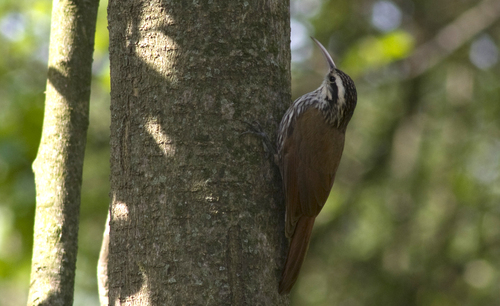 Narrow-billed Woodcreeper
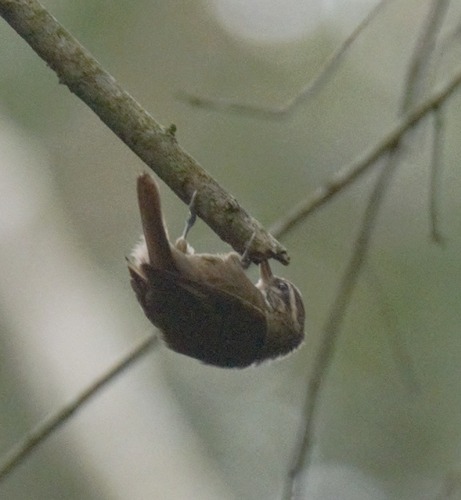 Plain Xenops
In breve
Il segno di campo più affidabile per separare il Narrow-billed Woodcreeper dal Plain Xenops è la struttura complessiva: il woodcreeper è molto più grande, con un becco lungo, sottile e ricurvo, mentre lo xenops è piccolo, compatto e ha un becco corto, tozzo e leggermente rivolto verso l'alto. In tutte le livree, il woodcreeper mostra una corona e parti superiori striate, mentre lo xenops è per lo più non striato sopra, tranne che per una corona debolmente striata. In volo o posato, il corpo snello ed allungato del woodcreeper e la lunga coda contrastano nettamente con la forma corta e arrotondata dello xenops e la sua distintiva coda cannella con nero. Entrambe le specie possono mostrare un supercilium pallido, ma lo xenops ha una marcatura malare bianca audace e una pancia grigio-marrone uniforme, mentre le parti inferiori del woodcreeper sono striate o macchiate. I woodcreepers giovanili sono più scuri e più striati sotto, ma sono comunque più grandi e con un becco più lungo di qualsiasi xenops.
Consigli di identificazione
- Size and shape: Il woodcreeper è molto più grande e lungo dello xenops. Se l'uccello appare piccolo, compatto e con una coda corta, è quasi certamente uno xenops.
- Bill shape: Il woodcreeper ha un becco lungo, sottile e distintamente ricurvo; lo xenops ha un becco corto, tozzo e leggermente rivolto verso l'alto. La forma del becco è visibile anche a distanza moderata ed è diagnostica.
- Crown and upperparts streaking: Il woodcreeper (tutte le età) mostra forti striature bianco-giallastre su una corona e una nuca scure, e spesso sulla parte superiore della schiena. Lo xenops ha solo deboli striature sulla corona e altrimenti parti superiori uniformi.
- Supercilium and malar: Entrambe le specie hanno un supercilium pallido, ma quello dello xenops è più audace e accompagnato da una larga striscia malare bianca pura, formando un forte contrasto facciale. Il supercilium del woodcreeper è bianco-giallastro, si allarga posteriormente ed è bordato sopra da una corona nerognola e dietro da una striscia nera, ma manca della malare dello xenops.
- Underparts: Il woodcreeper ha parti inferiori bianco-giallastre con macchie o striature scure (più evidenti sul petto e sulle copritrici della coda, sfumando sulla pancia). Lo xenops è uniformemente di un grigio-marrone opaco sotto, con una gola pallida, per lo più non striata.
- Tail and wing pattern: Lo xenops ha una coda cannella con molto nero, e ali con una larga banda giallo-ocra o ocra sulle penne alari—questo è visibile in volo o quando le ali sono spiegate. Il woodcreeper ha una coda e ali rosso-castagne, con web esterni più marroni e punte nerognole sulle primarie, ma mancano della forte banda alare dello xenops.
- Juvenile plumage: I woodcreepers giovanili sono più scuri sopra, con un supercilium e parti inferiori più giallastre, e una striatura più pesante sotto—sono comunque più grandi e più striati di qualsiasi xenops. Gli xenops giovanili assomigliano agli adulti.
- Leg color: Le gambe e i piedi del woodcreeper sono grigio-verdastri a grigio scuro; quelli dello xenops sono grigio-bluastro. Questo è sottile ma può aiutare a distanza ravvicinata.
- Foraging behavior: Il woodcreeper scala tronchi e grandi rami, muovendosi verticalmente; lo xenops cerca cibo su rami sottili, spesso appeso in modo acrobatico o lavorando su legno marcio e viti.
- Posture and movement: Il woodcreeper è eretto, allungato e deliberato; lo xenops è più orizzontale, veloce e agile, spesso muovendo ali e coda.
- Habitat context: In boschi aperti o savane, aspettati il woodcreeper; in foreste dense e umide, è più probabile trovare lo xenops.
- Iris color: Entrambi hanno iridi da marroni a castagne, non un forte separatore.
- Sex differences: Entrambe le specie sono sessualmente monomorfiche nella livrea.
- Flight style: Il volo del woodcreeper è forte e diretto; lo xenops è veloce e fluttuante, spesso facendo brevi salti tra i rami.
- Pitfalls: A distanza, entrambi possono mostrare un supercilium pallido e parti superiori marroni, ma la combinazione di dimensioni, forma del becco e modello delle parti inferiori li separerà sempre se visti bene.
Taglia
Il Narrow-billed Woodcreeper è sostanzialmente più grande (18–22 cm di lunghezza; maschi 23–37,5 g, femmine 21,5–33,5 g) rispetto al Plain Xenops (circa 12 cm, 8,5–13 g) [wikipedia][wikidata]. La dimensione del woodcreeper è ovvia anche a distanza, apparendo snella e allungata, mentre lo xenops è notevolmente piccolo e compatto. In stormi misti, il woodcreeper sovrasta lo xenops, che è uno dei più piccoli ovenbirds.
Piumaggio
Il giovanile Narrow-billed Woodcreeper è più scuro complessivamente rispetto agli adulti, con una testa nerognola, un supercilium e parti inferiori più giallastre, e una striatura più distinta sotto. Questa età è comunque più grande e più striata di qualsiasi xenops. I woodcreepers adulti hanno un supercilium pallido giallastro (che si allarga posteriormente), una corona e una nuca marrone-nerognola con striature bianco-giallastre, un dorso e copritrici rosso-marroni con un leggero olivastro, e ali e coda rosso-castagne. Le parti inferiori sono bianco-giallastre con macchie o striature scure, sfumando sulla pancia ma riapparendo sulle copritrici della coda. Al contrario, gli adulti e i giovanili del Plain Xenops sono non striati sopra, tranne che per una corona leggermente striata, con parti superiori marroni opache a rosso-marroni, un audace supercilium giallastro o bianco, e una larga striscia malare bianca pura. La coda è cannella con molto nero, e le ali mostrano una larga banda giallo-ocra o ocra sulle penne alari. Le parti inferiori sono uniformemente di un grigio-marrone opaco, con una gola pallida, per lo più non striata. Il becco dello xenops è nerognolo sopra e pallido sotto, corto e leggermente rivolto verso l'alto, mentre quello del woodcreeper è lungo, sottile e ricurvo, grigio pallido a corno rosato.
Comportamento
Il Narrow-billed Woodcreeper cerca cibo tipicamente arrampicandosi su tronchi e grandi rami, usando il suo lungo becco per sondare la corteccia e le fessure, muovendosi spesso verticalmente. Di solito viene visto singolarmente o in coppie, a volte unendosi a stormi misti di specie ma rimanendo sui tronchi e sui rami principali. Il Plain Xenops è molto più attivo e acrobatico, cercando cibo su rami sottili, spesso morti o caduti, viti e nel sottobosco fino ai livelli medi. Batte, solleva e raccoglie con il suo becco rivolto verso l'alto, spesso unendosi a stormi misti e utilizzando una gamma più ampia di substrati di foraggiamento, incluso appendersi a testa in giù. In volo, il woodcreeper è diretto e forte, mentre lo xenops è veloce e fluttuante.
Habitat
Entrambe le specie possono verificarsi in regioni sovrapposte di Argentina, Brasile e Paraguay, ma le loro preferenze microambientali differiscono. Il Narrow-billed Woodcreeper predilige boschi aperti, foreste galleria, savane e margini forestali, spesso in habitat più secchi o aperti. Il Plain Xenops è più strettamente legato a foreste umide, specialmente il sottobosco e i livelli medi, e si trova spesso in ambienti più densi e a chioma chiusa. Se visto in un bosco secco e aperto, è più probabile che si tratti di un woodcreeper; in una foresta densa e umida, è più atteso lo xenops.
Narrow-billed Woodcreeper · Plain Xenops · I miei uccelli difficili