

Motmot

マミジロオニキバシリ 対 サザイカマドドリ

Lepidocolaptes angustirostris 対 Spartonoica maluroides

マミジロオニキバシリとサザイカマドドリのクイズ
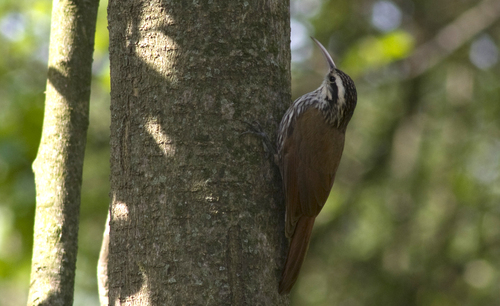
マミジロオニキバシリ (Lepidocolaptes angustirostris) マミジロオニキバシリ
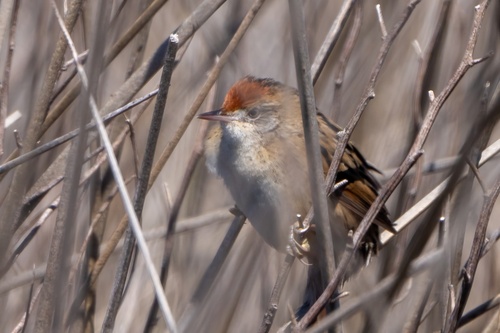
サザイカマドドリ (Spartonoica maluroides) サザイカマドドリ

メディア

読み込み中…

要点

ナロービルドウッドクリーパーとサザイカマドドリを分ける最も信頼できる方法は全体的な構造によるものです:ウッドクリーパーははるかに大きく、スリムで、長く細い下向きのくちばしを持っていますが、カマドドリは小さく、コンパクトで、短くまっすぐなくちばしを持っています。幼鳥のウッドクリーパーは上面が暗く、下面により明確な縞模様がありますが、それでもその形と長い尾が際立っています。飛んでいるときや止まっているとき、ウッドクリーパーの赤褐色の翼と尾は、カマドドリの茶色の段階的な尾と砂色の上面と対照的です。生息地も強い手がかりです:ウッドクリーパーは森林や森の縁に見られ、カマドドリは湿地や葦原に限定されています。

識別のコツ

  1. Size and shape: ウッドクリーパーははるかに大きくスリムで、長い尾と細長い体を持っています;カマドドリは小さく、コンパクトで、丸い体をしています。これは距離があっても明らかです。
  2. Bill structure: ウッドクリーパーは長く細い下向きのくちばしを持っています;カマドドリは短くまっすぐなくちばしを持っています。くちばしの形は見えるときに診断的です。
  3. Tail: ウッドクリーパーの尾は長く、まっすぐで、赤褐色です;カマドドリの尾は短く、段階的(下にステップダウン)、尖っており、中央の羽に黒が少しあるほとんど茶色です。
  4. Wing and tail color in flight: ウッドクリーパーは特に飛んでいるときに赤褐色の翼と尾を示します;カマドドリの翼は基部にシナモン色があり、尾は茶色で中央に黒があります。
  5. Supercilium and face: 両方とも淡いスーパシリウムを持っていますが、ウッドクリーパーのものはバフィホワイトで後方に広がり、目の後ろに黒いストライプがあります;カマドドリのものは砂色の茶色の顔に白っぽく、黒い目のストライプはありません。
  6. Crown and nape: ウッドクリーパーは淡い縞模様のある黒褐色の冠/後頭部を持っています;カマドドリは赤褐色の冠と後頭部と上背中にのみ太い黒い縞模様があります。
  7. Underparts: ウッドクリーパーの下部はバフィホワイトで、暗い斑点/縞模様があります(幼鳥ではより明確です);カマドドリの下部は白っぽく、胸、側面、腹部にバフまたはシナモン色の色合いがあり、一般的に斑点はありません。
  8. Juvenile marks: 幼鳥のウッドクリーパーは上面が暗く、頭部がより黒っぽく、オクラ色のスーパシリウムと下部を持ち、下面により明確な縞模様があります。カマドドリの幼鳥の記述はありませんが、下面に重い縞模様を示す可能性は低いです。
  9. Behavior: ウッドクリーパーは幹や枝を登ります;カマドドリは湿地の植物の低いところで餌を探し、決して木に登りません。
  10. Habitat: ウッドクリーパーは森林/森の縁にいます;カマドドリは湿地や葦原にのみいます。生息地はしばしば決定的です。
  11. Leg color: ウッドクリーパーの足は緑がかった灰色から暗い灰色です;カマドドリの足は淡いタン色です。よく見える場合に役立ちます。
  12. Iris color: ウッドクリーパーの虹彩は茶色から栗色です;カマドドリの虹彩は鈍い白から淡い青みがかった色です。微妙ですが、近くで見ると役立つことがあります。
  13. Voice: カマドドリはバッタのようなブンブン音を出します;ウッドクリーパーの声はここでは説明されていません。湿地でブンブン音を聞いたら、それはカマドドリです。
  14. Sexes: 両種は性別的に単形(オスとメスは似ています)であるため、性別は分離には役立ちません。
  15. Subspecies variation: ウッドクリーパーは赤褐色/オリーブ色のトーンと縞模様に地域的な変異を示しますが、常に同じ構造と一般的なパターンを保持します;カマドドリは単型で、暗さ/サイズのわずかな変異のみがあります。

大きさ

ナロービルドウッドクリーパーはサザイカマドドリ(13–14.5 cm、約11 g)よりもかなり大きい(18–22 cm、オス23–37.5 g、メス21.5–33.5 g)です[wikipedia][wikidata]。ウッドクリーパーはほぼ2倍の重さで、明らかに長く、より細長い体と尾を持っています。フィールドでは、ウッドクリーパーはスリムで伸びたように見えますが、カマドドリは小さく、コンパクトで丸い体をしています。

羽色

幼鳥のナロービルドウッドクリーパーは上面が暗く、より黒っぽい頭、オクラ色のスーパシリウムと下部、そして成鳥と比較してより明確な縞模様があります。成鳥はバフィホワイトのスーパシリウム、淡い縞模様のある黒褐色の冠と後頭部、赤褐色の背中と翼の覆い、赤褐色の翼と尾を示します。喉と頬は無地の白っぽく、胸/腹部はバフィホワイトで暗い斑点や縞模様があります。対照的に、サザイカマドドリ(成鳥;幼鳥の記述なし)は赤褐色の冠、後頭部と上背中に太い黒い縞模様のある砂色の茶色からオリーブ色の上面、飛翔羽の基部にシナモン色のある茶色の翼、尖った羽を持つ茶色の段階的な尾(中央のペアに黒が少し)を持っています。スーパシリウムは白っぽく、顔は砂色の茶色で、下部は胸、側面、腹部にバフ/シナモン色の色合いがあり、一般的に斑点はありません。ウッドクリーパーの下翼の覆い羽はバラ色のシナモン色ですが、カマドドリの下翼は記述されていません。ウッドクリーパーの羽毛は上面と下面でより縞模様が多く(特に幼鳥では)、その翼と尾はより赤褐色ですが、カマドドリはより砂色の茶色で全体的に赤褐色が少ないです。

行動

ナロービルドウッドクリーパーは通常、木の幹や枝を登りながら餌を探し、長いくちばしで樹皮や隙間を探ります。その動きは垂直で意図的であり、しばしば単独または混合群れで森林の生息地に見られます。サザイカマドドリは湿地の草やセジから昆虫を採取することで餌を探し、通常は地面に近く、しばしば密な湿地の植物の中で深く見られます。その動きは素早く、マウスのようで、湿地から離れているところはほとんど見られません。ウッドクリーパーの行動は強く樹上性ですが、カマドドリは厳密に陸生で湿地に依存しています。

生息環境

ナロービルドウッドクリーパーは、アルゼンチン、ボリビア、ブラジル、パラグアイ、スリナム、ウルグアイの森林の縁、森林、さらには樹木のある人間が改変した地域など、さまざまな森林生息地に見られます。対照的に、サザイカマドドリはアルゼンチン、ブラジル、パラグアイ、ウルグアイの淡水、塩水、汽水の湿地の葦原とセジに限定されています。カマドドリは森林や林地には存在せず、その存在は湿地生息地の強い指標です。もし鳥が密な湿地の植物の中に見られたら、それはほぼ確実にカマドドリです;もし木や森林にいるなら、それはウッドクリーパーです。

声

サザイカマドドリの主な歌は「バッタのようなブンブン音、長く...」と説明されており[wikipedia]、湿地の鳥の中で独特です。ナロービルドウッドクリーパーに関しては音声の記述は提供されていないため、声はカマドドリのブンブン音が聞こえた場合にのみ役立ちます;そうでなければ、視覚的な特徴に頼ります。

より良い説明を送る

比較と同じ項目を使ってください。文章はすぐに公開されます。

The most reliable way to separate Narrow-billed Woodcreeper from Bay-capped Wren-Spinetail is by overall structure: the woodcreeper is much larger, slimmer, and has a long, slender, decurved bill, while the wren-spinetail is small, compact, and has a short, straight bill. Juvenile woodcreepers are darker above with more distinct streaking below, but even so, their shape and long tail stand out. In flight or perched, the woodcreeper's rufous-chestnut wings and tail contrast with the wren-spinetail's brown, graduated tail and sandy upperparts. Habitat is also a strong clue: woodcreepers are found in woodland and forest edges, while wren-spinetails are restricted to marshes and reedbeds.

  1. Size and shape: The woodcreeper is much larger and slimmer, with a long tail and elongated body; the wren-spinetail is small, compact, and round-bodied. This is obvious even at a distance.
  2. Bill structure: Woodcreeper has a long, slender, decurved bill; wren-spinetail has a short, straight bill. Bill shape is diagnostic when visible.
  3. Tail: Woodcreeper's tail is long, straight, and rufous-chestnut; wren-spinetail's tail is shorter, graduated (steps down), pointed, and mostly brown with some black on the central feathers.
  4. Wing and tail color in flight: Woodcreeper shows rufous-chestnut wings and tail, especially in flight; wren-spinetail's wings are brown with cinnamon at the base, tail brown with black centers.
  5. Supercilium and face: Both have a pale supercilium, but woodcreeper's is buffy white and widens to the rear, with a black stripe behind the eye; wren-spinetail's is whitish on a sandy brown face, with no black eye-stripe.
  6. Crown and nape: Woodcreeper has a blackish brown crown/nape with pale streaks; wren-spinetail has a rufous crown and bold black streaks only on the nape and upper back.
  7. Underparts: Woodcreeper's underparts are buffy-white with dusky spots/streaks (more distinct in juveniles); wren-spinetail's are whitish with a buff or cinnamon tinge, and generally unstreaked except for some color on the breast/sides.
  8. Juvenile marks: Juvenile woodcreepers are darker above, more blackish on the head, with ochraceous supercilium and underparts, and more distinct streaks below. No juvenile description for wren-spinetail, but unlikely to show heavy streaking below.
  9. Behavior: Woodcreeper climbs trunks and branches; wren-spinetail forages low in marsh vegetation, never climbing trees.
  10. Habitat: Woodcreeper in woodland/forest edge; wren-spinetail only in marshes and reedbeds. Habitat is often decisive.
  11. Leg color: Woodcreeper's legs are greenish gray to dark gray; wren-spinetail's are light tan. Useful if seen well.
  12. Iris color: Woodcreeper's iris is brown to chestnut; wren-spinetail's is dull white to pale bluish. Subtle but can help in close views.
  13. Voice: Wren-spinetail gives a grasshopper-like buzz; woodcreeper's voice not described here. If you hear the buzz in marshes, it's the wren-spinetail.
  14. Sexes: Both species are sexually monomorphic (males and females look alike), so sex is not useful for separation.
  15. Subspecies variation: Woodcreeper shows some regional variation in rufous/olive tones and streaking, but always keeps the same structure and general pattern; wren-spinetail is monotypic with only minor variation in darkness/size.

Narrow-billed Woodcreeper is significantly larger (18–22 cm long; males 23–37.5 g, females 21.5–33.5 g) than Bay-capped Wren-Spinetail (13–14.5 cm, about 11 g) [wikipedia][wikidata]. The woodcreeper is almost twice as heavy and noticeably longer, with a more elongated body and tail. In the field, the woodcreeper appears slim and stretched, while the wren-spinetail is small, compact, and round-bodied.

Juvenile Narrow-billed Woodcreeper has darker upperparts, a more blackish head, ochraceous supercilium and underparts, and more distinct streaks below compared to adults. Adults show a buffy white supercilium, blackish brown crown and nape with pale streaks, rufous-brown back and wing coverts, and rufous-chestnut wings and tail. The throat and cheeks are plain whitish, and the breast/belly are buffy-white with dusky spots or streaks. In contrast, Bay-capped Wren-Spinetail (adults; no juvenile description) has a rufous crown, sandy brown to olive-brown upperparts with bold black streaks on nape and upper back, brown wings with cinnamon at the base of the flight feathers, and a brown, graduated tail with pointed feathers (central pair with some black). The supercilium is whitish, the face sandy brown, and the underparts are whitish with a buff/cinnamon tinge on the breast, sides, and flanks. The woodcreeper's underwing coverts are rosy-cinnamon, while the wren-spinetail's underwing is not described. The woodcreeper's plumage is more streaked above and below (especially in juveniles), and its wings and tail are more rufous, while the wren-spinetail is more sandy-brown and less rufous overall.

Narrow-billed Woodcreeper typically forages by hitching up tree trunks and branches, probing bark and crevices with its long bill. Its movements are vertical and deliberate, often seen alone or in mixed flocks in wooded habitats. Bay-capped Wren-Spinetail forages by gleaning insects from marsh grasses and sedges, usually low to the ground and often deep within dense marsh vegetation. Its movements are quick and mouse-like, and it is rarely seen away from marshes. The woodcreeper's behavior is strongly arboreal, while the wren-spinetail is strictly terrestrial and marsh-bound.

Narrow-billed Woodcreeper is found in a variety of wooded habitats, including forest edges, woodlands, and even human-modified areas with trees, across Argentina, Bolivia, Brazil, Paraguay, Suriname, and Uruguay. In contrast, Bay-capped Wren-Spinetail is restricted to reedbeds and sedges in freshwater, brackish, and saltwater marshes in Argentina, Brazil, Paraguay, and Uruguay. The wren-spinetail is absent from forests and woodlands, and its presence is a strong indicator of marsh habitat. If the bird is seen in dense marsh vegetation, it is almost certainly a wren-spinetail; if in trees or woodland, it is a woodcreeper.

The Bay-capped Wren-Spinetail's primary song is described as a 'grasshopper-like buzz, long and...' [wikipedia], which is distinctive among marsh birds. No vocal description is provided for Narrow-billed Woodcreeper in the notes, so voice is only useful if the wren-spinetail's buzzing is heard; otherwise, rely on visual marks.

変更を破棄しますか?

保存していない編集があります。今離れると失われます。

マミジロオニキバシリ · サザイカマドドリ · 苦手な鳥