

Narrow-billed Woodcreeper vs Bay-capped Wren-Spinetail
Lepidocolaptes angustirostris contro Spartonoica maluroides
Fai un quiz con Narrow-billed Woodcreeper e Bay-capped Wren-Spinetail
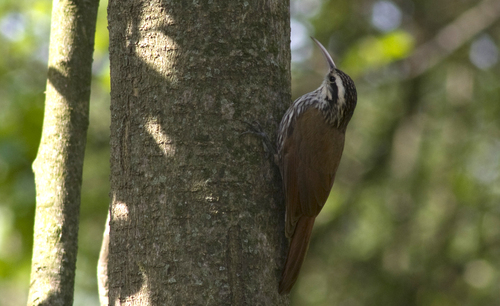 Narrow-billed Woodcreeper
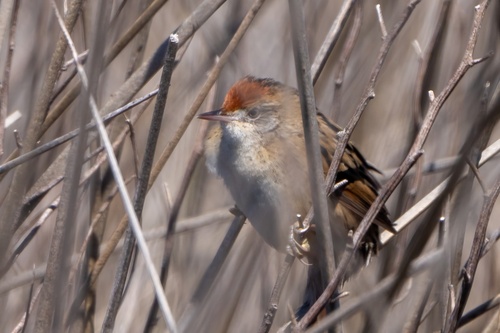 Bay-capped Wren-Spinetail
In breve
Il modo più affidabile per separare il Narrow-billed Woodcreeper dal Bay-capped Wren-Spinetail è la struttura complessiva: il woodcreeper è molto più grande, più snello e ha un becco lungo, sottile e ricurvo, mentre il wren-spinetail è piccolo, compatto e ha un becco corto e dritto. I woodcreepers juvenili sono più scuri sopra con striature più distinte sotto, ma anche così, la loro forma e la lunga coda si distinguono. In volo o posati, le ali e la coda ruggine-castagna del woodcreeper contrastano con la coda marrone e graduata e le parti superiori sabbiose del wren-spinetail. L'habitat è anche un forte indizio: i woodcreepers si trovano in boschi e margini forestali, mentre i wren-spinetails sono limitati a paludi e canneti.
Consigli di identificazione
- Dimensione e forma: Il woodcreeper è molto più grande e snello, con una lunga coda e un corpo allungato; il wren-spinetail è piccolo, compatto e di corpo rotondo. Questo è ovvio anche a distanza.
- Struttura del becco: Il woodcreeper ha un becco lungo, sottile e ricurvo; il wren-spinetail ha un becco corto e dritto. La forma del becco è diagnostica quando è visibile.
- Coda: La coda del woodcreeper è lunga, dritta e ruggine-castagna; la coda del wren-spinetail è più corta, graduata (scende a gradini), appuntita e per lo più marrone con alcune piume centrali nere.
- Colore delle ali e della coda in volo: Il woodcreeper mostra ali e coda ruggine-castagna, specialmente in volo; le ali del wren-spinetail sono marroni con cannella alla base, la coda marrone con centri neri.
- Supercilium e faccia: Entrambi hanno un supercilium pallido, ma quello del woodcreeper è bianco sporco e si allarga verso il retro, con una striscia nera dietro l'occhio; quello del wren-spinetail è biancastro su una faccia marrone sabbiosa, senza striscia nera attorno all'occhio.
- Corona e nuca: Il woodcreeper ha una corona/nuca marrone scuro con striature chiare; il wren-spinetail ha una corona ruggine e striature nere audaci solo sulla nuca e sulla parte superiore della schiena.
- Parte inferiore: La parte inferiore del woodcreeper è bianco sporco con macchie/striature scure (più distinte nei juvenili); quella del wren-spinetail è biancastra con una sfumatura color crema o cannella, e generalmente senza striature tranne per qualche colore sul petto/lati.
- Segni giovanili: I woodcreepers juvenili sono più scuri sopra, più neri sulla testa, con supercilium e parte inferiore ocra, e striature più distinte sotto. Nessuna descrizione giovanile per il wren-spinetail, ma è improbabile che mostri pesanti striature sotto.
- Comportamento: Il woodcreeper scala tronchi e rami; il wren-spinetail cerca cibo in basso nella vegetazione palustre, senza mai arrampicarsi sugli alberi.
- Habitat: Woodcreeper in boschi/margini forestali; wren-spinetail solo in paludi e canneti. L'habitat è spesso decisivo.
- Colore delle gambe: Le gambe del woodcreeper sono grigio-verde scuro; quelle del wren-spinetail sono di un marrone chiaro. Utile se visto bene.
- Colore dell'iride: L'iride del woodcreeper è marrone-castagna; quella del wren-spinetail è bianco opaco a bluastro pallido. Sottile ma può aiutare in viste ravvicinate.
- Voce: Il wren-spinetail emette un ronzio simile a quello di un grillo; la voce del woodcreeper non è descritta qui. Se senti il ronzio nelle paludi, è il wren-spinetail.
- Sessi: Entrambe le specie sono sessualmente monomorfiche (maschi e femmine si somigliano), quindi il sesso non è utile per la separazione.
- Variazione delle sottospecie: Il woodcreeper mostra alcune variazioni regionali nei toni ruggine/oliva e nelle striature, ma mantiene sempre la stessa struttura e il modello generale; il wren-spinetail è monotipo con solo lievi variazioni di oscurità/dimensione.
Taglia
Il Narrow-billed Woodcreeper è significativamente più grande (18–22 cm di lunghezza; maschi 23–37,5 g, femmine 21,5–33,5 g) rispetto al Bay-capped Wren-Spinetail (13–14,5 cm, circa 11 g) [wikipedia][wikidata]. Il woodcreeper è quasi due volte più pesante e visibilmente più lungo, con un corpo e una coda più allungati. Sul campo, il woodcreeper appare snello e allungato, mentre il wren-spinetail è piccolo, compatto e di corpo rotondo.
Piumaggio
Il juvenile Narrow-billed Woodcreeper ha parti superiori più scure, una testa più nera, supercilium e parte inferiore ocra, e striature più distinte sotto rispetto agli adulti. Gli adulti mostrano un supercilium bianco sporco, una corona e nuca marrone scuro con striature chiare, dorso e copritrici delle ali ruggine-marrone, e ali e coda ruggine-castagna. La gola e le guance sono bianche semplici, e il petto/barriga sono bianco sporco con macchie o striature scure. Al contrario, il Bay-capped Wren-Spinetail (adulti; nessuna descrizione giovanile) ha una corona ruggine, parti superiori marrone sabbioso a marrone oliva con audaci striature nere sulla nuca e sulla parte superiore della schiena, ali marroni con cannella alla base delle piume di volo, e una coda marrone graduata con piume appuntite (coppia centrale con alcune nere). Il supercilium è biancastro, la faccia è marrone sabbioso, e le parti inferiori sono bianche con una sfumatura color crema/cannella sul petto, lati e fianchi. Le copritrici delle ali inferiori del woodcreeper sono rosa-cannella, mentre l'ala inferiore del wren-spinetail non è descritta. Il piumaggio del woodcreeper è più striato sopra e sotto (specialmente nei juvenili), e le sue ali e coda sono più ruggine, mentre il wren-spinetail è più marrone sabbioso e meno ruggine nel complesso.
Comportamento
Il Narrow-billed Woodcreeper cerca tipicamente cibo arrampicandosi su tronchi e rami, sondando la corteccia e le fessure con il suo lungo becco. I suoi movimenti sono verticali e deliberati, spesso visti da soli o in stormi misti in habitat boschivi. Il Bay-capped Wren-Spinetail cerca cibo raccogliendo insetti dalle erbe palustri e dalle giunchiglie, di solito vicino al suolo e spesso in profondità nella vegetazione palustre densa. I suoi movimenti sono rapidi e simili a quelli di un topo, e raramente viene visto lontano dalle paludi. Il comportamento del woodcreeper è fortemente arboricolo, mentre il wren-spinetail è strettamente terrestre e legato alle paludi.
Habitat
Il Narrow-billed Woodcreeper si trova in una varietà di habitat boschivi, inclusi margini forestali, boschi e persino aree modificate dall'uomo con alberi, in Argentina, Bolivia, Brasile, Paraguay, Suriname e Uruguay. Al contrario, il Bay-capped Wren-Spinetail è limitato a canneti e giunchiglie in paludi d'acqua dolce, salmastra e salata in Argentina, Brasile, Paraguay e Uruguay. Il wren-spinetail è assente da foreste e boschi, e la sua presenza è un forte indicatore di habitat palustre. Se l'uccello è visto in vegetazione palustre densa, è quasi certamente un wren-spinetail; se in alberi o boschi, è un woodcreeper.
Voce
Il canto principale del Bay-capped Wren-Spinetail è descritto come un 'ronzio simile a quello di un grillo, lungo e...' [wikipedia], che è distintivo tra gli uccelli delle paludi. Nessuna descrizione vocale è fornita per il Narrow-billed Woodcreeper nelle note, quindi la voce è utile solo se si sente il ronzio del wren-spinetail; altrimenti, fare affidamento sui segni visivi.
Narrow-billed Woodcreeper · Bay-capped Wren-Spinetail · I miei uccelli difficili