

Motmot

ムナフハウチワドリ 対 ミドリコムシクイ

Phragmacia substriata 対 Camaroptera brachyura

ムナフハウチワドリとミドリコムシクイのクイズ
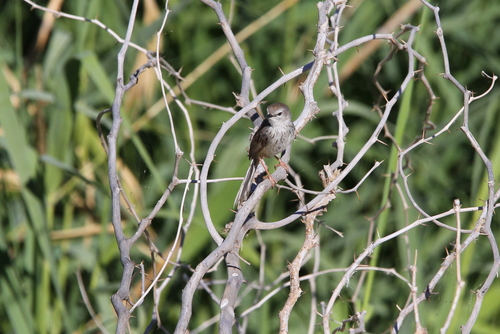
ムナフハウチワドリ (Phragmacia substriata) ムナフハウチワドリ
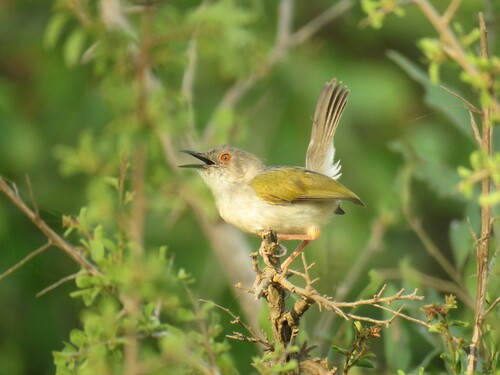
ミドリコムシクイ (Camaroptera brachyura) ミドリコムシクイ

メディア

読み込み中…

要点

ナマクアハウチワドリとミドリコムシクイの最も信頼できるフィールドマークは尾です:ナマクアハウチワドリは明らかに長く、茶色で、しばしば傾いている尾を持っていますが、ミドリコムシクイははるかに短く、丸い尾を示します。さらに、ナマクアハウチワドリは上面が豊かな赤褐色で、白くわずかに縞模様のある胸を持つのに対し、ミドリコムシクイは上面が緑オリーブ色で、下部は無地の白灰色です。両種の幼鳥はより鈍い色合いですが、コムシクイの若鳥はより淡い黄色の胸を示し、縞模様はありません。両種は小さく、活発なハウチワドリですが、構造、尾、上面の色がフィールドでの鍵となります。

識別のコツ

  1. Tail length and shape: ナマクアハウチワドリは長く、茶色の尾を持ち、しばしば角度をつけて傾いています;ミドリコムシクイの尾は短く、丸いです。これはすべての年齢と季節で最も一貫したフィールドマークです。
  2. Tail behavior: ナマクアハウチワドリは頻繁に尾を上げます;コムシクイはめったにそうせず、尾を下げたままにしたり、短く振ったりします。
  3. Upperpart color: ナマクアハウチワドリは上面が豊かな赤褐色ですが、コムシクイは緑オリーブ色です。強い光の下では、コムシクイの緑はかなり明るく見えることがありますが、ナマクアハウチワドリは常に暖かい茶色に見えます。
  4. Underparts: ナマクアハウチワドリは白い喉と胸を持ち、わずかに縞模様があります(成鳥)、そしてバフ色の脇腹があります。コムシクイは下部が無地の白灰色で、縞模様はありません;幼鳥はより淡い黄色の洗いが見られることがありますが、決して縞模様はありません。
  5. Eyebrow: ナマクアハウチワドリは明確な白い眉があります;コムシクイは強い眉がなく、顔はより地味です。
  6. Bill: ナマクアハウチワドリは短く、まっすぐな黒いくちばしを持っています;コムシクイのくちばしも短いですが、やや太く見えることがあります。これは微妙で、フィールドでは常に信頼できるわけではありません。
  7. Leg color: ナマクアハウチワドリはピンクがかった茶色の足を持っています;コムシクイの足の色は指定されていないため、これは強い区別要因ではありません。
  8. Jizz/structure: ナマクアハウチワドリは尾のためにより長く、より「ふわふわ」と見えます;コムシクイはコンパクトで丸みを帯びています。
  9. Flight view: 飛行中、ナマクアハウチワドリの長い尾と赤褐色のトーンは明らかです;コムシクイは短い尾と緑がかった外観を持ちます。
  10. Juvenile confusion: 若いナマクアハウチワドリは鈍い色合いですが、同じ構造とわずかな胸の縞模様を示します;若いコムシクイは下部がより淡く、時には黄色がかっていますが、決して縞模様はありません。
  11. Habitat: 非常に密な葉のカバーの中では、コムシクイの方が可能性が高いです;開けた低木の中では、特に鳥が見え、尾を傾けている場合は、ナマクアハウチワドリを疑ってください。
  12. Group behavior: ナマクアハウチワドリはしばしば小さな群れやペアで見られ、開けた低木の中を移動します;コムシクイは通常、単独またはペアで、めったに開けた場所には出ません。
  13. Vocalizations: 高音の「ツリープ・ツリープ・トゥルルル」という声が聞こえた場合、ナマクアハウチワドリを支持します;コムシクイの鳴き声はここでは説明されていません。
  14. Sex and season: 両種は性的二形性がほとんどないため、これらのマークは年間を通じて適用されます。
  15. Common pitfalls: 主な混乱は、サイズと全体的な小さなハウチワドリの形から生じます。決定する前に、尾の長さ、上面の色、下部のパターンを常に確認してください。

大きさ

両種は小さなシスティコリダですが、ミドリコムシクイは約10グラムでわずかに軽いです [wikidata]。ナマクアハウチワドリは少し長く(12–13 cm対コムシクイの11.5 cm) [wikipedia]、主にその長い尾のためです。手に取ったり近距離で見ると、ナマクアハウチワドリは尾のためにより細長く「ふわふわ」と見えますが、コムシクイはよりコンパクトで丸みを帯びています。

羽色

行動

ナマクアハウチワドリは通常、ペアまたは小さな群れで見られ、尾を上げて低木の中で餌を探します。開けたまたは半開けの低木の中を活発に移動しているのが見られる可能性が高いです。ミドリコムシクイは非常に隠れがちで、通常は密なカバーの中で低く留まり、完全に自分をさらけ出すことはめったにありません。その動きはより秘密主義的で、厚い茂みの中で跳ね回り、尾を傾けることはめったにありません。

生息環境

ナマクアハウチワドリは低木を好み、しばしば乾燥したまたは半乾燥地域に生息し、通常はコムシクイと比較してより開けた状況で見られます。ミドリコムシクイは密なカバーと強く関連しており、しばしば湿った藪や絡み合った茂み、または茂った下草の中にいます。鳥が密で葉の多いカバーの中で見られる場合、コムシクイの方が可能性が高いです;開けた低木の中では、ナマクアハウチワドリを疑ってください。

声

ナマクアハウチワドリは高音の「ツリープ・ツリープ・トゥルルル」という鳴き声を出します。メモにはミドリコムシクイの声の詳細は提供されていないため、声はここでは信頼できる区別要因ではありません。

より良い説明を送る

比較と同じ項目を使ってください。文章はすぐに公開されます。

The most reliable field mark between Namaqua Warbler and Green-backed Camaroptera is the tail: Namaqua Warbler has a distinctly long, brown, and often cocked tail, while Green-backed Camaroptera shows a much shorter, rounded tail. In addition, Namaqua Warbler is a rich russet brown above with a white, faintly streaked breast, whereas Green-backed Camaroptera is green-olive above with plain whitish-grey underparts. Juveniles of both are duller, but the Camaroptera's young show a paler yellowish breast, not streaked. Both species are small, active warblers, but their structure, tail, and upperpart color are key in the field.

  1. Tail length and shape: Namaqua Warbler has a long, brown tail, often cocked at an angle; Green-backed Camaroptera's tail is short and rounded. This is the single most consistent field mark in all ages and seasons.
  2. Tail behavior: Namaqua Warbler frequently cocks its tail up; Camaroptera rarely does, keeping its tail lowered or flicking it briefly.
  3. Upperpart color: Namaqua Warbler is rich russet brown above, while Camaroptera is green-olive. In strong light, the green of Camaroptera can be quite bright, whereas Namaqua Warbler always looks warm brown.
  4. Underparts: Namaqua Warbler shows a white throat and breast with faint streaking (adults), and buff flanks. Camaroptera is plain whitish-grey below, with no streaking; juveniles may show a paler yellowish wash but never streaks.
  5. Eyebrow: Namaqua Warbler has a distinct whitish eyebrow; Camaroptera lacks a strong eyebrow, with a plainer face.
  6. Bill: Namaqua Warbler has a short, straight, black bill; Camaroptera's bill is also short but may appear slightly stubbier. This is subtle and not always reliable in the field.
  7. Leg color: Namaqua Warbler has pinkish-brown legs; Camaroptera's leg color is not specified, so this is not a strong separator.
  8. Jizz/structure: Namaqua Warbler looks longer and more 'whispy' due to its tail; Camaroptera is compact and rounded.
  9. Flight view: In flight, Namaqua Warbler's long tail and russet tones are obvious; Camaroptera appears short-tailed and greenish.
  10. Juvenile confusion: Young Namaqua Warbler is duller but still shows the same structure and faint breast streaking; young Camaroptera is paler below, sometimes yellowish, but never streaked.
  11. Habitat: In very dense, leafy cover, Camaroptera is more likely; in open scrub, especially if the bird is visible and cocking its tail, suspect Namaqua Warbler.
  12. Group behavior: Namaqua Warbler is often in small groups or pairs, moving through open scrub; Camaroptera is usually single or in pairs, rarely out in the open.
  13. Vocalizations: If you hear a high-pitched 'treeep-treep-trrrrrr', it supports Namaqua Warbler; Camaroptera's call is not described here.
  14. Sex and season: Both species show little to no sexual dimorphism, so these marks apply year-round.
  15. Common pitfalls: The main confusion arises from similar size and overall small warbler shape. Always check tail length, upperpart color, and underpart pattern before deciding.

Both species are small cisticolids, but Green-backed Camaroptera is slightly lighter at about 10 grams [wikidata]. Namaqua Warbler is a bit longer (12–13 cm vs. 11.5 cm for Camaroptera) [wikipedia], mainly due to its longer tail. In hand or at close range, Namaqua Warbler appears more elongated and 'whispy' due to its tail, while Camaroptera is more compact and rounded.

  • Juveniles: Namaqua Warbler juveniles are duller versions of adults but still show the long brown tail and faintly streaked white breast. Green-backed Camaroptera juveniles are paler overall, especially on the breast, which is yellowish rather than white or streaked.
  • Adults: Namaqua Warbler has rich russet brown upperparts, a whitish eyebrow, white throat and breast with faint streaking, and buff rear flanks. The tail is long and brown, often cocked. Green-backed Camaroptera has green upperparts, olive wings, and plain whitish-grey underparts. Its tail is short and rounded. Both sexes are similar in each species.
  • Flight views: Namaqua Warbler's long tail and russet tones are visible even in brief flight; Camaroptera's short tail and greenish upperparts stand out, with no streaking below.

Namaqua Warbler is usually seen in pairs or small groups, foraging low in scrub with its tail cocked up. It is more likely to be seen actively moving through open or semi-open scrub. Green-backed Camaroptera is highly skulking, typically staying low in dense cover and rarely exposing itself fully. Its movements are more secretive, often hopping within thick bushes and rarely cocking its tail.

Namaqua Warbler prefers low scrub, often in drier or semi-arid regions, and is usually seen in more open situations compared to Camaroptera. Green-backed Camaroptera is strongly associated with dense cover, often in moist thickets, tangles, or bushy undergrowth. If the bird is seen in dense, leafy cover, Camaroptera is more likely; in open low scrub, suspect Namaqua Warbler.

Namaqua Warbler gives a high-pitched 'treeep-treep-trrrrrr' call. No vocal details are provided for Green-backed Camaroptera in the notes, so voice is not a reliable separator here.

変更を破棄しますか?

保存していない編集があります。今離れると失われます。

ムナフハウチワドリ · ミドリコムシクイ · 苦手な鳥