

Motmot

セイキインコ 対 ゴクラクインコ

Psephotellus varius 対 Psephotellus pulcherrimus

セイキインコとゴクラクインコのクイズ
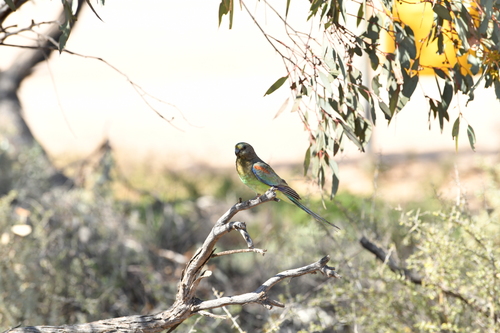
セイキインコ (Psephotellus varius) セイキインコ
ゴクラクインコ (Psephotellus pulcherrimus) ゴクラクインコ

メディア

読み込み中…

要点

ムルガインコとゴクラクインコを区別する最も信頼できる方法は、分布と状態によるものです:ゴクラクインコは絶滅しており、ムルガインコは乾燥したオーストラリア南部に広く分布しています。標本、写真、または歴史的記録を比較する場合は、全体の色合いと尾の構造に焦点を当ててください。オスのムルガインコは明るい緑色で、黄色、青、赤のハイライトがありますが、ゴクラクインコはターコイズ、アクア、スカーレット、黒の目を引く混合色を示し、尾は体とほぼ同じ長さです。メスと幼鳥のムルガインコはずっと地味で、悪い視界ではゴクラクインコと混同されることがありますが、特定の色の配置と生息地の文脈が助けになります。どちらの種についても年齢特有の上翼パターンに関する詳細なメモはないため、全体の色合い、尾の形状、文脈に頼ってください。

識別のコツ

  1. 状態と分布:ゴクラクインコは絶滅しており、今日見られる生きた鳥はムルガインコです。ゴクラクインコはかつて東クイーンズランドと北ニューサウスウェールズでのみ見られ、乾燥した内陸では決して見られませんでした。
  2. 尾の長さと形:ゴクラクインコは体とほぼ同じ長さの尾を持っており、長尾のオウムの中でも非常に細長い外観を与えます。ムルガインコの尾は長いですが、同じ極端な比率ではありません。
  3. 成鳥オスの色合い:オスのムルガインコは明るい緑色で、特に黄色の額と頭の後ろに赤い斑点があります。ゴクラクインコはターコイズ、アクア、スカーレット、黒の混合色で、より広範囲で鮮明な色合いを持っていました。
  4. メス/幼鳥の混同:メスと幼鳥のムルガインコはずっと地味で、オリーブブラウンと淡い緑のトーンを持ち、赤い肩を示すことがあります。ゴクラクインコは、色が少ない個体でもより多くのターコイズとスカーレットを示し、ムルガインコのメスのオリーブブラウンの洗い流しは決してありませんでした。
  5. 上翼パターン:どちらの種についても年齢特有の上翼または飛行パターンのマークは記載されていないため、この特徴に頼らないでください。
  6. 地面にいる行動:ゴクラクインコは非常に地上性で、草木の中で地面で餌を食べているのがよく見られました。ムルガインコはより樹上性で、長時間地面で餌を探しているのが見られることは少ないです。
  7. 生息地の文脈:ムルガインコは乾燥した、しばしばムルガに支配された低木や草地に生息しています。ゴクラクインコは東部の草木の多い開けた森林に制限されていました。
  8. くちばしの色:オスのムルガインコは黒い縁取りのある青灰色のくちばしを持ち、メスはより茶色がかった灰色のくちばしを持っています。ゴクラクインコのくちばしの色は詳細に記載されていませんが、主要なフィールドマークではありません。
  9. 上尾羽の赤:オスのムルガインコは上尾羽に赤を示し、良い視界での微妙ですが有用なマークです。ゴクラクインコの尾は、強いターコイズと黒のコントラストでより均一に色付けされていました。
  10. 黄色の中間翼カバー:オスのムルガインコは黄色の中間翼カバーを持ち、止まっている鳥のフィールドマークとして有用です。ゴクラクインコの翼の色はこの詳細には記載されていません。
  11. 性差:ムルガインコは強い性差があり、オスはメスよりもはるかに明るいです。ゴクラクインコには性差についての言及はありませんが、両性ともに色鮮やかであると記述されていました。
  12. 歴史的文脈:1927年以降の記録はゴクラクインコではありません。北部の未確認の報告は、ムルガインコではなくキビタイヒスイインコとの混同かもしれません。
  13. 卵:両種は白い卵を産みますが、サイズや形はフィールド識別には役立ちません。
  14. 群れのサイズ:ムルガインコは通常ペアで見られます;ゴクラクインコもペアまたは小さな群れで見られたため、これは診断的ではありません。
  15. 飛行スタイル:ゴクラクインコは長い尾にもかかわらず、急速な飛行者として記述されていました;ムルガインコの飛行は特に急速または遅いとは記述されていないため、注意して使用してください。

大きさ

ムルガインコは中型でスリムなオウムで、約61gの重さがあり、長さは27〜32cm、翼幅は30〜42cmです。ゴクラクインコも中型で長尾ですが、正確な質量は利用できません。両種は長い尾を持っていますが、ゴクラクインコの尾は体とほぼ同じ長さであり、オウムの中でも異常です。手に持ったり写真で見たりすると、ムルガインコはややがっしりしているように見えるかもしれませんが、サイズだけでは診断的ではありません。

羽色

どちらの種についても幼鳥や未成熟の上翼パターンの詳細な説明はないため、成鳥の羽毛に焦点を当ててください。成鳥のオスのムルガインコは主に明るい緑色で、黄色の額、頭の後ろに赤い斑点、青みがかった首、オレンジ赤のある黄色がかった腹部、青と緑のトーンの尾、上尾羽に赤が少しあります。メスはずっと地味で、オリーブブラウンの頭と胸、地味な黄色の額、淡い緑の腹部を持ち、一部には赤い肩があります。ゴクラクインコはさらに鮮やかな色合いで、ターコイズ、アクア、スカーレット、黒、茶色の混合色を持ち、尾は非常に長く、体の長さにほぼ匹敵します。スカーレットとターコイズの配置はムルガインコよりも広範囲でコントラストが強いです。両者とも尾は長いですが、ゴクラクインコの尾は比率的に長く、色のコントラストが際立っています。メスと幼鳥のムルガインコはずっと地味で、ゴクラクインコの色あせたイラストと混同される可能性がありますが、強いターコイズ-スカーレット-黒のコントラストは欠けています。

行動

ムルガインコは通常ペアで見られ、乾燥した草地やムルガの低木の中でよく見られ、特に地面にいるわけではありません。対照的に、ゴクラクインコは非常に地上性で、草木の中で地面にいる時間がほとんどで、急速な飛行と長い尾にもかかわらず、地面にいる習性はオーストラリアのオウムの中では異常であり、歴史的な記録において強い行動の手がかりとなります。

生息環境

ムルガインコはオーストラリア南部および中央部の乾燥した低木地帯や軽い森林の草地に生息しており、特にムルガ(アカシア)が存在する場所で見られます。ゴクラクインコはクイーンズランドとニューサウスウェールズの国境地域の草木の多い森林に生息しており、乾燥した内陸では記録されていません。したがって、乾燥したオーストラリア南部での現代の目撃はムルガインコであり、ゴクラクインコはより湿った草木の多い開けた森林に制限されており、現在は絶滅しています。

より良い説明を送る

比較と同じ項目を使ってください。文章はすぐに公開されます。

The most reliable way to separate Mulga Parrot from Paradise Parrot is by range and status: Paradise Parrot is extinct, while Mulga Parrot is still widespread in arid southern Australia. If comparing specimens, photos, or historical records, focus on the overall color palette and tail structure. Male Mulga Parrots are bright green with yellow, blue, and red highlights, while Paradise Parrots showed a striking mix of turquoise, aqua, scarlet, and black, with a tail nearly as long as the body. Females and immatures of Mulga Parrot are much duller and can be confused with Paradise Parrot in poor views, but the specific color placement and habitat context help. There are no detailed notes on age-specific upperwing patterns for either species, so rely on overall coloration, tail shape, and context.

  1. Status and range: Paradise Parrot is extinct; any live bird seen today is Mulga Parrot. Paradise Parrot was only ever found in eastern Queensland and northern New South Wales, never in the arid interior.
  2. Tail length and shape: Paradise Parrot had a tail almost as long as its body, giving it a very elongated look even among long-tailed parrots. Mulga Parrot's tail is long but not to the same extreme proportion.
  3. Adult male coloration: Male Mulga Parrot is bright green with blue, yellow, and red highlights, especially a yellow forehead and red patch on the back of the head. Paradise Parrot was a mix of turquoise, aqua, scarlet, and black, with more extensive and sharply contrasting colors.
  4. Female/immature confusion: Female and immature Mulga Parrots are much duller, with olive-brown and pale green tones, and may show a red shoulder. Paradise Parrot, even in less colorful individuals, showed more turquoise and scarlet, and never the olive-brown wash of female Mulga Parrot.
  5. Upperwing pattern: No age-specific upperwing or flight pattern marks are described for either species; do not rely on this feature.
  6. Ground-dwelling behavior: Paradise Parrot was highly terrestrial, often seen feeding on the ground in grassy woodlands. Mulga Parrot is more arboreal and less likely to be seen foraging on the ground for extended periods.
  7. Habitat context: Mulga Parrot is found in arid, often mulga-dominated scrub and grassland. Paradise Parrot was restricted to grassy, open woodland in the east.
  8. Bill color: Male Mulga Parrot has a blue-grey bill edged with black; females have a more brown-grey bill. Paradise Parrot's bill color is not described in detail, but is not a primary field mark.
  9. Red on upper tail coverts: Male Mulga Parrot shows some red on the upper tail coverts, a subtle but useful mark in good views. Paradise Parrot's tail was more uniformly colored with strong turquoise and black contrasts.
  10. Yellow median wing coverts: Male Mulga Parrot has yellow median wing coverts, which can be a useful field mark in perched birds. Paradise Parrot's wing coloration is not described in this detail.
  11. Sexual dimorphism: Mulga Parrot is strongly sexually dimorphic, with males much brighter than females. No mention of sexual dimorphism in Paradise Parrot, but both sexes were described as colorful.
  12. Historical context: Any record after 1927 is not Paradise Parrot. Unconfirmed reports in the north may be confusion with Golden-shouldered Parrot, not Mulga Parrot.
  13. Eggs: Both species laid white eggs, but size and shape are not useful for field identification.
  14. Group size: Mulga Parrot is usually in pairs; Paradise Parrot was also seen in pairs or small groups, so this is not diagnostic.
  15. Flight style: Paradise Parrot was described as a rapid flyer despite its long tail; Mulga Parrot's flight is not specifically described as rapid or slow, so use with caution.

Mulga Parrot is a medium-sized, slim parrot weighing about 61 g [wikidata], with a length of 27–32 cm and a wingspan of 30–42 cm [wikipedia]. Paradise Parrot was also medium-sized and long-tailed, but no precise mass is available. Both species have long tails, but Paradise Parrot's tail was almost as long as its body, which is unusual even among parrots. In hand or in photos, Mulga Parrot may appear slightly stockier, but size alone is not diagnostic.

There are no detailed descriptions of juvenile or immature upperwing patterns for either species, so focus on adult plumage. Adult male Mulga Parrots are predominantly bright green with a yellow forehead, red patch on the back of the head, blue-tinged neck, yellowish lower belly with orange-red, and a tail with blue and green tones and some red on the upper tail coverts. Females are duller, with olive-brown head and chest, dull yellow forehead, and pale green belly; some have a red shoulder. Paradise Parrot was even more vividly colored, with a mix of turquoise, aqua, scarlet, black, and brown; its tail was extremely long, nearly matching the body length. The placement of scarlet and turquoise was more extensive and contrasted than in Mulga Parrot. In both, the tail is long, but Paradise Parrot's is proportionally longer and more striking in color contrast. Female and immature Mulga Parrots are much duller and could be confused with faded illustrations of Paradise Parrot, but lack the strong turquoise-scarlet-black contrast.

Mulga Parrot is usually seen in pairs, often low in arid grassland or mulga scrub, and is not especially ground-dwelling. Paradise Parrot, in contrast, was highly terrestrial, spending most of its time on the ground in grassy woodlands, despite its rapid flight and long tail. This ground-dwelling habit was unusual among Australian parrots and is a strong behavioral clue in historical accounts.

Mulga Parrot is found in arid scrublands and lightly timbered grasslands of southern and central Australia, especially where mulga (Acacia) is present. Paradise Parrot was native to grassy woodlands in the Queensland–New South Wales border region, in the east, and was never recorded in the arid interior. Thus, any modern sighting in arid southern Australia is Mulga Parrot; Paradise Parrot was restricted to more humid, grassy, open woodland and is now extinct.

変更を破棄しますか?

保存していない編集があります。今離れると失われます。

セイキインコ · ゴクラクインコ · 苦手な鳥