

Mulga Parrot vs Paradise Parrot
Psephotellus varius contro Psephotellus pulcherrimus
Fai un quiz con Mulga Parrot e Paradise Parrot
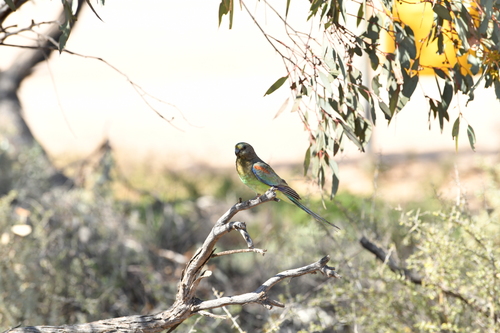 Mulga Parrot
 Paradise Parrot
In breve
Il modo più affidabile per separare il Mulga Parrot dal Paradise Parrot è attraverso l'areale e lo stato: il Paradise Parrot è estinto, mentre il Mulga Parrot è ancora diffuso nell'arido sud dell'Australia. Se si confrontano esemplari, foto o registrazioni storiche, concentrarsi sulla palette di colori complessiva e sulla struttura della coda. I maschi di Mulga Parrot sono di un verde brillante con riflessi gialli, blu e rossi, mentre i Paradise Parrot mostrano una miscela sorprendente di turchese, aqua, scarlatto e nero, con una coda quasi lunga quanto il corpo. Le femmine e gli immaturi di Mulga Parrot sono molto più opachi e possono essere confusi con il Paradise Parrot in visioni scadenti, ma la specifica disposizione dei colori e il contesto dell'habitat aiutano. Non ci sono note dettagliate sui modelli delle ali superiori specifici per età per nessuna delle due specie, quindi fare affidamento sulla colorazione complessiva, sulla forma della coda e sul contesto.
Consigli di identificazione
- Stato e areale: Il Paradise Parrot è estinto; qualsiasi uccello vivo visto oggi è un Mulga Parrot. Il Paradise Parrot è stato trovato solo nel Queensland orientale e nel New South Wales settentrionale, mai nell'interno arido.
- Lunghezza e forma della coda: Il Paradise Parrot aveva una coda quasi lunga quanto il suo corpo, conferendogli un aspetto molto allungato anche tra i pappagalli a coda lunga. La coda del Mulga Parrot è lunga ma non in proporzione così estrema.
- Colorazione del maschio adulto: Il maschio di Mulga Parrot è di un verde brillante con riflessi blu, gialli e rossi, in particolare una fronte gialla e una macchia rossa sulla parte posteriore della testa. Il Paradise Parrot era una miscela di turchese, aqua, scarlatto e nero, con colori più estesi e a forte contrasto.
- Confusione femmina/immatura: Le femmine e gli immaturi di Mulga Parrots sono molto più opachi, con toni oliva-marroni e verde pallido, e possono mostrare una spalla rossa. Il Paradise Parrot, anche negli individui meno colorati, mostrava più turchese e scarlatto, e mai il lavaggio oliva-marrone delle femmine di Mulga Parrot.
- Modello delle ali superiori: Non ci sono segni specifici per età delle ali superiori o del volo descritti per nessuna delle due specie; non fare affidamento su questa caratteristica.
- Comportamento terrestre: Il Paradise Parrot era altamente terrestre, spesso visto nutrirsi a terra in boschi erbosi. Il Mulga Parrot è più arboricolo e meno probabile da vedere cercare cibo a terra per periodi prolungati.
- Contesto dell'habitat: Il Mulga Parrot si trova in arbusti aridi, spesso dominati da mulga, e praterie. Il Paradise Parrot era ristretto a boschi aperti e umidi a est.
- Colore del becco: Il maschio di Mulga Parrot ha un becco blu-grigio bordato di nero; le femmine hanno un becco più marrone-grigio. Il colore del becco del Paradise Parrot non è descritto in dettaglio, ma non è un segno principale sul campo.
- Rosso sulle copritrici superiori della coda: Il maschio di Mulga Parrot mostra del rosso sulle copritrici superiori della coda, un segno sottile ma utile in buone visioni. La coda del Paradise Parrot era più uniformemente colorata con forti contrasti di turchese e nero.
- Copritrici mediane delle ali gialle: Il maschio di Mulga Parrot ha copritrici mediane delle ali gialle, che possono essere un segno utile sul campo negli uccelli in perching. La colorazione delle ali del Paradise Parrot non è descritta in questo dettaglio.
- Dimorfismo sessuale: Il Mulga Parrot è fortemente dimorfico sessualmente, con maschi molto più brillanti delle femmine. Non si menziona il dimorfismo sessuale nel Paradise Parrot, ma entrambi i sessi erano descritti come colorati.
- Contesto storico: Qualsiasi registrazione dopo il 1927 non è Paradise Parrot. Rapporti non confermati nel nord possono essere confusione con il Golden-shouldered Parrot, non il Mulga Parrot.
- Uova: Entrambe le specie deponevano uova bianche, ma dimensione e forma non sono utili per l'identificazione sul campo.
- Dimensione del gruppo: Il Mulga Parrot è solitamente in coppie; il Paradise Parrot è stato visto anche in coppie o piccoli gruppi, quindi questo non è diagnostico.
- Stile di volo: Il Paradise Parrot è stato descritto come un volatore rapido nonostante la sua lunga coda; il volo del Mulga Parrot non è specificamente descritto come rapido o lento, quindi usarlo con cautela.
Taglia
Il Mulga Parrot è un pappagallo di dimensioni medie e snello che pesa circa 61 g [wikidata], con una lunghezza di 27–32 cm e un'apertura alare di 30–42 cm [wikipedia]. Il Paradise Parrot era anche di dimensioni medie e a coda lunga, ma non è disponibile una massa precisa. Entrambe le specie hanno code lunghe, ma la coda del Paradise Parrot era quasi lunga quanto il suo corpo, il che è insolito anche tra i pappagalli. In mano o in foto, il Mulga Parrot può apparire leggermente più robusto, ma la dimensione da sola non è diagnostica.
Piumaggio
Non ci sono descrizioni dettagliate dei modelli delle ali superiori giovanili o immature per nessuna delle due specie, quindi concentrarsi sul piumaggio adulto. I maschi adulti di Mulga Parrots sono prevalentemente di un verde brillante con una fronte gialla, una macchia rossa sulla parte posteriore della testa, un collo con sfumature blu, un ventre inferiore giallastro con arancione-rosso, e una coda con toni blu e verdi e un po' di rosso sulle copritrici superiori della coda. Le femmine sono più opache, con testa e petto oliva-marroni, fronte gialla opaca e ventre verde pallido; alcune hanno una spalla rossa. Il Paradise Parrot era ancora più vividamente colorato, con una miscela di turchese, aqua, scarlatto, nero e marrone; la sua coda era estremamente lunga, quasi pari alla lunghezza del corpo. La disposizione di scarlatto e turchese era più estesa e contrastata rispetto al Mulga Parrot. In entrambi, la coda è lunga, ma quella del Paradise Parrot è proporzionalmente più lunga e più sorprendente nel contrasto di colori. Le femmine e gli immaturi di Mulga Parrots sono molto più opachi e potrebbero essere confusi con illustrazioni sbiadite del Paradise Parrot, ma mancano del forte contrasto turchese-scarlatto-nero.
Comportamento
Il Mulga Parrot è solitamente visto in coppie, spesso in basso in praterie aride o arbusti di mulga, e non è particolarmente terrestre. Il Paradise Parrot, al contrario, era altamente terrestre, trascorrendo la maggior parte del suo tempo a terra in boschi erbosi, nonostante il suo volo rapido e la lunga coda. Questo comportamento terrestre era insolito tra i pappagalli australiani ed è un forte indizio comportamentale nei racconti storici.
Habitat
Il Mulga Parrot si trova in arbusti aridi e praterie leggermente alberate del sud e del centro dell'Australia, specialmente dove è presente il mulga (Acacia). Il Paradise Parrot era nativo di boschi erbosi nella regione di confine tra Queensland e New South Wales, a est, e non è mai stato registrato nell'interno arido. Pertanto, qualsiasi avvistamento moderno nell'arido sud dell'Australia è un Mulga Parrot; il Paradise Parrot era ristretto a boschi aperti e umidi, erbosi, ed è ora estinto.