

Motmot

マミジロヨシキリ 対 ヨーロッパヨシキリ

Acrocephalus melanopogon 対 Acrocephalus scirpaceus

マミジロヨシキリとヨーロッパヨシキリのクイズ
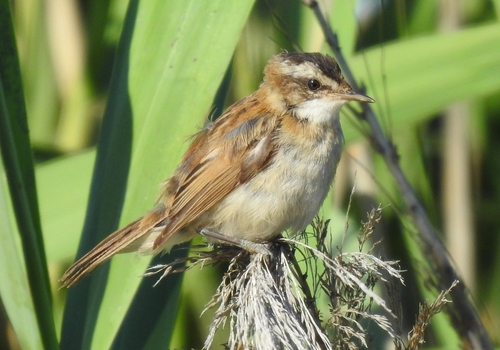
マミジロヨシキリ (Acrocephalus melanopogon) マミジロヨシキリ
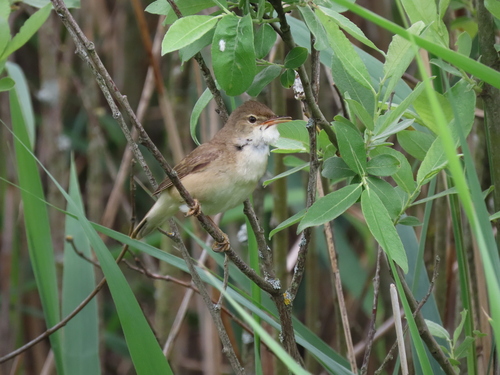
ヨーロッパヨシキリ (Acrocephalus scirpaceus) ヨーロッパヨシキリ

メディア

読み込み中…

要点

マミジロヨシキリとヨーロッパヨシキリの間で最も信頼できるフィールドマークは、特に幼鳥や未成熟のマミジロヨシキリの背中や時には胸に見られる細かい縞模様の存在であり、すべての年齢のヨーロッパヨシキリの完全に縞模様のない茶色の背中と対比されます。マミジロヨシキリは、より目立つ白っぽい眉斑と灰色の耳羽を示し、ヨーロッパヨシキリの顔はよりシンプルです。両種はサイズと構造が似ていますが、羽毛や歌の微妙な違いがそれらを区別するのに役立ちます。特に良く見えたり聞こえたりしたときに。幼鳥や未成熟の鳥は主な落とし穴であり、若いマミジロヨシキリは特に下部に縞模様があることがありますが、若いヨーロッパヨシキリはより豊かなバフ色ですが、決して縞模様はありません。

識別のコツ

  1. 背中の縞模様が鍵: 背中に細かい縞模様を探してください—すべての年齢のマミジロヨシキリに見られ、ヨーロッパヨシキリには見られません。これは特に良い光の下で最も信頼できるフィールドマークです。
  2. 幼鳥の胸の縞模様: 幼いマミジロヨシキリはしばしば胸に縞模様を示しますが、幼いヨーロッパヨシキリは下部がシンプルです(ただし、色調はより豊かなバフです)。
  3. 眉斑と顔: マミジロヨシキリは目立つ白っぽい眉斑と対照的な灰色の耳羽を持ち、より際立った顔のパターンを与えます。ヨーロッパヨシキリの眉斑は弱く、顔はよりシンプルな茶色です。
  4. 下部の色: マミジロヨシキリの成鳥は下部が白いです; ヨーロッパヨシキリの成鳥は下部がバフ色です。幼いヨーロッパヨシキリは特に豊かなバフ色ですが、決して縞模様はありません。
  5. 耳羽: 灰色の耳羽はマミジロヨシキリの微妙だが有用な特徴であり、眉斑と対照的です; ヨーロッパヨシキリの耳羽は顔の他の部分と区別されません。
  6. くちばしの形とサイズ: 両者は似たサイズと形の強く尖ったくちばしを持っています; これは有用な区別点ではありません。
  7. 歌の違い: マミジロヨシキリの歌は柔らかく、速く、よりメロディックで、ナイチンゲールのようなフレーズを含み、飛行中の歌はありません。ヨーロッパヨシキリの歌は遅く、よりおしゃべりで、音楽的ではありません。
  8. 飛行と翼のパターン: どちらの種にも特有の上翼や飛行マークは記載されていません; 飛行中の翼のパターンに頼らないでください。
  9. 止まり方: 両種は葦の茎に似たように止まります; 姿勢や動きは区別するのに信頼できません。
  10. 生息地の重複: 両者は同じ葦原の生息地に見られることがあります; 生息地だけでそれらを区別しないでください。
  11. 季節と範囲: 南ヨーロッパや南アジアにいる場合はマミジロヨシキリを考慮してください; さらに北または冬のサハラ以南のアフリカでは、ヨーロッパヨシキリの方が可能性が高いです。しかし、両者は南ヨーロッパで一緒に見られることがあります。
  12. 性差: 両種の両性は似ています; 性別をフィールドマークとして使用しないでください。
  13. サイズ: マミジロヨシキリはわずかに小さいですが、その違いは微妙でフィールドでは信頼できません。
  14. 混乱のリスク: 幼いマミジロヨシキリはその縞模様の外観のため主な落とし穴です; 南ヨーロッパやアジアで幼いAcrocephalusに対処する際は、常に上部と下部の縞模様を確認してください。
  15. 疑わしい場合: 鳥が上部と下部がシンプルな茶色で(豊かなバフであっても)、強い眉斑と灰色の耳羽が欠けている場合、ヨーロッパヨシキリの可能性が高いです。縞模様や目立つ顔がある場合は、マミジロヨシキリを疑ってください。

大きさ

Both species are very similar in size, with マミジロヨシキリ slightly smaller (12–13 cm) compared to ヨーロッパヨシキリ (13 cm). Both have similar proportions and structure, with no major difference in bill size or wing shape noted in the sources. Body mass for ヨーロッパヨシキリ is about 12 g; no mass given for マミジロヨシキリ, but it is expected to be similar or slightly less. Size alone is not a reliable field mark between these two.

羽色

行動

両種は典型的なAcrocephalusのヨシキリであり、しばしば密な葦やセジに隠れています。ソースには大きな行動の違いは記載されていません。マミジロヨシキリは飛行中に歌わず、ヨーロッパヨシキリは露出した止まり木から歌うことがありますが、飛行中の歌は記載されていません。両者は葦の茎にしがみついたり、低い植生の中を移動したりするのが見られます。

生息環境

両種は葦原や類似の湿地生息地で繁殖します。マミジロヨシキリは南ヨーロッパ、南温帯アジア、北西アフリカにより制限されているのに対し、ヨーロッパヨシキリはヨーロッパ全体と西パレアールクティックに広く分布し、サハラ以南のアフリカで越冬します。重複する地域では、両者は同じ葦原の生息地に見られることがあり、生息地だけでは区別するのが信頼できません。

声

マミジロヨシキリの歌は速く、柔らかく、ヨーロッパヨシキリよりもメロディックで、しばしばナイチンゲールのようなフレーズやいくつかの模倣を含みます。飛行中には歌いません。ヨーロッパヨシキリの歌は遅く、典型的なAcrocephalusの口笛や模倣を伴うおしゃべりな「ジットジットジット」で、全体的には音楽的ではありません。両者は他の種を模倣することができますが、全体的なトーンとペースは微妙に異なり、マミジロヨシキリはより柔らかく、より多様です。

より良い説明を送る

比較と同じ項目を使ってください。文章はすぐに公開されます。

The most reliable field mark between Moustached Warbler and Common Reed Warbler is the presence of fine streaking on the back and sometimes breast of Moustached Warbler, especially in juveniles and immatures, versus the completely unstreaked brown back of Common Reed Warbler of all ages. Moustached Warbler also shows a more prominent whitish supercilium and grey ear coverts, while Common Reed Warbler's face is plainer. Both species are similar in size and structure, but subtle differences in plumage and song can help separate them, especially when seen well or heard. Juvenile and immature birds are the main pitfall, as young Moustached Warblers can be especially streaky below, while young Common Reed Warblers are richer buff but never streaked.

  1. Back streaking is key: Look for fine streaks on the back—present in all ages of Moustached Warbler, absent in Common Reed Warbler. This is the most reliable field mark, especially in good light.
  2. Juvenile breast streaking: Juvenile Moustached Warblers often show streaks on the breast, while juvenile Common Reed Warblers are plain below (though richer buff in tone).
  3. Supercilium and face: Moustached Warbler has a prominent whitish supercilium and contrasting grey ear coverts, giving a more marked facial pattern. Common Reed Warbler's supercilium is weaker, and the face is plainer brown.
  4. Underparts color: Moustached Warbler adults are white below; Common Reed Warbler adults are buff below. Juvenile Common Reed Warbler is especially rich buff, but never streaked.
  5. Ear coverts: Grey ear coverts are a subtle but useful feature of Moustached Warbler, contrasting with the supercilium; Common Reed Warbler's ear coverts are not distinct from the rest of the face.
  6. Bill shape and size: Both have strong, pointed bills of similar size and shape; not a useful separation point.
  7. Song differences: Moustached Warbler's song is softer, faster, and more melodious, with nightingale-like phrases and no flight song. Common Reed Warbler's song is slower, chattier, and less musical.
  8. Flight and wing pattern: No distinctive upperwing or flight marks for either species are noted; do not rely on wing pattern in flight.
  9. Perched jizz: Both species perch similarly on reed stems; posture and movement are not reliable for separation.
  10. Habitat overlap: Both can be found in the same reedbed habitats; do not use habitat alone to separate them where ranges overlap.
  11. Season and range: If in southern Europe or southern Asia, consider Moustached Warbler; if further north or in sub-Saharan Africa in winter, Common Reed Warbler is more likely. However, both can occur together in southern Europe.
  12. Sex differences: Both sexes are alike in both species; do not use sex as a field mark.
  13. Size: Moustached Warbler is slightly smaller, but the difference is subtle and not reliable in the field.
  14. Confusion risk: Young Moustached Warblers are the main pitfall due to their streaked appearance; always check for streaking above and below when dealing with a juvenile Acrocephalus in southern Europe or Asia.
  15. When in doubt: If the bird is plain brown above and below (even if rich buff), and lacks a strong supercilium and grey ear coverts, Common Reed Warbler is more likely. If there is any streaking or a marked face, suspect Moustached Warbler.

Both species are very similar in size, with Moustached Warbler slightly smaller (12–13 cm) compared to Common Reed Warbler (13 cm). Both have similar proportions and structure, with no major difference in bill size or wing shape noted in the sources. Body mass for Common Reed Warbler is about 12 g; no mass given for Moustached Warbler, but it is expected to be similar or slightly less. Size alone is not a reliable field mark between these two.

  • Juvenile/immature birds: Moustached Warbler juveniles are heavily streaked above and often show streaking on the breast, which can be quite bold. In contrast, juvenile Common Reed Warblers are never streaked above or below; instead, they are a richer buff color on the underparts but remain plain brown above.
  • Adults: Adult Moustached Warbler has a finely streaked brown back, white underparts, a prominent whitish supercilium, and grey ear coverts. Adult Common Reed Warbler is unstreaked brown above, with buff underparts and a much less distinct supercilium; the face is generally plainer and lacks the grey tones.
  • Face pattern: Moustached Warbler's supercilium is more prominent and contrasts with the grey ear coverts, while Common Reed Warbler's supercilium is weaker and the ear coverts blend into the face.
  • No mention of distinctive upperwing or flight marks for either species in the sources.

Both species are typical Acrocephalus warblers, often skulking in dense reeds and sedges. No major behavioral differences are noted in the sources. Moustached Warbler does not sing in flight, while Common Reed Warbler may sing from exposed perches but is not noted for flight song either. Both may be seen clinging to reed stems or moving through low vegetation.

Both species breed in reedbeds and similar wetland habitats. Moustached Warbler is more restricted to southern Europe, southern temperate Asia, and northwest Africa, while Common Reed Warbler is widespread across Europe and the western Palearctic, wintering in sub-Saharan Africa. In areas of overlap, both can occur in the same reedbed habitats, making habitat alone unreliable for separation.

Moustached Warbler's song is fast, soft, and more melodious than Common Reed Warbler, often including nightingale-like phrases and some mimicry. It does not sing in flight. Common Reed Warbler's song is slower, a chattering 'jit-jit-jit' with typical Acrocephalus whistles and mimicry, but less musical overall. Both can mimic other species, but the overall tone and pace are subtly different, with Moustached Warbler being softer and more varied.

変更を破棄しますか?

保存していない編集があります。今離れると失われます。

マミジロヨシキリ · ヨーロッパヨシキリ · 苦手な鳥