

Motmot

ヒメハイイロチュウヒ 対 レバントハイタカ

Circus pygargus 対 Tachyspiza brevipes

ヒメハイイロチュウヒとレバントハイタカのクイズ
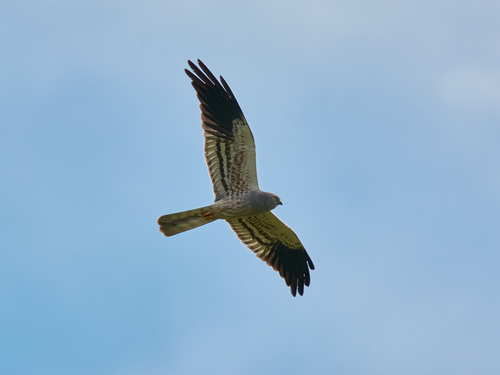
ヒメハイイロチュウヒ (Circus pygargus) ヒメハイイロチュウヒ
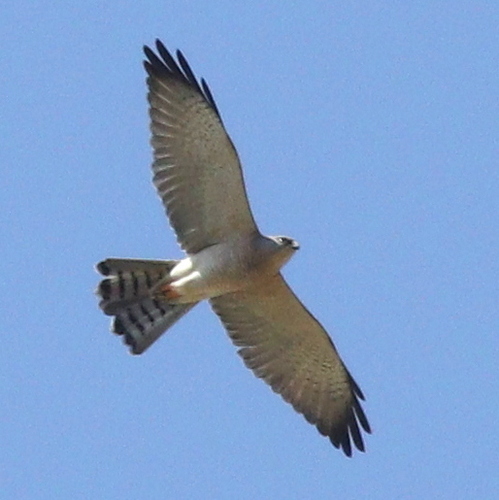
レバントハイタカ (Tachyspiza brevipes) レバントハイタカ

メディア

読み込み中…

要点

モンタギューのハイイロチュウヒとレバントハイタカを区別する最も信頼できるフィールドマークは、全体的な形状と飛行スタイルです:モンタギューのハイイロチュウヒは、尖った翼と長い尾を持つ細長い長翼の浮遊性のハイイロチュウヒであり、一方レバントハイタカは、短くて広い、よりハヤブサのような翼と短い尾を持つはるかに小さくてコンパクトな猛禽です。幼鳥と雌のモンタギューのハイイロチュウヒは他の茶色の猛禽と混同されることがありますが、レバントハイタカはハイイロチュウヒの長くて弾力のある低空飛行や同じ翼/尾の比率を示すことはありません。成鳥の雄のモンタギューのハイイロチュウヒは、黒い翼先と特徴的な黒い二次帯を持つ淡い灰色であり、雄のレバントハイタカは上面が青灰色で、下面には細かい赤褐色の斑点があります。幼鳥のモンタギューのハイイロチュウヒは、下面が均一に赤褐色で、レバントハイタカの縞模様や斑点のない下部が欠けています。サイズ、構造、飛行スタイルは、フィールドでこれら二つを区別する最も迅速な方法です。

識別のコツ

  1. Size and structure: モンタギューのハイイロチュウヒはレバントハイタカよりもはるかに大きく、長い翼を持っています。鳥が細長く、非常に長い翼と尾を持っている場合はハイイロチュウヒを考え、コンパクトで短い翼の場合はハヤブサを考えてください。
  2. Flight style: モンタギューのハイイロチュウヒは、遅く弾力のある浮遊性の翼拍で飛び、しばしば開けた野原の上を低く滑空します。レバントハイタカは、急速な羽ばたき、直接的な飛行を使用し、木々の間を滑空したり急降下したりする可能性が高いです。
  3. Wingshape: 飛行中、モンタギューのハイイロチュウヒは長く狭い尖った翼(「手」)を示し、特に幼鳥や雌において顕著です。レバントハイタカは、より短く広い、よりハヤブサのような翼を持ち、よりコンパクトな外観です。
  4. Tail: モンタギューのハイイロチュウヒは長く細い尾を持ち、しばしばまっすぐまたはわずかに扇状に保たれます。レバントハイタカの尾は、体に対して短く、より四角いです。
  5. White rump: モンタギューのハイイロチュウヒ(すべての年齢/性別)は、飛行中に目立つ白い尾羽(上尾羽カバー)を示しますが、レバントハイタカにはこの特徴がありません。
  6. Juvenile underparts: 幼鳥のモンタギューのハイイロチュウヒは、縞模様や斑点がない均一な赤褐色の下面を持っています。幼鳥のレバントハイタカは下面に縞模様があり、暗い喉の線を示します。
  7. Female underparts: 雌のモンタギューのハイイロチュウヒは、縦のストライプと斑点のある翼カバーを持つ淡い黄褐色の下面を持っています。雌のレバントハイタカは、下面が赤褐色の斑点模様で、暗い喉の線がある可能性があります。
  8. Adult male plumage: 雄のモンタギューのハイイロチュウヒは、黒い翼先と太い黒い二次帯を持つ淡い灰色で、腹部/側面には錆色の縞があります。雄のレバントハイタカは、上面が青灰色で、細かい赤褐色と白の斑点があり、白い喉が暗い線で分かれています。
  9. Upperwing pattern: 飛行中、モンタギューのハイイロチュウヒ(特に雄)は黒い先端と黒い二次帯を示しますが、レバントハイタカにはこれらの目立つ翼の模様がありません。
  10. Perched posture: モンタギューのハイイロチュウヒは止まっているときに細長く長翼に見え、しばしば翼先が尾の先に達するか超えます。レバントハイタカはコンパクトで直立しています。
  11. Habitat context: モンタギューのハイイロチュウヒはほぼ常に開けた国で見られ、密な木の近くではめったに見られません。レバントハイタカは森林、森林の端、または木の塊に関連しており、移動中でない限り、開けた野原を横切ることはめったにありません。
  12. Flight context: 農地や湿地の上を低く横切っているのが見られた場合、ほぼ確実にハイイロチュウヒです。木々の間を急降下したり、木に止まっている小さな猛禽は、よりハヤブサである可能性が高いです。
  13. Sexual dimorphism: 両種は性差が見られますが、モンタギューのハイイロチュウヒではより顕著で、雄は雌よりもはるかに淡く灰色です。レバントハイタカの雄と雌は両方とも下面に斑点がありますが、色合いが異なります。
  14. Melanistic forms: モンタギューのハイイロチュウヒは、レバントハイタカには見られないメラニスティック(全体が暗い)形態を示すことがあります。これらは稀ですが、識別を混乱させる可能性があります。
  15. Migration timing: 両種は渡り鳥ですが、モンタギューのハイイロチュウヒは長距離の渡り鳥であり、主に開けた国の上を8月から10月、4月から5月に移動しているのが見られます。レバントハイタカは中東を大群で渡り、しばしば熱上昇気流を利用し、森林や開けた地域を通過します。

大きさ

モンタギューのハイイロチュウヒは、長さ43〜47 cm、翼幅97〜115 cm、平均体重約315 g([wikidata])で、かなり大きく、長い翼を持っています。それに対して、レバントハイタカははるかに小さく、コンパクトで、長さ32〜38 cm、翼幅65〜75 cmです。ハイイロチュウヒの翼と尾は、体に対してはるかに長く、より優雅で浮遊性の外観を与えています。レバントハイタカはユーラシアハイタカに近いサイズであり、どのハイイロチュウヒよりも明らかに小さく、ずんぐりした外観です。

羽色

行動

モンタギューのハイイロチュウヒは典型的なハイイロチュウヒであり、遅く弾力のある浮遊性の翼拍で開けた野原の上を低く飛び、しばしば滑空しながら左右に傾きます。その飛行は滑らかで、アジサシのように表現されます。対照的に、レバントハイタカは木々の間を操縦するために適応しており、急速で直接的な飛行、迅速な羽ばたき、時折の滑空や移動中の滑空を行います。ハイイロチュウヒのように開けた地面の上を低く横切ることはめったにありません。止まっているとき、ハイイロチュウヒは長翼で細長く見え、ハヤブサはコンパクトで直立しています。

生息環境

モンタギューのハイイロチュウヒは、ユーラシア全体の大きな開けた地域—草原、湿地、農地—で繁殖し、通常は開けた国や野原の上を低く飛んでいるのが見られます。レバントハイタカは、開けた森林、森林の端、または孤立した木の塊を好み、しばしば水の近くにあり、移動中でない限り、木から遠く離れているのはめったに見られません。開けた野原の上を低く横切る猛禽を見た場合、ほぼ確実にハイイロチュウヒです。木々の間を急降下したり、木に止まっている小さな猛禽は、よりハヤブサである可能性が高いです。

より良い説明を送る

比較と同じ項目を使ってください。文章はすぐに公開されます。

The most reliable field mark to separate Montagu's Harrier from Levant Sparrowhawk is overall shape and flight style: Montagu's Harrier is a slender, long-winged, buoyant harrier with pointed wings and a long tail, while Levant Sparrowhawk is a much smaller, compact raptor with short, broad, more falcon-like wings and a shorter tail. Juvenile and female Montagu's Harriers can be confused with other brown raptors, but Levant Sparrowhawk never shows the harrier's long, elastic, low-hunting flight or the same wing/tail proportions. Adult male Montagu's Harrier is pale grey with black wingtips and distinctive black secondary bands, while male Levant Sparrowhawk is blue-grey above with fine rufous barring below. Juvenile Montagu's Harrier is uniformly reddish-brown below, lacking the streaked or barred underparts of Levant Sparrowhawk. Size, structure, and flight style are the quickest ways to separate these two in the field.

  1. Size and structure: Montagu's Harrier is much larger and longer-winged than Levant Sparrowhawk. If the bird looks slim, with very long wings and tail, think harrier; if compact and short-winged, think sparrowhawk.
  2. Flight style: Montagu's Harrier flies with slow, elastic, buoyant wingbeats and often glides low over open fields in a marked dihedral. Levant Sparrowhawk uses rapid flapping, direct flight, and is more likely to soar or dash through trees.
  3. Wingshape: In flight, Montagu's Harrier shows long, narrow, pointed wings ('hands'), especially obvious in juveniles and females. Levant Sparrowhawk has shorter, broader, more falcon-like wings with a more compact look.
  4. Tail: Montagu's Harrier has a long, slim tail, often held straight or slightly fanned. Levant Sparrowhawk's tail is shorter and more squared-off in proportion to the body.
  5. White rump: Montagu's Harrier (all ages/sexes) shows a prominent white rump (upper tail coverts) in flight; Levant Sparrowhawk lacks this feature.
  6. Juvenile underparts: Juvenile Montagu's Harrier is uniformly red-brown below with no streaking or barring. Juvenile Levant Sparrowhawk is streaked below and shows a dark throat line.
  7. Female underparts: Female Montagu's Harrier has pale yellow-brown underparts with longitudinal stripes and spotted wing coverts. Female Levant Sparrowhawk is barred reddish brown below, with a possible dark throat line.
  8. Adult male plumage: Male Montagu's Harrier is pale grey with black wingtips and bold black secondary bands, plus rusty streaks on the belly/flanks. Male Levant Sparrowhawk is blue-grey above, finely barred rufous and white below, with a white throat and dark central stripe.
  9. Upperwing pattern: In flight, Montagu's Harrier (especially males) shows black tips and black secondary bands; Levant Sparrowhawk lacks these bold wing markings.
  10. Perched posture: Montagu's Harrier appears slim and long-winged when perched, often with wingtips reaching or exceeding the tail tip. Levant Sparrowhawk is compact and upright.
  11. Habitat context: Montagu's Harrier is almost always seen in open country, rarely near dense trees. Levant Sparrowhawk is associated with woodland, forest edges, or tree clumps, and is rarely seen quartering over fields.
  12. Flight context: If seen quartering low over farmland or marsh, it's likely a harrier. If seen dashing through trees or perched in woodland, it's likely a sparrowhawk.
  13. Sexual dimorphism: Both species show sexual dimorphism, but in Montagu's Harrier it is more pronounced, with males much paler and greyer than females. Levant Sparrowhawk males and females are both barred below but differ in shade.
  14. Melanistic forms: Montagu's Harrier can show melanistic (all dark) morphs, which are not found in Levant Sparrowhawk. These are rare but can confuse identification.
  15. Migration timing: Both species are migratory, but Montagu's Harrier is a long-distance migrant, often seen moving in August–October and April–May, mainly over open country. Levant Sparrowhawk migrates in large numbers over the Middle East, often using thermals and passing over woodland or open areas.

Montagu's Harrier is substantially larger and longer-winged: length 43–47 cm, wingspan 97–115 cm, and average body mass around 315 g ([wikidata]). In contrast, Levant Sparrowhawk is much smaller and more compact, with length 32–38 cm and wingspan 65–75 cm. The harrier's wings and tail are both much longer in proportion to the body, giving it a more graceful, buoyant appearance. Levant Sparrowhawk is closer in size to a Eurasian Sparrowhawk and appears noticeably smaller and chunkier than any harrier.

  • Juveniles: Juvenile Montagu's Harrier is uniformly red-brown below (belly and underwing coverts) with no spotting or streaking, while juvenile Levant Sparrowhawk is dark grey-brown above and heavily streaked below, with a distinct dark throat line. Juvenile harrier lacks the fine barring or streaking typical of sparrowhawks.
  • Females: Female Montagu's Harrier is brown above with pale yellow-brown underparts, longitudinal stripes on the belly, and spotted wing coverts. Female Levant Sparrowhawk is slate-grey above, barred reddish brown below, and may show a dark throat line. Both can look brownish from a distance, but the harrier is more uniform above and lacks the sparrowhawk's strong barring.
  • Adult males: Male Montagu's Harrier is pale grey with black wingtips and bold black bands on the secondaries, plus rusty streaks on the belly/flanks. Male Levant Sparrowhawk is blue-grey above, pale below with fine rufous and white barring, and a white throat bisected by a dark line. The harrier's wing pattern (black tips and bands) is unique.
  • Upperwing in flight: Montagu's Harrier shows black secondaries and wingtips, with a long, narrow, pointed-winged look. Levant Sparrowhawk has short, broad, more pointed wings but lacks the harrier's black secondary bands and has a more compact profile.
  • Other: Montagu's Harrier has a white rump (upper tail coverts) visible in flight; Levant Sparrowhawk does not.

Montagu's Harrier is a classic harrier: it hunts by flying low over open fields with slow, elastic, buoyant wingbeats and a marked dihedral, often gliding and tilting side to side. Its flight is described as smooth and tern-like. Levant Sparrowhawk, in contrast, is adapted for maneuvering through trees, with rapid, direct flight, quick flapping, and occasional soaring or gliding on migration. It rarely quarters low over open ground like a harrier. Perched, the harrier looks long-winged and slim, while the sparrowhawk is compact and upright.

Montagu's Harrier breeds in large open areas—grasslands, marshes, and agricultural fields—across the Palearctic, and is typically seen in open country or low over fields. Levant Sparrowhawk prefers open woodland, forest edges, or isolated tree clumps, often near water, and is rarely seen far from trees except on migration. If you see a raptor quartering low over open fields, it's almost certainly a harrier; a small raptor dashing through woodland or perched in a tree is more likely a sparrowhawk.

変更を破棄しますか?

保存していない編集があります。今離れると失われます。

ヒメハイイロチュウヒ · レバントハイタカ · 苦手な鳥