

Albanella minore vs Sparviere levantino
Circus pygargus contro Tachyspiza brevipes
Fai un quiz con Albanella minore e Sparviere levantino
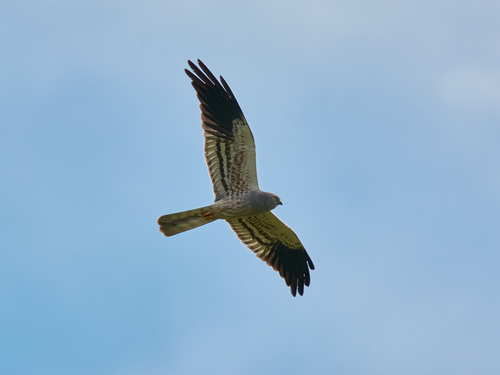 Albanella minore
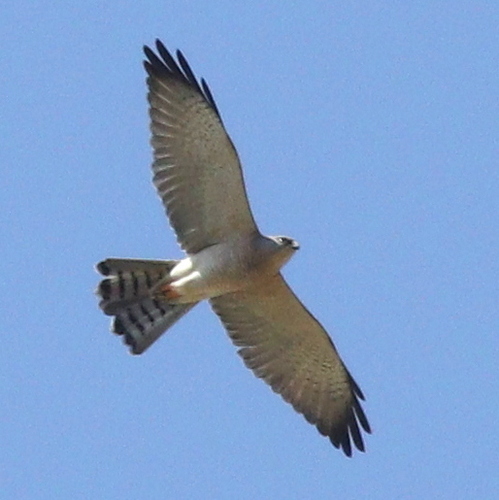 Sparviere levantino
In breve
Il segno di campo più affidabile per separare l'Albanella minore dallo Sparviere levantino è la forma generale e lo stile di volo: l'Albanella minore è un falco snello, con ali lunghe e un volo galleggiante, con ali appuntite e una lunga coda, mentre lo Sparviere levantino è un rapace molto più piccolo e compatto, con ali corte e larghe, più simili a quelle di un falco, e una coda più corta. Gli esemplari giovani e le femmine di Albanella minore possono essere confusi con altri rapaci marroni, ma lo Sparviere levantino non mostra mai il lungo volo elastico e basso dell'albanella o le stesse proporzioni ali/coda. L'adulto maschio dell'Albanella minore è grigio chiaro con punte nere sulle ali e bande secondarie nere distintive, mentre il maschio dello Sparviere levantino è blu-grigio sopra con sottili barre ruggine sotto. L'esemplare giovane dell'Albanella minore è uniformemente marrone-rossiccio sotto, privo delle striature o delle barre tipiche dello Sparviere levantino. Dimensioni, struttura e stile di volo sono i modi più rapidi per separare questi due sul campo.
Consigli di identificazione
- Size and structure: L'Albanella minore è molto più grande e con ali più lunghe rispetto allo Sparviere levantino. Se l'uccello appare snello, con ali e coda molto lunghe, pensa all'albanella; se è compatto e con ali corte, pensa allo sparviere.
- Flight style: L'Albanella minore vola con battiti d'ali lenti, elastici e galleggianti e spesso plana basso su campi aperti in un dihedro marcato. Lo Sparviere levantino utilizza battiti rapidi, volo diretto ed è più propenso a planare o a sfrecciare tra gli alberi.
- Wingshape: In volo, l'Albanella minore mostra ali lunghe, strette e appuntite ('mani'), particolarmente evidenti negli esemplari giovani e femminili. Lo Sparviere levantino ha ali più corte, più larghe e più simili a quelle di un falco, con un aspetto più compatto.
- Tail: L'Albanella minore ha una coda lunga e sottile, spesso tenuta dritta o leggermente aperta. La coda dello Sparviere levantino è più corta e più squadrata in proporzione al corpo.
- White rump: L'Albanella minore (di tutte le età/sessi) mostra un evidente posteriore bianco (copritrici della coda superiore) in volo; lo Sparviere levantino non presenta questa caratteristica.
- Juvenile underparts: L'esemplare giovane dell'Albanella minore è uniformemente marrone-rossiccio sotto, senza striature o barre. Lo Sparviere levantino giovane è striato sotto e mostra una linea scura sulla gola.
- Female underparts: La femmina dell'Albanella minore ha parti inferiori marrone chiaro con strisce longitudinali e copritrici delle ali macchiate. La femmina dello Sparviere levantino è barrata di marrone rossiccio sotto, con una possibile linea scura sulla gola.
- Adult male plumage: Il maschio dell'Albanella minore è grigio chiaro con punte nere sulle ali e bande secondarie nere audaci, oltre a striature ruggine su pancia/fianchi. Il maschio dello Sparviere levantino è blu-grigio sopra, finemente barrato ruggine e bianco sotto, con una gola bianca e una striscia centrale scura.
- Upperwing pattern: In volo, l'Albanella minore (soprattutto i maschi) mostra punte nere e bande secondarie nere; lo Sparviere levantino non presenta queste marcature audaci sulle ali.
- Perched posture: L'Albanella minore appare snella e con ali lunghe quando è posata, spesso con le punte delle ali che raggiungono o superano la punta della coda. Lo Sparviere levantino è compatto e eretto.
- Habitat context: L'Albanella minore è quasi sempre vista in campagna aperta, raramente vicino a boschi fitti. Lo Sparviere levantino è associato a boschi, margini forestali o gruppi di alberi, ed è raramente visto sorvolare campi.
- Flight context: Se vista sorvolare bassa su terreni agricoli o paludi, è probabile che sia un'albanella. Se vista sfrecciare tra gli alberi o posata in un bosco, è probabile che sia uno sparviere.
- Sexual dimorphism: Entrambe le specie mostrano dimorfismo sessuale, ma nell'Albanella minore è più pronunciato, con i maschi molto più chiari e grigi rispetto alle femmine. I maschi e le femmine dello Sparviere levantino sono entrambi barrati sotto ma differiscono nel colore.
- Melanistic forms: L'Albanella minore può mostrare forme melanistiche (tutte scure), che non si trovano nello Sparviere levantino. Queste sono rare ma possono confondere l'identificazione.
- Migration timing: Entrambe le specie sono migratorie, ma l'Albanella minore è un migratore a lungo raggio, spesso vista muoversi da agosto a ottobre e da aprile a maggio, principalmente su campagna aperta. Lo Sparviere levantino migra in gran numero attraverso il Medio Oriente, spesso utilizzando termiche e passando sopra boschi o aree aperte.
Taglia
L'Albanella minore è sostanzialmente più grande e con ali più lunghe: lunghezza 43–47 cm, apertura alare 97–115 cm e massa corporea media di circa 315 g ([wikidata]). Al contrario, lo Sparviere levantino è molto più piccolo e compatto, con lunghezza 32–38 cm e apertura alare 65–75 cm. Le ali e la coda dell'albanella sono entrambe molto più lunghe in proporzione al corpo, conferendole un aspetto più elegante e galleggiante. Lo Sparviere levantino è più vicino in dimensioni a uno Sparviere eurasiatico e appare notevolmente più piccolo e tozzo rispetto a qualsiasi albanella.
Piumaggio
- Juveniles: L'esemplare giovane dell'Albanella minore è uniformemente marrone-rossiccio sotto (pancia e copritrici delle ali inferiori) senza macchie o striature, mentre lo Sparviere levantino giovane è grigio-marrone scuro sopra e pesantemente striato sotto, con una linea scura sulla gola ben definita. L'albanella giovane manca delle barre o delle striature fini tipiche degli sparvieri.
- Females: La femmina dell'Albanella minore è marrone sopra con parti inferiori marrone chiaro, strisce longitudinali sulla pancia e copritrici delle ali macchiate. La femmina dello Sparviere levantino è grigio ardesia sopra, barrata di marrone rossiccio sotto, e può mostrare una linea scura sulla gola. Entrambe possono apparire marronose da lontano, ma l'albanella è più uniforme sopra e manca delle forti barre dello sparviere.
- Adult males: Il maschio dell'Albanella minore è grigio chiaro con punte nere sulle ali e bande nere audaci sulle secondarie, oltre a striature ruggine su pancia/fianchi. Il maschio dello Sparviere levantino è blu-grigio sopra, chiaro sotto con sottili barre ruggine e bianche, e una gola bianca divisa da una linea scura. Il motivo delle ali dell'albanella (punte e bande nere) è unico.
- Upperwing in flight: L'Albanella minore mostra secondarie nere e punte nere, con un aspetto lungo, stretto e appuntito. Lo Sparviere levantino ha ali corte, larghe e più appuntite ma manca delle bande secondarie nere dell'albanella e ha un profilo più compatto.
- Other: L'Albanella minore ha un posteriore bianco (copritrici della coda superiore) visibile in volo; lo Sparviere levantino no.
Comportamento
L'Albanella minore è un classico falco: caccia volando basso su campi aperti con battiti d'ali lenti, elastici e galleggianti e un dihedro marcato, spesso planando e inclinando da un lato all'altro. Il suo volo è descritto come fluido e simile a quello di un gabbiano. Lo Sparviere levantino, al contrario, è adattato per manovrare tra gli alberi, con volo rapido e diretto, battiti veloci e occasionali planate o voli in migrazione. Raramente sorvola a bassa quota su terreni aperti come un'albanella. Posato, l'albanella appare con ali lunghe e sottili, mentre lo sparviere è compatto e eretto.
Habitat
L'Albanella minore nidifica in ampie aree aperte—praterie, paludi e campi agricoli—attraverso il Paleartico, ed è tipicamente vista in campagna aperta o bassa sopra i campi. Lo Sparviere levantino preferisce boschi aperti, margini forestali o gruppi isolati di alberi, spesso vicino all'acqua, ed è raramente visto lontano dagli alberi tranne che in migrazione. Se vedi un rapace sorvolare a bassa quota su campi aperti, è quasi certamente un'albanella; un piccolo rapace che sfreccia tra gli alberi o posato su un albero è più probabilmente uno sparviere.
Albanella minore · Sparviere levantino · I miei uccelli difficili