

Motmot

マキバタヒバリ 対 ムネアカタヒバリ

Anthus pratensis 対 Anthus cervinus

マキバタヒバリとムネアカタヒバリのクイズ
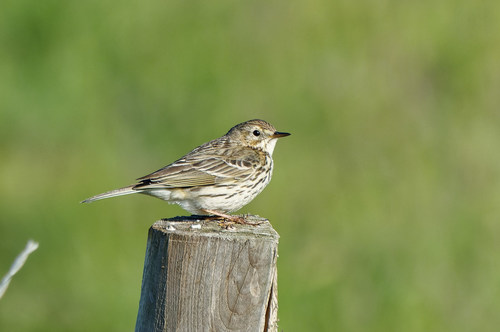
マキバタヒバリ (Anthus pratensis) マキバタヒバリ
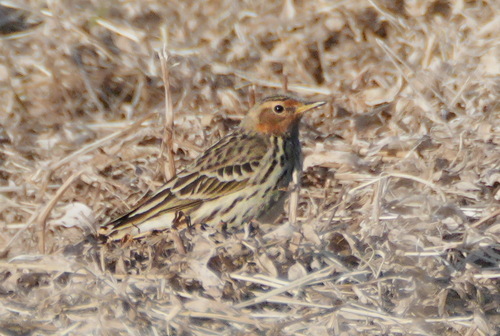
ムネアカタヒバリ (Anthus cervinus) ムネアカタヒバリ

メディア

読み込み中…

要点

マキバタヒバリとムネアカタヒバリの最も信頼できるフィールドマークは、繁殖羽衣の成鳥ムネアカタヒバリのレンガ色の顔と喉であり、これはマキバタヒバリには決して見られません。繁殖シーズン外や未熟な鳥では、識別がはるかに難しくなります:ムネアカタヒバリは、上面と下面により重く広範囲に縞模様があり、淡い背羽の縞と全体的に対照的で縞模様の外観を持っています。マキバタヒバリは上面がより茶色く、下面が淡い色で、細かい縞模様と長い後爪を持っています。両者はサイズと形が似ているため、特に秋と冬にムネアカタヒバリが赤い色を失うときは、縞模様のパターンと季節の羽衣に注意を払うことが重要です。

識別のコツ

  1. 繁殖成鳥ムネアカタヒバリはレンガ色の顔と喉を示す—これは診断的で、マキバタヒバリには決して見られません。春と初夏にこれを探してください。
  2. 繁殖羽衣外では、ムネアカタヒバリは上面(頭、背中、尾)と下面(脇、胸)でマキバタヒバリよりもはるかに重く縞模様がある。特に秋と冬における縞模様の密度と範囲に注目してください。
  3. ムネアカタヒバリは淡い背羽の縞を持ち、特に新しい羽衣では上から見るとより対照的で縞模様の外観を与えることがあります。マキバタヒバリは背中がより茶色く、対照的ではありません。
  4. マキバタヒバリは下面が淡い色で、より細かく、限られた縞模様を持つ一方、ムネアカタヒバリは下面がより白く、大胆な黒い縞があります。
  5. マキバタヒバリの長い後爪を探してください—それは他の後ろの指よりも長く、地面や止まっているときに良い視界で見ることができることがあります。
  6. 尾のパターンは強く診断的ではないが、マキバタヒバリは狭い白い外尾の縁を持っています;これは微妙で、常に見えるわけではありません。
  7. 飛行スタイルはわずかに異なる:ムネアカタヒバリは強く、直接的な飛行をし、マキバタヒバリはしばしば短い歌の飛行を繰り返し行います。
  8. 鳴き声が異なる:マキバタヒバリはかすかな「tsi-tsi」を出し、ムネアカタヒバリは飛行中に鋭い「psii」を出します。鳥が飛んでいるときは注意深く聞いてください。
  9. 生息地と範囲の文脈が助けになる:ムネアカタヒバリは西ヨーロッパでは珍しい渡り鳥または迷鳥です;西ヨーロッパの典型的なマキバタヒバリの生息地にいる場合、マキバタヒバリの方がはるかに可能性が高いです。
  10. 秋と冬には混乱に注意:ムネアカタヒバリは赤を失い、マキバタヒバリに非常に似て見えますが、依然としてより重い縞模様とより対照的で縞模様の外観を示します。
  11. 両種はサイズと形が似ている;全体のサイズや印象だけに頼らないでください。
  12. 幼鳥や未熟な羽衣には、上翼や飛行の特徴的なマークがあるとは記載されていないため、縞模様と背羽のパターンに注目してください。
  13. 顔のパターンは繁殖羽衣外では強く診断的ではないが、ムネアカタヒバリはより重い縞模様のためにわずかにより目立つように見えることがあります。
  14. 両種は地面を歩いたり走ったり、低い植物に止まったりするのを見ることができる;行動は強い区別要因ではありません。
  15. 疑わしい場合は、縞模様の密度を優先し、春には顔と喉の赤の有無を優先してください。

大きさ

両種は非常に似た測定値を持つ小型のヒバリです:マキバタヒバリは長さ14.5〜15 cmで、体重は15〜22 gです [wikipedia]。ムネアカタヒバリも小型のヒバリであり、情報源には重要なサイズの違いは記載されていません。構造は似ていますが、マキバタヒバリは特に長い後爪を持っており、フィールドで見ることができることがあります。

羽色

成鳥の繁殖羽衣では、ムネアカタヒバリはレンガ色の顔と喉で際立っています—これはマキバタヒバリにはすべての年齢と季節で欠けています。繁殖シーズン外や未熟な個体では、ムネアカタヒバリは分けるのがはるかに難しくなりますが、上面(頭、背中、尾)と下面(脇、胸)でマキバタヒバリよりも依然として重く縞模様があり、淡い背羽の縞を示してより対照的で縞模様の外観を与えます。マキバタヒバリは上面が茶色で、下面が淡い色で、より暗い横縞がありますが、縞模様はあまり広範囲ではなく、尾には狭い白い外縁があります。繁殖羽衣でないとき、両種は地面で似ていますが、ムネアカタヒバリは常に特に脇腹と背中でより大胆に縞模様が見えます。情報源には幼鳥や未熟な個体のための特徴的な上翼や飛行パターンの違いは記載されていません。

行動

両種は地面に生息するヒバリで、似たような餌を取る習慣や動きの習慣を持ち、しばしば開けた場所で歩いたり走ったりします。ムネアカタヒバリは強く、直接的な飛行を持つと記載されており、マキバタヒバリは短い歌の飛行を繰り返し行います。両者は低い植物や地面に止まっているのを見ることができ、印象は一般的に似ています。

生息環境

マキバタヒバリは、草原や湿原を含む開けた国で広く繁殖し、西ヨーロッパではしばしば豊富です。ムネアカタヒバリは、ヨーロッパの最北部とユーラシアの遠北で繁殖し、西ヨーロッパでは珍しい迷鳥です。冬には、マキバタヒバリは南ヨーロッパ、北アフリカ、南西アジアで見られ、ムネアカタヒバリはアフリカと東南アジアで冬を越します。西ヨーロッパでは、ムネアカタヒバリははるかに珍しく、通常は渡り鳥または迷鳥としてのみ見られます。

声

マキバタヒバリはかすかな「tsi-tsi」の鳴き声と、終わりに向かって加速する単純で繰り返しの歌を出します。ムネアカタヒバリは飛行中に特徴的な「psii」の鳴き声を出します。ムネアカタヒバリの歌は詳細に記載されていませんが、鳴き声は微妙に異なり、よく聞こえれば識別に役立つかもしれません。

より良い説明を送る

比較と同じ項目を使ってください。文章はすぐに公開されます。

The most reliable field mark between Meadow Pipit and Red-throated Pipit is the brick-red face and throat of adult Red-throated Pipits in breeding plumage, which Meadow Pipit never shows. Outside the breeding season or in immature birds, separation is much trickier: Red-throated Pipit is more heavily and extensively streaked above and below, with paler mantle stripes and a more contrasting, striped look overall. Meadow Pipit is browner above, buff below, with finer streaking and a long hind claw. Both are similar in size and shape, so careful attention to streaking pattern and seasonal plumage is key, especially in autumn and winter when Red-throated Pipit loses its red coloration.

  1. Breeding adult Red-throated Pipit shows a brick-red face and throat—this is diagnostic and never shown by Meadow Pipit. Look for this in spring and early summer.
  2. Outside breeding plumage, Red-throated Pipit is much more heavily streaked above (cap, back, rump) and below (flanks, chest) than Meadow Pipit. Focus on the density and extent of streaking, especially in autumn and winter.
  3. Red-throated Pipit has pale mantle stripes that can give it a more contrasting, striped look from above, especially in fresh plumage. Meadow Pipit is browner and less contrasting on the back.
  4. Meadow Pipit is buff below with finer, more limited streaking, while Red-throated Pipit is whiter below with bold black streaks.
  5. Look for the long hind claw on Meadow Pipit—it is longer than the rest of the hind toes and can sometimes be seen in good views on the ground or perched.
  6. Tail pattern is not strongly diagnostic, but Meadow Pipit has narrow white outer tail edges; this is subtle and not always visible.
  7. Flight style differs slightly: Red-throated Pipit has a strong, direct flight, while Meadow Pipit often performs short song flights with a repetitive song.
  8. Calls differ: Meadow Pipit gives a faint 'tsi-tsi', while Red-throated Pipit gives a sharper 'psii' in flight. Listen carefully if birds are flying over.
  9. Habitat and range context can help: Red-throated Pipit is a rare migrant or vagrant in western Europe; if you are in typical Meadow Pipit habitat in western Europe, Meadow Pipit is much more likely.
  10. In autumn and winter, beware confusion: Red-throated Pipit loses its red and looks much more like Meadow Pipit, but still shows heavier streaking and a more contrasting, striped look.
  11. Both species are similar in size and shape; do not rely on overall size or jizz alone.
  12. Juvenile and immature plumages are not described as having distinctive upperwing or flight marks in the sources, so focus on streaking and mantle pattern.
  13. Facial pattern is not strongly diagnostic outside breeding plumage, but Red-throated Pipit may appear slightly more marked due to the heavier streaking.
  14. Both species can be seen walking or running on the ground and perching on low vegetation; behavior is not a strong separator.
  15. If in doubt, prioritize streaking density and, in spring, the presence or absence of red on the face and throat.

Both species are small pipits with very similar measurements: Meadow Pipit is 14.5–15 cm in length and weighs 15–22 g [wikipedia]. Red-throated Pipit is also a small pipit, and no significant size difference is noted in the sources. Structure is similar, but Meadow Pipit has a notably long hind claw, which can sometimes be seen in the field.

In adult breeding plumage, Red-throated Pipit stands out with a brick-red face and throat—this is absent in Meadow Pipit at all ages and seasons. Outside the breeding season and in immatures, Red-throated Pipit becomes much harder to separate, but is still more heavily streaked above (cap, back, rump) and below (flanks, chest) than Meadow Pipit, and shows pale mantle stripes that can give a more contrasting, striped appearance. Meadow Pipit is brown above and buff below, with darker barring but less extensive streaking, and its tail has narrow white outer edges. Both species are similar on the ground when not in breeding plumage, but Red-throated Pipit always appears more boldly streaked, especially on the flanks and back. No distinctive upperwing or flight pattern differences are described for juveniles or immatures in the sources.

Both species are ground-dwelling pipits with similar feeding and movement habits, often walking or running in open areas. Red-throated Pipit is described as having a strong, direct flight, while Meadow Pipit performs short song flights with a repetitive song. Both can be seen perched on low vegetation or on the ground, and their jizz is generally similar.

Meadow Pipit breeds widely across the Palearctic in open country, including grasslands and moorlands, and is often abundant in western Europe. Red-throated Pipit breeds much further north, in the far north of Europe and the Palearctic, and is a rare vagrant to western Europe. In winter, Meadow Pipit is found in southern Europe, North Africa, and southwest Asia, while Red-throated Pipit winters in Africa and Southeast Asia. In Western Europe, Red-throated Pipit is much rarer and usually only seen as a migrant or vagrant.

Meadow Pipit gives a faint 'tsi-tsi' call and a simple, repetitive song that accelerates towards the end. Red-throated Pipit gives a characteristic 'psii' call in flight. The songs are not described in detail for Red-throated Pipit, but the calls are subtly different and may help with identification if heard well.

変更を破棄しますか?

保存していない編集があります。今離れると失われます。

マキバタヒバリ · ムネアカタヒバリ · 苦手な鳥