

Motmot

シロクロモズ 対 ズアカモズ

Lanius nubicus 対 Lanius senator

シロクロモズとズアカモズのクイズ
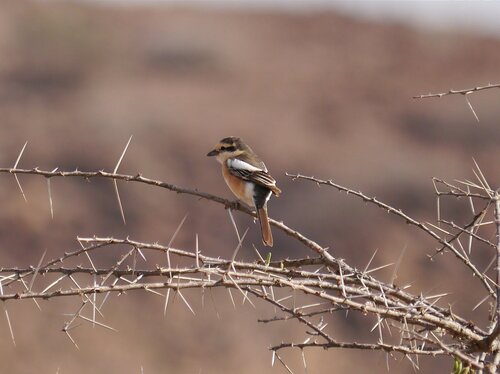
シロクロモズ (Lanius nubicus) シロクロモズ
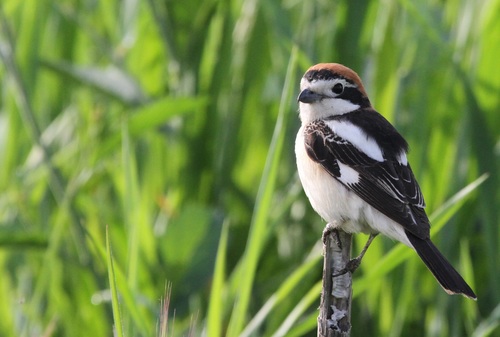
ズアカモズ (Lanius senator) ズアカモズ

メディア

読み込み中…

要点

幼鳥のシロクロモズとズアカモズは混乱を招くことがありますが、シロクロモズの長い尾、淡い顔、灰色の背中と尾羽を探してください。ズアカモズは砂色の背中と淡い灰色の尾羽を持っています。成鳥のシロクロモズは白い冠と眉斑で簡単に識別できますが、ズアカモズは豊かな栗色の冠と後頭部を示します。シロクロモズは小さく、より細身で目立たず、しばしばあまり目立たない場所に止まります。両種は似たようなモズの構造を持っていますが、特に幼鳥においては頭の模様と上面の色に注意を払うことが重要です。

識別のコツ

  1. 幼鳥の上面: 幼鳥のシロクロモズは灰色の背中と尾羽を持ち、暗い縞模様があり、顔は淡いです。一方、幼鳥のズアカモズは砂色の背中と淡い灰色の尾羽を持ち、細かく縞模様のある茶色と白の上面を示します。これは幼鳥の重要なフィールドマークです。
  2. 尾の長さ: 幼鳥であっても、シロクロモズはズアカモズよりも明らかに長い尾を持っています。止まっている鳥や直接比較する際にこれを利用してください。
  3. 頭の模様(成鳥): 成鳥のシロクロモズは白い冠、額、眉斑を持ち、黒い上面と対照的です。ズアカモズは豊かな栗色の冠と後頭部を持ち、冠には白がありません。
  4. 翼の斑点: シロクロモズは肩と初列風切に大きな白い斑点を示します(成鳥と幼鳥)、特に飛行中や翼を広げたときに明らかです。ズアカモズの翼の斑点はあまり広がっておらず、西部の亜種は全く欠けているかもしれません。
  5. 腹部: シロクロモズはオレンジ色の側面と胸(オス)を持つ白い腹部を持っていますが、ズアカモズの腹部は純白(オス)またはバフ色で縞模様(メス/幼鳥)です。
  6. メス/幼鳥の混同: メスのシロクロモズは鈍い色合いで、茶色がかった黒い上面と白い斑点に灰色またはバフ色の色合いがあります。ズアカモズのメスと幼鳥はより茶色がかり、縞模様が多く、鮮明な白黒のコントラストが欠けています。
  7. 顔の色(幼鳥): 幼鳥のシロクロモズは、一般的に顔が暗いズアカモズの幼鳥と比較して、顔と額が淡いです。
  8. 尾羽の色(幼鳥): シロクロモズは灰色の尾羽を持ち、ズアカモズは淡い灰色または砂色の尾羽を持っています。これは微妙ですが、良い光の中で役立ちます。
  9. 止まり方: シロクロモズはあまり目立つ場所に止まることはありません。もし隠れた場所や日陰でモズを見たら、シロクロモズの可能性を考えてください。ズアカモズは大胆で、しばしば開けた場所に止まります。
  10. サイズと印象: シロクロモズは小さく、より細身で尾が長いのに対し、ズアカモズはよりがっしりとしていて頑丈です。これは経験や直接比較で最もよく判断されます。
  11. くちばしの構造: 両者ともにフック状のくちばしを持っていますが、シロクロモズのくちばしは比較的小さく、より繊細です。
  12. 生息地の文脈: シロクロモズはより多くの覆いのある場所を好み、非常に開けた土地を避けます。ズアカモズは開けた果樹園や散在する木々のある野原にいる可能性が高いです。
  13. 鳴き声: メロディックでウグイスのような歌声が聞こえた場合、シロクロモズの可能性が高いですが、これらの音に基づいてフィールドで確実に分けることはできません。
  14. 西部ズアカモズ: 西地中海にいて、目立つ白い翼の斑点がないモズを見た場合、ズアカモズ(L. s. badius)の可能性を疑ってください。シロクロモズは常に強い白い斑点を示します。
  15. 季節的文脈: 両種は地中海地域で繁殖しますが、シロクロモズはあまり広範囲には分布していません。両者が生息する地域では、特に幼鳥が豊富な夏の終わりに構造的および羽毛の違いに焦点を当ててください。

大きさ

シロクロモズはその属の中で最も小さく、体重は約25g、長さは17〜18.5cm、翼幅は24〜26.5cmです [wikidata]。ズアカモズはわずかに大きく、長さは17〜19cmですが、質量は示されていません。フィールドでは、シロクロモズはより細身で尾が長く見え、ズアカモズは少しがっしりとしていて頑丈です。サイズだけでは微妙ですが、シロクロモズの華奢な体型と長い尾は、並べて見たときに役立ちます。

羽色

行動

シロクロモズは目立たず、しばしばあまり露出のない位置に止まり、非常に開けた土地を避けます。より秘密主義的で、目立つ止まり木ではなく、しばしば茂みや木の中で見られます。ズアカモズはモズの典型的な姿で、しばしば露出した枝、ワイヤー、またはフェンスの柱にオープンに止まり、通常は地面から2〜6メートルの高さで獲物を追いかけて飛び立ちます。両種は止まり木から狩りをしますが、ズアカモズはより大胆で目立ちます。

生息環境

両種は散在する木々のある開けた森林を好みますが、シロクロモズはより多くの覆いのある場所を好み、非常に開けた土地を避け、しばしばより密な茂みや木の中に留まります。ズアカモズは開けた森林地帯、果樹園、裸または砂地の場所に見られ、開けた生息地で見られる可能性が高いです。シロクロモズは南東ヨーロッパと東地中海で繁殖し、ズアカモズは地中海地域でより広範囲に分布しています。

声

シロクロモズの鳴き声は短くて耳障りですが、その歌にはメロディックでウグイスのようなフレーズが含まれています。これらのメモにおいてズアカモズのための特有の鳴き声の違いは記述されていないため、声はここでの主要な区別要因ではありません。

より良い説明を送る

比較と同じ項目を使ってください。文章はすぐに公開されます。

Juvenile Masked and Woodchat Shrikes can be confusing, but look for the Masked Shrike's longer tail, paler face, and grey back and rump versus the Woodchat's sandy back and pale grey rump. Adult Masked Shrikes are easily told by their white crown and supercilium, while Woodchat Shrikes show a rich chestnut crown and nape. Masked Shrikes are smaller, more slender, and less conspicuous, often perching less openly. Both species share similar shrike structure, but careful attention to head pattern and upperpart color, especially in immatures, is key.

  1. Juvenile upperparts: Juvenile Masked Shrike has a grey back and rump with darker barring and a paler face, while juvenile Woodchat Shrike shows a sandy back and pale grey rump with vermiculated (finely barred) brown and white upperparts. This is a key field mark for immatures.
  2. Tail length: Masked Shrike, even as a juvenile, has a noticeably longer tail than Woodchat Shrike. Use this in perched birds or when comparing directly.
  3. Head pattern (adults): Adult Masked Shrike has a white crown, forehead, and supercilium, contrasting with black upperparts. Woodchat Shrike has a rich chestnut crown and nape, with no white on the crown.
  4. Wing patches: Masked Shrike shows large white patches on the shoulders and primaries (adults and juveniles), especially obvious in flight or when the wing is spread. Woodchat Shrike's wing patches are less extensive, and the western race may lack them entirely.
  5. Underparts: Masked Shrike has white underparts with orange flanks and breast (male), while Woodchat Shrike's underparts are pure white (male) or buff and vermiculated (female/juvenile).
  6. Female/immature confusion: Female Masked Shrike is duller, with brownish-black upperparts and a grey or buff tinge to the white patches; Woodchat Shrike females and juveniles are browner and more vermiculated, lacking the crisp black-and-white contrast.
  7. Face color (juveniles): Masked Shrike juveniles have a paler face and forehead compared to the generally darker-faced Woodchat juveniles.
  8. Rump color (juveniles): Masked Shrike has a grey rump, Woodchat Shrike a pale grey or sandy rump. This is subtle but useful in good light.
  9. Perching behavior: Masked Shrike is less likely to perch openly; if you see a shrike in a more hidden or shaded spot, consider Masked. Woodchat Shrike is bolder and often perches in the open.
  10. Size and jizz: Masked Shrike is smaller, more slender, and longer-tailed, while Woodchat Shrike is bulkier and more robust. This is best judged with experience or direct comparison.
  11. Bill structure: Both have hooked bills, but Masked Shrike's is relatively smaller and more delicate.
  12. Habitat context: Masked Shrike prefers areas with more cover and avoids very open ground; Woodchat Shrike is more likely in open orchards or fields with scattered trees.
  13. Vocalizations: If you hear melodic, warbler-like song, Masked Shrike is more likely, but calls are not reliably separable in the field based on these notes.
  14. Western Woodchat Shrike: If you are in the western Mediterranean and see a shrike lacking bold white wing patches, suspect Woodchat (L. s. badius), as Masked always shows strong white patches.
  15. Seasonal context: Both species breed in the Mediterranean region, but Masked Shrike is less widespread. In areas where both occur, focus on structural and plumage differences, especially in late summer when juveniles are abundant.

Masked Shrike is the smallest of its genus, weighing around 25 g and measuring 17–18.5 cm in length with a 24–26.5 cm wingspan [wikidata]. Woodchat Shrike is slightly larger, at 17–19 cm in length, but no mass is given. In the field, Masked Shrike appears more slender and long-tailed, while Woodchat is a bit bulkier and more robust. Size alone is subtle, but the Masked Shrike's daintier build and longer tail can help when seen side by side.

  • Juvenile/First-year: Juvenile Masked Shrike shows grey-brown upperparts with darker bars from head to rump, a paler grey forehead, and a grey back and rump. The face is paler, and the tail is longer. Juvenile Woodchat Shrike has brown and white vermiculated upperparts, a sandy back, and a pale grey rump; the underparts are buff and also vermiculated. Masked Shrike juveniles have white primary patches on brown wings, while Woodchat juveniles lack this strong contrast.

  • Adult males: Masked Shrike males have a striking white crown, forehead, and supercilium, black upperparts, and large white patches on the shoulders and primaries. The throat and underparts are white with orange flanks and breast. Woodchat Shrike males show a rich chestnut crown and nape, black and white upperparts, and pure white underparts. The western race of Woodchat (L. s. badius) lacks large white wing patches.

  • Adult females: Female Masked Shrike is a duller version of the male, with brownish-black upperparts and a grey or buff tinge to the white shoulder patches and underparts. Female Woodchat Shrike is browner above and also vermiculated, with less contrast overall.

  • In flight: Masked Shrike shows large white patches on the wings and outer tail feathers, especially in adults and juveniles. Woodchat Shrike's wing pattern is less bold, especially in the western race.

Masked Shrike is less conspicuous, often perching in less exposed positions and avoiding very open country. It tends to be more secretive and is often seen within bushes or trees rather than on prominent perches. Woodchat Shrike is more typical of shrikes, frequently perching openly on exposed branches, wires, or fence posts, usually 2–6 meters above ground, and making sallying flights after prey. Both species hunt from perches, but Woodchat is bolder and more visible.

Both species favor open woodland with scattered trees, but Masked Shrike prefers areas with more cover, avoiding very open country and often staying within denser bushes or trees. Woodchat Shrike is found in open wooded areas, orchards, and places with bare or sandy ground, and is more likely to be seen in open habitats. Masked Shrike breeds in southeastern Europe and the eastern Mediterranean, while Woodchat Shrike is more widespread in the Mediterranean region.

Masked Shrike's calls are short and grating, but its song includes melodic, warbler-like phrases. No distinctive vocal differences are described for Woodchat Shrike in these notes, so voice is not a primary separator here.

変更を破棄しますか?

保存していない編集があります。今離れると失われます。

シロクロモズ · ズアカモズ · 苦手な鳥