

Motmot

マンクスミズナギドリ 対 バローロヒメミズナギドリ

Puffinus puffinus 対 Puffinus baroli

マンクスミズナギドリとバローロヒメミズナギドリのクイズ
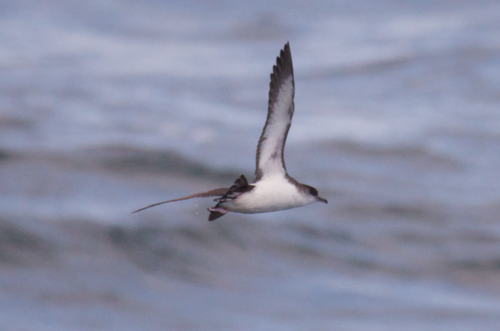
マンクスミズナギドリ (Puffinus puffinus) マンクスミズナギドリ
バローロヒメミズナギドリ (Puffinus baroli) バローロヒメミズナギドリ

メディア

読み込み中…

要点

マンxミズナギドリとバローロヒメミズナギドリを区別する最も信頼できるフィールドマークは、バローロの上翼にある銀色のパネルの存在であり、マンxにはありません。バローロはまた、暗い目を持つ明らかに淡い顔を示しますが、マンxはより地味で暗い顔をしています。飛行中、バローロは小さく見え、短くて丸みを帯びた翼と青い足(見える場合)を持ち、マンxの長くて真っ直ぐな翼と大きなサイズと比較されます。両種は表面的には似たような白黒のミズナギドリですが、翼のパターン、顔のコントラスト、全体的な構造に注意を払うことで、ほとんどのフィールド条件で区別できます。

識別のコツ

  1. 銀色の上翼パネル: バローロヒメミズナギドリは、飛行中に見える明確な銀色のパネルを上翼に示し、すべての年齢で診断可能です。マンxミズナギドリはこの特徴がなく、上翼は均一に暗いです。
  2. 顔のパターン: バローロは、はっきりと対照的な暗い目を持つ淡い顔をしており、マスクのような外観を与えます。マンxの顔は全体的に地味で暗く、目の周りに強いコントラストはありません。
  3. 翼の形と飛行スタイル: バローロの翼は短くて丸みを帯びており、よりフラッターな、直接的でない飛行をもたらします。マンxは長くて真っ直ぐな翼を持ち、直角にしっかりと保持され、「飛ぶ十字架」のシルエットを作り、より強力で滑空する飛行を実現します。
  4. サイズと体格: マンxはバローロよりも明らかに大きく、体重が重いです。混合群れや並んでいる場合、バローロは小さくて繊細に見えます。
  5. 足の色: バローロは青い足を持ち、止まっている時や近くで飛んでいる時に見えることがあります。マンxの足は青くありません。
  6. 下部のコントラスト: 両種は白い下部と暗い上部を持っていますが、マンxの分割はより均一で、バローロの銀色の上翼パネルが欠けています。
  7. くちばしと頭の形: ソースでは詳細に説明されていませんが、バローロの小さいサイズは、より細いくちばしと相対的に小さい頭に反映されるかもしれません。
  8. 生息地と範囲: 繁殖コロニーの近くで観察された場合、場所は強い手がかりになります: バローロはアゾレスとカナリアでのみ繁殖し、マンxはイギリス、アイルランド、近くの北大西洋の島々で繁殖します。
  9. コロニーでの行動: マンxは夜間のみコロニーを訪れますが、バローロは日中に活動することがあります。
  10. 飛行の特徴: マンxは通常、翼の拍動が少なく、より滑空するように飛びますが、バローロはより活発でフラッターに見えることがあります。
  11. 落とし穴: 重なり合う白黒のパターンは、特に距離があると混乱を引き起こす可能性があります。バローロのために、常に銀色の上翼パネルと顔のコントラストを探してください。
  12. 年齢/季節: 年齢特有の違いは詳細に説明されていないため、上記のマークは大人と未熟者の両方に適用されます。
  13. 性別: 性的二形性は説明されていません; これらのマークは両性に適用されます。
  14. 声: ソースでは説明されていません; 利用可能な情報に基づいて分離のために声に依存しないでください。
  15. 文脈: マカロネシアのボートから見られた場合、バローロがはるかに可能性が高いです; 北大西洋の水域では、マンxが優勢です。

大きさ

マンxミズナギドリは、体重が約521 g [wikidata]、長さが30–38 cm、翼幅が76–89 cm [wikipedia]で、2種の中で大きいです。バローロヒメミズナギドリは明らかに小さく、正確な体重はここでは示されていませんが、「小さなミズナギドリ」として説明されています。直接比較すると、マンxはより体格が大きく、翼が長く見え、バローロは特に飛行中により優雅でコンパクトに見えます。

羽色

すべての年齢において、バローロヒメミズナギドリは上翼に銀色のパネルを示し、これはマンxには存在しない重要な特徴です。バローロの顔は明らかに淡く、はっきりと対照的な暗い目を持ち、マンxはより均一に暗い顔をしています。両者は黒い上部と白い下部を持っていますが、マンxは銀色の上翼パネルが欠けており、より均一な白黒の分割を持っています。幼鳥と未熟者の羽毛はソースで別々に詳細に説明されていないため、これらのコントラストは大人に適用され、おそらく未熟者にも適用されます。バローロはまた、近距離または良好な光の下で見えることがある青い足を持ち、マンxの足は青くありません。

行動

両種は典型的な「シアリング」飛行を示しますが、マンxミズナギドリの飛行はより直接的で、体に対して直角に保持された硬い真っ直ぐな翼を持ち、「飛ぶ十字架」の外観を与えます。バローロの飛行は、短くて丸みを帯びた翼のために、よりフラッターである可能性があります。マンxは、最小限の翼の拍動で海の上を低く飛ぶことで知られ、バンクする際に黒と白を交互に見せることがよくあります。バローロは昼間により活発である可能性があり、マンxは夜間のみコロニーを訪れます。

生息環境

マンxミズナギドリは主に北東大西洋、特にイギリス、アイルランド、近くの島々で繁殖し、冬には南大西洋に移動します。バローロヒメミズナギドリはマカロネシア(アゾレスとカナリア)で繁殖し、主要なマンxコロニーほど北には見られません。両者は繁殖シーズン以外は完全に海洋性ですが、繁殖地の近くで見られた場合、場所は強い手がかりになる可能性があります: マカロネシアのバローロ、北大西洋の島々のマンx。

より良い説明を送る

比較と同じ項目を使ってください。文章はすぐに公開されます。

The most reliable field mark to separate Manx Shearwater from Barolo Shearwater is the presence of a silvery panel on the upperwing of Barolo, which is absent in Manx. Barolo also shows a distinctly pale face with a dark eye, while Manx has a plainer, darker face. In flight, Barolo appears smaller, with shorter, more rounded wings and blue feet (if seen), compared to the longer, straighter wings and larger size of Manx. Both species are superficially similar black-and-white shearwaters, but careful attention to wing pattern, face contrast, and overall structure will separate them in most field conditions.

  1. Silvery upperwing panel: Barolo Shearwater shows a distinct silvery panel on the upperwing, visible in flight and diagnostic at all ages. Manx Shearwater lacks this feature; its upperwing is uniformly dark.
  2. Face pattern: Barolo has a pale face with a sharply contrasting dark eye, giving a masked look. Manx's face is plainer and darker overall, without strong contrast around the eye.
  3. Wing shape and flight style: Barolo's wings are shorter and more rounded, resulting in a more fluttery, less direct flight. Manx has longer, straighter wings, held stiffly at right angles, creating a 'flying cross' silhouette and a more powerful, gliding flight.
  4. Size and bulk: Manx is noticeably larger and heavier-bodied than Barolo. In mixed flocks or side-by-side, Barolo will look smaller and more delicate.
  5. Feet color: Barolo has blue feet, which may be visible when perched or in close flight views. Manx's feet are not blue.
  6. Underpart contrast: Both species have white underparts and dark upperparts, but Manx's division is more even and lacks the silvery upperwing panel of Barolo.
  7. Bill and head shape: Not described in detail in the sources, but Barolo's smaller size may be reflected in a finer bill and proportionally smaller head.
  8. Habitat and range: If observed near breeding colonies, location is a strong clue: Barolo breeds only in the Azores and Canaries, while Manx breeds in the UK, Ireland, and nearby northern Atlantic islands.
  9. Behavior at colonies: Manx visits colonies only at night, while Barolo may be active during the day.
  10. Flight jizz: Manx typically flies with fewer wingbeats and more gliding, while Barolo may appear more active and fluttery.
  11. Pitfalls: Overlapping black-and-white pattern can cause confusion, especially at distance. Always look for the silvery upperwing panel and facial contrast for Barolo.
  12. Age/season: No age-specific differences are detailed, so the above marks apply to both adults and immatures.
  13. Sex: No sexual dimorphism is described; these marks work for both sexes.
  14. Voice: Not described in the sources; do not rely on vocalizations for separation based on available information.
  15. Context: If seen from a boat in Macaronesia, Barolo is far more likely; in northern Atlantic waters, Manx is dominant.

Manx Shearwater is the larger of the two, with a body mass around 521 g [wikidata], a length of 30–38 cm, and a wingspan of 76–89 cm [wikipedia]. Barolo Shearwater is distinctly smaller, though exact mass is not given here, and is described as a 'small shearwater.' In direct comparison, Manx will look bulkier and longer-winged, while Barolo appears daintier and more compact, especially in flight.

For all ages, Barolo Shearwater shows a silvery panel on the upperwing, a key feature not present in Manx. Barolo's face is noticeably paler with a sharply contrasting dark eye, while Manx has a more uniformly dark face. Both have black upperparts and white underparts, but Manx lacks the silvery upperwing panel and has a more even black-and-white division. Juvenile and immature plumages are not detailed separately in the sources, so these contrasts apply to adults and likely to immatures as well. Barolo also has blue feet, which may be visible at close range or in good light, while Manx's feet are not blue.

Both species exhibit typical 'shearing' flight, but Manx Shearwater's flight is described as more direct, with stiff, straight wings held at right angles to the body, giving a 'flying cross' appearance. Barolo's flight is likely more fluttery due to its shorter, more rounded wings. Manx is known for flying low over the sea with minimal wingbeats, often appearing to alternate black and white as it banks. Barolo may be more active during daylight hours, while Manx visits colonies only at night.

Manx Shearwater breeds mainly in the northeast Atlantic, especially off the UK, Ireland, and nearby islands, and migrates to the South Atlantic in winter. Barolo Shearwater breeds in Macaronesia (Azores and Canaries), and is not found as far north as the main Manx colonies. Both are entirely marine outside the breeding season, but if seen near breeding sites, location can be a strong clue: Barolo in Macaronesia, Manx in northern Atlantic islands.

変更を破棄しますか?

保存していない編集があります。今離れると失われます。

マンクスミズナギドリ · バローロヒメミズナギドリ · 苦手な鳥