

Motmot

マングローブカッコウ 対 ウロコツグミモドキ

Coccyzus minor 対 Allenia fusca

マングローブカッコウとウロコツグミモドキのクイズ
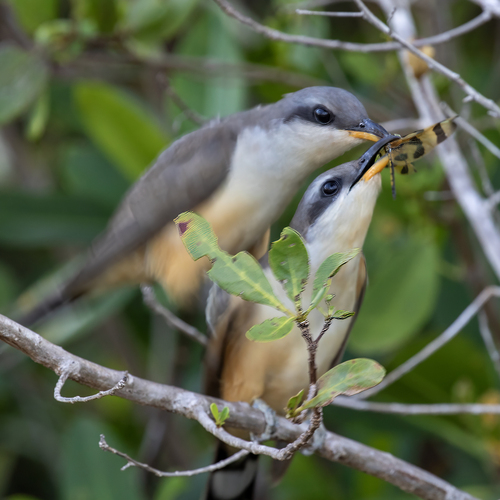
マングローブカッコウ (Coccyzus minor) マングローブカッコウ
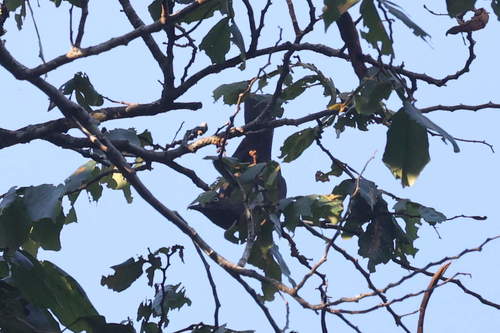
ウロコツグミモドキ (Allenia fusca) ウロコツグミモドキ

メディア

読み込み中…

要点

マングローブカッコウとウロコツグミモドキを区別する最も信頼できるフィールドマークは、カッコウの大胆な黒い顔のマスクと淡い下体の存在であり、対してツグミモドキはウロコ模様の白っぽい下体と顔のマスクがないことです。飛んでいるときや止まっているとき、カッコウの長い尾は黒と白の裏面と黄色のアイリングが目立ち、ツグミモドキは単一の白い翼帯と白い先端の尾羽を示します。くちばしの形も重要です:カッコウのくちばしは長く、下顎に黄色があり、強く下向きに曲がっていますが、ツグミモドキのくちばしは短く、わずかに曲がっているだけで、強い色のコントラストがありません。両者はサイズが似ているため、自信を持って識別するには顔、下体、くちばしに注目してください。

識別のコツ

  1. Facial mask (all ages): マングローブカッコウは大胆な黒い顔のマスクを持っていますが、ウロコツグミモドキは持っていません。頭が見える場合、これが最も早く区別する方法です。
  2. Underparts color and pattern (all ages): カッコウは無地の淡い下体を示しますが、ツグミモドキは胸や側面に特に目立つ灰褐色のウロコ模様や「ウロコ」マークのある白っぽい下体を持っています。このウロコ模様はツグミモドキに特有です。
  3. Bill shape and color (all ages): カッコウのくちばしは長く、強く下向きに曲がっており、上部は黒で下顎に黄色があります。ツグミモドキのくちばしは短く、わずかに曲がっているだけで、強い色のコントラストがありません。
  4. Eye-ring (all ages): カッコウは目立つ黄色のアイリングを持っていますが、ツグミモドキは持っていません。
  5. Tail pattern (all ages): カッコウの尾は長く、上部は茶色で、下部は黒と白です。ツグミモドキの尾は暗い茶褐色で、外側の羽の先端に白い部分がありますが、下部は黒と白ではありません。
  6. Wing bar (all ages): ツグミモドキは折りたたまれた翼に単一の白い翼帯を示しますが、カッコウには翼帯がありません。
  7. Overall coloration (all ages): カッコウは上部が茶色で下部が淡い色をしていますが、ツグミモドキは上部が灰褐色で、赤みがかった尾と白っぽく、強く模様のある下体を持っています。
  8. Head shape and jizz (all ages): カッコウの頭は滑らかに見え、くちばしの曲がりがより目立ちますが、ツグミモドキの頭はより丸く、ツグミのようです。
  9. Posture (all ages): カッコウは止まっているときにしばしば細長く水平に見えますが、ツグミモドキはより直立しており、ツグミのようです。
  10. Vocalizations (all ages): カッコウの繰り返される喉の「ガーク」コールと、ツグミモドキのより柔らかく、より多様でメロディックな歌を聞いてください。
  11. Habitat (all ages): 密なマングローブにいる場合、カッコウの方が可能性が高いですが、乾燥したり高地の低木にいる場合はツグミモドキの方が可能性が高いですが、重複が起こることがあります。
  12. Tail length (all ages): カッコウの尾は相対的に長く、止まっているときに翼の先端を大きく超えることがよくあります。
  13. Subspecies variation (thrasher): すべてのツグミモドキの亜種はウロコのある下体と翼帯を保持していますが、上部がより明るいまたは暗いものもあります。下体の模様が見える場合、この変異に惑わされないでください。
  14. No age-specific flight marks: どちらの種も特有の幼鳥や未成熟の上翼パターンを示さないため、年齢に関係なく顔や下体のマークに注目してください。
  15. Avoid size as a separator: 両種は質量がほぼ同じで、長さも似ているため、識別においてサイズの認識に頼らないでください。

大きさ

両種はサイズと質量が非常に近いです:マングローブカッコウは平均66g、ウロコツグミモドキは68gです [wikidata]。カッコウはわずかに長く(28〜34 cm対23 cmのツグミモドキ)、この違いはフィールドでは微妙です。どちらの種も他の種よりも著しく太いまたは細いわけではないため、サイズだけでは信頼できる区別にはなりません。

羽色

行動

情報源には強い行動の違いは記載されていません。両種は密な植生の中で止まっているか移動しているのが見られる可能性が高いです。カッコウは動きがより細長く、意図的に見えることがありますが、ツグミモドキは姿勢や採餌スタイルで大きなツグミに似ることがありますが、これらは微妙でフィールドでは常に信頼できるわけではありません。

生息環境

マングローブカッコウは通常、ネオトロピカルなマングローブ生息地に見られます [wikipedia]が、ウロコツグミモドキは小アンティル諸島に広く分布しています [wikipedia]。両者は密な低木地帯に出現することがありますが、カッコウはマングローブにより密接に関連しています。典型的なマングローブ生息地で見られた場合、カッコウの方が可能性が高いですが、生息地の重複が起こることがあるため、これだけに頼らないでください。

声

マングローブカッコウは喉の「ガークガークガークガークガウクガウク」と時々単一の「ウィット」を発します [wikipedia]。ウロコツグミモドキは、モッキンバードに似た一連の多様な音やフレーズを歌いますが、より柔らかく、より遅いです [wikipedia]。カッコウのコールはより繰り返しが多く、音楽的ではなく、ツグミモドキの方がより複雑で多様です。繰り返される厳しいコールを聞いたらカッコウを考え、より柔らかく、メロディックで多様な歌を聞いたらツグミモドキを考えてください。

より良い説明を送る

比較と同じ項目を使ってください。文章はすぐに公開されます。

The most reliable field mark to separate Mangrove Cuckoo from Scaly-breasted Thrasher is the presence of a bold black facial mask and buffy underparts on the cuckoo, versus the thrasher's scaly-marked whitish underparts and lack of a facial mask. In flight or perched, the cuckoo’s long tail with black-and-white underside and yellow eye-ring stand out, while the thrasher shows a single white wing bar and white-tipped tail feathers. Bill shape is also key: the cuckoo’s bill is long, black with yellow on the lower mandible, and strongly decurved, while the thrasher’s is shorter, only slightly decurved, and lacks strong color contrast. Both are similar in size, so focus on face, underparts, and bill for a confident ID.

  1. Facial mask (all ages): Mangrove Cuckoo has a bold black facial mask; Scaly-breasted Thrasher does not. This is the quickest way to separate them if the head is visible.
  2. Underparts color and pattern (all ages): Cuckoo shows plain buffy underparts, while thrasher has whitish underparts with bold gray-brown scalloping or 'scaly' marks, especially on the chest and flanks. The scaly pattern is unique to the thrasher.
  3. Bill shape and color (all ages): Cuckoo’s bill is long, strongly decurved, black above with yellow on the lower mandible. Thrasher’s bill is shorter, only slightly decurved, and lacks strong color contrast.
  4. Eye-ring (all ages): Cuckoo has a conspicuous yellow eye-ring; thrasher does not.
  5. Tail pattern (all ages): Cuckoo’s tail is long, brown above, and black-and-white below. Thrasher’s tail is darker brownish-black with white tips on the outer feathers, but not black-and-white underneath.
  6. Wing bar (all ages): Thrasher shows a single white wing bar on the folded wing; cuckoo lacks any wing bars.
  7. Overall coloration (all ages): Cuckoo is brown above with buffy below; thrasher is gray-brown above with a reddish rump and whitish, heavily marked underparts.
  8. Head shape and jizz (all ages): Cuckoo’s head appears sleeker with a more pronounced bill curve; thrasher’s head is rounder, more thrush-like.
  9. Posture (all ages): Cuckoo often appears elongated and horizontal when perched; thrasher is more upright, like a thrush.
  10. Vocalizations (all ages): Listen for the cuckoo’s repeated guttural 'gawk' calls versus the thrasher’s softer, more varied and melodic song.
  11. Habitat (all ages): If in dense mangroves, cuckoo is more likely; in drier or upland scrub, thrasher is more likely, but overlap can occur.
  12. Tail length (all ages): Cuckoo’s tail is proportionally longer, often extending well past the wingtips when perched.
  13. Subspecies variation (thrasher): All thrasher subspecies retain the scaly underparts and wing bar, but some are paler or darker above. Do not let this variation confuse you if the underparts pattern is visible.
  14. No age-specific flight marks: Neither species shows distinctive juvenile or immature upperwing patterns, so focus on facial and underpart marks regardless of age.
  15. Avoid size as a separator: Both species are nearly identical in mass and similar in length; do not rely on perceived size for identification.

Both species are very close in size and mass: Mangrove Cuckoo averages 66 g and Scaly-breasted Thrasher 68 g [wikidata]. The cuckoo is slightly longer (28–34 cm vs. 23 cm for the thrasher), but this difference is subtle in the field. Neither species is notably bulkier or more slender than the other, so size alone is not a reliable separator.

  • Juvenile/immature wing pattern: No age-specific upperwing or flight pattern marks are described for either species in the sources, so focus on adult plumage for separation.

  • Mangrove Cuckoo (adult): Shows a brown upper body, black facial mask, yellow eye-ring, and buffy underparts. The tail is long, brown above, and strikingly black-and-white below. The bill is black above with yellow on the lower mandible and strongly curved. No wing bars.

  • Scaly-breasted Thrasher (adult): Has a dark gray-brown head and upperparts with a reddish tinge on the rump, and a darker brownish-black tail with white tips on the outer feathers. The folded wing shows a single white bar. Underparts are whitish with bold gray-brown scalloping or 'scaly' marks, especially on the chest and flanks. The bill is shorter, only slightly decurved, and lacks the strong color contrast of the cuckoo. No facial mask or yellow eye-ring.

  • Subspecies variation (thrasher): Some subspecies are paler or darker, but all retain the scaly underparts and white wing bar.

No strong behavioral differences are described in the sources. Both species are likely to be seen perched or moving through dense vegetation. The cuckoo may appear more elongated and deliberate in movement, while the thrasher may resemble a large thrush in posture and foraging style, but these are subtle and not always reliable in the field.

Mangrove Cuckoo is typically found in Neotropical mangrove habitats [wikipedia], while Scaly-breasted Thrasher is widespread in the Lesser Antilles [wikipedia]. Both can occur in dense, shrubby areas, but the cuckoo is more tightly associated with mangroves. If seen in classic mangrove habitat, cuckoo is more likely, but habitat overlap can occur, so do not rely solely on this.

Mangrove Cuckoo gives a guttural 'gawk gawk gawk gawk gauk gauk' and sometimes a single 'whit' [wikipedia]. Scaly-breasted Thrasher sings a series of varied notes and phrases, reminiscent of a mockingbird but softer and slower [wikipedia]. The cuckoo’s call is more repetitive and less musical, while the thrasher’s is more complex and variable. If you hear a repeated, harsh call, think cuckoo; if you hear a softer, more melodious and varied song, think thrasher.

変更を破棄しますか?

保存していない編集があります。今離れると失われます。

マングローブカッコウ · ウロコツグミモドキ · 苦手な鳥