

Mangrove Cuckoo vs Scaly-breasted Thrasher
Coccyzus minor contro Allenia fusca
Fai un quiz con Mangrove Cuckoo e Scaly-breasted Thrasher
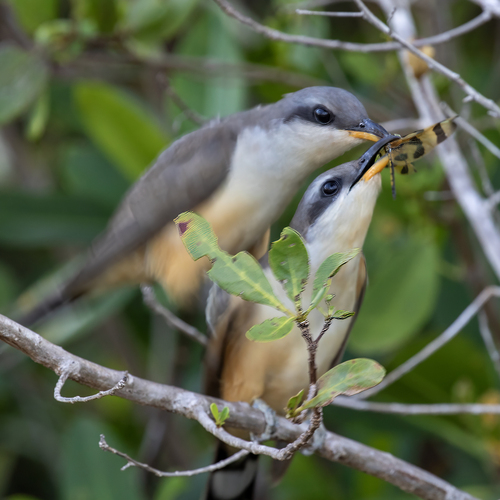 Mangrove Cuckoo
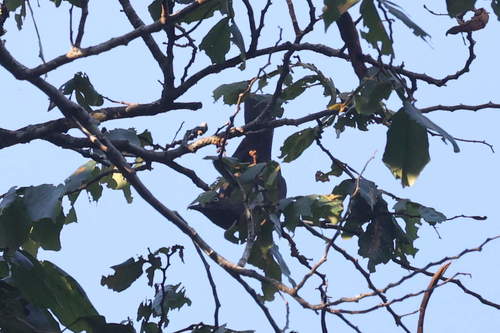 Scaly-breasted Thrasher
In breve
Il segno distintivo più affidabile per separare il Mangrove Cuckoo dallo Scaly-breasted Thrasher è la presenza di una maschera facciale nera audace e di parti inferiori color crema sul cuculo, rispetto alle parti inferiori bianche con segni squamosi e alla mancanza di una maschera facciale del thrasher. In volo o posato, la lunga coda del cuculo con il lato inferiore bianco e nero e l'anello oculare giallo si distingue, mentre il thrasher mostra una singola barra alare bianca e piume della coda con punte bianche. La forma del becco è anche fondamentale: il becco del cuculo è lungo, nero con giallo sulla mandibola inferiore e fortemente ricurvo, mentre quello del thrasher è più corto, solo leggermente ricurvo e privo di un forte contrasto di colore. Entrambi sono simili in dimensioni, quindi concentrati su faccia, parti inferiori e becco per un'identificazione sicura.
Consigli di identificazione
- Maschera facciale (tutte le età): Il Mangrove Cuckoo ha una maschera facciale nera audace; lo Scaly-breasted Thrasher no. Questo è il modo più rapido per separarli se la testa è visibile.
- Colore e motivo delle parti inferiori (tutte le età): Il cuculo mostra parti inferiori color crema, mentre il thrasher ha parti inferiori bianche con audaci segni grigio-marroni o 'squamosi', specialmente sul petto e sui fianchi. Il motivo squamoso è unico per il thrasher.
- Forma e colore del becco (tutte le età): Il becco del cuculo è lungo, fortemente ricurvo, nero sopra con giallo sulla mandibola inferiore. Il becco del thrasher è più corto, solo leggermente ricurvo e privo di un forte contrasto di colore.
- Anello oculare (tutte le età): Il cuculo ha un anello oculare giallo evidente; il thrasher no.
- Motivo della coda (tutte le età): La coda del cuculo è lunga, marrone sopra e bianco e nero sotto. La coda del thrasher è di un marrone scuro-nerastro con punte bianche sulle piume esterne, ma non è bianco e nero sotto.
- Barra alare (tutte le età): Il thrasher mostra una singola barra alare bianca sull'ala ripiegata; il cuculo non ha barre alari.
- Colorazione generale (tutte le età): Il cuculo è marrone sopra con parti inferiori color crema; il thrasher è grigio-marrone sopra con un ventre rossastro e parti inferiori bianche, fortemente segnate.
- Forma della testa e jizz (tutte le età): La testa del cuculo appare più snella con una curva del becco più pronunciata; la testa del thrasher è più rotonda, più simile a quella di un tordo.
- Postura (tutte le età): Il cuculo appare spesso allungato e orizzontale quando è posato; il thrasher è più eretto, come un tordo.
- Vocalizzazioni (tutte le età): Ascolta i ripetuti richiami gutturali 'gawk' del cuculo rispetto al canto più morbido, vario e melodico del thrasher.
- Habitat (tutte le età): Se in mangrovie dense, è più probabile vedere il cuculo; in aree più secche o di macchia montana, è più probabile vedere il thrasher, ma può esserci sovrapposizione.
- Lunghezza della coda (tutte le età): La coda del cuculo è proporzionalmente più lunga, spesso si estende ben oltre le punte delle ali quando è posato.
- Variazione delle sottospecie (thrasher): Tutte le sottospecie di thrasher mantengono le parti inferiori squamose e la barra alare, ma alcune sono più chiare o più scure sopra. Non lasciare che questa variazione ti confonda se il motivo delle parti inferiori è visibile.
- Nessun segno di volo specifico per età: Nessuna delle due specie mostra motivi distintivi di volo per i giovani o immaturi, quindi concentrati sui segni facciali e delle parti inferiori indipendentemente dall'età.
- Evitare la dimensione come separatore: Entrambe le specie sono quasi identiche in massa e simili in lunghezza; non fare affidamento sulla dimensione percepita per l'identificazione.
Taglia
Entrambe le specie sono molto simili in dimensioni e massa: il Mangrove Cuckoo pesa in media 66 g e lo Scaly-breasted Thrasher 68 g [wikidata]. Il cuculo è leggermente più lungo (28–34 cm contro 23 cm per il thrasher), ma questa differenza è sottile sul campo. Nessuna delle due specie è notevolmente più robusta o più snella dell'altra, quindi la dimensione da sola non è un separatore affidabile.
Piumaggio
-
Motivo dell'ala giovanile/immatura: Non sono descritti segni specifici per l'ala superiore o il motivo di volo per nessuna delle due specie nelle fonti, quindi concentrati sul piumaggio adulto per la separazione.
-
Mangrove Cuckoo (adulto): Mostra un corpo superiore marrone, una maschera facciale nera, un anello oculare giallo e parti inferiori color crema. La coda è lunga, marrone sopra e sorprendentemente bianco e nero sotto. Il becco è nero sopra con giallo sulla mandibola inferiore e fortemente curvato. Nessuna barra alare.
-
Scaly-breasted Thrasher (adulto): Ha una testa e parti superiori grigio-marroni scure con una sfumatura rossastra sul ventre, e una coda marrone scuro-nerastra con punte bianche sulle piume esterne. L'ala ripiegata mostra una singola barra bianca. Le parti inferiori sono bianche con audaci segni grigio-marroni o 'squamosi', specialmente sul petto e sui fianchi. Il becco è più corto, solo leggermente ricurvo, e privo del forte contrasto di colore del cuculo. Nessuna maschera facciale o anello oculare giallo.
-
Variazione delle sottospecie (thrasher): Alcune sottospecie sono più chiare o più scure, ma tutte mantengono le parti inferiori squamose e la barra alare bianca.
Comportamento
Non sono descritte forti differenze comportamentali nelle fonti. Entrambe le specie sono probabilmente viste posate o muoversi attraverso vegetazione densa. Il cuculo può apparire più allungato e deliberato nei movimenti, mentre il thrasher può assomigliare a un grande tordo nella postura e nello stile di foraggiamento, ma queste sono sottili e non sempre affidabili sul campo.
Habitat
Il Mangrove Cuckoo si trova tipicamente negli habitat di mangrovie neotropicali [wikipedia], mentre lo Scaly-breasted Thrasher è diffuso nelle Piccole Antille [wikipedia]. Entrambi possono verificarsi in aree dense e cespugliose, ma il cuculo è più strettamente associato alle mangrovie. Se visto in un habitat classico di mangrovie, è più probabile vedere il cuculo, ma può verificarsi sovrapposizione degli habitat, quindi non fare affidamento solo su questo.
Voce
Il Mangrove Cuckoo emette un gutturale 'gawk gawk gawk gawk gauk gauk' e a volte un singolo 'whit' [wikipedia]. Lo Scaly-breasted Thrasher canta una serie di note e frasi varie, che ricordano un usignolo ma più morbide e lente [wikipedia]. Il richiamo del cuculo è più ripetitivo e meno musicale, mentre quello del thrasher è più complesso e variabile. Se senti un richiamo ripetuto e aspro, pensa al cuculo; se senti un canto più morbido, melodioso e vario, pensa al thrasher.
Mangrove Cuckoo · Scaly-breasted Thrasher · I miei uccelli difficili