

Motmot

マングローブカッコウ 対 ハイイロフルエドリ

Coccyzus minor 対 Cinclocerthia gutturalis

マングローブカッコウとハイイロフルエドリのクイズ
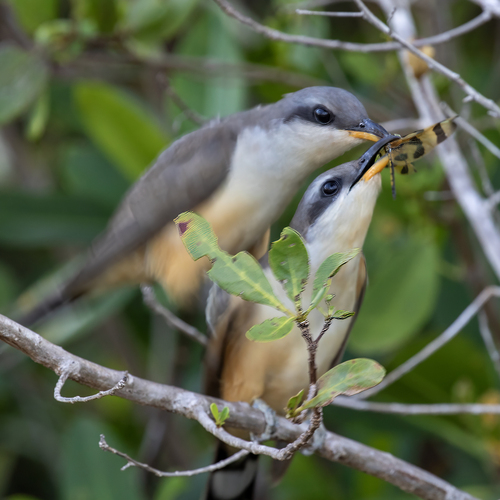
マングローブカッコウ (Coccyzus minor) マングローブカッコウ
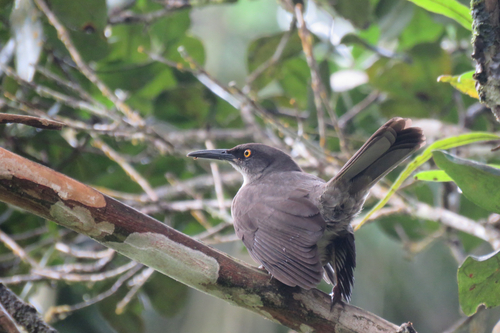
ハイイロフルエドリ (Cinclocerthia gutturalis) ハイイロフルエドリ

メディア

読み込み中…

要点

マングローブカッコウとハイイロフルエドリを区別する最も信頼できるフィールドマークは、マングローブカッコウの大胆な黒い顔のマスクと黄色いアイリングであり、これはハイイロフルエドリには存在しません。マングローブカッコウはまた、淡い下腹部と黒と白の模様がある長い尾を持っていますが、ハイイロフルエドリは全体的に灰褐色で、淡い白い喉と胸の中心を持ち、顔のマスクはありません。構造的には、カッコウのくちばしは強く下向きに曲がっており、二色(上が黒、下が黄色)ですが、フルエドリのくちばしは長く、わずかに下向きに曲がっており、色は均一です。幼鳥のハイイロフルエドリはより茶色で、まだらの胸を持っており、これは落とし穴になることがあります。両種はサイズが似ていますが、行動と姿勢は非常に異なります:マングローブカッコウはより直立で意図的であり、ハイイロフルエドリはしばしば翼を震わせ、植生の中を活発に動いているのが見られます。

識別のコツ

  1. Facial Mask (Adults): マングローブカッコウは目の部分に大胆な黒い顔のマスクを示し、ハイイロフルエドリのすべての年齢には存在しません。マスクが見えたら、それはカッコウです。
  2. Eye-ring: マングローブカッコウには明確な黄色のアイリングがありますが、ハイイロフルエドリにはありません。
  3. Bill Shape and Color: マングローブカッコウのくちばしは強く下向きに曲がっており、二色(上が黒、下が黄色)です;ハイイロフルエドリのくちばしは長く、わずかに下向きに曲がっており、色は均一で、雌のくちばしは雄よりも長いです。
  4. Tail Pattern: マングローブカッコウの尾は上が茶色で、下が際立って黒と白です。ハイイロフルエドリの尾は上も下も単調な灰褐色で、際立った模様はありません。
  5. Underparts: マングローブカッコウは淡い下腹部を持っています;ハイイロフルエドリは喉と中央の胸に淡い白がありますが、側面はよりシナモン色またはオリーブ色がかっています。幼鳥のフルエドリはより茶色で、胸にまだらがありますが、カッコウのようにきれいな淡い色はありません。
  6. Upperparts: 両者は上が茶色または灰褐色ですが、カッコウはより暖かい茶色で、フルエドリはより灰色がかっています、特に亜種マクロリンカでは。
  7. Behavior: ハイイロフルエドリはしばしば独特のディスプレイで翼を震わせたり、揺れたりしますが、マングローブカッコウはこれを行いません。この行動が見られたら、それはフルエドリの診断になります。
  8. Posture: マングローブカッコウは直立して止まり、ゆっくり動きます;ハイイロフルエドリはより水平で、活発で、落ち着きがありません。
  9. Habitat: マングローブカッコウはマングローブや沿岸の茂みで見られます;ハイイロフルエドリはマルティニークとセントルシアにのみ生息し、さまざまな森林にいます。これらの島にいない場合、それはフルエドリではありません。
  10. Voice: マングローブカッコウの喉の「ガクガクガク」は独特です。これを聞いたら、それはカッコウです。フルエドリの歌はここでは説明されていません。
  11. Juvenile Pitfall: 幼鳥のハイイロフルエドリはより茶色で、下がまだらで、カッコウの淡い下腹部と混同されることがありますが、常に顔のマスクと尾の模様が欠けています。
  12. Sex Differences: フルエドリだけがくちばしの長さにおいて性差を示します(雌が長い)が、これは微妙で、主要なフィールドマークではありません。
  13. Flight: どちらの種にも特有の飛行や翼の模様は説明されていません;頭と尾の模様に依存してください。
  14. Local Abundance: ハイイロフルエドリはマルティニークとセントルシアにのみ見られ、そこでは地元で一般的です;マングローブカッコウはネオトロピクス全体に広がっていますが、全体的にはあまり一般的ではありません。
  15. Common Pitfall: カッコウの顔のマスクやフルエドリの震える行動を見落とすことが、ほとんどの誤同定につながります。最初にこれらを確認してください。

大きさ

両種はサイズと質量が非常に近く、マングローブカッコウは平均66g、ハイイロフルエドリは69gです [wikidata]。マングローブカッコウはハイイロフルエドリ(23–26 cm)に比べてわずかに長い(28–34 cm)ですが、この違いはフィールドでは微妙です。翼幅はカッコウにのみ与えられ(38–43 cm)、全体的な印象は両者が中型で長い尾を持つ鳥であるということです。サイズだけではこれら二つを信頼できるように区別することはできません。

羽色

成鳥のマングローブカッコウは、茶色の上面、大胆な黒い顔のマスク、黄色のアイリング、淡い下腹部によって最もよく認識されます。尾は長く、上が茶色で、下が際立って黒と白です。くちばしは上が黒で、下が黄色です。対照的に、成鳥のハイイロフルエドリは上が温かい灰褐色で、顔はやや暗い(しかしマスクはありません)、淡い白い喉と中央の胸、そしてより薄いシナモン色またはオリーブ色がかった側面を持っています。フルエドリのくちばしは長く、わずかに下向きに曲がっており、雌はより長いくちばしを持っています。幼鳥のハイイロフルエドリは全体的により茶色で、まだらの胸を持っており、これはカッコウの淡い下腹部と混同されることがありますが、顔のマスクと尾の模様は欠けています。どちらの種にも特有の年齢別の翼の模様は説明されていないため、区別は頭と下腹部の色、顔のマーキング、尾の模様に依存します。

行動

マングローブカッコウは通常、直立して止まり、マングローブや密な茂みの中を意図的に動き、長時間静止していることがよくあります。対照的に、ハイイロフルエドリは非常に活発で、地面から樹冠まで採餌し、翼を震わせるディスプレイで有名です:翼は垂れ下がり、体から急速に震えています。この震える行動は独特で、フルエドリの診断になります。カッコウはこの行動を示しません。

生息環境

マングローブカッコウは通常、ネオトロピクス全体のマングローブや密な沿岸の茂みで見られます。ハイイロフルエドリはマルティニークとセントルシアの島に制限されており、低地から山地までのさまざまな森林生息地に生息し、しばしば絡み合った木や着生植物のある木の中で採餌します。この鳥がこれらの島の外で見られた場合、それはハイイロフルエドリではありません。生息地の重複は、これらの島の密な森林地域を除いて最小限です。

声

マングローブカッコウは「ガクガクガクガクガウクガウク」といった喉の声を出し、時には単独の「ウィット」という音を出します。ハイイロフルエドリの声は提供されたメモには記載されていないため、声はカッコウの独特の呼び声が聞こえた場合のみ診断的です。

より良い説明を送る

比較と同じ項目を使ってください。文章はすぐに公開されます。

The most reliable field mark to separate Mangrove Cuckoo from Grey Trembler is the Mangrove Cuckoo’s bold black facial mask and yellow eye-ring, which are absent in the Grey Trembler. Mangrove Cuckoo also has buffy underparts and a long tail with black-and-white patterning below, while Grey Trembler is overall gray-brown with a buffy white throat and breast center, lacking any facial mask. Structurally, the cuckoo’s bill is strongly decurved and bicolored (black above, yellow below), whereas the trembler’s bill is long, slightly downcurved, and uniform in color. Juvenile Grey Tremblers are browner and have a mottled chest, which can be a pitfall. Both species are similar in size, but their behavior and posture are very different: Mangrove Cuckoo is more upright and deliberate, while Grey Trembler is often seen shivering its wings and moving actively through vegetation.

  1. Facial Mask (Adults): Mangrove Cuckoo shows a bold black facial mask through the eye, absent in Grey Trembler of all ages. If you see a mask, it is the cuckoo.
  2. Eye-ring: Mangrove Cuckoo has a clear yellow eye-ring, while Grey Trembler does not.
  3. Bill Shape and Color: Mangrove Cuckoo’s bill is strongly decurved and bicolored (black above, yellow below); Grey Trembler’s bill is long, slightly downcurved, and uniform in color, with the female’s bill longer than the male’s.
  4. Tail Pattern: Mangrove Cuckoo’s tail is brown above and strikingly black-and-white below. Grey Trembler’s tail is plain gray-brown above and below, lacking any bold pattern.
  5. Underparts: Mangrove Cuckoo has buffy underparts; Grey Trembler has buffy white on throat and central breast, but the flanks are more cinnamon or olive-tinged. Juvenile tremblers are browner and mottled on the chest, but never as cleanly buff as the cuckoo.
  6. Upperparts: Both are brown or gray-brown above, but the cuckoo is warmer brown, while the trembler is more grayish, especially in the subspecies macrorhyncha.
  7. Behavior: Grey Trembler often shivers or trembles its wings in a distinctive display, which Mangrove Cuckoo never does. If you see this behavior, it is diagnostic for trembler.
  8. Posture: Mangrove Cuckoo perches upright and moves slowly; Grey Trembler is more horizontal, active, and restless.
  9. Habitat: Mangrove Cuckoo is found in mangroves and coastal thickets; Grey Trembler is only on Martinique and Saint Lucia, in a variety of forests. If you are not on these islands, it is not a trembler.
  10. Voice: Mangrove Cuckoo’s guttural "gawk gawk gawk" is distinctive. If you hear this, it is the cuckoo. Trembler’s song is not described here.
  11. Juvenile Pitfall: Juvenile Grey Trembler is browner and mottled below, which could be confused with the buffy underparts of the cuckoo, but always lacks the facial mask and tail pattern.
  12. Sex Differences: Only the trembler shows sexual dimorphism in bill length (female longer), but this is subtle and not a primary field mark.
  13. Flight: No distinctive flight or wing pattern is described for either species; rely on head and tail pattern.
  14. Local Abundance: Grey Trembler is only found on Martinique and Saint Lucia and is locally common there; Mangrove Cuckoo is more widespread in the Neotropics but less common overall.
  15. Common Pitfall: Overlooking the facial mask of the cuckoo or the trembling behavior of the trembler leads to most misidentifications. Always check for these first.

Both species are very close in size and mass, with Mangrove Cuckoo averaging 66 g and Grey Trembler 69 g [wikidata]. Mangrove Cuckoo is slightly longer (28–34 cm) compared to Grey Trembler (23–26 cm), but this difference is subtle in the field. Wingspan is only given for the cuckoo (38–43 cm), but the overall impression is that both are medium-sized, long-tailed birds. Size alone is not a reliable separator between these two.

Adult Mangrove Cuckoo is best recognized by its brown upperparts, bold black facial mask, yellow eye-ring, and buffy underparts. The tail is long, brown above, and strikingly black-and-white below. The bill is black above and yellow below. In contrast, adult Grey Trembler is warm gray-brown above with a slightly darker face (but no mask), buffy white throat and central breast, and paler cinnamon or olive-tinged flanks. The trembler’s bill is long and slightly downcurved, with females having a longer bill. Juvenile Grey Trembler is browner overall and has a mottled chest, which can be confused with the buffy underparts of the cuckoo, but lacks the facial mask and tail pattern. No distinctive age-specific wing pattern is described for either species, so separation relies on head and underpart coloration, facial markings, and tail pattern.

Mangrove Cuckoo tends to perch upright and move deliberately through mangroves and dense thickets, often remaining still for long periods. In contrast, Grey Trembler is highly active, foraging from ground to canopy, and is famous for its wing-shivering display: wings drooped and rapidly quivering away from the body. This trembling behavior is unique and diagnostic for the trembler. The cuckoo does not show this behavior.

Mangrove Cuckoo is typically found in mangroves and dense coastal thickets throughout the Neotropics. Grey Trembler is restricted to the islands of Martinique and Saint Lucia, where it inhabits a range of forested habitats from lowland to montane, often foraging in tangles and epiphyte-laden trees. If the bird is seen outside of these islands, it is not a Grey Trembler. Habitat overlap is minimal except in dense forested areas on these islands.

Mangrove Cuckoo gives a guttural "gawk gawk gawk gawk gauk gauk" and sometimes a single "whit" note. Grey Trembler’s vocalizations are not described in the provided notes, so voice is only diagnostic if the cuckoo’s distinctive call is heard.

変更を破棄しますか?

保存していない編集があります。今離れると失われます。

マングローブカッコウ · ハイイロフルエドリ · 苦手な鳥