

Mangrove Cuckoo vs Gray Trembler
Coccyzus minor contro Cinclocerthia gutturalis
Fai un quiz con Mangrove Cuckoo e Gray Trembler
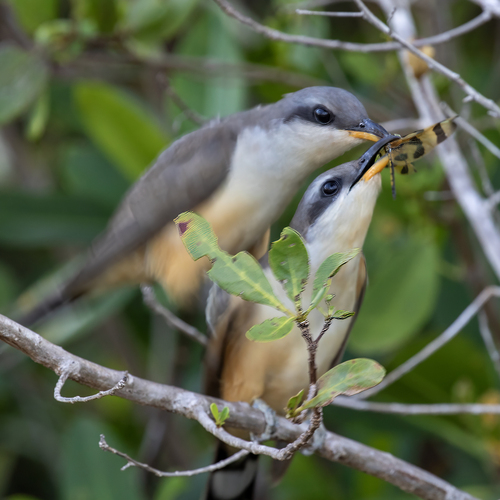 Mangrove Cuckoo
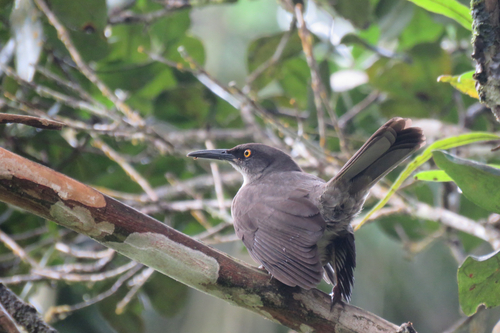 Gray Trembler
In breve
Il segno di campo più affidabile per separare il Mangrove Cuckoo dal Gray Trembler è la maschera facciale nera audace e l'anello giallo attorno all'occhio del Mangrove Cuckoo, assenti nel Gray Trembler. Il Mangrove Cuckoo ha anche parti inferiori color crema e una lunga coda con un motivo bianco e nero sotto, mentre il Gray Trembler è complessivamente grigio-marrone con una gola e un centro del petto bianchi color crema, privo di qualsiasi maschera facciale. Strutturalmente, il becco del cuculo è fortemente curvato verso il basso e bicolore (nero sopra, giallo sotto), mentre il becco del trembler è lungo, leggermente curvato verso il basso e uniforme nel colore. I giovani Grey Tremblers sono più marroni e hanno un petto maculato, il che può essere un tranello. Entrambe le specie sono simili in dimensioni, ma il loro comportamento e la loro postura sono molto diversi: il Mangrove Cuckoo è più eretto e deliberato, mentre il Gray Trembler è spesso visto tremare le ali e muoversi attivamente attraverso la vegetazione.
Consigli di identificazione
- Facial Mask (Adults): Il Mangrove Cuckoo mostra una maschera facciale nera audace attraverso l'occhio, assente nel Gray Trembler di tutte le età. Se vedi una maschera, è il cuculo.
- Eye-ring: Il Mangrove Cuckoo ha un chiaro anello giallo attorno all'occhio, mentre il Gray Trembler no.
- Bill Shape and Color: Il becco del Mangrove Cuckoo è fortemente curvato verso il basso e bicolore (nero sopra, giallo sotto); il becco del Gray Trembler è lungo, leggermente curvato verso il basso e uniforme nel colore, con il becco della femmina più lungo di quello del maschio.
- Tail Pattern: La coda del Mangrove Cuckoo è marrone sopra e sorprendentemente nera e bianca sotto. La coda del Gray Trembler è grigio-marrone semplice sopra e sotto, priva di qualsiasi motivo audace.
- Underparts: Il Mangrove Cuckoo ha parti inferiori color crema; il Gray Trembler ha bianco crema sulla gola e sul petto centrale, ma i fianchi sono più color cannella o oliva. I giovani tremblers sono più marroni e maculati sul petto, ma non sono mai così puliti color crema come il cuculo.
- Upperparts: Entrambi sono marroni o grigio-marroni sopra, ma il cuculo è di un marrone più caldo, mentre il trembler è più grigiastro, specialmente nella sottospecie macrorhyncha.
- Behavior: Il Gray Trembler spesso trema o vibra le ali in una mostra distintiva, cosa che il Mangrove Cuckoo non fa mai. Se vedi questo comportamento, è diagnostico per il trembler.
- Posture: Il Mangrove Cuckoo si posiziona eretto e si muove lentamente; il Gray Trembler è più orizzontale, attivo e irrequieto.
- Habitat: Il Mangrove Cuckoo si trova in mangrovie e cespugli costieri; il Gray Trembler è solo a Martinica e Saint Lucia, in una varietà di foreste. Se non sei su queste isole, non è un trembler.
- Voice: Il gutturale "gawk gawk gawk" del Mangrove Cuckoo è distintivo. Se senti questo, è il cuculo. Il canto del trembler non è descritto qui.
- Juvenile Pitfall: Il giovane Gray Trembler è più marrone e maculato sotto, il che potrebbe essere confuso con le parti inferiori color crema del cuculo, ma manca sempre della maschera facciale e del motivo della coda.
- Sex Differences: Solo il trembler mostra dimorfismo sessuale nella lunghezza del becco (femmina più lunga), ma questo è sottile e non un segno di campo primario.
- Flight: Non è descritto alcun volo o motivo distintivo delle ali per nessuna delle due specie; fai affidamento sul motivo della testa e della coda.
- Local Abundance: Il Gray Trembler si trova solo a Martinica e Saint Lucia ed è localmente comune lì; il Mangrove Cuckoo è più diffuso nei Neotropici ma meno comune in generale.
- Common Pitfall: Trascurare la maschera facciale del cuculo o il comportamento tremolante del trembler porta alla maggior parte delle identificazioni errate. Controlla sempre prima questi aspetti.
Taglia
Entrambe le specie sono molto simili in dimensioni e massa, con il Mangrove Cuckoo che pesa in media 66 g e il Gray Trembler 69 g [wikidata]. Il Mangrove Cuckoo è leggermente più lungo (28–34 cm) rispetto al Gray Trembler (23–26 cm), ma questa differenza è sottile sul campo. L'apertura alare è fornita solo per il cuculo (38–43 cm), ma l'impressione generale è che entrambe siano uccelli di dimensioni medie e con coda lunga. La dimensione da sola non è un separatore affidabile tra questi due.
Piumaggio
L'adulto Mangrove Cuckoo è meglio riconosciuto per le sue parti superiori marroni, la maschera facciale nera audace, l'anello giallo attorno all'occhio e le parti inferiori color crema. La coda è lunga, marrone sopra e sorprendentemente nera e bianca sotto. Il becco è nero sopra e giallo sotto. Al contrario, l'adulto Gray Trembler è grigio-marrone caldo sopra con un volto leggermente più scuro (ma senza maschera), gola bianca color crema e petto centrale, e fianchi più chiari color cannella o oliva. Il becco del trembler è lungo e leggermente curvato verso il basso, con le femmine che hanno un becco più lungo. Il giovane Gray Trembler è complessivamente più marrone e ha un petto maculato, il che può essere confuso con le parti inferiori color crema del cuculo, ma manca della maschera facciale e del motivo della coda. Non è descritto alcun motivo distintivo delle ali specifico per l'età per nessuna delle due specie, quindi la separazione si basa sulla colorazione della testa e delle parti inferiori, sulle marcature facciali e sul motivo della coda.
Comportamento
Il Mangrove Cuckoo tende a posarsi eretto e muoversi deliberatamente attraverso le mangrovie e i cespugli densi, spesso rimanendo fermo per lunghi periodi. Al contrario, il Gray Trembler è altamente attivo, foraggiando dal suolo alla chioma, ed è famoso per la sua mostra di vibrazione delle ali: ali abbassate e che tremano rapidamente lontano dal corpo. Questo comportamento di tremore è unico e diagnostico per il trembler. Il cuculo non mostra questo comportamento.
Habitat
Il Mangrove Cuckoo si trova tipicamente in mangrovie e cespugli costieri densi in tutto i Neotropici. Il Gray Trembler è ristretto alle isole di Martinica e Saint Lucia, dove abita una gamma di habitat forestali da pianura a montano, spesso foraggiando in grovigli e alberi carichi di epifite. Se l'uccello viene visto al di fuori di queste isole, non è un Gray Trembler. La sovrapposizione degli habitat è minima, eccetto che in aree forestali dense su queste isole.
Voce
Il Mangrove Cuckoo emette un gutturale "gawk gawk gawk gawk gauk gauk" e a volte una singola nota "whit". Le vocalizzazioni del Gray Trembler non sono descritte nelle note fornite, quindi la voce è solo diagnostica se si sente il richiamo distintivo del cuculo.