

Motmot

マダラウミスズメ 対 コバシウミスズメ

Brachyramphus perdix 対 Brachyramphus brevirostris

マダラウミスズメとコバシウミスズメのクイズ

マダラウミスズメ (Brachyramphus perdix) マダラウミスズメ
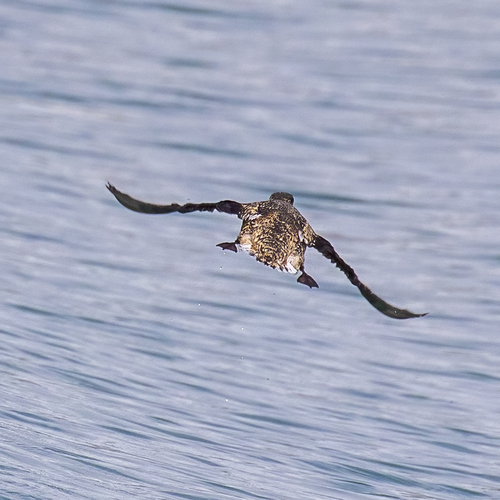
コバシウミスズメ (Brachyramphus brevirostris) コバシウミスズメ

メディア

読み込み中…

要点

ロングビルウミスズメとコバシウミスズメを区別する最も信頼できるフィールドマークはくちばしです:ロングビルは明らかに長く、細い黒いくちばしを持ち、コバシは著しく短いくちばしを持っています。繁殖羽衣では、ロングビルウミスズメは喉がより淡く、鱗模様が弱く、コバシはより均一に灰褐色です。非繁殖(冬)羽衣では、ロングビルはコバシが見せることができる白い襟がありません。両者は尖った翼を持つコンパクトなウミスズメですが、特に頭部と喉周りの構造や羽衣の微妙な違いが重要です。未成熟や冬の個体は特に難しいため、くちばしの長さと喉/顔の模様が最も実用的なフィールドマークです。

識別のコツ

  1. Bill length and shape: ロングビルウミスズメは常に明らかに長く、細い黒いくちばしを持ち、コバシウミスズメは短く、太いくちばしを持っています。これはすべての年齢と季節で最も一貫したフィールドマークです。
  2. Breeding plumage throat: ロングビルウミスズメは淡い喉を示し、暗い顔や胸と対照的です;コバシウミスズメは淡い部分のないより均一な灰褐色の頭と喉を持っています。春と夏にこれを使用してください。
  3. Breeding plumage scaling: ロングビルウミスズメは淡い羽の縁のために上面に弱い鱗模様を持っていますが、コバシはより均一な色合いでこの鱗効果がありません。
  4. Non-breeding (winter) collar: コバシウミスズメは冬に白い襟を見せることがありますが、ロングビルウミスズメは決して持っていません。白い襟が見えたら、それはロングビルではありません。
  5. Crown and nape in winter: 両者は冬に暗い冠とうなじを持っていますが、ロングビルのものは白い腹部に対してよりはっきりと定義されています。
  6. Eye ring: ロングビルウミスズメは明確な白いアイリングを持ち、コバシではあまり目立たないか、欠けていることがありますが、これは微妙なマークであり、フィールドで常に見えるわけではありません。
  7. Size and bulk: ロングビルはわずかに大きく、重いですが、これは直接比較や経験がないと明らかではありません。
  8. Jizz and posture: 両者はコンパクトでずんぐりした体形を持ち、短い尾と尖った翼を持っています;違いは微妙で、迅速な識別には信頼できません。
  9. Flight style: 両種は急速な翼の動きと直接的な飛行を持ちます;一貫した違いはありません。
  10. Habitat context: アラスカでは、潮流氷河の近くや荒れた山の斜面にいるウミスズメはコバシの可能性が高いです。内陸で見つかるウミスズメは、特に北アメリカやヨーロッパではほぼ確実にロングビルです。
  11. Vagrancy: ロングビルウミスズメは通常の範囲から遠くに現れる傾向があり、内陸の湖や川でも見られます;コバシはそのような漂流で知られていません。
  12. Nesting context: フィールドマークではありませんが、裸で雪の近くの斜面での巣作りに関する情報があれば、これはコバシを指し示します。
  13. Plumage pitfalls: 両種は悪い光や距離で似て見えることがあります;全体の色に頼る前に、常にくちばしの長さと喉の模様を確認してください。
  14. Immature/first-winter birds: 特有の上翼パターンの違いは記載されていないため、これらの年齢ではくちばしと頭/喉の模様に頼ってください。
  15. Voice: 利用可能な情報源には診断的な音声の違いは記載されていないため、分離に音声を使用しないでください。

大きさ

両種は全体の長さが約25 cmで似ていますが、ロングビルウミスズメはわずかに大きく、コバシウミスズメより約20%重いです [wikipedia]。フィールドでは、この違いは微妙で、鳥が並んでいない限り診断的ではありません。ただし、くちばしはロングビルで明らかに長く、細いですが、コバシは短く、太いくちばしを持っています。体形は両者ともにずんぐりしており、短い尾と尖った翼を持っています。

羽色

すべての年齢において、特に飛行中、両種は尖った翼と暗い上面を持っていますが、季節による重要な違いがあります:

両種は白いアイリングを持っていますが、これはロングビルウミスズメでより一貫して観察されています。

行動

両種は通常、孤独またはペアで行動し、大きな群れを形成することは稀です。ロングビルウミスズメは漂流しやすく、内陸や淡水湖で見られることがありますが、コバシウミスズメは潮流氷河の近くの沿岸水域により密接に関連しています。飛行中、両者はコンパクトに見え、急速な翼の動きと尖った翼を持っています。巣作りの行動はフィールドマークではありませんが、両種はコロニーから離れた場所に巣を作ります。

生息環境

ロングビルウミスズメはカムチャツカからオホーツク海まで繁殖し、主に北日本周辺で冬を過ごし、時には内陸や遠くの海岸にさまようことがあります。コバシウミスズメはアラスカと東シベリアの沖に見られ、雪原の近くの山の斜面で繁殖し、潮流氷河の近くで餌を探します。北アメリカやヨーロッパの内陸で見られた場合、ロングビルが漂流するため、はるかに可能性が高いです。アラスカでは、コバシは氷河や荒れた沿岸の斜面の近くにいる可能性が高いです。

より良い説明を送る

比較と同じ項目を使ってください。文章はすぐに公開されます。

The most reliable field mark to separate Long-billed Murrelet from Kittlitz's Murrelet is the bill: Long-billed shows a distinctly longer, slender black bill, while Kittlitz's has a notably shorter bill. In breeding plumage, Long-billed Murrelet has a paler throat and weaker scaly pattern, while Kittlitz's is more uniformly greyish-brown. In non-breeding (winter) plumage, Long-billed lacks the white collar that Kittlitz's can show. Both are compact auks with pointed wings, but subtle differences in structure and plumage, especially around the head and throat, are key. Immature and winter birds are especially challenging, so bill length and throat/face pattern are the most practical field marks.

  1. Bill length and shape: Long-billed Murrelet always has a noticeably longer, slender black bill; Kittlitz's Murrelet has a short, stubby bill. This is the most consistent field mark at all ages and seasons.
  2. Breeding plumage throat: Long-billed Murrelet shows a pale throat, contrasting with the darker face and breast; Kittlitz's Murrelet has a more uniform greyish-brown head and throat without a pale area. Use this in spring and summer.
  3. Breeding plumage scaling: Long-billed Murrelet has a weak scaly pattern on the upperparts due to pale feather edges, but Kittlitz's is more evenly colored and lacks this scaly effect.
  4. Non-breeding (winter) collar: Kittlitz's Murrelet may show a white collar in winter, which Long-billed Murrelet never has. If you see a white collar, it's not Long-billed.
  5. Crown and nape in winter: Both have dark crowns and napes in winter, but Long-billed's is more sharply defined against the white underparts.
  6. Eye ring: Long-billed Murrelet has a distinct white eye ring, which may be less obvious or absent in Kittlitz's, but this is a subtle mark and not always visible in the field.
  7. Size and bulk: Long-billed is slightly larger and heavier, but this is only apparent with direct comparison or experience.
  8. Jizz and posture: Both are compact and chunky with short tails and pointed wings; differences are subtle and not reliable for quick ID.
  9. Flight style: Both species have rapid wingbeats and direct flight; no consistent difference noted.
  10. Habitat context: In Alaska, a murrelet near tidewater glaciers or on barren mountain slopes is likely Kittlitz's. A murrelet found inland, away from the coast, especially in North America or Europe, is almost certainly Long-billed.
  11. Vagrancy: Long-billed Murrelet is prone to appearing far from its normal range, including inland lakes and rivers; Kittlitz's is not known for such vagrancy.
  12. Nesting context: Not a field mark, but if you have information about nesting on bare, snow-adjacent slopes, this points to Kittlitz's.
  13. Plumage pitfalls: Both species can appear similar in poor light or at distance; always check bill length and throat pattern before relying on overall color.
  14. Immature/first-winter birds: No unique upperwing pattern differences are described; rely on bill and head/throat pattern for these ages.
  15. Voice: No diagnostic vocal differences are described in the available sources; do not use voice for separation.

Both species are similar in overall length, around 25 cm, but Long-billed Murrelet is slightly larger and about 20% heavier than Kittlitz's Murrelet [wikipedia]. In the field, this difference is subtle and rarely diagnostic unless birds are side by side. The bill, however, is noticeably longer and more slender in Long-billed, while Kittlitz's has a shorter, stubbier bill. Body shape is similarly chunky in both, with short tails and pointed wings.

For all ages and especially in flight, both species have pointed wings and dark upperparts, but there are key differences by season:

  • Breeding plumage (adults): Long-billed Murrelet is mainly brown with pale feather edges, creating a weak scaly look, and shows a pale throat. Kittlitz's Murrelet is more uniformly greyish-brown, matching its preference for nesting on bare ground, and lacks the pale throat. The scaly effect is much less pronounced in Kittlitz's.
  • Non-breeding (winter) plumage: Long-billed Murrelet is white below with a black crown, nape, back, and wings, and lacks a white collar. Kittlitz's Murrelet adopts a more classic black-and-white seabird look and can show a white collar, which Long-billed never has. Both have white underparts, but the head pattern is a key point.
  • Immature/first-winter birds: No specific upperwing pattern differences are described in the sources, so focus on bill length and head/throat pattern for these ages.

Both species have a white eye ring, but this is more consistently noted in Long-billed Murrelet.

Both species are typically solitary or in pairs, rarely forming large flocks. Long-billed Murrelet is prone to vagrancy and may be found far inland or on freshwater lakes, while Kittlitz's Murrelet is more closely tied to coastal waters, especially near tidewater glaciers. In flight, both appear compact with rapid wingbeats and pointed wings. Nesting behavior is not a field mark, but both species nest away from colonies.

Long-billed Murrelet breeds from Kamchatka to the Sea of Okhotsk and winters mainly around northern Japan, sometimes wandering far inland or to distant coasts. Kittlitz's Murrelet is found off Alaska and eastern Siberia, breeding on mountain slopes near snowfields and foraging near tidewater glaciers. If seen inland in North America or Europe, Long-billed is vastly more likely due to its vagrancy. In Alaska, Kittlitz's is more likely near glaciers or barren coastal slopes.

変更を破棄しますか?

保存していない編集があります。今離れると失われます。

マダラウミスズメ · コバシウミスズメ · 苦手な鳥