

Motmot

コホオアカ 対 シマノジコ

Emberiza pusilla 対 Emberiza rutila

コホオアカとシマノジコのクイズ
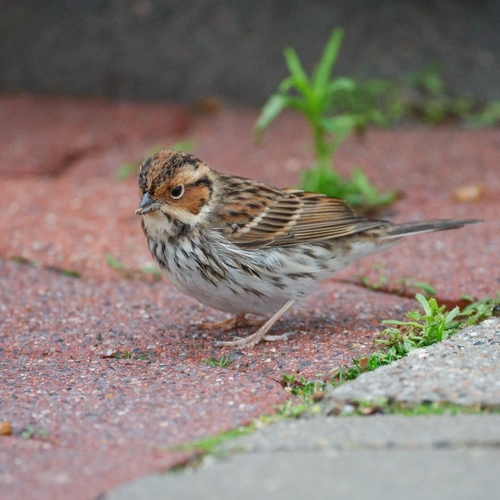
コホオアカ (Emberiza pusilla) コホオアカ
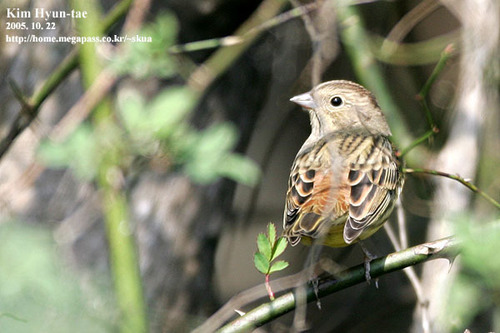
シマノジコ (Emberiza rutila) シマノジコ

メディア

読み込み中…

要点

リトルバンティングとシマノジコを区別する最も信頼できる方法は顔の模様です:リトルバンティングは常に鮮明な白いマラーストライプと細い暗い境界線を持つ栗色の頬を示し、白いアイリングと黒い冠のストライプを持っています。一方、シマノジコ(特に繁殖期のオス)は、顔の模様があまりはっきりしていない、より広範囲な栗色の頭を持っています。すべての羽色において、リトルバンティングは小さくてコンパクトで、胸と側面に強いストライプの入った白い腹部を持ち、シマノジコの黄色がかった腹部と栗色の上面と対照的です。雌や非繁殖期のシマノジコは鈍くてストライプが入っているように見えることがありますが、リトルバンティングのはっきりした顔の模様は欠けています。鳴き声は似ていますが、リトルバンティングの方がわずかに金属的です。構造と尾の模様は飛行中に役立ちます。特にシマノジコの尾に白がないことが重要です。

識別のコツ

  1. Face pattern is key: リトルバンティングは常に鮮明な白いマラーストライプと栗色の頬の後ろに細い暗い境界線を持ち、さらに白いアイリングと黒い冠のストライプを持っています。シマノジコはすべての羽色においてこの鮮明な顔のコントラストが欠けています。
  2. Crown stripes: リトルバンティングは、鈍い光の中でも見える明確な黒い冠のストライプを持っています。シマノジコの冠は繁殖期のオスではより均一に栗色であり、雌や非繁殖期の個体では鈍い茶色で、強いストライピングはありません。
  3. Underpart color: リトルバンティングは胸と側面に強い暗いストライプの入った白い腹部を持っています。シマノジコ(特にオス)は側面にのみストライプのある黄色い腹部を持ち、雌は白ではなく淡い黄色の腹部を持っています。
  4. Upperpart color: シマノジコの繁殖期のオスは頭上と上面が明るい栗色ですが、リトルバンティングははるかに鈍く、広範囲な栗色がありません。
  5. Cheek patch: リトルバンティングの栗色の頬は特に後ろ側で鮮明に境界があり、シマノジコの頭はより均一に栗色または茶色がかっており、細い暗い境界線はありません。
  6. Eye-ring: リトルバンティングは明確な白いアイリングを持っていますが、シマノジコはどの羽色でも強いアイリングを示しません。
  7. Tail pattern: シマノジコの尾は短く、外側の羽にほとんど白がありません。リトルバンティングについては指定されていませんが、ほとんどのEmberizaは尾に白があるので、飛行中に見える場合はこれを探してください。
  8. Size and structure: リトルバンティングは小さくてコンパクトで、体が短く、より繊細な感じがします。シマノジコは長くてがっしりしていますが、これは直接比較しないと微妙です。
  9. Sex and age pitfalls: 雌や非繁殖期のシマノジコは鈍くてストライプが入っていますが、リトルバンティングのはっきりしたマラーと頬の模様は欠けています。全体の鈍さやストライピングだけに頼らないでください。
  10. Rump color: シマノジコの雌は鈍い栗色の尾羽を示しますが、これはリトルバンティングの特徴ではありません。
  11. Throat color: シマノジコの雌は淡い喉を持ち、リトルバンティングの喉はマラーストライプとともに白です。
  12. Voice: 鳴き声は似ており、完全な歌が聞かれない限り分離には信頼できません。リトルバンティングの歌は連続したシリーズであり、シマノジコの歌はより変動的で高音です。
  13. Habitat/context: 両種は移動中や迷鳥として似たような生息地に出現することがあります。生息地に頼って分離しないでください。
  14. Seasonal changes: シマノジコのオスは繁殖羽において最も明るいです。非繁殖期では栗色が部分的に隠れますが、リトルバンティングのはっきりした顔の模様は依然として欠けています。
  15. When in doubt: 鮮明な白いマラーストライプ、白いアイリング、黒い冠のストライプを持つバンティングを見たら、それはリトルバンティングです。もしその鳥が大きく、黄色がかった腹部とより均一な頭を持っているなら、シマノジコを疑ってください。

大きさ

リトルバンティングは明らかに小さく、長さは12〜14 cm、質量は約15.4 gです[wikidata]。一方、シマノジコは14〜15 cmの長さで、わずかにがっしりとした印象を与えます。フィールドでは、リトルバンティングはより繊細でコンパクトに感じられますが、シマノジコは尾が少し長く、体が重いです。この違いは、鳥が並んでいない限り微妙です。

羽色

幼鳥や非繁殖期の鳥は混乱を引き起こす可能性が最も高いです。すべての年齢のリトルバンティングは白いマラーストライプ、白いアイリング、栗色の頬の後ろに細い暗い境界線を持ち、黒い冠のストライプがあります。腹部は白で、胸と側面には強い暗いストライプがあります。シマノジコの繁殖期のオスは頭上と上面が明るい栗色で、黄色い腹部と側面にいくつかのストライプがあります。非繁殖期のオスは鈍く、栗色は淡い羽毛の縁で部分的に隠れています。雌は主に上面が鈍い茶色で、暗いストライプがあり、下は淡い黄色で、鈍い栗色の尾羽と淡い喉を持っています。シマノジコは決してリトルバンティングのはっきりしたマラーと頬の模様を示しません。シマノジコの尾は短く、外側の羽にほとんど白がありませんが、リトルバンティングは尾にいくらかの白を示すことがあります(指定はありませんが、属に典型的です)。要約すると、すべての年齢において顔の模様と腹部の色/ストライピングに焦点を当ててください。

行動

両種は行動において典型的なバンティングであり、しばしば地面や低い植生で餌を食べます。情報源には大きな行動の違いは記載されておらず、両方とも低い位置に止まり、低木や木から歌うことがあります。飛行スタイルは強い分離要因としては記述されていません。

生息環境

両種は古代の世界のバンティングであり、パレアールクティックに分布していますが、シマノジコはより厳密に東方に分布しています。生息地の好みは、特に移動中や迷鳥の際に、これら2種をフィールドで分離するための信頼できる要因としては記述されていません。

声

両種は短く鋭い鳴き声を出します:リトルバンティングの鳴き声は特徴的な「ズィク」と表現され、シマノジコの鳴き声は短い「ズィック」で非常に似ています。歌はより異なります:リトルバンティングの歌は転がる「シロースィルシルシロースィ」であり、シマノジコの歌は低い止まり木から出される変動的で高音の歌です。実際には、鳴き声は非常に似ているため、歌がしっかりと聞かれない限り、安全な分離要因とはなりません。

より良い説明を送る

比較と同じ項目を使ってください。文章はすぐに公開されます。

The most reliable way to separate Little Bunting from Chestnut Bunting is by face pattern: Little Bunting always shows a crisp white malar stripe and a fine dark border to its chestnut cheek, along with a white eye-ring and black crown stripes, while Chestnut Bunting (especially breeding males) has a much more extensive chestnut head with less sharply defined facial markings. In all plumages, Little Bunting is smaller and more compact, with white underparts heavily streaked on the breast and flanks, contrasting with the yellowish underparts and chestnut upperparts of Chestnut Bunting. Females and non-breeding Chestnut Buntings can look dull and streaky, but still lack the Little Bunting's sharply defined facial pattern. Calls are similar, but Little Bunting's is slightly more metallic. Structure and tail pattern can help in flight, especially the lack of white in Chestnut Bunting's tail.

  1. Face pattern is key: Little Bunting always shows a crisp white malar stripe and a fine dark border to the rear of the chestnut cheek, plus a white eye-ring and black crown stripes. Chestnut Bunting lacks this sharp facial contrast in all plumages.
  2. Crown stripes: Little Bunting has clear black crown stripes, visible even in dull light. Chestnut Bunting's crown is more uniformly chestnut in breeding males, or dull brown in females/non-breeding, without strong striping.
  3. Underpart color: Little Bunting has white underparts with heavy dark streaking on breast and flanks. Chestnut Bunting (especially males) has yellow underparts with streaks only on the sides; females are pale yellow below, not white.
  4. Upperpart color: Chestnut Bunting breeding males are bright chestnut above and on the head, while Little Bunting is much duller and lacks extensive chestnut above.
  5. Cheek patch: Little Bunting's chestnut cheek is sharply bordered, especially to the rear, while Chestnut Bunting's head is more uniformly chestnut or brownish, with no fine dark border.
  6. Eye-ring: Little Bunting has a clear white eye-ring; Chestnut Bunting does not show a strong eye-ring in any plumage.
  7. Tail pattern: Chestnut Bunting's tail is short with little or no white on the outer feathers. While not specified for Little Bunting, most Emberiza show some white in the tail, so look for this in flight if visible.
  8. Size and structure: Little Bunting is smaller and more compact, with a shorter body and a daintier feel. Chestnut Bunting is longer and bulkier, but this is subtle unless you have direct comparison.
  9. Sex and age pitfalls: Female and non-breeding Chestnut Buntings are dull and streaky, but still lack the sharply defined malar and cheek pattern of Little Bunting. Do not rely on overall dullness or streaking alone.
  10. Rump color: Chestnut Bunting females show a dull chestnut rump, which is not a feature of Little Bunting.
  11. Throat color: Chestnut Bunting females have a buff throat, while Little Bunting's throat is white with the malar stripe.
  12. Voice: Calls are similar and not reliable for separation unless the full song is heard; Little Bunting's song is a rolling series, Chestnut Bunting's is more variable and high-pitched.
  13. Habitat/context: Both species can occur in similar habitats on migration or as vagrants; do not rely on habitat for separation.
  14. Seasonal changes: Chestnut Bunting males are brightest in breeding plumage; in non-breeding, the chestnut is partly obscured but still lacks the sharply defined face pattern of Little Bunting.
  15. When in doubt: If you see a bunting with a sharply defined white malar stripe, white eye-ring, and black crown stripes, it is a Little Bunting. If the bird is larger, with yellowish underparts and a more uniform head, suspect Chestnut Bunting.

Little Bunting is distinctly smaller, at 12–14 cm in length and about 15.4 g in mass [wikidata], while Chestnut Bunting is 14–15 cm long and appears slightly bulkier. In the field, Little Bunting feels daintier and more compact, whereas Chestnut Bunting is a bit longer-tailed and heavier-bodied, though this difference can be subtle unless birds are side by side.

Juvenile and non-breeding birds are the most likely to cause confusion. Little Bunting of all ages shows a white malar stripe, white eye-ring, and a fine dark border to the rear of the chestnut cheek patch, with black crown stripes. Its underparts are white with strong dark streaking on the breast and flanks. Chestnut Bunting breeding males are bright chestnut above and on the head, with yellow underparts and some streaking on the sides; non-breeding males are duller, with chestnut partly obscured by pale feather fringes. Females are mostly dull brown above with dark streaks, pale yellow below, a dull chestnut rump, and a buff throat. Chestnut Bunting never shows the sharply defined malar and cheek pattern of Little Bunting. The tail of Chestnut Bunting is short with little or no white on the outer feathers, while Little Bunting may show some white in the tail (not specified, but typical for the genus). In summary, focus on face pattern and underpart color/streaking for all ages.

Both species are typical buntings in behavior, often feeding on the ground or low in vegetation. No major behavioral differences are noted in the sources; both may perch low and sing from shrubs or trees. Flight style is not described as a strong separator.

Both species are Old World buntings of the Palearctic, but Chestnut Bunting is more strictly eastern in distribution. Habitat preferences are not described as a reliable separator in the field for these two species, especially on migration or vagrancy.

Both species give a short, sharp call: Little Bunting's is described as a distinctive 'zik', while Chestnut Bunting's is a short 'zick', very similar. The songs differ more: Little Bunting's is a rolling 'siroo-sir-sir-siroo', while Chestnut Bunting's is a variable, high-pitched song given from a low perch. In practice, calls are so similar that they are not a safe separator unless the song is heard well.

変更を破棄しますか?

保存していない編集があります。今離れると失われます。

コホオアカ · シマノジコ · 苦手な鳥