

Motmot

ミナミクロヒメウ 対 バウンティヒメウ

Phalacrocorax sulcirostris 対 Leucocarbo ranfurlyi

ミナミクロヒメウとバウンティヒメウのクイズ
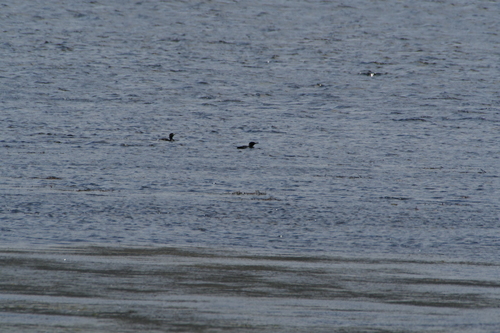
ミナミクロヒメウ (Phalacrocorax sulcirostris) ミナミクロヒメウ
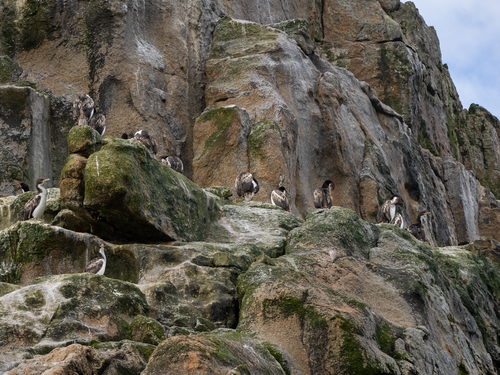
バウンティヒメウ (Leucocarbo ranfurlyi) バウンティヒメウ

メディア

読み込み中…

要点

リトルブラックコルモランとバウンティヒメウを区別する最も信頼できるフィールドマークは全体の羽毛です:リトルブラックコルモランは完全に黒(成鳥には緑がかった光沢があります)が、バウンティヒメウは際立って黒と白で、上面は黒、下面は白です。すべての羽毛の状態で、バウンティヒメウは止まっているときに大胆な白い翼の帯を示しますが、リトルブラックコルモランはこれを示しません。サイズも強い手がかりです:バウンティヒメウははるかに重く、がっしりとしています。ピンクの足と白い腹を持つコルモランを見たら、それはバウンティヒメウです;全体が黒で緑の目を持つ鳥はリトルブラックコルモランです。生息地も強い手がかりです。バウンティヒメウは遠く離れたバウンティ諸島に厳密に限定されていますが、リトルブラックコルモランはオーストラリアとニュージーランド北部の湖や川に広く分布しています。

識別のコツ

  1. 羽毛:全体が黒 vs. 黒と白 — リトルブラックコルモランは完全に黒(成鳥と幼鳥)ですが、バウンティヒメウは常に上面が黒で下面が白です。白い下面が見えたら、それはリトルブラックコルモランではありません。
  2. 白い翼の帯(バウンティヒメウのみ) — 止まっているとき、バウンティヒメウは折りたたまれた翼に大胆な白い斑点を示し、帯を形成します;リトルブラックコルモランはこれを示しません。
  3. くちばしと顔 — リトルブラックコルモランは長くて細い灰色のくちばしと緑(成鳥)または茶色(幼鳥)の目を持っています。バウンティヒメウのくちばしは詳細には記述されていませんが、顔の皮膚は肉芽がなく、目の色は特に際立っていません。
  4. 足の色 — バウンティヒメウはピンクの足を持ち、止まっているときに簡単に見えます;リトルブラックコルモランは黒い脚と足を持っています。
  5. 繁殖のマーク — 繁殖期には、リトルブラックコルモランは頭と首に散在する白い羽毛や淡い白っぽい眉を示すことがありますが、体や翼には決して白はありません。バウンティヒメウはそのような頭のマークを発達させませんが、常に白い下面を持っています。
  6. 幼鳥/未熟な混乱 — 若いリトルブラックコルモランも全て暗いですが、バウンティヒメウは早い段階から黒と白のコントラストを維持します。バウンティヒメウが全て暗い段階はありません。
  7. サイズと体格 — バウンティヒメウははるかに大きく、重い(質量の2.5倍)で、より頑丈な体型と長い首を持っています。一緒に二羽を見ると、サイズの違いは際立っています。
  8. 生息地 — リトルブラックコルモランは内陸の湖や川に見られ、大きな群れで見られることもあります。バウンティヒメウは厳密に海洋性で、バウンティ諸島に限定されており、内陸やニュージーランドやオーストラリアの本土の島では見られません。
  9. 群れ行動 — リトルブラックコルモランはしばしば大きく、調整された群れで餌を食べます;バウンティヒメウはこのような行動では知られておらず、通常は少数で見られます。
  10. 分布 — バウンティ諸島にいない限り、バウンティヒメウは見られません。リトルブラックコルモランはオーストラリアとニュージーランド北部に一般的で広く分布しています。
  11. 虹彩の色 — 成鳥のリトルブラックコルモランは緑の目を持ち、近くで見ることができます;バウンティヒメウの虹彩の色は特に際立っていません。
  12. 止まっている姿勢 — 両種は直立して止まりますが、バウンティヒメウの大きなサイズと白い下面は並んで見ると明らかです。
  13. 飛行 — どちらの種も飛行中の詳細な翼のパターンは記述されていませんが、バウンティヒメウの白い下面は下から見えるはずで、リトルブラックコルモランは均一に暗いです。
  14. 性別 — 両種は羽毛において性別が同形であり、同定に性別を頼らないでください。
  15. 落とし穴 — 繁殖中のリトルブラックコルモランの散在する白い頭の羽毛を、バウンティヒメウの大胆な白い翼の帯と下面と混同しないでください。リトルブラックコルモランの全体の黒さは、はるかに大きなカワウを除いて、オーストラリア・ニュージーランドのコルモランの中で独特です。

大きさ

バウンティヒメウはリトルブラックコルモランよりもはるかに大きく、重いです:バウンティヒメウは平均2500gで、リトルブラックコルモランは1000gです [wikidata]。長さでは、バウンティヒメウは約71cmに達し、リトルブラックコルモランは60〜65cmです [wikipedia]。この違いはフィールドで明らかで、バウンティヒメウはがっしりとしており、長い首を持ち、全体的により頑丈に見えます。

羽色

年齢に関係なく、リトルブラックコルモランは全て黒で、成鳥の背中には緑がかった光沢があります。繁殖期には、成鳥は頭と首に散在する白い羽毛や淡い白っぽい眉を示すことがありますが、体は黒のままです。幼鳥は茶色がかった黒ですが、決して白い下面や翼の斑点を示しません。対照的に、すべての年齢のバウンティヒメウは上面が鋭く黒く、下面が白で、黒い部分には金属的な青い光沢があります。止まっているときに、折りたたまれた翼に大胆な白い斑点があり、これが帯を形成します—これはリトルブラックコルモランには決して存在しません。バウンティヒメウの足はピンクですが、リトルブラックコルモランは黒い脚と足を持っています。幼鳥と未熟な羽毛は詳細には記述されていませんが、基本的な黒と白のコントラストは常にバウンティヒメウに存在し、リトルブラックコルモランには決して存在しません。

行動

リトルブラックコルモランはしばしば大きく、密集した群れで餌を食べ、特に内陸の湖や川で調整されたラインやグループで泳いだり潜ったりします [wikipedia]。彼らはしばしば数百羽の群れで見られ、一緒に魚を追い込むために移動します。バウンティヒメウは岩の多い沖合の島に限定されており、そのような群れ行動では知られていません;その習性はあまり詳しく記述されていませんが、はるかに小さく孤立した集団で繁殖し、餌を探します。

生息環境

生息地は主要な区別要因です。リトルブラックコルモランはオーストラリアとニュージーランド北部の淡水湖や川に広く分布し、しばしば内陸の遠くに見られます。バウンティヒメウはバウンティ諸島にのみ見られ、ニュージーランドの南東にある遠くの亜南極群であり、本土や淡水の生息地では決して見られません。バウンティ諸島にいない限り、バウンティヒメウは見られません。

声

鳴き声はフィールドでの診断には役立ちません。バウンティヒメウのオスはディスプレイ中のみ鳴き、リトルブラックコルモランは巣から離れると一般的に静かです。声は実用的な区別要因ではありません。

より良い説明を送る

比較と同じ項目を使ってください。文章はすぐに公開されます。

The most reliable field mark to separate Little Black Cormorant from Bounty Islands Shag is overall plumage: Little Black Cormorant is entirely black (with a greenish sheen in adults), while Bounty Islands Shag is strikingly black-and-white, with a black upper side and white underparts. In all plumages, the Bounty Islands Shag shows a bold white wing bar when perched, which the Little Black Cormorant never shows. Size is also a strong clue: Bounty Islands Shag is much heavier and bulkier. If you see a cormorant with pink feet and a white belly, it is the Bounty Islands Shag; all-black, green-eyed birds are Little Black Cormorant. Habitat is a strong clue as well, since Bounty Islands Shag is strictly limited to the remote Bounty Islands, while Little Black Cormorant is widespread on lakes and rivers of Australia and northern New Zealand.

  1. Plumage: All-black vs. black-and-white — Little Black Cormorant is entirely black (adult and immature), while Bounty Islands Shag is always black above and white below. If you see white underparts, it is not Little Black Cormorant.
  2. White wing bar (Bounty Islands Shag only) — When perched, Bounty Islands Shag shows a bold white patch on the folded wing, forming a bar; Little Black Cormorant never shows this.
  3. Bill and face — Little Black Cormorant has a long, slender, grey bill and green (adult) or brown (immature) eyes. Bounty Islands Shag's bill is not described in detail, but the facial skin is not carunculated and the eye color is not highlighted as distinctive.
  4. Feet color — Bounty Islands Shag has pink feet, easily seen when perched; Little Black Cormorant has black legs and feet.
  5. Breeding marks — In breeding season, Little Black Cormorant may show scattered white feathers on the head and neck, and a faint whitish eyebrow, but never any white on the body or wings. Bounty Islands Shag does not develop such head markings, but always has white underparts.
  6. Juvenile/immature confusion — Even young Little Black Cormorants are all dark, while Bounty Islands Shag maintains the black-and-white contrast from an early age. There is no stage where a Bounty Islands Shag is all dark.
  7. Size and bulk — Bounty Islands Shag is much larger and heavier (2.5x the mass), with a more robust build and longer neck. If you see two together, the size difference is striking.
  8. Habitat — Little Black Cormorant is found on inland lakes and rivers, sometimes in large flocks. Bounty Islands Shag is strictly marine, confined to the Bounty Islands; it is never found inland or on the main islands of New Zealand or Australia.
  9. Flocking behavior — Little Black Cormorant often feeds in large, coordinated groups; Bounty Islands Shag is not known for this and is usually seen in small numbers.
  10. Range — If you are not on the Bounty Islands, you are not seeing Bounty Islands Shag. Little Black Cormorant is common and widespread in Australia and northern New Zealand.
  11. Iris color — Adult Little Black Cormorant has green eyes, which can be visible at close range; Bounty Islands Shag's iris color is not highlighted as distinctive.
  12. Perched posture — Both species perch upright, but the larger size and white underparts of Bounty Islands Shag are obvious when seen side by side.
  13. Flight — No detailed wing pattern is described for either species in flight, but the white underparts of Bounty Islands Shag should be visible from below, while Little Black Cormorant is uniformly dark.
  14. Sexes — Both species are sexually monomorphic in plumage; do not rely on sex for identification.
  15. Pitfalls — Do not confuse breeding Little Black Cormorant's scattered white head feathers for the bold white wing bar and underparts of Bounty Islands Shag. The overall blackness of Little Black Cormorant is unique among Australasian cormorants except for the much larger Great Cormorant.

Bounty Islands Shag is much larger and heavier than Little Black Cormorant: it averages 2500 g versus 1000 g for Little Black Cormorant [wikidata]. In length, Bounty Islands Shag reaches about 71 cm, compared to 60–65 cm for Little Black Cormorant [wikipedia]. This difference is obvious in the field, with Bounty Islands Shag appearing bulkier, longer-necked, and more robust overall.

No matter the age, Little Black Cormorant is all black, with a greenish gloss on the back in adults. In breeding season, adults may show scattered white feathers on the head and neck, and a faint whitish eyebrow, but the body remains black. Immatures are brownish-black, but never show white underparts or wing patches. In contrast, Bounty Islands Shag of all ages is sharply black above and white below, with a metallic blue sheen on the black areas. It has a bold white patch on the folded wing, forming a bar when perched—this is never present in Little Black Cormorant. The feet of Bounty Islands Shag are pink, while Little Black Cormorant has black legs and feet. Juvenile and immature plumages are not described in detail, but the fundamental black-and-white contrast is always present in Bounty Islands Shag, and never in Little Black Cormorant.

Little Black Cormorant often feeds in large, tight flocks, swimming and diving in coordinated lines or groups, especially on inland lakes and rivers [wikipedia]. They are frequently seen in groups of hundreds, moving together to herd fish. Bounty Islands Shag is restricted to rocky offshore islands and is not known for such flocking behavior; its habits are less well described, but it breeds and forages in much smaller, isolated populations.

Habitat is a major separator. Little Black Cormorant is widespread on freshwater lakes and rivers across Australia and northern New Zealand, often far inland. Bounty Islands Shag is only found on the Bounty Islands, a remote Subantarctic group southeast of New Zealand, and never occurs on mainland or freshwater habitats. If you are not on the Bounty Islands, you are not seeing Bounty Islands Shag.

Vocalizations are not diagnostic in the field. Bounty Islands Shag males call only during display, and Little Black Cormorant is generally silent away from the nest. Voice is not a practical separator.

変更を破棄しますか?

保存していない編集があります。今離れると失われます。

ミナミクロヒメウ · バウンティヒメウ · 苦手な鳥