

Little Black Cormorant vs Bounty Islands Shag
Phalacrocorax sulcirostris contro Leucocarbo ranfurlyi
Fai un quiz con Little Black Cormorant e Bounty Islands Shag
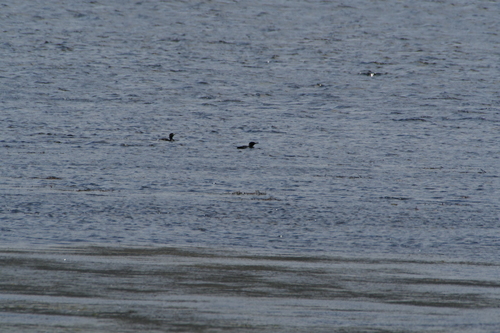 Little Black Cormorant
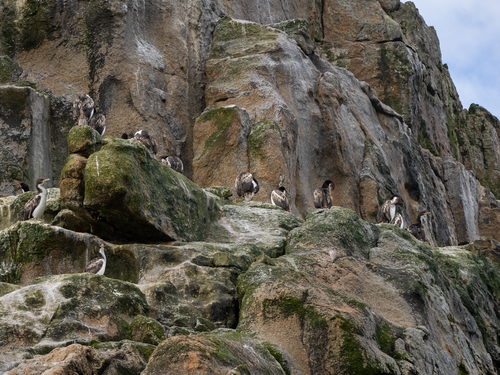 Bounty Islands Shag
In breve
Il segno distintivo più affidabile per separare il Little Black Cormorant dal Bounty Islands Shag è il piumaggio complessivo: il Little Black Cormorant è completamente nero (con una lucentezza verdognola negli adulti), mentre il Bounty Islands Shag è sorprendentemente nero e bianco, con una parte superiore nera e una parte inferiore bianca. In tutti i piumaggi, il Bounty Islands Shag mostra una marcata banda bianca sulle ali quando è posato, cosa che il Little Black Cormorant non mostra mai. Anche le dimensioni sono un forte indizio: il Bounty Islands Shag è molto più pesante e robusto. Se vedi un cormorano con piedi rosa e una pancia bianca, è il Bounty Islands Shag; gli uccelli completamente neri e con occhi verdi sono Little Black Cormorant. L'habitat è anche un forte indizio, poiché il Bounty Islands Shag è strettamente limitato alle remote Bounty Islands, mentre il Little Black Cormorant è diffuso nei laghi e nei fiumi dell'Australia e della Nuova Zelanda settentrionale.
Consigli di identificazione
- Piumaggio: Tutto nero vs. nero e bianco — Il Little Black Cormorant è completamente nero (adulto e immaturo), mentre il Bounty Islands Shag è sempre nero sopra e bianco sotto. Se vedi una parte inferiore bianca, non è un Little Black Cormorant.
- Banda bianca sulle ali (solo Bounty Islands Shag) — Quando è posato, il Bounty Islands Shag mostra una marcata macchia bianca sull'ala ripiegata, formando una banda; il Little Black Cormorant non mostra mai questo.
- Becco e faccia — Il Little Black Cormorant ha un becco lungo, snodato e grigio e occhi verdi (adulto) o marroni (immaturo). Il becco del Bounty Islands Shag non è descritto in dettaglio, ma la pelle facciale non è caruncolata e il colore degli occhi non è evidenziato come distintivo.
- Colore dei piedi — Il Bounty Islands Shag ha piedi rosa, facilmente visibili quando è posato; il Little Black Cormorant ha gambe e piedi neri.
- Segni di nidificazione — Durante la stagione di nidificazione, il Little Black Cormorant può mostrare piume bianche sparse sulla testa e sul collo, e un leggero sopracciglio biancastro, ma mai bianco sul corpo o sulle ali. Il Bounty Islands Shag non sviluppa tali segni sulla testa, ma ha sempre una parte inferiore bianca.
- Confusione giovanile/immatura — Anche i giovani Little Black Cormorant sono completamente scuri, mentre il Bounty Islands Shag mantiene il contrasto nero e bianco fin dalla giovane età. Non esiste una fase in cui un Bounty Islands Shag sia completamente scuro.
- Dimensioni e robustezza — Il Bounty Islands Shag è molto più grande e pesante (2,5 volte la massa), con una costruzione più robusta e un collo più lungo. Se vedi due insieme, la differenza di dimensioni è evidente.
- Habitat — Il Little Black Cormorant si trova in laghi e fiumi interni, a volte in grandi stormi. Il Bounty Islands Shag è strettamente marino, confinato alle Bounty Islands; non si trova mai nell'entroterra o sulle isole principali della Nuova Zelanda o dell'Australia.
- Comportamento di stormo — Il Little Black Cormorant si nutre spesso in grandi gruppi coordinati; il Bounty Islands Shag non è noto per questo e di solito viene visto in piccoli numeri.
- Distribuzione — Se non sei sulle Bounty Islands, non stai vedendo il Bounty Islands Shag. Il Little Black Cormorant è comune e diffuso in Australia e nella Nuova Zelanda settentrionale.
- Colore dell'iride — L'adulto Little Black Cormorant ha occhi verdi, che possono essere visibili da vicino; il colore dell'iride del Bounty Islands Shag non è evidenziato come distintivo.
- Postura posata — Entrambe le specie si posano erette, ma la dimensione maggiore e la parte inferiore bianca del Bounty Islands Shag sono evidenti quando viste fianco a fianco.
- Volo — Non è descritto alcun modello di ali dettagliato per entrambe le specie in volo, ma la parte inferiore bianca del Bounty Islands Shag dovrebbe essere visibile dal basso, mentre il Little Black Cormorant è uniformemente scuro.
- Sessi — Entrambe le specie sono sessualmente monomorfiche nel piumaggio; non fare affidamento sul sesso per l'identificazione.
- Trappole — Non confondere le piume bianche sparse sulla testa del Little Black Cormorant in nidificazione con la marcata banda bianca sulle ali e la parte inferiore del Bounty Islands Shag. L'oscurità complessiva del Little Black Cormorant è unica tra i cormorani australiani, eccetto per il molto più grande Cormorano.
Taglia
Il Bounty Islands Shag è molto più grande e pesante del Little Black Cormorant: pesa in media 2500 g contro 1000 g per il Little Black Cormorant [wikidata]. In lunghezza, il Bounty Islands Shag raggiunge circa 71 cm, rispetto ai 60–65 cm del Little Black Cormorant [wikipedia]. Questa differenza è evidente sul campo, con il Bounty Islands Shag che appare più robusto, con un collo più lungo e complessivamente più robusto.
Piumaggio
Indipendentemente dall'età, il Little Black Cormorant è tutto nero, con una lucentezza verdognola sulla schiena negli adulti. Durante la stagione di nidificazione, gli adulti possono mostrare piume bianche sparse sulla testa e sul collo, e un leggero sopracciglio biancastro, ma il corpo rimane nero. Gli immaturi sono di colore bruno-nero, ma non mostrano mai parti inferiori bianche o macchie sulle ali. Al contrario, il Bounty Islands Shag di tutte le età è nettamente nero sopra e bianco sotto, con una lucentezza blu metallica nelle aree nere. Ha una marcata macchia bianca sull'ala ripiegata, formando una banda quando è posato—questo non è mai presente nel Little Black Cormorant. I piedi del Bounty Islands Shag sono rosa, mentre il Little Black Cormorant ha gambe e piedi neri. I piumaggi giovanili e immaturi non sono descritti in dettaglio, ma il fondamentale contrasto nero e bianco è sempre presente nel Bounty Islands Shag, e mai nel Little Black Cormorant.
Comportamento
Il Little Black Cormorant si nutre spesso in grandi stormi compatti, nuotando e tuffandosi in linee o gruppi coordinati, specialmente nei laghi e nei fiumi interni [wikipedia]. Vengono frequentemente visti in gruppi di centinaia, muovendosi insieme per radunare i pesci. Il Bounty Islands Shag è ristretto a isole rocciose al largo e non è noto per tale comportamento di stormo; le sue abitudini sono meno ben descritte, ma nidifica e si nutre in popolazioni molto più piccole e isolate.
Habitat
L'habitat è un separatore principale. Il Little Black Cormorant è diffuso in laghi e fiumi d'acqua dolce in tutta l'Australia e nella Nuova Zelanda settentrionale, spesso lontano dall'entroterra. Il Bounty Islands Shag si trova solo sulle Bounty Islands, un remoto gruppo subantartico a sud-est della Nuova Zelanda, e non si verifica mai in habitat di terraferma o d'acqua dolce. Se non sei sulle Bounty Islands, non stai vedendo il Bounty Islands Shag.
Voce
Le vocalizzazioni non sono diagnostiche sul campo. I maschi del Bounty Islands Shag chiamano solo durante il corteggiamento, e il Little Black Cormorant è generalmente silenzioso lontano dal nido. La voce non è un separatore pratico.
Little Black Cormorant · Bounty Islands Shag · I miei uccelli difficili