

Motmot

カリガネ 対 コザクラバシガン

Anser erythropus 対 Anser brachyrhynchus

カリガネとコザクラバシガンのクイズ
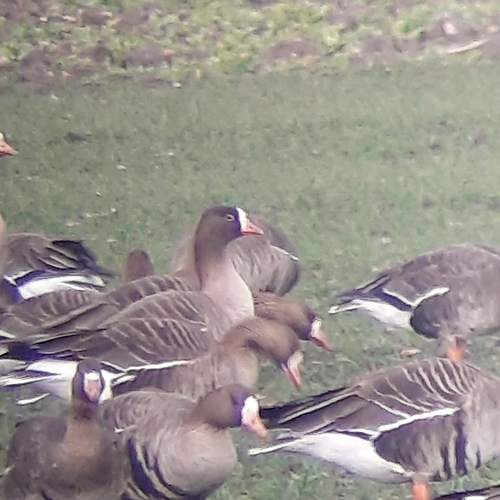
カリガネ (Anser erythropus) カリガネ
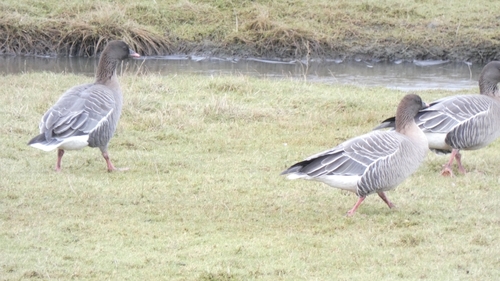
コザクラバシガン (Anser brachyrhynchus) コザクラバシガン

メディア

読み込み中…

要点

カリガネとコザクラバシガンを区別する最も信頼できるフィールドマークは、カリガネの特徴である明確な黄色のアイリングと、頭頂部まで延びる白いブレイズの組み合わせです。これらの特徴はコザクラバシガンには見られません。さらに、カリガネは明らかに小さく、よりコンパクトで、短いくちばしと明るいオレンジ色の脚を持っていますが、コザクラバシガンは大きく、短いが太いくちばしを持ち、中央がピンクで基部と先端が黒く、脚はピンクです。両種は淡い上翼覆羽と白い尻を持っていますが、顔と脚の詳細な色合いはすべての年齢で重要です。飛行中または地上で、これらの頭部と脚の特徴、全体的なサイズに注意を払うことで、ほとんどの混乱を解消できます。

識別のコツ

  1. Yellow eye-ring (Lesser White-fronted only): カリガネのすべての年齢と季節に存在する明確な黄色のアイリングを探してください。コザクラバシガンには存在しません。
  2. White facial blaze to crown (Lesser White-fronted only): カリガネの顔の白い部分は頭頂部まで延びていますが、コザクラバシガンはブレイズのない普通の暗褐色の頭を持っています。
  3. Leg color: カリガネは常に明るいオレンジ色の脚と足を持ち、コザクラバシガンはピンクの脚と足を持っています。これは、止まっている鳥と歩いている鳥の両方で確認できます。
  4. Bill color and shape: カリガネは小さく短いピンクがかったくちばしを持っています。コザクラバシガンは中央がピンクで基部と先端が黒い短いが太いくちばしを持っています。このパターンはユニークで、近距離で確認できます。
  5. Size and structure: カリガネは非常に小さく、コンパクトで、マガモよりもわずかに大きい程度ですが、コザクラバシガンはより大きく、首が長いです。混合群れの中で、カリガネは最も小さなガチョウとして目立ちます。
  6. Upperwing color: 両種は淡い上翼覆羽を持っていますが、カリガネのものはマウスグレーで、コザクラバシガンのものはより青みがかったグレー(グレイラグのよう)です。これは微妙で、良い光や写真で使用するのが最適です。
  7. Belly barring: 両種は腹部に黒いバーを示しますが、カリガネの方が幅広く、より広範囲にわたります。常に見えるわけではありませんが、識別をサポートできます。
  8. Tail pattern: コザクラバシガンは広い白い先端を持つ灰色の尾を持ち、飛行中または羽繕い中に見ることができます。カリガネの尾のパターンはあまり特徴的ではありません。
  9. Rump and vent: 両種は白い尻と肛門を示すため、これでは区別できません。
  10. Flock size and context: 北西ヨーロッパの開けた農地での大きく騒がしい群れはほぼ常にコザクラバシガンです。カリガネは珍しく、通常は小さな群れまたは混合群れにいます。
  11. Flight 'jizz': コザクラバシガンは飛行中により長い翼を持ち、重く見えますが、カリガネはよりコンパクトで機敏です。
  12. Vocalization: コザクラバシガンは非常に声が大きく、群れの中で高音のホーンが聞こえます。カリガネは静かで、聞こえる可能性が低いです。
  13. Habitat and range: 英国、オランダ、またはデンマークでは、大きな群れの中にピンクの脚を持つガチョウはほぼ確実にコザクラバシガンです。カリガネは珍しく、東ヨーロッパや漂流者として見られる可能性が高いです。
  14. Juvenile/immature plumage: 未熟な上翼や体のパターンについての詳細な違いは記載されていないため、すべての年齢で顔、くちばし、脚の色に頼ってください。
  15. Pitfalls: 距離や悪い光が黄色のアイリングや顔のブレイズを隠すことに注意してください。結論を出す前に、常に頭と脚の明確な視界を得るようにしてください。

大きさ

カリガネは明らかに小さく、軽量で、平均体重は約1797gで、コザクラバシガンの2505gと比較されます。カリガネは長さ53〜66cm、翼幅120〜135cmですが、コザクラバシガンは長さ60〜75cm、翼幅135〜170cmです。フィールドでは、カリガネはしばしばマガモよりわずかに大きい程度に見えますが、コザクラバシガンはより大きく、他の中型ガチョウに近いサイズです。このサイズの違いは、通常、混合群れや一緒に見られるときに明らかです。

羽色

すべての年齢において、最も顕著な違いは頭にあります:成鳥と未熟なカリガネは、頭頂部まで達する顕著な白いブレイズと明確な黄色のアイリングを示しますが、コザクラバシガンは両方とも欠いており、普通の暗褐色の頭と顔を示します。両種は淡い上翼覆羽を持っていますが、カリガネのものはマウスグレーで、コザクラバシガンのものはグレイラグに似た青みがかったグレーです。両者は白い尻と肛門を持っていますが、コザクラバシガンの尾は広い白い先端を持つ灰色で、カリガネの尾のパターンはあまり特徴的ではありません。下部では、両者は黒いバーを持っていますが、カリガネのパターンはより幅広く、より広範囲にわたります。脚の色は識別的です:カリガネは常に明るいオレンジ色の脚を持ち、コザクラバシガンはピンクの脚と足を持っています。くちばしの色も強いマークです:カリガネは小さくピンクがかったくちばしを持ち、コザクラバシガンは中央に特徴的なピンクのバンドがあり、基部と先端が黒い短いくちばしを示します。幼鳥と未熟な羽毛は、いずれの種についても詳細に記載されていませんが、重要な顔と脚の特徴はすべての年齢に適用されます。

行動

両種は群れで行動し、しばしば群れで餌を探しますが、コザクラバシガンは特に北西ヨーロッパの越冬地で非常に大きく密集した群れで見られる可能性が高いです。カリガネははるかに希少で、通常は小さなグループで見られ、時には他のガチョウと一緒にいます。両者は農地や湿地で餌を食べますが、コザクラバシガンは開放的な農地に対してより耐性があり、移動中や冬に非常に多く見られることがあります。飛行中、両種は淡い上翼と白い尻を示しますが、コザクラバシガンはしばしばより大きく、長い翼を持ち、カリガネはよりコンパクトで機敏です。

生息環境

コザクラバシガンは高い北極地域(グリーンランド、アイスランド、スヴァールバル、ノヴァヤゼムリャ)で繁殖し、北西ヨーロッパ、特に英国、オランダ、デンマークで広く越冬します。ここでは豊富で、しばしば開けた農地で見られます。カリガネは北極の最北部でさらに東で繁殖し、現在はヨーロッパで珍しい繁殖者であり、フェンノスカンディアでの再導入の試みがあります。冬には、カリガネははるかに希少で、より局所的であり、しばしば小さな群れまたは他のガチョウと混合して見られます。英国やオランダで大きなガチョウの群れを見ると、コザクラバシガンである可能性がはるかに高いです。

声

コザクラバシガンは非常に声が大きく、特に飛行中に高音のホーンの呼び声のメドレーを生成し、大きな群れでは耳をつんざくような音になります。カリガネは声が少なく、フィールドで聞こえる可能性が低いです。声は区別のための主要なフィールドマークではありませんが、コザクラバシガンの群れの音量と音程は、文脈でのサポートとなる手がかりとなることがあります。

より良い説明を送る

比較と同じ項目を使ってください。文章はすぐに公開されます。

The most reliable field mark to separate Lesser White-fronted Goose from Pink-footed Goose is the combination of a distinct yellow eye-ring and a white blaze extending up to the crown on the Lesser White-fronted, features never shown by Pink-footed. In addition, Lesser White-fronted is noticeably smaller and more compact, with a shorter bill and bright orange legs, while Pink-footed is larger, with a short but stouter bill that is pink in the middle and black at the base and tip, and pink feet. Both species have pale upperwing-coverts and white rumps, but the detailed facial and leg coloration are key in all ages. In flight or on the ground, careful attention to these head and leg features, as well as overall size, will resolve most confusion.

  1. Yellow eye-ring (Lesser White-fronted only): Look for a clear yellow ring around the eye, present in all ages and seasons of Lesser White-fronted, never in Pink-footed.
  2. White facial blaze to crown (Lesser White-fronted only): The white on the face extends up onto the crown in Lesser White-fronted, while Pink-footed has a plain dark brown head with no blaze.
  3. Leg color: Lesser White-fronted always has bright orange legs and feet; Pink-footed has pink legs and feet. This is visible in both perched and walking birds.
  4. Bill color and shape: Lesser White-fronted has a small, short pinkish bill; Pink-footed has a short but stouter bill with a pink band in the middle and black at both base and tip. This pattern is unique and visible at close range.
  5. Size and structure: Lesser White-fronted is much smaller and more compact, barely larger than a Mallard, while Pink-footed is bulkier and longer-necked. In mixed flocks, Lesser White-fronted stands out as the smallest goose.
  6. Upperwing color: Both have pale upperwing-coverts, but Lesser White-fronted's are mouse-grey, while Pink-footed's are more bluish-grey (like Greylag). This is subtle and best used in good light or photos.
  7. Belly barring: Both species show black bars on the belly, but these are broader and more extensive in Lesser White-fronted. Not always visible, but can support ID.
  8. Tail pattern: Pink-footed has a grey tail with a broad white tip, which can be seen in flight or when preening; Lesser White-fronted's tail pattern is less distinctive.
  9. Rump and vent: Both show white rumps and vents, so this is not diagnostic between the two.
  10. Flock size and context: Large, noisy flocks in open farmland in northwest Europe are almost always Pink-footed. Lesser White-fronted is rare and usually in small groups or mixed flocks.
  11. Flight 'jizz': Pink-footed appears longer-winged and heavier in flight; Lesser White-fronted is more compact and agile.
  12. Vocalization: Pink-footed is extremely vocal, with high-pitched honking in flocks; Lesser White-fronted is quieter and less likely to be heard.
  13. Habitat and range: In the UK, Netherlands, or Denmark, a goose with pink legs in a large flock is almost certainly Pink-footed. Lesser White-fronted is rare and more likely in eastern Europe or as a vagrant.
  14. Juvenile/immature plumage: No detailed differences are described for immature upperwing or body pattern, so rely on facial, bill, and leg color for all ages.
  15. Pitfalls: Beware of distance and poor light obscuring the yellow eye-ring or facial blaze; always try to get a clear view of the head and legs before concluding.

Lesser White-fronted Goose is significantly smaller and lighter, with an average mass of about 1797 g compared to Pink-footed Goose's 2505 g. Lesser White-fronted measures 53–66 cm in length with a 120–135 cm wingspan, while Pink-footed is 60–75 cm long with a 135–170 cm wingspan. In the field, Lesser White-fronted often appears only slightly larger than a Mallard, whereas Pink-footed is bulkier and closer in size to other medium geese. This size difference is usually apparent in mixed flocks or when seen together.

For all ages, the most striking difference is in the head: adult and immature Lesser White-fronted Geese show a prominent white blaze reaching up to the crown and a clear yellow eye-ring, while Pink-footed Geese lack both, showing a plain dark brown head and face. Both species have pale upperwing-coverts, but the Lesser White-fronted's are mouse-grey, and Pink-footed's are more bluish-grey, similar to Greylag. Both have white rumps and vent, but the tail of Pink-footed is grey with a broad white tip, while tail pattern is less distinctive in Lesser White-fronted. On the underparts, both have some black barring, but the pattern is broader and more extensive in Lesser White-fronted. Leg color is diagnostic: Lesser White-fronted always has bright orange legs, while Pink-footed has pink legs and feet. Bill color is also a strong mark: Lesser White-fronted has a small, pinkish bill, while Pink-footed shows a short bill with a distinctive pink band in the middle and black at the base and tip. Juvenile and immature plumages are not described in detail for either species in the sources, but the key facial and leg features apply to all ages.

Both species are gregarious and often forage in flocks, but Pink-footed Goose is much more likely to be seen in very large, dense flocks, especially in wintering areas in northwest Europe. Lesser White-fronted Goose is much scarcer and usually found in smaller groups, sometimes associating with other geese. Both graze on farmland and wetlands, but Pink-footed is more tolerant of open agricultural fields and can be spectacularly numerous in migration and winter. In flight, both species show pale upperwings and white rumps, but Pink-footed often appears bulkier and longer-winged, while Lesser White-fronted is more compact and agile.

Pink-footed Goose breeds in high Arctic regions (Greenland, Iceland, Svalbard, Novaya Zemlya) and winters widely in northwest Europe, especially the UK, Netherlands, and Denmark, where it is abundant and often seen in open farmland. Lesser White-fronted Goose breeds further east in the northernmost Palearctic and is now a rare breeder in Europe, with reintroduction attempts in Fennoscandia. In winter, Lesser White-fronted is much scarcer and more localized, often found in smaller flocks or mixed with other geese. If you see a large flock of geese in the UK or Netherlands, it is far more likely to be Pink-footed.

Pink-footed Goose is very vocal, especially in flight, producing a medley of high-pitched honking calls that can be deafening in large flocks. Lesser White-fronted Goose is less vocal and less likely to be heard in the field, especially given its scarcity. Voice is not a primary field mark for separation, but the sheer volume and pitch of Pink-footed flocks can be a supporting clue in context.

変更を破棄しますか?

保存していない編集があります。今離れると失われます。

カリガネ · コザクラバシガン · 苦手な鳥