

Oca lombardella minore vs Oca zamperosee
Anser erythropus contro Anser brachyrhynchus
Fai un quiz con Oca lombardella minore e Oca zamperosee
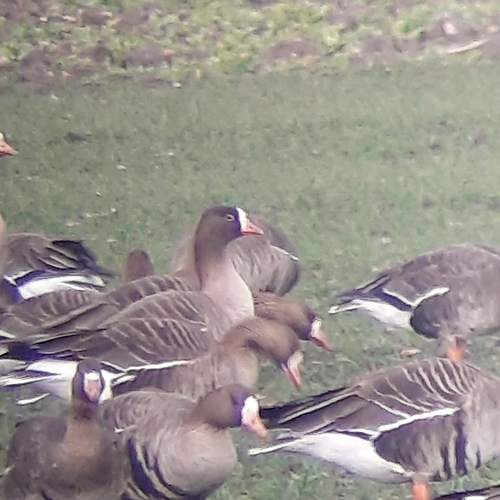 Oca lombardella minore
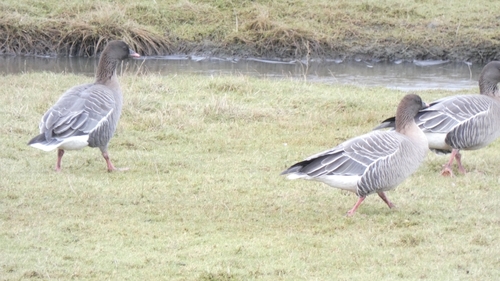 Oca zamperosee
In breve
Il segno distintivo più affidabile per separare l'Oca lombardella minore dall'Oca zamperosee è la combinazione di un anello giallo attorno all'occhio e una macchia bianca che si estende fino alla corona sull'Oca lombardella minore, caratteristiche mai mostrate dall'Oca zamperosee. Inoltre, l'Oca lombardella minore è notevolmente più piccola e più compatta, con un becco più corto e zampe arancioni brillanti, mentre l'Oca zamperosee è più grande, con un becco corto ma più robusto che è rosa al centro e nero alla base e alla punta, e zampe rosa. Entrambe le specie hanno copritrici delle ali superiori chiare e rami bianchi, ma la colorazione dettagliata del viso e delle zampe è fondamentale in tutte le età. In volo o a terra, prestare attenzione a queste caratteristiche della testa e delle zampe, così come alla dimensione complessiva, risolverà la maggior parte delle confusioni.
Consigli di identificazione
- Anello giallo attorno all'occhio (solo Oca lombardella minore): Cerca un chiaro anello giallo attorno all'occhio, presente in tutte le età e stagioni dell'Oca lombardella minore, mai nell'Oca zamperosee.
- Macchia facciale bianca fino alla corona (solo Oca lombardella minore): Il bianco sul viso si estende fino alla corona nell'Oca lombardella minore, mentre l'Oca zamperosee ha una testa marrone scuro uniforme senza macchia.
- Colore delle zampe: L'Oca lombardella minore ha sempre zampe e piedi arancioni brillanti; l'Oca zamperosee ha zampe e piedi rosa. Questo è visibile sia negli uccelli in posato che in quelli in movimento.
- Colore e forma del becco: L'Oca lombardella minore ha un piccolo becco rosa corto; l'Oca zamperosee ha un becco corto ma più robusto con una banda rosa al centro e nera sia alla base che alla punta. Questo schema è unico e visibile da vicino.
- Dimensione e struttura: L'Oca lombardella minore è molto più piccola e più compatta, appena più grande di un Germano reale, mentre l'Oca zamperosee è più robusta e con collo più lungo. Nei gruppi misti, l'Oca lombardella minore si distingue come l'oca più piccola.
- Colore delle ali superiori: Entrambe hanno copritrici delle ali superiori chiare, ma quelle dell'Oca lombardella minore sono grigie topo, mentre quelle dell'Oca zamperosee sono più grigie-blu (come l'Oca grigia). Questo è sottile e meglio utilizzato in buona luce o foto.
- Striature sul ventre: Entrambe le specie mostrano barre nere sul ventre, ma queste sono più ampie e più estese nell'Oca lombardella minore. Non sempre visibili, ma possono supportare l'identificazione.
- Schema della coda: L'Oca zamperosee ha una coda grigia con una punta bianca ampia, che può essere vista in volo o mentre si sistema; lo schema della coda dell'Oca lombardella minore è meno distintivo.
- Rami e cloaca: Entrambe mostrano rami e cloaca bianchi, quindi questo non è diagnostico tra i due.
- Dimensione e contesto del gruppo: Grandi gruppi rumorosi in terreni agricoli aperti nel nord-ovest dell'Europa sono quasi sempre Oche zamperosee. L'Oca lombardella minore è rara e di solito si trova in piccoli gruppi o in gruppi misti.
- 'Jizz' in volo: L'Oca zamperosee appare con ali più lunghe e più pesante in volo; l'Oca lombardella minore è più compatta e agile.
- Vocalizzazione: L'Oca zamperosee è estremamente vocale, con un richiamo acuto in gruppi; l'Oca lombardella minore è più silenziosa e meno probabile da essere udita.
- Habitat e distribuzione: Nel Regno Unito, nei Paesi Bassi, o in Danimarca, un'oca con zampe rosa in un grande gruppo è quasi certamente un'Oca zamperosee. L'Oca lombardella minore è rara e più probabile in Europa orientale o come vagabonda.
- Piumaggio giovanile/immaturo: Non sono descritte differenze dettagliate per il piumaggio immaturo delle ali superiori o del corpo, quindi fare riferimento al colore del viso, del becco e delle zampe per tutte le età.
- Insidie: Fai attenzione alla distanza e alla scarsa luce che possono oscurare l'anello giallo attorno all'occhio o la macchia facciale; cerca sempre di avere una visione chiara della testa e delle zampe prima di concludere.
Taglia
L'Oca lombardella minore è significativamente più piccola e leggera, con una massa media di circa 1797 g rispetto ai 2505 g dell'Oca zamperosee. L'Oca lombardella minore misura 53–66 cm di lunghezza con un'apertura alare di 120–135 cm, mentre l'Oca zamperosee è lunga 60–75 cm con un'apertura alare di 135–170 cm. Sul campo, l'Oca lombardella minore appare spesso solo leggermente più grande di un Germano reale, mentre l'Oca zamperosee è più robusta e più vicina in dimensione ad altre oche di media grandezza. Questa differenza di dimensione è solitamente evidente in gruppi misti o quando viste insieme.
Piumaggio
Per tutte le età, la differenza più evidente è nella testa: le Oche lombardelle minori adulte e immature mostrano una prominente macchia bianca che raggiunge la corona e un chiaro anello giallo attorno all'occhio, mentre le Oche zamperosee mancano di entrambi, mostrando una testa e un viso marrone scuro uniforme. Entrambe le specie hanno copritrici delle ali superiori chiare, ma quelle dell'Oca lombardella minore sono grigie topo, e quelle dell'Oca zamperosee sono più grigie-blu, simili all'Oca grigia. Entrambe hanno rami e cloaca bianchi, ma la coda dell'Oca zamperosee è grigia con una punta bianca ampia, mentre lo schema della coda è meno distintivo nell'Oca lombardella minore. Nelle parti inferiori, entrambe hanno alcune striature nere, ma il pattern è più ampio e più esteso nell'Oca lombardella minore. Il colore delle zampe è diagnostico: l'Oca lombardella minore ha sempre zampe arancioni brillanti, mentre l'Oca zamperosee ha zampe e piedi rosa. Il colore del becco è anche un segno forte: l'Oca lombardella minore ha un piccolo becco rosa, mentre l'Oca zamperosee mostra un becco corto con una distintiva banda rosa al centro e nera alla base e alla punta. I piumaggi giovanili e immaturi non sono descritti in dettaglio per nessuna delle due specie nelle fonti, ma le caratteristiche chiave del viso e delle zampe si applicano a tutte le età.
Comportamento
Entrambe le specie sono gregarie e spesso foraggiano in gruppi, ma l'Oca zamperosee è molto più probabile da essere vista in gruppi molto grandi e densi, specialmente nelle aree di svernamento nel nord-ovest dell'Europa. L'Oca lombardella minore è molto più rara e di solito si trova in gruppi più piccoli, a volte associandosi con altre oche. Entrambe pascolano su terreni agricoli e zone umide, ma l'Oca zamperosee è più tollerante nei campi agricoli aperti e può essere spettacolari numerosa in migrazione e in inverno. In volo, entrambe le specie mostrano ali superiori chiare e rami bianchi, ma l'Oca zamperosee appare spesso più robusta e con ali più lunghe, mentre l'Oca lombardella minore è più compatta e agile.
Habitat
L'Oca zamperosee nidifica nelle regioni artiche alte (Groenlandia, Islanda, Svalbard, Novaya Zemlya) e sverna ampiamente nel nord-ovest dell'Europa, specialmente nel Regno Unito, nei Paesi Bassi e in Danimarca, dove è abbondante e spesso vista in terreni agricoli aperti. L'Oca lombardella minore nidifica più a est nel Palearctico settentrionale e ora è un nido raro in Europa, con tentativi di reintroduzione in Fennoscandia. In inverno, l'Oca lombardella minore è molto più rara e più localizzata, spesso trovata in piccoli gruppi o mista con altre oche. Se vedi un grande gruppo di oche nel Regno Unito o nei Paesi Bassi, è molto più probabile che sia un'Oca zamperosee.
Voce
L'Oca zamperosee è molto vocale, specialmente in volo, producendo una melodia di richiami acuti che possono essere assordanti in grandi gruppi. L'Oca lombardella minore è meno vocale e meno probabile da essere udita sul campo, specialmente data la sua scarsità. La voce non è un segno primario per la separazione, ma il volume e il tono dei gruppi di Oche zamperosee possono essere un indizio di supporto nel contesto.
Oca lombardella minore · Oca zamperosee · I miei uccelli difficili