

Motmot

カリガネ 対 コクガン

Anser erythropus 対 Branta bernicla

カリガネとコクガンのクイズ
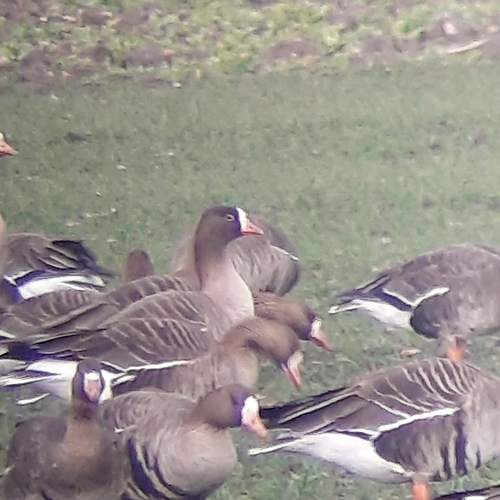
カリガネ (Anser erythropus) カリガネ
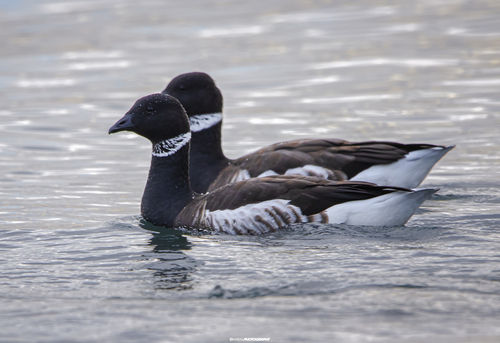
コクガン (Branta bernicla) コクガン

メディア

読み込み中…

要点

カリガネとコクガンを区別する最も信頼できるフィールドマークは、カリガネに見られる明るい白いブレイズが頭頂まで伸び、黄色のアイリングがあることです。一方、コクガンは黒い頭と首を持ち、首の側面には小さな白い斑点しかありません。飛んでいるときや休んでいるとき、カリガネはオレンジ色の足とピンクがかったくちばしを示しますが、コクガンは黒い足と短くて太い黒いくちばしを持っています。幼鳥と成鳥のカリガネはどちらも白いブレイズと黄色のアイリングを示しますが、すべてのコクガンの形態にはこれらの特徴がありません。構造と全体の色合いも異なります:カリガネはコンパクトですが、依然として「ガンのよう」であり、コクガンはさらに小さく、よりコンパクトで、非常に短い尾と暗く、より均一な体を持っています。どちらも小さなガンですが、羽毛と頭の模様は独特です。

識別のコツ

  1. 顔の模様は診断的: カリガネは常に頭頂まで伸びる明るい白いブレイズと黄色のアイリングを示します(すべての年齢)、一方、コクガンは白いブレイズや黄色のアイリングを示さず、頭と首は黒で、首の側面には小さな白い斑点しかありません。
  2. くちばしの色と形: カリガネはピンクがかったくちばしを持ち、比例的に小さいですが、依然として「ガンのよう」です。コクガンは非常に短くて太い黒いくちばしを持っています。
  3. 足の色: カリガネは明るいオレンジ色の足を持ち(飛んでいるときや歩いているときに非常に目立ちます)、コクガンは黒い足を持っています。
  4. 尾の形と色: コクガンはすべてのガンの中で最も短い尾を持ち、黒で純白の下尾を持っています。カリガネはより典型的なガンの尾を持ち、短くも対照的ではありません。
  5. 飛行中の上翼: カリガネはマウスグレーの上翼カバーを示します(大カリガネと共有していますが、コクガンとは異なります)。コクガンはマウスグレーのパネルがない、より均一に暗い上翼を持っています。
  6. 腹部の模様: カリガネは腹部に広い黒い帯を持っています(成鳥)、一方、コクガンの腹部は単純な暗い灰褐色(暗腹)またはより淡いですが、決して帯状ではありません。
  7. 全体の色合い: コクガンはより均一に暗く、特に暗腹の形態では、腹部と背中の間にほとんどコントラストがありません。淡い腹のコクガンはよりコントラストがありますが、依然としてブレイズや帯がありません。
  8. ジズと構造: コクガンは特にコンパクトで、短い首と非常に短い尾を持ち、カリガネよりも「ガンのよう」ではありません。カリガネはコンパクトですが、依然として典型的なガンの構造を示します。
  9. 生息地の文脈: コクガンは冬に強く沿岸に生息し、塩湿地や河口を好みます。カリガネは内陸の湿地や湖にいる可能性が高く、沿岸にはめったにいません。
  10. 他の種との関連: カリガネは他の灰色のガン(特に大カリガネ)と一緒に見られることがありますが、コクガンは他のBrantaガンと群れを作る可能性が高いです。
  11. 幼鳥の混乱: 幼鳥のカリガネは依然として白いブレイズと黄色のアイリングを示しますが、幼鳥のコクガンは決して示しません。
  12. コクガンの亜種の変異: すべてのコクガンの形態(暗腹、淡腹、黒いブラン)は白いブレイズと黄色のアイリングを欠いているため、これらのマークは常にカリガネと区別されます。
  13. 悪条件でのくちばしと足の色: 薄暗い条件では、まず顔の模様を探してください。くちばしと足の色は見えにくいかもしれませんが、見える場合は依然として役立ちます。
  14. 混合群れ: Brantaガンの中に白い顔のブレイズを持つ小さなガンが見えた場合、それはコクガンではありません。
  15. 主要なマークに重複なし: コクガンが白いブレイズや黄色のアイリングを示す年齢や季節はなく、カリガネがそれらを欠くこともありません—これらは常に安全なフィールドマークです。

大きさ

カリガネはほとんどの他のガンよりもわずかに小さいですが、コクガンよりも重い(平均体重約1797g)です。コクガンは長さ(55〜66 cm)では似ていますが、特にいくつかの亜種では軽くなることがあります(ここではコクガンの体重は指定されていませんが、通常は880〜2200gの範囲です)。どちらもコンパクトですが、コクガンは特に短くて太いくちばしと非常に短い尾で目立ちます—ガンの中で最も短いです。フィールドでは、カリガネはマガモよりもわずかに大きく見えるかもしれませんが、コクガンはさらにコンパクトで、ジズでは「ガンのよう」ではありません。

羽色

行動

両種は通常、群れで見られ、しばしば開けた地面や水の近くで草を食べたり休んだりしています。カリガネは他の灰色のガン、特に大カリガネと関連することがありますが、コクガンは沿岸の群れで見られることが多く、時には他のBranta種と一緒にいます。コクガンは習性がより海洋的/沿岸的で、しばしば塩湿地や潮間帯で餌を食べますが、カリガネは移動や冬の間に内陸や淡水の湿地で見られる可能性が高いです。

生息環境

カリガネは北ユーラシアで稀な繁殖者であり、ヨーロッパでは珍しい移動者や再導入地域としてしか見られません。内陸の湿地、湖、または河川で見られる可能性が高いです。対照的に、コクガンは温帯地域の海岸、塩湿地、河口に定期的に冬に訪れる訪問者であり、特に西ヨーロッパや英国諸島で見られます。潮間帯や塩湿地で小さなガンを見た場合、コクガンの可能性が高いですが、内陸の淡水では、特に混合灰色ガンの群れの中ではカリガネが見られる可能性がありますが、稀です。

より良い説明を送る

比較と同じ項目を使ってください。文章はすぐに公開されます。

The most reliable field mark to separate Lesser White-fronted Goose from Brent Goose is the presence of a bright white blaze extending up to the crown and a yellow eye-ring on the Lesser White-fronted, versus the Brent's black head and neck with only a small white patch on the neck sides. In flight or at rest, Lesser White-fronted shows orange legs and a pinkish bill, while Brent Goose has black legs and a short, stubby black bill. Juvenile and adult Lesser White-fronted Geese both show the white blaze and yellow eye-ring, while all Brent Goose forms lack these features. Structure and overall coloration also differ: Lesser White-fronted is compact but still 'goose-like', while Brent is even smaller and more compact, with a very short tail and a darker, more uniform body. Both are small geese, but their plumage and head pattern are distinctive.

  1. Face pattern is diagnostic: Lesser White-fronted Goose always shows a bright white blaze extending up to the crown and a yellow eye-ring (all ages), while Brent Goose never shows a white blaze or yellow eye-ring—its head and neck are black with only a small white patch on the neck sides.
  2. Bill color and shape: Lesser White-fronted has a pinkish bill that is proportionally small but still 'goose-like'; Brent Goose has a very short, stubby black bill.
  3. Leg color: Lesser White-fronted has bright orange legs (very obvious in flight or when walking); Brent Goose has black legs.
  4. Tail shape and color: Brent Goose has the shortest tail of any goose, which is black with a pure white under-tail; Lesser White-fronted has a more typical goose tail, not as short or contrasting.
  5. Upperwing in flight: Lesser White-fronted shows mouse-grey upperwing-coverts (shared with Greater White-fronted but not Brent); Brent Goose has a more uniformly dark upperwing with no mouse-grey panel.
  6. Belly pattern: Lesser White-fronted has broad black bars across the belly (adults), while Brent Goose's belly is plain dark grey-brown (dark-bellied) or paler but never barred.
  7. Overall coloration: Brent Goose is more uniformly dark, especially in the dark-bellied form, with little contrast between belly and back. Pale-bellied Brent shows more contrast but still lacks any blaze or bars.
  8. Jizz and structure: Brent Goose is especially compact, with a short neck and very short tail, and looks less 'goose-like' than Lesser White-fronted, which is compact but still shows typical goose structure.
  9. Habitat context: Brent Goose is strongly coastal in winter, favoring saltmarshes and estuaries; Lesser White-fronted is more likely on inland wetlands or lakes, rarely coastal.
  10. Association with other species: Lesser White-fronted may be found with other grey geese (especially Greater White-fronted), while Brent is more likely to flock with other Branta geese.
  11. Juvenile confusion: Juvenile Lesser White-fronted still shows the white blaze and yellow eye-ring, while juvenile Brent Goose never does.
  12. Subspecies variation in Brent: All forms of Brent Goose (dark-bellied, pale-bellied, black brant) lack the white blaze and yellow eye-ring, so these marks always separate them from Lesser White-fronted.
  13. Bill and leg color in poor light: In dull conditions, look for the face pattern first; bill and leg color may be harder to see but are still useful if visible.
  14. Mixed flocks: If you see a small goose with a white face blaze among Branta geese, it is not a Brent Goose.
  15. No overlap in key marks: There is no age or season where Brent Goose shows a white blaze or yellow eye-ring, nor where Lesser White-fronted lacks them—these are always safe field marks.

Lesser White-fronted Goose is slightly smaller than most other geese but is heavier (mean body mass ~1797g) than Brent Goose, which is similar in length (55–66 cm) but can be lighter, especially in some subspecies (Brent mass not specified here, but typically ranges from 880–2200g). Both are compact, but Brent Goose is especially notable for its short, stubby bill and very short tail—the shortest among geese. In the field, Lesser White-fronted may appear only a little larger than a Mallard, while Brent Goose is even more compact and less 'goose-like' in jizz.

  • Juvenile/immature and adult Lesser White-fronted Goose: Always shows a bright white blaze reaching up to the crown and a yellow eye-ring. The upperwing-coverts are mouse-grey, and the legs are orange. The belly has broad black bars, and the bill is pinkish.
  • Brent Goose (all ages and forms): Never shows a white blaze or yellow eye-ring. Head and neck are black with a small white patch on the neck sides (not on the face or crown). Underparts are dark grey-brown (dark-bellied) or show a paler belly and flanks (pale-bellied), but always with a black tail and pure white under-tail. The bill is short and black, and the legs are black. No mouse-grey upperwing panel or orange legs.
  • In flight: Lesser White-fronted shows typical 'grey goose' upperwing with mouse-grey coverts and orange legs trailing; Brent Goose shows a more uniformly dark upperwing and very short black tail with a striking white under-tail.

Both species are typically seen in flocks, often grazing or resting on open ground or near water. Lesser White-fronted Goose may associate with other grey geese, especially Greater White-fronted, while Brent Goose is more often found in coastal flocks, sometimes with other Branta species. Brent Goose tends to be more marine/coastal in habits, often feeding on saltmarshes and tidal flats, while Lesser White-fronted is more likely to be found inland or on freshwater wetlands during migration and winter.

Lesser White-fronted Goose is a scarce breeder in the northern Palearctic and is rarely seen in Europe except as a rare migrant or in reintroduction areas. It is more likely to be found on inland wetlands, lakes, or rivers. Brent Goose, by contrast, is a regular winter visitor to temperate-zone sea-coasts, saltmarshes, and estuaries, especially in western Europe and the British Isles. If you see a small goose on a tidal flat or saltmarsh, Brent is much more likely; inland on freshwater, especially in mixed grey goose flocks, Lesser White-fronted is possible but rare.

変更を破棄しますか?

保存していない編集があります。今離れると失われます。

カリガネ · コクガン · 苦手な鳥