

Oca lombardella minore vs Oca colombaccio
Anser erythropus contro Branta bernicla
Fai un quiz con Oca lombardella minore e Oca colombaccio
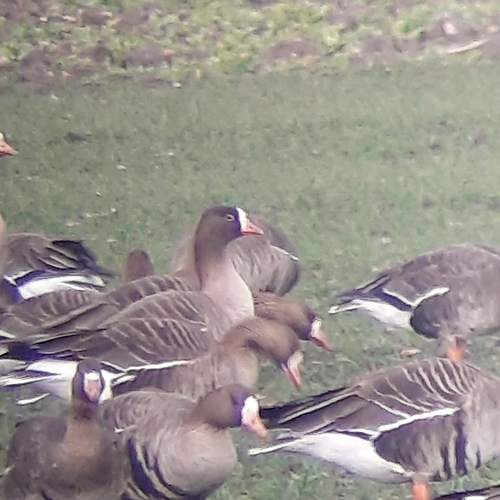 Oca lombardella minore
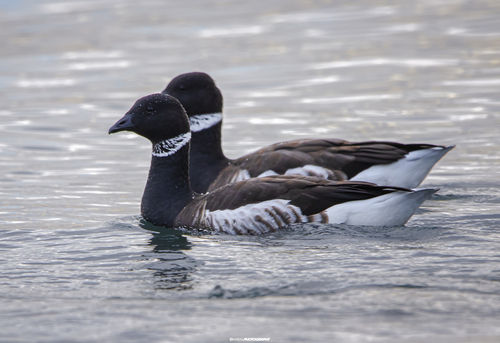 Oca colombaccio
In breve
Il segno di campo più affidabile per separare l'Oca lombardella minore dall'Oca colombaccio è la presenza di una brillante striscia bianca che si estende fino alla corona e di un anello oculare giallo sull'Oca lombardella minore, rispetto alla testa e al collo neri dell'Oca colombaccio con solo una piccola macchia bianca sui lati del collo. In volo o a riposo, l'Oca lombardella minore mostra zampe arancioni e un becco rossastro, mentre l'Oca colombaccio ha zampe nere e un becco corto e tozzo di colore nero. Le oche lombardelle minori juvenile e adulte mostrano entrambe la striscia bianca e l'anello oculare giallo, mentre tutte le forme di Oca colombaccio mancano di queste caratteristiche. La struttura e la colorazione generale differiscono anche: l'Oca lombardella minore è compatta ma ancora 'simile a un'oca', mentre l'Oca colombaccio è ancora più piccola e più compatta, con una coda molto corta e un corpo più scuro e uniforme. Entrambe sono oche piccole, ma il loro piumaggio e il modello della testa sono distintivi.
Consigli di identificazione
- Il modello del viso è diagnostico: L'Oca lombardella minore mostra sempre una brillante striscia bianca che si estende fino alla corona e un anello oculare giallo (tutte le età), mentre l'Oca colombaccio non mostra mai una striscia bianca o un anello oculare giallo: la sua testa e il suo collo sono neri con solo una piccola macchia bianca sui lati del collo.
- Colore e forma del becco: L'Oca lombardella minore ha un becco rossastro che è proporzionalmente piccolo ma ancora 'simile a un'oca'; l'Oca colombaccio ha un becco nero molto corto e tozzo.
- Colore delle zampe: L'Oca lombardella minore ha zampe arancioni brillanti (molto evidenti in volo o quando cammina); l'Oca colombaccio ha zampe nere.
- Forma e colore della coda: L'Oca colombaccio ha la coda più corta di qualsiasi oca, che è nera con una parte sottostante bianca pura; l'Oca lombardella minore ha una coda più tipica da oca, non così corta o contrastante.
- Copertura dell'ala superiore in volo: L'Oca lombardella minore mostra coperture dell'ala superiore grigio topo (condivise con l'Oca lombardella maggiore ma non con l'Oca colombaccio); l'Oca colombaccio ha un'ala superiore più uniformemente scura senza pannello grigio topo.
- Modello del ventre: L'Oca lombardella minore ha ampie barre nere sul ventre (adulti), mentre il ventre dell'Oca colombaccio è di un grigio-bruno scuro uniforme (ventre scuro) o più chiaro ma mai a barre.
- Colorazione generale: L'Oca colombaccio è più uniformemente scura, specialmente nella forma a ventre scuro, con poco contrasto tra ventre e dorso. L'Oca colombaccio a ventre chiaro mostra più contrasto ma manca ancora di qualsiasi striscia o barre.
- Jizz e struttura: L'Oca colombaccio è particolarmente compatta, con un collo corto e molto corta, e appare meno 'simile a un'oca' rispetto all'Oca lombardella minore, che è compatta ma mostra ancora una struttura tipica da oca.
- Contesto dell'habitat: L'Oca colombaccio è fortemente costiera in inverno, preferendo le zone umide salmastre e gli estuari; l'Oca lombardella minore è più probabile che si trovi in zone umide interne o laghi, raramente costiera.
- Associazione con altre specie: L'Oca lombardella minore può essere trovata con altre oche grigie (specialmente l'Oca lombardella maggiore), mentre l'Oca colombaccio è più probabile che si riunisca con altre oche Branta.
- Confusione giovanile: L'Oca lombardella minore juvenile mostra ancora la striscia bianca e l'anello oculare giallo, mentre l'Oca colombaccio juvenile non lo fa mai.
- Variazione delle sottospecie nell'Oca colombaccio: Tutte le forme di Oca colombaccio (a ventre scuro, a ventre chiaro, brant nera) mancano della striscia bianca e dell'anello oculare giallo, quindi questi segni li separano sempre dall'Oca lombardella minore.
- Colore del becco e delle zampe in scarsa illuminazione: In condizioni di scarsa luminosità, cerca prima il modello del viso; il colore del becco e delle zampe potrebbe essere più difficile da vedere ma è comunque utile se visibile.
- Fagotti misti: Se vedi un'oca piccola con una striscia bianca sul viso tra le oche Branta, non è un'Oca colombaccio.
- Nessuna sovrapposizione nei segni chiave: Non c'è età o stagione in cui l'Oca colombaccio mostri una striscia bianca o un anello oculare giallo, né in cui l'Oca lombardella minore ne sia priva: questi sono sempre segni di campo sicuri.
Taglia
L'Oca lombardella minore è leggermente più piccola della maggior parte delle altre oche ma è più pesante (massa corporea media ~1797g) rispetto all'Oca colombaccio, che è simile in lunghezza (55–66 cm) ma può essere più leggera, specialmente in alcune sottospecie (massa dell'Oca colombaccio non specificata qui, ma tipicamente varia da 880 a 2200g). Entrambe sono compatte, ma l'Oca colombaccio è particolarmente nota per il suo becco corto e tozzo e la sua coda molto corta: la più corta tra le oche. Sul campo, l'Oca lombardella minore può apparire solo leggermente più grande di un Germano reale, mentre l'Oca colombaccio è ancora più compatta e meno 'simile a un'oca' nel jizz.
Piumaggio
- Oca lombardella minore juvenile/immatura e adulta: Mostra sempre una brillante striscia bianca che raggiunge fino alla corona e un anello oculare giallo. Le coperture dell'ala superiore sono grigio topo e le zampe sono arancioni. Il ventre ha ampie barre nere e il becco è rossastro.
- Oca colombaccio (tutte le età e forme): Non mostra mai una striscia bianca o un anello oculare giallo. La testa e il collo sono neri con una piccola macchia bianca sui lati del collo (non sul viso o sulla corona). Le parti inferiori sono di un grigio-bruno scuro uniforme (ventre scuro) o mostrano un ventre e fianchi più chiari (ventre chiaro), ma sempre con una coda nera e una parte sottostante bianca pura. Il becco è corto e nero, e le zampe sono nere. Nessun pannello grigio topo sull'ala superiore o zampe arancioni.
- In volo: L'Oca lombardella minore mostra un'ala superiore tipica da 'oca grigia' con coperture grigio topo e zampe arancioni che seguono; l'Oca colombaccio mostra un'ala superiore più uniformemente scura e una coda nera molto corta con una parte sottostante bianca sorprendente.
Comportamento
Entrambe le specie sono tipicamente viste in gruppi, spesso pascolando o riposando su terreni aperti o vicino all'acqua. L'Oca lombardella minore può associarsi con altre oche grigie, specialmente l'Oca lombardella maggiore, mentre l'Oca colombaccio si trova più spesso in gruppi costieri, talvolta con altre specie di Branta. L'Oca colombaccio tende ad essere più marina/costiera nelle abitudini, spesso nutrendosi in zone umide salmastre e pianure di marea, mentre l'Oca lombardella minore è più probabile che si trovi in zone umide interne o su acque dolci durante la migrazione e l'inverno.
Habitat
L'Oca lombardella minore è un allevatore raro nel Palearctico settentrionale ed è raramente vista in Europa se non come migrante raro o in aree di reintroduzione. È più probabile trovarla in zone umide interne, laghi o fiumi. L'Oca colombaccio, al contrario, è un visitatore invernale regolare delle coste marine della zona temperata, delle zone umide salmastre e degli estuari, specialmente in Europa occidentale e nelle Isole Britanniche. Se vedi un'oca piccola su una pianura di marea o in una zona umida salmastra, è molto più probabile che sia un'Oca colombaccio; all'interno su acque dolci, specialmente in gruppi misti di oche grigie, l'Oca lombardella minore è possibile ma rara.
Oca lombardella minore · Oca colombaccio · I miei uccelli difficili