

Motmot

コズアカコシアカツバメ 対 ノドジロサンショクツバメ

Cecropis abyssinica 対 Petrochelidon preussi

コズアカコシアカツバメとノドジロサンショクツバメのクイズ
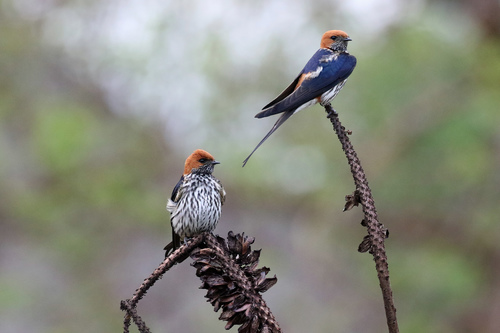
コズアカコシアカツバメ (Cecropis abyssinica) コズアカコシアカツバメ
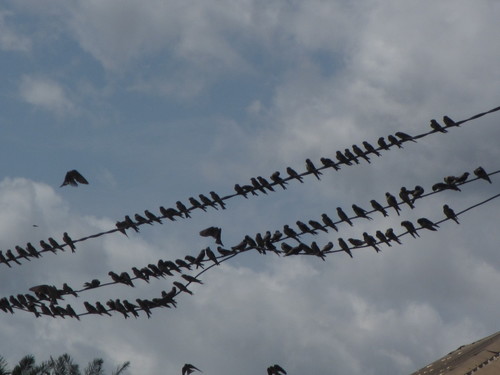
ノドジロサンショクツバメ (Petrochelidon preussi) ノドジロサンショクツバメ

メディア

読み込み中…

要点

コズアカコシアカツバメとノドジロサンショクツバメの間で最も信頼できるフィールドマークは、羽毛の特徴の組み合わせです:コズアカコシアカツバメは、豊かな赤褐色の冠、うなじ、頭の側面、深い赤の尾、そして重い白の腹部の縞模様を示しますが、ノドジロサンショクツバメはこれらの大胆な頭部と尾の色、強い腹部の縞模様が欠けています。幼鳥のコズアカコシアカツバメは鈍く、茶色がかっていますが、まだいくつかの縞模様と頭に赤褐色のヒントを示しますが、ノドジロサンショクツバメの幼鳥は全体的にコントラストが少ないです。飛行中、コズアカコシアカツバメの長く、深く分かれた尾は、特に成鳥において強い手がかりです。両種はツバメですが、その構造、羽毛、飛行スタイルは十分に異なり、注意深い観察者は特に頭、尾、尾の良い視界があればそれらを区別できます。

識別のコツ

  1. Head Color (All Ages): コズアカコシアカツバメは赤褐色の冠、うなじ、頭の側面を持ち、成鳥では明るく目立ち、幼鳥でも鈍いながらも存在します。ノドジロサンショクツバメはこの特徴が欠けており、より均一に暗いまたは muted な頭を持っています。
  2. Rump Color (All Ages): コズアカコシアカツバメの深い赤の尾を探してください。これは暗い青の上面と対照的です。ノドジロサンショクツバメは赤褐色または赤の尾を示しません。
  3. Underpart Streaking (All Ages): コズアカコシアカツバメは重い、暗い縞模様のある白い腹部を持っています(亜種によって変動しますが、常に存在します)。ノドジロサンショクツバメはより平坦な腹部を持ち、大胆な縞模様が欠けています。
  4. Tail Shape and Length (Adults, Especially Males): コズアカコシアカツバメは長く、深く分かれた尾を持ち、外側の羽が長いです。これらは幼鳥では短くなりますが、まだ存在します。ノドジロサンショクツバメは、崖のツバメに典型的な短く、四角い尾を持ち、外側の羽は長くありません。
  5. Upperwing and Underwing (All Ages): コズアカコシアカツバメの上翼は黒褐色で、黄褐色の下翼の覆いがあります。ノドジロサンショクツバメの翼の模様はコントラストが少なく、黄褐色の下翼が欠けています。
  6. Juvenile Confusion: 幼鳥のコズアカコシアカツバメは鈍く、茶色がかっており、コントラストが少なく、尾の流れが短いですが、まだ頭に赤褐色のヒントと下に淡い縞模様を示します。幼鳥のノドジロサンショクツバメは平坦で、これらの特徴が欠けています。
  7. Size and Structure: コズアカコシアカツバメはより大きく、より細長く、尾が長く、より優雅な印象を持っています。ノドジロサンショクツバメはよりコンパクトで、尾が短く、飛行中や止まっているときにがっしりとしています。
  8. Flight Style: コズアカコシアカツバメは不規則で急降下する動きで飛び、しばしば単独またはペアで見られます。ノドジロサンショクツバメは群れで見られる可能性が高く、崖の近くを直接かつ迅速に飛びます。
  9. Perched Posture: 停止中、コズアカコシアカツバメの長い尾の流れが明らかで、しばしば交差したり、止まり木の下で垂れ下がったりします。ノドジロサンショクツバメは四角い尾を持ち、尾の突出が少ないです。
  10. Habitat Context: コズアカコシアカツバメは人間の構造物、開けた国、サバンナの近くで見られることが多いです。ノドジロサンショクツバメは崖や岩の突起により制限されています。
  11. Vocalization: コズアカコシアカツバメの鼻にかかった「ゼー ゼー ゼー」を聞いてください。ノドジロサンショクツバメはこの鳴き声を出しませんが、声は補助的なフィールドマークであり、主要なものではありません。
  12. Seasonal Movement: コズアカコシアカツバメは南アフリカで部分的に移動性があるため、季節ごとの地元の状況を確認してください。ノドジロサンショクツバメはより定住的で、繁殖崖に結びついています。
  13. Pitfalls: 鈍い幼鳥に注意してください—頭と尾の色、腹部の縞模様に焦点を当ててください。尾の長さは幼鳥ではあまり信頼できませんが、まだ役立ちます。
  14. Sex Differences: オスのコズアカコシアカツバメは最も長い尾の流れを持っていますが、メスもノドジロサンショクツバメよりも長い分かれた尾を示します。
  15. Flock Association: 崖の近くで大きく、密集した群れで見られた場合はノドジロサンショクツバメを疑ってください。ワイヤーや建物の上でペアまたは小さなグループで見られた場合はコズアカコシアカツバメを疑ってください。

大きさ

コズアカコシアカツバメは大きなツバメで、長さは15〜19 cmです。ノドジロサンショクツバメの直接的なサイズデータは提供されていませんが、他のPetrochelidon種と比較すると、Cecropis abyssinicaよりも小さく、よりコンパクトである可能性があります。フィールドでは、コズアカコシアカツバメは特に長く、深く分かれた尾のために、より長く、より細長く見えます。ノドジロサンショクツバメは崖のツバメとして、短い尾でがっしりとした外観を持ち、四角い尾とよりコンパクトなシルエットが期待されます。

羽色

幼鳥と未成熟のコズアカコシアカツバメは成鳥よりも鈍く、茶色がかっており、コントラストが少なく、外側の尾羽が短いですが、まだ頭に赤褐色のヒントと下に淡い縞模様を示します。成鳥のコズアカコシアカツバメは赤褐色の冠、うなじ、頭の側面、深い赤の尾、暗い青の上面、重い白の腹部の縞模様で特徴的です。上翼と下翼の飛行羽は黒褐色で、黄褐色の下翼の覆いがあります。尾は黒褐色で深く分かれ、長い外側の羽(成鳥のオスで最も長い)があります。ノドジロサンショクツバメは赤褐色の頭と尾が欠けており、腹部はそれほど重い縞模様がなく、全体的な色合いはより muted で、強い頭部や尾のコントラストが欠けています。すべての年齢において、赤褐色の冠と尾の欠如、重い腹部の縞模様の欠如がノドジロサンショクツバメをコズアカコシアカツバメから区別します。飛行中、コズアカコシアカツバメの長く、深く分かれた尾は、ノドジロサンショクツバメの短く、四角い尾との重要な違いです。

行動

コズアカコシアカツバメはCecropisツバメに典型的な不規則な飛行スタイルを持ち、しばしば長く尖った翼と深く分かれた尾を引きずりながら急降下したり滑空したりする姿が見られます。しばしばワイヤーや露出した枝に止まります。ノドジロサンショクツバメは崖のツバメとして、繁殖コロニーの近くで密集した速く飛ぶ群れで見られる可能性が高く、よりコンパクトで直接的な飛行を持ち、尾の突出が少ないです。コズアカコシアカツバメは単独またはペアで見られる可能性が高く、ノドジロサンショクツバメはしばしば群れで見られます。

生息環境

コズアカコシアカツバメはサハラ以南のアフリカ全体で広く繁殖し、開けた国、サバンナ、崖、洞窟、建物、橋などの適切な巣作りの場所を好みます。適応性があり、しばしば人間が作った構造物に巣を作ります。ノドジロサンショクツバメもアフリカに生息していますが、巣作りのために崖や岩の突起により密接に結びついており、建物や橋を利用する可能性は低いです。両方が生息する地域では、コズアカコシアカツバメは開けた人間が変えた生息地にいる可能性が高く、ノドジロサンショクツバメはより自然な崖の面を好みます。

声

コズアカコシアカツバメは鼻にかかった「ゼー ゼー ゼー ゼー ゼー」という鳴き声を出します。ノドジロサンショクツバメの特定の鳴き声は提供されていませんが、崖のツバメは一般的によりおしゃべりで、ツイッターのような鳴き声を持っています。繰り返される鼻にかかった「ゼー」という鳴き声を聞いた場合、コズアカコシアカツバメを支持しますが、声だけでは常に診断的ではありません。

より良い説明を送る

比較と同じ項目を使ってください。文章はすぐに公開されます。

The most reliable field mark between Lesser Striped Swallow and Preuss's Swallow is the combination of plumage features: Lesser Striped Swallow shows a rich rufous-chestnut crown, nape, and sides of the head, a deep red rump, and heavily streaked white underparts, while Preuss's Swallow lacks these bold head and rump colors and the strong underpart streaking. Juvenile Lesser Striped Swallows are duller and browner but still show some streaking and a hint of rufous on the head, whereas Preuss's Swallow juveniles are less contrasting overall. In flight, Lesser Striped Swallow's long, deeply forked tail with elongated outer feathers is a strong clue, especially in adults. Both species are swallows, but their structure, plumage, and flight style differ enough for careful observers to separate them, especially with good views of the head, rump, and tail.

  1. Head Color (All Ages): Lesser Striped Swallow has a rufous-chestnut crown, nape, and sides of the head, which is bright and obvious in adults and still present, though duller, in juveniles. Preuss's Swallow lacks this feature, with a more uniformly dark or muted head.
  2. Rump Color (All Ages): Look for the deep red rump on Lesser Striped Swallow, contrasting with the dark blue upperparts. Preuss's Swallow does not show a rufous or red rump.
  3. Underpart Streaking (All Ages): Lesser Striped Swallow has white underparts with heavy, dark streaking (variable by subspecies, but always present). Preuss's Swallow has plainer underparts, lacking bold streaks.
  4. Tail Shape and Length (Adults, Especially Males): Lesser Striped Swallow has a long, deeply forked tail with elongated outer feathers; these are shorter but still present in juveniles. Preuss's Swallow has a shorter, squarer tail typical of cliff swallows, with no elongated outer feathers.
  5. Upperwing and Underwing (All Ages): Lesser Striped Swallow's upperwings are blackish-brown, with tawny underwing coverts. Preuss's Swallow's wing pattern is less contrasting and lacks the tawny underwing.
  6. Juvenile Confusion: Juvenile Lesser Striped Swallows are duller and browner, with less contrast and shorter tail streamers, but they still show some rufous on the head and faint streaking below. Juvenile Preuss's Swallow is plain and lacks these features.
  7. Size and Structure: Lesser Striped Swallow is larger and more slender, with a longer tail and more graceful jizz. Preuss's Swallow is more compact, shorter-tailed, and stockier in flight and when perched.
  8. Flight Style: Lesser Striped Swallow flies with an erratic, swooping motion, often solo or in pairs. Preuss's Swallow is more likely to be seen in flocks, flying directly and rapidly near cliffs.
  9. Perched Posture: When perched, Lesser Striped Swallow's long tail streamers are obvious, often crossing or drooping well below the perch. Preuss's Swallow perches with a squarer tail and less tail projection.
  10. Habitat Context: Lesser Striped Swallow is often found near human structures, open country, and savannah. Preuss's Swallow is more restricted to cliffs and rocky outcrops.
  11. Vocalization: Listen for the nasal 'zeh zeh zeh' of Lesser Striped Swallow. Preuss's Swallow does not give this call, but voice is a supporting, not primary, field mark.
  12. Seasonal Movement: Lesser Striped Swallow is partially migratory in southern Africa, so check local status by season. Preuss's Swallow is more sedentary and tied to breeding cliffs.
  13. Pitfalls: Beware of dull juveniles—focus on head and rump color, and underpart streaking. Tail length is less reliable in juveniles but still useful.
  14. Sex Differences: Male Lesser Striped Swallows have the longest tail streamers, but females also show a forked tail longer than any Preuss's Swallow.
  15. Flock Association: If seen in a large, tight flock near a cliff, suspect Preuss's Swallow; if in pairs or small groups on wires or buildings, suspect Lesser Striped Swallow.

Lesser Striped Swallow is a large swallow, measuring 15–19 cm in length. No direct size data is provided for Preuss's Swallow, but by comparison with other Petrochelidon species, it is likely smaller and more compact than Cecropis abyssinica. In the field, Lesser Striped Swallow will appear longer and more slender, especially due to its long, deeply forked tail. Preuss's Swallow, as a cliff swallow, is expected to look shorter-tailed and stockier, with a squarer tail and more compact silhouette.

Juvenile and immature Lesser Striped Swallows are duller and browner than adults, with less contrast and shorter outer tail feathers, but they still show some rufous on the head and faint streaking below. The adult Lesser Striped Swallow is distinctive with its rufous-chestnut crown, nape, and sides of the head, deep red rump, dark blue upperparts, and heavily streaked white underparts. The upperwings and underwing flight feathers are blackish-brown, with tawny underwing coverts. The tail is blackish and deeply forked, with long outer feathers (longest in adult males). Preuss's Swallow lacks the rufous head and rump, and its underparts are not as heavily streaked; its overall coloration is more muted and lacks strong head or rump contrast. In all ages, the absence of a rufous crown and rump, and the lack of heavy underpart streaking, separate Preuss's Swallow from Lesser Striped Swallow. In flight, the long, deeply forked tail of Lesser Striped Swallow is a key difference from the shorter, squarer tail of Preuss's Swallow.

Lesser Striped Swallow has an erratic flight style typical of Cecropis swallows, often seen swooping and gliding with long, pointed wings and a deeply forked tail trailing behind. It often perches on wires or exposed branches. Preuss's Swallow, as a cliff swallow, is likely to be seen in tight, fast-flying flocks, especially near breeding colonies, and has a more compact, direct flight with less tail projection. Lesser Striped Swallow is more likely to be seen singly or in pairs, while Preuss's Swallow is often gregarious.

Lesser Striped Swallow breeds widely across Sub-Saharan Africa, favoring open country, savannah, and areas with suitable nesting sites such as cliffs, caves, buildings, and bridges. It is adaptable and often nests on man-made structures. Preuss's Swallow is also African but is more closely tied to cliffs and rocky outcrops for nesting, and is less likely to be found using buildings or bridges. In areas where both occur, Lesser Striped Swallow is more likely in open, human-altered habitats, while Preuss's Swallow favors more natural cliff faces.

Lesser Striped Swallow gives a nasal 'zeh zeh zeh zeh zeh' call. No specific vocalization is provided for Preuss's Swallow, but cliff swallows generally have more chattering, twittering calls. If you hear a repeated nasal 'zeh' call, it supports Lesser Striped Swallow, but voice alone is not always diagnostic.

変更を破棄しますか?

保存していない編集があります。今離れると失われます。

コズアカコシアカツバメ · ノドジロサンショクツバメ · 苦手な鳥