

Motmot

メジロヒメモズモドキ 対 キノドモズモドキ

Pachysylvia decurtata 対 Vireo flavifrons

メジロヒメモズモドキとキノドモズモドキのクイズ
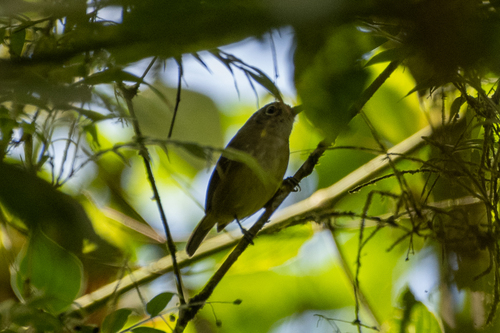
メジロヒメモズモドキ (Pachysylvia decurtata) メジロヒメモズモドキ
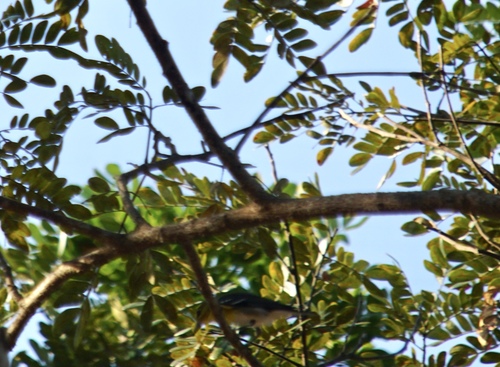
キノドモズモドキ (Vireo flavifrons) キノドモズモドキ

メディア

読み込み中…

要点

最も信頼できるフィールドマークは、キノドモズモドキの大胆な黄色の喉と目立つ黄色の「眼鏡」であり、これはメジロヒメモズモドキのずっと鈍い灰青色からオリーブ色の顔と強い顔の模様がないことと鮮やかに対照を成しています。すべての羽色において、キノドモズモドキはより大きく、ずんぐりしており、白い翼帯を持っていますが、メジロヒメモズモドキはより小さく、スリムで、翼帯がありません。両者ともオリーブ色の上面と黄色がかった下面を示すことがありますが、キノドモズモドキの喉と眼鏡はどの年齢でも診断的です。灰青色の冠と翼帯がない小さなオリーブ色の鳥を見たら、それはメジロヒメモズモドキです。明るい黄色の喉、白い腹、そして大胆な眼鏡があれば、それはキノドモズモドキです。サイズ、構造、顔の模様が最も良い手がかりであり、特に鳥が素早く動いている場合や部分的に隠れている場合に役立ちます。

識別のコツ

  1. 黄色の「眼鏡」(キノドモズモドキのみ): キノドモズモドキは常に大胆な黄色のアイリングと黄色のロアを示し、「眼鏡」を形成します—メジロヒメモズモドキのどの年齢や亜種にも存在しません。
  2. 喉の色: キノドモズモドキの喉は明るい黄色で、白い腹と鮮やかに対比されています。メジロヒメモズモドキの喉は淡い灰色または白っぽく、胸や側面にはわずかな黄色の洗いがかかっています。
  3. 翼帯: キノドモズモドキは暗い翼に2本の強い白い翼帯があります(すべての年齢);メジロヒメモズモドキは緑がかった縁のある普通の暗い灰色の翼を持ち、翼帯はありません。
  4. 顔の模様: メジロヒメモズモドキは灰青色またはオリーブ灰色の冠と上顔を持ち、微妙な白っぽいアイリングと時々淡い眉斑がありますが、決してキノドモズモドキの大胆な眼鏡はありません。
  5. サイズと構造: キノドモズモドキはより大きく、ずんぐりしており、明らかに太いくちばしを持っています。メジロヒメモズモドキはずっと小さく、スリムで、全体的により繊細です。両者が一緒に見られる場合、サイズの違いは際立っています。
  6. くちばしの形: キノドモズモドキのくちばしは太くて重く、青灰色です。メジロヒメモズモドキのくちばしは細く、上部は暗い灰色で、下部は淡いです。
  7. 上面: 両者ともオリーブ色ですが、メジロヒメモズモドキの尻はより明るく、灰青色の冠を示すことがあります(特に指名亜種や一部の亜種);キノドモズモドキの頭と背中はより均一にオリーブ色です。
  8. 下面: キノドモズモドキは鮮明な白い腹と尾羽を持ち、メジロヒメモズモドキの下面はより洗い流されたようで、緑がかった黄色の側面と肛門が白っぽい腹に溶け込んでいます。
  9. 虹彩の色: 両者とも暗い目を持っているため、これは役に立ちません。
  10. 脚の色: 両者とも青灰色または淡い灰色の脚を持っています;強いフィールドマークではありません。
  11. 行動: キノドモズモドキはゆっくりと体系的に動き、しばしば単独またはペアで行動します。メジロヒメモズモドキはより活発で敏捷で、しばしば混合種の群れに加わります。
  12. 生息地の文脈: 北アメリカでは、キノドモズモドキのみが可能です。中米では、キノドモズモドキは移動性(主に冬)、メジロヒメモズモドキは通年の居住者です。密な湿った森林ではメジロヒメモズモドキがより可能性が高く、開けた森林やエッジではキノドモズモドキがより可能性が高いです。
  13. 亜種の変異(メジロヒメモズモドキ): 一部のメジロヒメモズモドキの亜種はより灰色または茶色の冠を持っていますが、いずれもキノドモズモドキの明るい黄色の眼鏡や翼帯を示すことはありません。
  14. 飛行時の視点: どちらの種にも特有の上翼パターンはありませんが、キノドモズモドキの白い翼帯は飛行中にフラッシュすることがあり、メジロヒメモズモドキの翼は普通です。
  15. 落とし穴: 両者とも上面はオリーブ色で下面は黄色がかって見えることがありますが、キノドモズモドキだけが黄色の眼鏡、黄色の喉、白い翼帯を組み合わせています。疑わしい場合は、顔と翼に焦点を当ててください。

大きさ

キノドモズモドキはメジロヒメモズモドキ(9.4–10.2 cm、6.6–10.3 g)よりも明らかに大きい(13–15 cm、15–21 g)です[wikipedia][avonet]。キノドモズモドキは明らかにずんぐりしており、より重く、太いくちばしと長い翼幅(23 cm対メジロヒメモズモドキでは指定されていませんが、はるかに短い)を持っています。メジロヒメモズモドキはより繊細で、スリムな体型と小さな頭を持っています。フィールドでは、キノドモズモドキはしばしばずんぐりして頑丈に見え、メジロヒメモズモドキは小さく、より繊細に見えます。

羽色

どちらの種にも年齢特有の翼パターンは記載されていないため、成鳥と一般的な羽色に焦点を当ててください。キノドモズモドキの成鳥は明るい黄色の喉、大胆な黄色の「眼鏡」(広い黄色のアイリングとロア)、オリーブ色の上面、白い翼帯、そして白い腹を示します。メジロヒメモズモドキの成鳥(すべての亜種)は翼帯と眼鏡がなく、灰青色(または亜種によっては灰色/オリーブ)の冠、オリーブグリーンの上面、白っぽいアイリング、淡いレモンイエローの胸が白っぽい腹にフェードし、緑がかった黄色の側面と肛門を持っています。メジロヒメモズモドキの顔の模様は微妙で、ロアの上にわずかな淡いストライプと灰色の顔があるだけで、決してキノドモズモドキの強い黄色の眼鏡はありません。キノドモズモドキの翼は暗く、2本の鋭い白い帯がありますが、メジロヒメモズモドキの翼は普通の暗い灰色で緑がかった縁があり、帯はありません。両者とも黄色がかった下面を持っていますが、キノドモズモドキの喉は最も明るく、メジロヒメモズモドキのものはより淡く、より拡散しています。情報源には、どちらの種にも幼鳥/未熟特有のマークは記載されていません。

行動

キノドモズモドキはしばしばキャノピーの高いところで体系的に餌を探しているのが見られ、よりゆっくりと意図的に動き、時には獲物を探すために立ち止まります。メジロヒメモズモドキはより活発で敏捷で、しばしば葉の中を素早く移動し、時には混合種の群れに加わります。キノドモズモドキはより孤独またはペアで見られることが多いのに対し、メジロヒメモズモドキは小さなグループや群れで見られることが多いです。飛行中、キノドモズモドキの重い体型と広い翼が明らかになり、メジロヒメモズモドキは素早くひらひらとしています。

生息環境

メジロヒメモズモドキはメキシコから中米を経て西コロンビア、エクアドル、ペルーまでの広範囲の低地および丘陵の森林に生息しています[wikipedia]。キノドモズモドキは南カナダと東アメリカの開けた落葉樹林で繁殖し、冬に中米とカリブ海に移動します[wikipedia]。中米では、両者とも移動中/冬に似た森林生息地に出現することがありますが、キノドモズモドキはより高い開けた森林や森林のエッジにいる可能性が高く、メジロヒメモズモドキは湿った森林の内部やエッジの居住者です。北アメリカの熱帯外で見られる場合、キノドモズモズモドキのみが可能です。

より良い説明を送る

比較と同じ項目を使ってください。文章はすぐに公開されます。

The most reliable field mark is the bold yellow throat and prominent yellow 'spectacles' of the Yellow-throated Vireo, which sharply contrast with the Lesser Greenlet’s much duller, gray-blue to olive face and lack of strong facial markings. In all plumages, the vireo is larger, chunkier, and has white wing bars, while the greenlet is smaller, slimmer, and lacks wing bars. Both can show olive upperparts and yellowish underparts, but the vireo’s throat and spectacles are diagnostic at any age. If you see a small olive bird with a gray-blue crown and no wing bars, it is a Lesser Greenlet; if it has a bright yellow throat, white belly, and bold spectacles, it is a Yellow-throated Vireo. Size, structure, and facial pattern are your best tools, especially if the bird is moving quickly or partly obscured.

  1. Yellow 'spectacles' (vireo only): Yellow-throated Vireo always shows a bold yellow eye-ring and yellow lores, forming 'spectacles'—never present in Lesser Greenlet of any age or subspecies.
  2. Throat color: The vireo’s throat is bright yellow and sharply set off from the white belly; Lesser Greenlet’s throat is pale gray or whitish, with only a faint yellow wash on the breast and flanks.
  3. Wing bars: Yellow-throated Vireo has two strong white wing bars on dark wings (all ages); Lesser Greenlet has plain dark grayish wings with greenish edges and no wing bars.
  4. Facial pattern: Lesser Greenlet has a gray-blue or olive-gray crown and upper face, with a subtle whitish eye-ring and sometimes a pale supercilium, but never the vireo’s bold spectacles.
  5. Size and structure: Vireo is larger, chunkier, and has a noticeably stouter bill; greenlet is much smaller, slimmer, and more delicate overall. If both are seen together, the size difference is striking.
  6. Bill shape: Vireo’s bill is thick and heavy, blue-gray in color; greenlet’s bill is finer, dark gray above and pale below.
  7. Upperparts: Both are olive above, but the greenlet’s is lighter on the rump and may show a gray-blue crown (especially nominate and some subspecies); vireo’s head and back are more uniformly olive.
  8. Underparts: Vireo has a crisp white belly and undertail; greenlet’s underparts are more washed out, with greenish-yellow flanks and vent blending into a whitish belly.
  9. Iris color: Both have dark eyes, so this is not useful.
  10. Leg color: Both have blue-gray or pale gray legs; not a strong field mark.
  11. Behavior: Vireo moves slowly and methodically, often alone or in pairs; greenlet is more active, agile, and likely to join mixed flocks.
  12. Habitat context: In North America, only vireo is possible. In Central America, vireo is a migrant (mainly winter), greenlet is a year-round resident. In dense humid forest, greenlet is more likely; in open woodland or edge, vireo is more likely.
  13. Subspecies variation (greenlet): Some greenlet subspecies have a grayer or browner crown, but none ever show the vireo’s bright yellow spectacles or wing bars.
  14. Flight views: No distinctive upperwing pattern for either, but vireo’s white wing bars may flash in flight, while greenlet’s wings are plain.
  15. Pitfalls: Both can appear olive above and yellowish below, but only vireo combines yellow spectacles, yellow throat, and white wing bars. If in doubt, focus on the face and wings.

Yellow-throated Vireo is distinctly larger (13–15 cm, 15–21 g) than Lesser Greenlet (9.4–10.2 cm, 6.6–10.3 g) [wikipedia][avonet]. The vireo is noticeably bulkier with a heavier, stouter bill and a longer wingspan (23 cm vs. not specified but much shorter in the greenlet). Lesser Greenlet is daintier, with a slimmer build and smaller head. In the field, the vireo often looks chunky and robust, while the greenlet appears petite and more delicate.

No age-specific wing pattern is described for either species, so focus on adult and general plumage. Yellow-throated Vireo adults show a bright yellow throat, bold yellow 'spectacles' (broad yellow eye-ring and lores), olive upperparts, white wing bars, and a white belly. Lesser Greenlet adults (all subspecies) lack wing bars and spectacles; they have a gray-blue (or gray/olive, depending on subspecies) crown, olive-green upperparts, a whitish eye-ring, and a pale lemon-yellow breast fading to whitish belly, with greenish-yellow flanks and vent. The greenlet’s facial pattern is subtle, with only a faint pale stripe above the lores and a grayish face, never the strong yellow spectacles of the vireo. The vireo’s wings are dark with two sharp white bars, while the greenlet’s wings are plain dark grayish with greenish edges but no bars. Both have yellowish underparts, but the vireo’s is brightest on the throat and the greenlet’s is paler and more diffuse. Juvenile/immature-specific marks are not described for either species in the sources.

Yellow-throated Vireo is often seen foraging methodically high in the canopy, moving more slowly and deliberately, sometimes pausing to scan for prey. Lesser Greenlet is more active and agile, often moving quickly through foliage and sometimes joining mixed-species flocks. The vireo may appear more solitary or in pairs, while the greenlet is more likely to be seen in small groups or flocks. In flight, the vireo’s heavier build and broader wings are apparent, while the greenlet is quick and fluttery.

Lesser Greenlet is found in a wide range of lowland and foothill forests from Mexico through Central America to western Colombia, Ecuador, and Peru [wikipedia]. Yellow-throated Vireo breeds in open deciduous woods in southern Canada and the eastern U.S., migrating to Central America and the Caribbean in winter [wikipedia]. In Central America, both can occur in similar forested habitats during migration/winter, but the vireo is more likely in taller, open woodland or forest edge, while the greenlet is a resident of humid forest interiors and edges. If seen in North America outside the tropics, only Yellow-throated Vireo is possible.

変更を破棄しますか?

保存していない編集があります。今離れると失われます。

メジロヒメモズモドキ · キノドモズモドキ · 苦手な鳥