

Lesser Greenlet vs Yellow-throated Vireo
Pachysylvia decurtata contro Vireo flavifrons
Fai un quiz con Lesser Greenlet e Yellow-throated Vireo
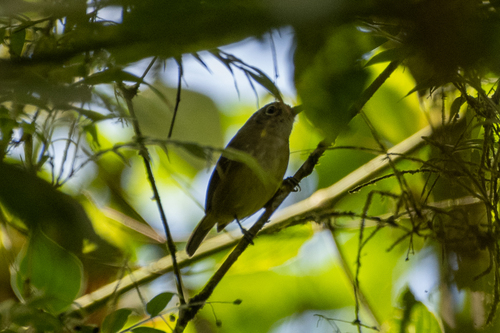 Lesser Greenlet
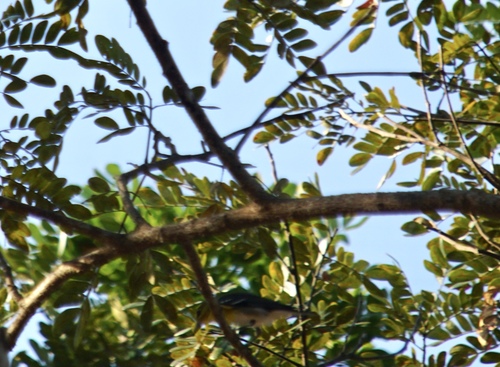 Yellow-throated Vireo
In breve
The most reliable field mark is the bold yellow throat and prominent yellow 'spectacles' of the Yellow-throated Vireo, which sharply contrast with the Lesser Greenlet’s much duller, gray-blue to olive face and lack of strong facial markings. In all plumages, the vireo is larger, chunkier, and has white wing bars, while the greenlet is smaller, slimmer, and lacks wing bars. Both can show olive upperparts and yellowish underparts, but the vireo’s throat and spectacles are diagnostic at any age. If you see a small olive bird with a gray-blue crown and no wing bars, it is a Lesser Greenlet; if it has a bright yellow throat, white belly, and bold spectacles, it is a Yellow-throated Vireo. Size, structure, and facial pattern are your best tools, especially if the bird is moving quickly or partly obscured.
Consigli di identificazione
- Yellow 'spectacles' (vireo only): Yellow-throated Vireo always shows a bold yellow eye-ring and yellow lores, forming 'spectacles'—never present in Lesser Greenlet of any age or subspecies.
- Throat color: The vireo’s throat is bright yellow and sharply set off from the white belly; Lesser Greenlet’s throat is pale gray or whitish, with only a faint yellow wash on the breast and flanks.
- Wing bars: Yellow-throated Vireo has two strong white wing bars on dark wings (all ages); Lesser Greenlet has plain dark grayish wings with greenish edges and no wing bars.
- Facial pattern: Lesser Greenlet has a gray-blue or olive-gray crown and upper face, with a subtle whitish eye-ring and sometimes a pale supercilium, but never the vireo’s bold spectacles.
- Size and structure: Vireo is larger, chunkier, and has a noticeably stouter bill; greenlet is much smaller, slimmer, and more delicate overall. If both are seen together, the size difference is striking.
- Bill shape: Vireo’s bill is thick and heavy, blue-gray in color; greenlet’s bill is finer, dark gray above and pale below.
- Upperparts: Both are olive above, but the greenlet’s is lighter on the rump and may show a gray-blue crown (especially nominate and some subspecies); vireo’s head and back are more uniformly olive.
- Underparts: Vireo has a crisp white belly and undertail; greenlet’s underparts are more washed out, with greenish-yellow flanks and vent blending into a whitish belly.
- Iris color: Both have dark eyes, so this is not useful.
- Leg color: Both have blue-gray or pale gray legs; not a strong field mark.
- Behavior: Vireo moves slowly and methodically, often alone or in pairs; greenlet is more active, agile, and likely to join mixed flocks.
- Habitat context: In North America, only vireo is possible. In Central America, vireo is a migrant (mainly winter), greenlet is a year-round resident. In dense humid forest, greenlet is more likely; in open woodland or edge, vireo is more likely.
- Subspecies variation (greenlet): Some greenlet subspecies have a grayer or browner crown, but none ever show the vireo’s bright yellow spectacles or wing bars.
- Flight views: No distinctive upperwing pattern for either, but vireo’s white wing bars may flash in flight, while greenlet’s wings are plain.
- Pitfalls: Both can appear olive above and yellowish below, but only vireo combines yellow spectacles, yellow throat, and white wing bars. If in doubt, focus on the face and wings.
Taglia
Yellow-throated Vireo is distinctly larger (13–15 cm, 15–21 g) than Lesser Greenlet (9.4–10.2 cm, 6.6–10.3 g) [wikipedia][avonet]. The vireo is noticeably bulkier with a heavier, stouter bill and a longer wingspan (23 cm vs. not specified but much shorter in the greenlet). Lesser Greenlet is daintier, with a slimmer build and smaller head. In the field, the vireo often looks chunky and robust, while the greenlet appears petite and more delicate.
Piumaggio
No age-specific wing pattern is described for either species, so focus on adult and general plumage. Yellow-throated Vireo adults show a bright yellow throat, bold yellow 'spectacles' (broad yellow eye-ring and lores), olive upperparts, white wing bars, and a white belly. Lesser Greenlet adults (all subspecies) lack wing bars and spectacles; they have a gray-blue (or gray/olive, depending on subspecies) crown, olive-green upperparts, a whitish eye-ring, and a pale lemon-yellow breast fading to whitish belly, with greenish-yellow flanks and vent. The greenlet’s facial pattern is subtle, with only a faint pale stripe above the lores and a grayish face, never the strong yellow spectacles of the vireo. The vireo’s wings are dark with two sharp white bars, while the greenlet’s wings are plain dark grayish with greenish edges but no bars. Both have yellowish underparts, but the vireo’s is brightest on the throat and the greenlet’s is paler and more diffuse. Juvenile/immature-specific marks are not described for either species in the sources.
Comportamento
Yellow-throated Vireo is often seen foraging methodically high in the canopy, moving more slowly and deliberately, sometimes pausing to scan for prey. Lesser Greenlet is more active and agile, often moving quickly through foliage and sometimes joining mixed-species flocks. The vireo may appear more solitary or in pairs, while the greenlet is more likely to be seen in small groups or flocks. In flight, the vireo’s heavier build and broader wings are apparent, while the greenlet is quick and fluttery.
Habitat
Lesser Greenlet is found in a wide range of lowland and foothill forests from Mexico through Central America to western Colombia, Ecuador, and Peru [wikipedia]. Yellow-throated Vireo breeds in open deciduous woods in southern Canada and the eastern U.S., migrating to Central America and the Caribbean in winter [wikipedia]. In Central America, both can occur in similar forested habitats during migration/winter, but the vireo is more likely in taller, open woodland or forest edge, while the greenlet is a resident of humid forest interiors and edges. If seen in North America outside the tropics, only Yellow-throated Vireo is possible.
Lesser Greenlet · Yellow-throated Vireo · I miei uccelli difficili