

Motmot

レイサンマガモ 対 ハワイマガモ

Anas laysanensis 対 Anas wyvilliana

レイサンマガモとハワイマガモのクイズ

レイサンマガモ (Anas laysanensis) レイサンマガモ
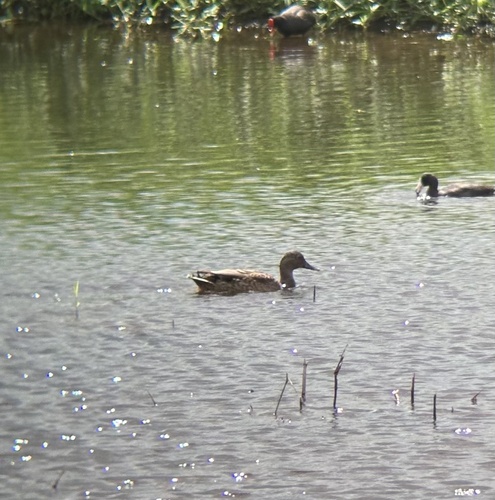
ハワイマガモ (Anas wyvilliana) ハワイマガモ

メディア

読み込み中…

要点

ハワイマガモとレイサンマガモを区別するための最も信頼できるフィールドマークは、レイサンマガモの目の周りの目立つ白いアイリングであり、これはハワイマガモにはありません。レイサンマガモは全体的に暗い茶色で、よりコンパクトで、短いスパチュラ状のくちばしを持ち、驚かされたときには飛び立つのではなく凍りつく傾向があります。ハワイマガモは雌のマガモに似ており、よりまだらな茶色の羽毛と、白で縁取られた緑から青のスペクルムを持っています。両種は雌においてオレンジ色の脚と似たくちばしの色を示すことがありますが、構造的および行動的な違い、ならびに微妙な羽毛の詳細が、確実な同定の鍵となります。

識別のコツ

  1. 白いアイリング(レイサンマガモのみ): 最も信頼できるマークです。目の周りに太い白いリングが見えたら、それは年齢や性別に関係なくレイサンマガモです。ハワイマガモはこれを示しません。
  2. 全体的なサイズと構造: レイサンマガモは小さく、丸みを帯びており、よりコンパクトで、短いスパチュラ状のくちばしを持っています。ハワイマガモは大きく、体が長く、形がマガモに似ています。
  3. スペクルムの色と境界: レイサンマガモのスペクルムは虹色の紫がかった緑で、強い白い境界はありません。ハワイマガモのスペクルムは緑から青で、常に両側が白で縁取られています。これは飛行中または翼が広げられたときに最もよく見られます。
  4. 羽毛のトーン: レイサンマガモは全体的に暗い茶色で、コントラストが少なく、より均一な外観を持っています。ハワイマガモはまだらな茶色で、雌のマガモに似ており、より多くのパターンがあり、特に雌では一般的に明るいトーンです。
  5. くちばしの色: 雌のレイサンマガモとハワイマガモはどちらも鈍いオレンジ色のくちばしに暗い模様がありますが、レイサンマガモのオスは黒い斑点のある暗い緑のくちばしを持ち、ハワイマガモのオスはオリーブグリーンのくちばしを持っています。
  6. 脚と足の色: 両種はオレンジから黄色のオレンジ色の脚を持っていますが、レイサンマガモの脚は通常明るいです、特にオスでは。これは微妙で、重複することがあります。
  7. 頭と首の虹色(オス): 一部のレイサンマガモのオスは頭や首にかすかな虹色を示しますが、これはマガモやハワイマガモのオスほど顕著ではありません。
  8. 尾の形: レイサンマガモのオスは中央の尾羽がわずかに上向きになることがありますが、これはハワイマガモの真っ直ぐな尾との微妙な違いです。
  9. 古い個体の白化: 頭と首に広範な白い羽毛が見られるのは古いレイサンマガモに一般的ですが、ハワイマガモには見られません。
  10. 接近時の行動: レイサンマガモは飛ぶよりも凍りつくか走る可能性が高く、ハワイマガモはすぐに飛び立ちます。
  11. 生息地と範囲: レイサンマガモはレイサン島といくつかの環礁に制限されており、ハワイマガモはハワイの主要な島々に見られます。場所は強い手がかりです。
  12. ハイブリッドの混乱(ハワイマガモ): ハワイマガモはマガモやハイブリッドから分けるのが非常に難しいことがありますが、レイサンマガモは野生でハイブリダイズすることは知られていません。
  13. 幼鳥/未成熟の羽毛: 特定の幼鳥の翼のパターンの違いは記載されていませんが、レイサンマガモの白いアイリングはすべての年齢で存在し、最良のマークとして残ります。
  14. 文脈: 特にレイサン島の密な低い植生の中で見られた場合、レイサンマガモを疑ってください。主要な島々の開けた湿地では、ハワイマガモの方がはるかに可能性が高いです。
  15. 飛行能力: レイサンマガモは飛ぶのが苦手で、持続的な飛行で見られることは稀です。ハワイマガモはうまく飛び、動かされるとすぐに飛び立ちます。

大きさ

ハワイマガモは著しく大きく、重い(成鳥の質量約615g [wikidata])で、マガモに近い構造を持っていますが、レイサンマガモはティールサイズでよりコンパクトです。レイサンマガモの縮小した翼と翼の筋肉は、その飛行能力の低さと陸上適応を反映しており、より細長いハワイマガモよりも短くてずんぐりした印象を与えます。フィールドでは、レイサンマガモは明らかに小さくてずんぐりして見え、特に両種が一緒に見られるとき(飼育下や移動先以外では稀)です。

羽色

すべての年齢において、レイサンマガモは目立つ白いアイリングを持つ暗い茶色の体を示し、これはハワイマガモにはどの年齢でも存在しません。レイサンマガモのスペクルムは両性で虹色の紫がかった緑ですが、ハワイマガモのスペクルムは緑から青で、常に白で縁取られています。古いレイサンマガモは頭と首に白い羽毛(白化)を示すことがありますが、これはハワイマガモには見られません。ハワイマガモはすべての年齢と性別において全体的にまだらな茶色で、雌のマガモに似ており、オスは頭と首がわずかに暗いです。両種はオレンジから黄色のオレンジ色の脚を持っていますが、レイサンマガモの脚は通常明るいです、特にオスでは。くちばしの色は雌では似ています(鈍いオレンジ色に暗い模様)が、レイサンマガモのオスは黒い斑点のある暗い緑のくちばしを持ち、ハワイマガモのオスはオリーブグリーンのくちばしを持っています。レイサンマガモのオスの尾羽はわずかに上向きになることがあり、別の微妙な違いです。飛行中、両種は虹色のスペクルムを示しますが、境界と色が異なります:レイサンマガモのものは紫がかった緑で、ハワイマガモに典型的な太い白い境界はありません。

行動

レイサンマガモは飛行が苦手で、飛び立つよりも凍りつくか走ることを好む傾向があり、捕食者のいない環境への適応を反映しています。より陸上性で、特徴的でエネルギッシュな採餌スタイル(例えば、飛び跳ねるようなスプリント)で歩いたり走ったりしているのがよく見られます。対照的に、ハワイマガモは典型的な水面を掻くカモのように振る舞い、すぐに飛び立ち、開けた湿地で泳いだり飛んだりするのが得意です。レイサンマガモの陸上性の習性と飛ぶことへの抵抗は、特に近距離で観察された場合に強い行動的手がかりとなります。

生息環境

レイサンマガモは現在、レイサン島といくつかの環礁に制限されており、浅い湖や干潟の近くの密な草や低木の覆いを好みます。非常に局所的で、これらの生息地の外ではめったに見られません。ハワイマガモは、川、流れ、湿地、池など、さまざまな湿地生息地で大きなハワイの島々に見られます。主要なハワイの島々で見られた場合、そのカモはほぼ確実にハワイマガモまたはハイブリッドであり、レイサンマガモは管理された再導入サイトを除いては非常に可能性が低いです。

より良い説明を送る

比較と同じ項目を使ってください。文章はすぐに公開されます。

The most reliable field mark for separating Laysan Duck from Hawaiian Duck is the prominent white eye-ring on the Laysan Duck, which is absent in Hawaiian Duck. Laysan Ducks are overall darker brown and more compact, with a short spatulate bill and a tendency to freeze rather than flush when startled. Hawaiian Ducks resemble female Mallards, with a more mottled brown plumage and a green-to-blue speculum bordered by white. Both species can show orange legs and similar bill coloration in females, but structural and behavioral differences, as well as subtle plumage details, are key for confident identification.

  1. White eye-ring (Laysan Duck only): The single most reliable mark. If you see a bold white ring around the eye, it's a Laysan Duck of any age or sex. Hawaiian Duck never shows this.
  2. Overall size and structure: Laysan Duck is smaller, rounder, and more compact, with a short spatulate bill. Hawaiian Duck is larger, longer-bodied, and more Mallard-like in shape.
  3. Speculum color and borders: Laysan Duck's speculum is iridescent purplish-green with no strong white borders; Hawaiian Duck's is green to blue, always bordered on both sides by white. This is best seen in flight or when the wing is spread.
  4. Plumage tone: Laysan Duck is dark brown overall, with less contrast and a more uniform appearance. Hawaiian Duck is mottled brown, resembling a female Mallard, with more patterning and a generally lighter tone, especially in females.
  5. Bill color: Female Laysan and Hawaiian Ducks both have dull orange bills with dark markings, but Laysan males have a dark green bill with black blotching, while Hawaiian males have an olive green bill.
  6. Leg and foot color: Both species have orange to yellow-orange legs, but Laysan Duck's are usually brighter, especially in males. This is subtle and can overlap.
  7. Head and neck iridescence (males): Some Laysan males show faint iridescence on the head or neck, but this is not as pronounced as in Mallard or Hawaiian Duck males.
  8. Tail shape: Laysan males may show slightly upturned central tail feathers, a subtle difference from the straight tail of Hawaiian Duck.
  9. Leucism in older birds: Extensive white feathering on the head and neck is common in older Laysan Ducks, never in Hawaiian Duck.
  10. Behavior when approached: Laysan Duck is more likely to freeze or run than to fly, while Hawaiian Duck will flush readily.
  11. Habitat and range: Laysan Duck is restricted to Laysan Island and a few atolls; Hawaiian Duck is found on the main Hawaiian Islands. Location is a strong clue.
  12. Hybrid confusion (Hawaiian Duck): Hawaiian Duck can be very difficult to separate from Mallard and hybrids, but Laysan Duck is not known to hybridize in the wild.
  13. Juvenile/immature plumage: No specific juvenile wing pattern differences are described, but the white eye-ring of Laysan Duck is present at all ages and remains the best mark.
  14. Context: If seen in dense low vegetation, especially on Laysan Island, suspect Laysan Duck. In open wetlands on the main islands, Hawaiian Duck is far more likely.
  15. Flight ability: Laysan Duck is a poor flyer and rarely seen in sustained flight; Hawaiian Duck flies well and often flushes when disturbed.

Hawaiian Duck is notably larger and heavier (adult mass ~615g [wikidata]), with a structure closer to Mallard, while Laysan Duck is teal-sized and more compact. Laysan Duck's reduced wings and wing muscles reflect its poor flying ability and terrestrial adaptation, making it appear shorter and chunkier than the more elongated Hawaiian Duck. In the field, Laysan Duck will look distinctly smaller and stockier, especially when both species are seen together (rare outside captivity or translocation sites).

For all ages, Laysan Duck shows a dark brown body with a conspicuous white eye-ring, a feature not present in Hawaiian Duck at any age. The Laysan Duck's speculum is iridescent purplish-green in both sexes, while Hawaiian Duck's is green to blue and always bordered by white. Older Laysan Ducks may show white feathering (leucism) on the head and neck, which is not seen in Hawaiian Duck. Hawaiian Duck, in all ages and sexes, is mottled brown overall, resembling a female Mallard, with males slightly darker on the head and neck. Both species have orange to yellow-orange legs, but Laysan Duck's are usually brighter, especially in males. Bill color is similar in females (dull orange with dark markings), but Laysan Duck males have a dark green bill with black blotching, while Hawaiian Duck males have an olive green bill. Tail feathers in Laysan Duck males may be slightly upturned, another subtle difference. In flight, both species show an iridescent speculum, but the bordering and color differ: Laysan's is purplish-green without the bold white borders typical of Hawaiian Duck.

Laysan Duck is a poor flyer, often preferring to freeze or run rather than flush, reflecting its adaptation to a predator-free environment. It is more terrestrial, frequently seen walking or running with a distinctive, energetic foraging style (such as fly-snapping sprints). Hawaiian Duck, by contrast, behaves more like a typical dabbling duck: it flushes readily and is more at home in open wetlands, swimming and flying with ease. Laysan Duck's terrestrial habits and reluctance to fly are strong behavioral clues, especially if observed at close range.

Laysan Duck is now restricted to Laysan Island and a few atolls, preferring dense grass and shrub cover near shallow lakes and mudflats. It is highly localized and rarely seen outside these habitats. Hawaiian Duck is found on the larger Hawaiian Islands in a variety of wetland habitats, including rivers, streams, marshes, and ponds. If seen on the main Hawaiian Islands, a duck is almost certainly a Hawaiian Duck or hybrid; Laysan Duck is extremely unlikely except at managed reintroduction sites.

変更を破棄しますか?

保存していない編集があります。今離れると失われます。

レイサンマガモ · ハワイマガモ · 苦手な鳥