

Laysan Duck vs Hawaiian Duck
Anas laysanensis contro Anas wyvilliana
Fai un quiz con Laysan Duck e Hawaiian Duck
 Laysan Duck
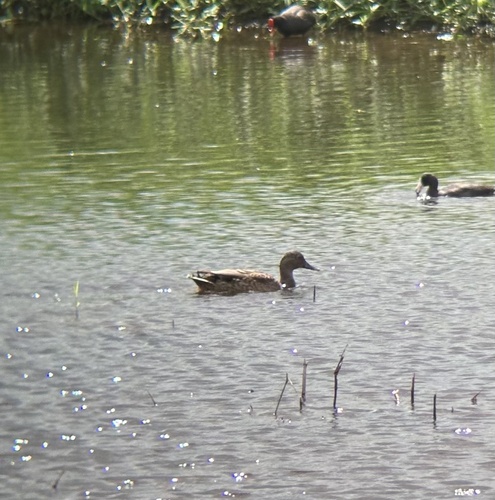 Hawaiian Duck
In breve
Il segno di campo più affidabile per separare il Laysan Duck dal Hawaiian Duck è l'evidente anello bianco attorno all'occhio del Laysan Duck, assente nel Hawaiian Duck. I Laysan Ducks sono complessivamente di un marrone più scuro e più compatti, con un becco spatolato corto e una tendenza a congelarsi piuttosto che volare quando spaventati. I Hawaiian Ducks assomigliano alle femmine di Germano reale, con un piumaggio marrone più maculato e uno speculum verde-blu bordato di bianco. Entrambe le specie possono mostrare zampe arancioni e una colorazione simile del becco nelle femmine, ma le differenze strutturali e comportamentali, così come i dettagli sottili del piumaggio, sono fondamentali per un'identificazione sicura.
Consigli di identificazione
- Anello bianco attorno all'occhio (solo Laysan Duck): Il segno più affidabile. Se vedi un anello bianco audace attorno all'occhio, è un Laysan Duck di qualsiasi età o sesso. Il Hawaiian Duck non mostra mai questo.
- Dimensioni e struttura complessive: Il Laysan Duck è più piccolo, rotondo e più compatto, con un becco spatolato corto. Il Hawaiian Duck è più grande, con un corpo più lungo e una forma più simile a quella del Germano reale.
- Colore e bordi dello speculum: Lo speculum del Laysan Duck è iridescente verde-porpora senza bordi bianchi forti; quello del Hawaiian Duck è verde-blu, sempre bordato su entrambi i lati di bianco. Questo è meglio visibile in volo o quando l'ala è spiegata.
- Tono del piumaggio: Il Laysan Duck è di un marrone scuro complessivo, con meno contrasto e un aspetto più uniforme. Il Hawaiian Duck è marrone maculato, assomigliando a una femmina di Germano reale, con più motivi e un tono generalmente più chiaro, specialmente nelle femmine.
- Colore del becco: Le femmine di Laysan e Hawaiian Ducks hanno entrambe becchi arancioni opachi con marcature scure, ma i maschi di Laysan hanno un becco verde scuro con macchie nere, mentre i maschi di Hawaiian hanno un becco verde oliva.
- Colore delle zampe e dei piedi: Entrambe le specie hanno zampe arancioni o giallo-arancioni, ma quelle del Laysan Duck sono solitamente più brillanti, specialmente nei maschi. Questo è sottile e può sovrapporsi.
- Iridescenza della testa e del collo (maschi): Alcuni maschi di Laysan mostrano una leggera iridescenza sulla testa o sul collo, ma questa non è così pronunciata come nei maschi di Germano reale o Hawaiian Duck.
- Forma della coda: I maschi di Laysan possono mostrare piume centrali della coda leggermente sollevate, una differenza sottile rispetto alla coda dritta del Hawaiian Duck.
- Leucismo negli uccelli più anziani: Un ampio piumaggio bianco sulla testa e sul collo è comune nei Laysan Ducks più anziani, mai nel Hawaiian Duck.
- Comportamento quando ci si avvicina: Il Laysan Duck è più propenso a congelarsi o correre piuttosto che volare, mentre il Hawaiian Duck tende a volare facilmente.
- Habitat e distribuzione: Il Laysan Duck è limitato all'isola di Laysan e a pochi atolli; il Hawaiian Duck si trova sulle principali isole hawaiane. La posizione è un forte indizio.
- Confusione ibrida (Hawaiian Duck): Il Hawaiian Duck può essere molto difficile da separare dal Germano reale e dagli ibridi, ma il Laysan Duck non è noto per ibridarsi in natura.
- Piumaggio giovanile/immaturo: Non sono descritte differenze specifiche nel modello delle ali giovanili, ma l'anello bianco attorno all'occhio del Laysan Duck è presente a tutte le età e rimane il segno migliore.
- Contesto: Se visto in vegetazione bassa e densa, specialmente sull'isola di Laysan, sospetta il Laysan Duck. Negli habitat umidi aperti delle isole principali, il Hawaiian Duck è molto più probabile.
- Capacità di volo: Il Laysan Duck è un volatore scarso e raramente visto in volo sostenuto; il Hawaiian Duck vola bene e spesso si alza in volo quando disturbato.
Taglia
Il Hawaiian Duck è notevolmente più grande e più pesante (massa adulta ~615g [wikidata]), con una struttura più simile al Germano reale, mentre il Laysan Duck è delle dimensioni di un'anatra teal e più compatto. Le ali e i muscoli del volo ridotti del Laysan Duck riflettono la sua scarsa capacità di volo e l'adattamento terrestre, facendolo apparire più corto e robusto rispetto al più allungato Hawaiian Duck. Sul campo, il Laysan Duck apparirà distintamente più piccolo e tozzo, specialmente quando entrambe le specie sono viste insieme (raro al di fuori della cattività o dei siti di traslocazione).
Piumaggio
Per tutte le età, il Laysan Duck mostra un corpo marrone scuro con un evidente anello bianco attorno all'occhio, una caratteristica non presente nel Hawaiian Duck a nessuna età. Lo speculum del Laysan Duck è iridescente verde-porpora in entrambi i sessi, mentre quello del Hawaiian Duck è verde-blu e sempre bordato di bianco. I Laysan Ducks più anziani possono mostrare piumaggio bianco (leucismo) sulla testa e sul collo, che non si vede nel Hawaiian Duck. Il Hawaiian Duck, in tutte le età e sessi, è complessivamente marrone maculato, assomigliando a una femmina di Germano reale, con i maschi leggermente più scuri sulla testa e sul collo. Entrambe le specie hanno zampe arancioni o giallo-arancioni, ma quelle del Laysan Duck sono solitamente più brillanti, specialmente nei maschi. Il colore del becco è simile nelle femmine (arancione opaco con marcature scure), ma i maschi di Laysan Duck hanno un becco verde scuro con macchie nere, mentre i maschi di Hawaiian Duck hanno un becco verde oliva. Le piume della coda nei maschi di Laysan Duck possono essere leggermente sollevate, un'altra differenza sottile. In volo, entrambe le specie mostrano uno speculum iridescente, ma i bordi e il colore differiscono: quello del Laysan è verde-porpora senza i bordi bianchi audaci tipici del Hawaiian Duck.
Comportamento
Il Laysan Duck è un volatore scarso, spesso preferendo congelarsi o correre piuttosto che volare, riflettendo il suo adattamento a un ambiente privo di predatori. È più terrestre, frequentemente visto camminare o correre con uno stile di foraggiamento distintivo ed energico (come sprint di volo). Il Hawaiian Duck, al contrario, si comporta più come un'anatra dabbling tipica: si alza in volo facilmente ed è più a suo agio in habitat umidi aperti, nuotando e volando con facilità. Le abitudini terrestri del Laysan Duck e la riluttanza a volare sono forti indizi comportamentali, specialmente se osservati da vicino.
Habitat
Il Laysan Duck è ora limitato all'isola di Laysan e a pochi atolli, preferendo copertura densa di erba e arbusti vicino a laghi poco profondi e fanghi. È altamente localizzato e raramente visto al di fuori di questi habitat. Il Hawaiian Duck si trova sulle isole hawaiane più grandi in una varietà di habitat umidi, tra cui fiumi, corsi d'acqua, paludi e stagni. Se visto sulle principali isole hawaiane, un'anatra è quasi certamente un Hawaiian Duck o un ibrido; il Laysan Duck è estremamente improbabile tranne che in siti di reintroduzione gestiti.