

Motmot

Karoo Long-billed Lark 対 Cape Long-billed Lark

Certhilauda subcoronata 対 Certhilauda curvirostris

Karoo Long-billed LarkとCape Long-billed Larkのクイズ
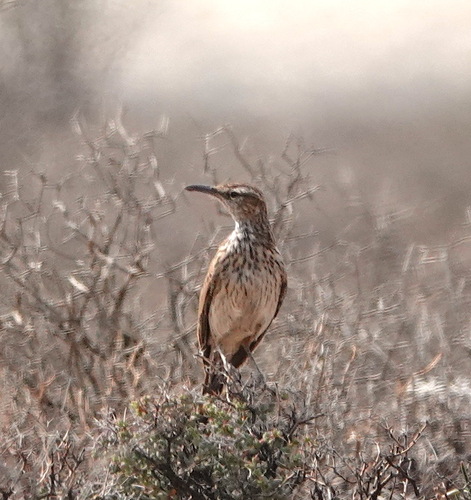
Karoo Long-billed Lark (Certhilauda subcoronata) Karoo Long-billed Lark
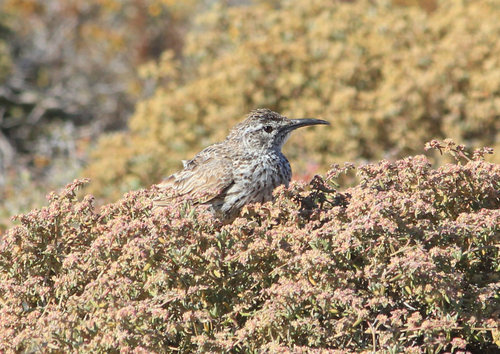
Cape Long-billed Lark (Certhilauda curvirostris) Cape Long-billed Lark

メディア

読み込み中…

要点

カルー・ロングビルド・ラークとケープ・ロングビルド・ラークは、特に成鳥の羽色において非常に似ていることで知られていますが、構造、 habitat、文脈における微妙な違いによってしばしば区別されます。これら二種の間には年齢特有の翼や飛行パターンの違いは記録されていないため、フィールドでの区別はくちばしの形、全体的な印象、特に生息地と分布に依存します。両者は大きく、砂色の茶色のラークで、長く湾曲したくちばしを持っていますが、ケープ・ロングビルド・ラークはより顕著に湾曲した重いくちばしを示す傾向があり、沿岸のファインボスや草原で見られることが多いのに対し、カルー・ロングビルド・ラークは乾燥した内陸のカルーの低木地を好みます。声や行動の手がかりはフィールドで信頼できる区別にはなりません。

識別のコツ

  1. くちばしの形: ケープ・ロングビルド・ラークは通常、カルー・ロングビルド・ラークよりも重く、より強く湾曲したくちばしを示します。これは近距離または良好な横顔のビューで最も有用です。特に雌や幼鳥において、重複や個体差に注意してください。
  2. 全体的な印象: ケープ・ロングビルド・ラークは、より大きくて頑丈に見えることがあり、胸が深い印象を持つ一方で、カルー・ロングビルド・ラークはしばしばややスリムで長い体型です。これは微妙で、他の特徴と組み合わせて使用するのが最適です。
  3. 羽色のトーン: 両種は上面が砂色の茶色で、下面が淡色で、ストライプがあります。ケープ・ロングビルド・ラーク(特にアグラス亜種)はやや暖かいまたは赤褐色に見えることがありますが、これは重複や摩耗のため信頼できません。
  4. 上翼と飛行パターン: 年齢特有の翼や飛行パターンの違いは記録されていません。両種は強い対照的なパネルや特徴的な幼鳥の上翼マークを欠いています。
  5. 生息地: カルー・ロングビルド・ラークは乾燥した内陸のカルーの低木地に典型的であり、ケープ・ロングビルド・ラークは沿岸のファインボス、草原、農地により多く見られます。重複ゾーンでは生息地を強力な手がかりとして使用しますが、唯一の基準としては使用しないでください。
  6. 分布: 南西ケープ沿岸地域にいる場合、ケープ・ロングビルド・ラークの可能性が高く、中央または北カルーではカルー・ロングビルド・ラークが優勢です。あなたの場所の地元の分布マップを確認してください。
  7. 行動: 両種は地面で採餌し、低く飛びます。強い行動の違いは記録されていません。
  8. 声: 呼び声や歌はフィールドで信頼できる区別にはなりません。
  9. 亜種の混乱: カルー・ロングビルド・ラークとケープ・ロングビルド・ラークの一部の亜種は、過去に別種または互いの亜種として扱われてきました。重複または交雑の可能性があるゾーンにいる場合、同定は本当に不確実である可能性があります。
  10. 性別と年齢: 分離のための記録された性的二形や年齢特有のフィールドマークはありません。両種のすべての性別と年齢は似ています。
  11. 落とし穴: 全体的な色や胸のストライプなどの単一の特徴に頼らないでください。これらは非常に変動し、重複します。くちばしの形と生息地を組み合わせることが最も有用です。
  12. 文脈: 農地や沿岸のファインボスで長いくちばしのラークを見た場合は、ケープ・ロングビルド・ラークに傾くべきです。乾燥した石の多いカルーでは、カルー・ロングビルド・ラークに傾くべきです。
  13. 不確実性: 特に遠くからの視界が悪い場合や、分布の重複地域では、フィールドでの同定が不可能な場合があります。正直な不確実性は過信よりも好ましいです。

大きさ

両種はラークとしては大きく、サイズは似ていますが、文献には長さや質量における明確な違いは記録されていません [avonet][wikidata]。くちばしのサイズと湾曲は全体的なサイズよりも有用です: ケープ・ロングビルド・ラークは通常、より重く、より強く湾曲したくちばしを持っており、カルー・ロングビルド・ラークのくちばしは長いですが、やや頑丈さが少なく、湾曲も浅いです。手に持ったり非常に近い距離で見ると、これは微妙ですが有用な区別となることがあります。

羽色

年齢特有の上翼や飛行パターンの違いは、どちらの種についても文献には記載されていません。成鳥と幼鳥は上面が砂色から赤褐色で、下面が淡色で、両者とも胸と側面にストライプがあります。トーンに微妙な違いが存在するかもしれません(ケープ・ロングビルド・ラークは時に暖かいまたは赤褐色と記述されることがあります、特にアグラス亜種において)が、これらはフィールドでは信頼できず、広範に重複します。幼鳥と未成熟の羽色は、二者間で明確に区別されていないと記載されており、両者とも強い翼パネルや対照的な上翼マークを欠いています。すべての年齢において、くちばしの形(上記参照)と生息地は羽色よりも信頼性があります。

行動

両種は開けた乾燥または半乾燥の生息地で地面で採餌し、しばしば跳ねるのではなく走ったり歩いたりします。飛行は通常低く、波打つようです。フィールドで二者を確実に区別するための強い行動の違いは記録されていません。

生息環境

生息地はしばしば最も実用的なフィールドの手がかりです。カルー・ロングビルド・ラークは南アフリカの乾燥した内陸のカルーの低木地に強く関連しており、特に南アフリカの中央部と西部、ナミビアに見られます [wikipedia]。ケープ・ロングビルド・ラークは、いくつかの半乾燥の低木地で重複することがありますが、沿岸のファインボス、草原、農地でより多く見られます、特に南西ケープ地域で。真のカルーや海から遠く離れた乾燥した低木地にいる場合、カルー・ロングビルド・ラークの可能性が高く、沿岸または沿岸近くのファインボス、草原、農地ではケープ・ロングビルド・ラークが好まれます。しかし、分布は移行ゾーンで重複することがあるため、他のマークと組み合わせて生息地を使用してください。

声

文献にはこれら二種の間で信頼できる声の違いは記載されていません。両者は似たようなラークのような呼び声や歌を持ち、声はフィールドでの区別には診断的とは見なされません。

より良い説明を送る

比較と同じ項目を使ってください。文章はすぐに公開されます。

Karoo Long-billed Lark and Cape Long-billed Lark are notoriously similar, especially in adult plumage, but can often be separated by subtle differences in structure, habitat, and context. No strong age-specific wing or flight pattern differences are documented between these two, so field separation relies on bill shape, overall jizz, and especially habitat and range. Both are large, sandy-brown larks with long, decurved bills, but Cape Long-billed Lark tends to show a more pronouncedly curved and heavier bill, and is more often found in coastal fynbos and grassland, while Karoo Long-billed Lark prefers drier, inland Karoo shrubland. Vocal and behavioral clues are not reliably distinctive in the field.

  1. Bill shape: Cape Long-billed Lark usually shows a heavier, more strongly decurved bill than Karoo Long-billed Lark. This is most useful at close range or in good profile views. Beware overlap and individual variation, especially in females and immatures.
  2. Overall jizz: Cape Long-billed Lark can appear bulkier and more robust, with a deeper-chested look, while Karoo Long-billed Lark is often slightly slimmer and longer-bodied. This is subtle and best used with other marks.
  3. Plumage tone: Both species are sandy-brown above and pale below, with streaking. Cape Long-billed Lark (especially the Agulhas subspecies) may be slightly warmer or more rufous, but this is not reliable due to overlap and wear.
  4. Upperwing and flight pattern: No distinctive age-specific wing or flight pattern differences are documented. Both species lack strong contrasting panels or distinctive juvenile upperwing marks.
  5. Habitat: Karoo Long-billed Lark is typical of dry, inland Karoo shrubland; Cape Long-billed Lark is more often in coastal fynbos, grassland, and farmland. Use habitat as a strong supporting clue, but not as the sole criterion in overlap zones.
  6. Range: If you are in the southwest Cape coastal region, Cape Long-billed Lark is more likely; in central or northern Karoo, Karoo Long-billed Lark predominates. Check local range maps for your site.
  7. Behavior: Both species forage on the ground and fly low; no strong behavioral differences are noted.
  8. Vocalization: Calls and songs are not reliably separable in the field.
  9. Subspecies confusion: Some subspecies of Karoo Long-billed Lark and Cape Long-billed Lark have been treated as separate species or as subspecies of each other in the past. If you are in a zone of potential overlap or hybridization, identification may be genuinely uncertain.
  10. Sex and age: No documented sexual dimorphism or age-specific field marks for separation; both sexes and all ages are similar in both species.
  11. Pitfalls: Do not rely on single features such as overall color or breast streaking, as these are highly variable and overlap. Bill shape and habitat together are most useful.
  12. Context: If you see a long-billed lark in cropland or coastal fynbos, lean toward Cape Long-billed Lark; in arid, stony Karoo, lean toward Karoo Long-billed Lark.
  13. Uncertainty: In some cases, especially with distant or poor views, or in areas of range overlap, field identification may not be possible. Honest uncertainty is preferable to overconfidence.

Both species are large for larks and similar in size, with no clear difference in length or mass documented in the sources [avonet][wikidata]. Bill size and curvature are more useful than overall size: Cape Long-billed Lark typically has a heavier, more strongly decurved bill, while Karoo Long-billed Lark's bill is long but slightly less robust and less deeply curved. In hand or at very close range, this can be a subtle but helpful distinction.

No age-specific upperwing or flight pattern differences are described in the sources for either species. Both adults and immatures are sandy to rufous-brown above with pale underparts, and both show streaking on the breast and flanks. Subtle differences in tone may exist (Cape Long-billed Lark sometimes described as warmer or more rufous, especially in the Agulhas subspecies), but these are unreliable in the field and overlap extensively. Juvenile and immature plumages are not described as distinct between the two, and both lack strong wing panels or contrasting upperwing marks. In all ages, the bill shape (see above) and habitat are more reliable than plumage.

Both species forage on the ground in open, arid or semi-arid habitats, often running or walking rather than hopping. Flight is typically low and undulating. There are no strong behavioral differences noted in the sources that would reliably separate the two in the field.

Habitat is often the most practical field clue. Karoo Long-billed Lark is strongly associated with dry, inland Karoo shrubland in southern Africa, especially in central and western South Africa and Namibia [wikipedia]. Cape Long-billed Lark, while overlapping in some semi-arid shrub, is more often found in coastal fynbos, grassland, and cropland, especially in the southwest Cape region. If you are in true Karoo or dry shrubland far from the coast, Karoo Long-billed Lark is more likely; in coastal or near-coastal fynbos, grassland, or farmland, Cape Long-billed Lark is favored. However, ranges can overlap in transitional zones, so use habitat in combination with other marks.

No reliable differences in vocalization are described between these two species in the sources. Both have similar lark-like calls and songs, and vocalizations are not considered diagnostic for field separation.

変更を破棄しますか?

保存していない編集があります。今離れると失われます。

Karoo Long-billed Lark · Cape Long-billed Lark · 苦手な鳥