

Motmot

ノドグロショウノガン 対 ハジロクロエリショウノガン

Heterotetrax vigorsii 対 Afrotis afraoides

ノドグロショウノガンとハジロクロエリショウノガンのクイズ
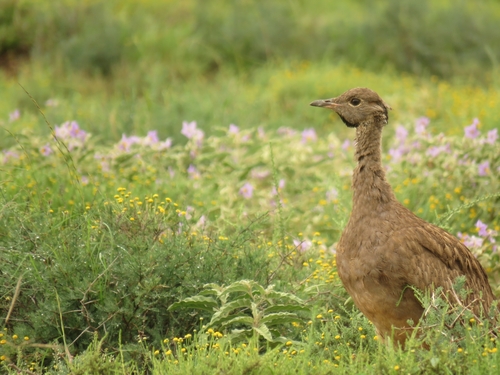
ノドグロショウノガン (Heterotetrax vigorsii) ノドグロショウノガン
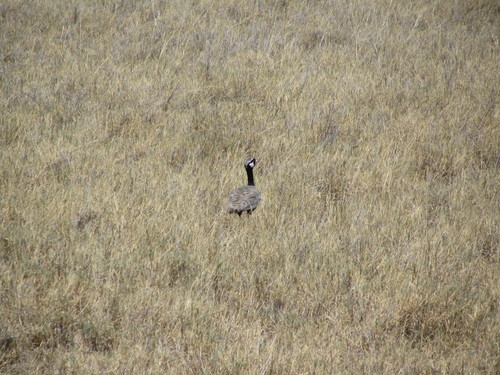
ハジロクロエリショウノガン (Afrotis afraoides) ハジロクロエリショウノガン

メディア

読み込み中…

要点

これら二種のショウノガンを区別する最も信頼できるフィールドマークは、ハジロクロエリショウノガン (Afrotis afraoides) の翼にある大きな白い一次羽の斑点の存在です — 飛行中に目を引き、特にオスでは止まっている時でも見えます。それに対して、ノドグロショウノガン (Heterotetrax vigorsii) は白いパネルのない均一な茶色の翼を持っています。成鳥のオスのハジロクロエリショウノガンは、上面と下面が大胆に黒と白であり、ノドグロショウノガンは灰褐色と淡い白のトーンで、はるかに控えめです。両種の雌は対照が少ないですが、Afrotis の翼の白は依然として重要な区別点です。両種は乾燥した南アフリカに生息していますが、ノドグロショウノガンはより密な低木のカローヴィジネーションを好み、ハジロクロエリショウノガンは開けた草原や低木を好みます。

識別のコツ

  1. 翼の白い一次羽のパネル(すべての年齢、両性): 飛行中、ハジロクロエリショウノガンは一次羽によって形成された大胆な白い斑点を上翼に示します。ノドグロショウノガンの翼は均一に茶色です。これは最も信頼できるフィールドマークです。
  2. オスの羽色(繁殖期/成鳥): オスのハジロクロエリショウノガンは、頭、首、腹部が劇的に黒く、上面には黒と白の縞模様があります。ノドグロショウノガンのオスははるかに控えめで、灰褐色の頭、首、胸を持ち、白い縁取りのある黒い顎/喉があります。
  3. 雌の羽色: 雌のハジロクロエリショウノガンは、上面が黒とバフの縞模様またはチェック模様で、黒い腹部を持っています。雌のノドグロショウノガンは、より単調な灰褐色で、喉に黒が少なく、大胆な縞模様や黒い腹部はありません。
  4. くちばしと脚の色: 両性のハジロクロエリショウノガンは赤いくちばしと明るい黄色の脚を持ち、近くで見ることができます。ノドグロショウノガンのくちばしと脚は明るい色とは記述されていません。
  5. 腹部の色: ノドグロショウノガンは淡い白の腹部(両性)を持ち、ハジロクロエリショウノガン(特に雌)は黒い腹部を持っています。
  6. 頭と首の模様: ノドグロショウノガンは灰褐色の頭と首を持ち、オスでは白い縁取りのある黒い顎/喉があります。ハジロクロエリショウノガンのオスは黒い頭と首を持ち、雌は縞模様またはチェック模様があります。
  7. 生息地の文脈: ノドグロショウノガンはより密な低木のカローヴィジネーションに生息し、時にはファインボスにいます。ハジロクロエリショウノガンは開けた草原や低木を好みます。鳥が開けた草原にいる場合、ハジロクロエリショウノガンの可能性が高いです。
  8. フラッシュ時の行動: ハジロクロエリショウノガンはしばしばより遠くでフラッシュし、翼に白を示します。ノドグロショウノガンはより密なカバーでしゃがむか凍りつく傾向があり、フラッシュされた場合は茶色の翼を示します。
  9. サイズ: ノドグロショウノガンはわずかに大きく、重いですが、これは微妙で、両種が並んでいない限りフィールドでは信頼できません。
  10. 性差: 両種は性差を示しますが、ハジロクロエリショウノガンのオスだけが大胆に黒と白です。ノドグロショウノガンのオスは雌よりわずかに目立つだけです。
  11. 亜種の変異: ノドグロショウノガンの亜種 H. v. namaqua は首と胸がより灰色ですが、これはハジロクロエリショウノガンの大胆な黒と白とは重なりません。
  12. 羽色の落とし穴: 未熟な雌のハジロクロエリショウノガンは対照が少なく見えることがありますが、翼の白は常に存在します。ノドグロショウノガンはどの年齢でも翼に白を示しません。
  13. 止まっている時の視界: 止まっている時でさえ、ハジロクロエリショウノガンの白い一次羽のパネルは折りたたまれた翼の淡い斑点として見えることがあります。ノドグロショウノガンの翼は常に茶色です。
  14. ジズ: ハジロクロエリショウノガンは開けた地面でより直立して目立つことが多いですが、ノドグロショウノガンはより秘密主義で低木のカバーに溶け込みます。
  15. 疑わしい場合: 鳥が飛ぶか位置を変えるのを待って、翼の白を確認してください — これはすべての年齢と季節で診断的です。

大きさ

両種は小型のショウノガンですが、ノドグロショウノガンはわずかに大きく、重いです。ノドグロショウノガンのオスは約60 cmの長さに達し、最大1,600 gの重さになりますが、雌は約1,350 gです [wikipedia]。ハジロクロエリショウノガンの直接的な測定値は示されていませんが、一般的に小型で軽量と考えられています。フィールドでは、サイズの違いは微妙で、姿勢や距離によって簡単に隠されるため、主要な区別点ではありません。

羽色

最も診断的な羽色の違いは、すべての年齢で見られますが、特に飛行中に目立つ翼の模様です: ハジロクロエリショウノガン(すべての年齢と性別)は、大きな白い一次羽を示し、上翼に大胆な白いパネルを形成しますが、ノドグロショウノガンは完全に茶色の翼を持ち、白はありません。成鳥のオスのハジロクロエリショウノガンは、頭、首、腹部が際立って黒く、背中と翼に黒と白の縞模様があります。雌は上面が黒とバフの縞模様またはチェック模様で、黒い腹部を持っています。ノドグロショウノガンのオスと雌はどちらもはるかに単調で、灰褐色の頭、首、胸(オスでは白い縁取りのある黒い顎/喉)、淡い白の腹部、茶色の翼を持っています。亜種 H. v. namaqua は首と胸がわずかに灰色です。雌のノドグロショウノガンはオスより喉の黒が少なく、Afrotis の大胆な黒と白の対比を示すことはありません。両性のハジロクロエリショウノガンは赤いくちばしと明るい黄色の脚を持ち、よく見える場合に役立ちます。

行動

両種は地面に生息し、ショウノガンの直立した意図的な歩き方で歩きます。ハジロクロエリショウノガンは開けた場所で見られる可能性が高く、しばしば目立って立っていたり、大きな翼の羽音でフラッシュして白い一次羽を見せます。ノドグロショウノガンはより密な低木の中で低く留まる傾向があり、より秘密主義でカモフラージュに依存しています。両種は、動揺したときに凍りついたりしゃがんだりすることがありますが、ハジロクロエリショウノガンはより遠くでフラッシュする可能性が高く、その翼の模様を明らかにします。

生息環境

ノドグロショウノガンは乾燥した低木のカローヴィジネーションや類似の地域に密接に結びついており、10〜50 cmのカバーのある地域を好み、時にはカローヴィジネーションのファインボスに生息します。ハジロクロエリショウノガンは、より開けた草原や低木に見られ、しばしば乾燥した、植生の少ない地域に生息します。移行ゾーンでは重なりが可能ですが、ノドグロショウノガンはハジロクロエリショウノガンが好む最も開けた草原を避けます。

より良い説明を送る

比較と同じ項目を使ってください。文章はすぐに公開されます。

The most reliable field mark to separate these two bustards is the presence of large white primary patches on the wings of the White-quilled Bustard (Afrotis afraoides) — striking in flight and visible even when perched, especially on males. In contrast, the Karoo Bustard (Heterotetrax vigorsii) has uniformly brown wings with no white panel. Adult male White-quilled Bustards are boldly black-and-white above and below, while Karoo Bustards are much more subdued, with grey-brown and pinkish-white tones. Females of both species are less contrasting, but the white in the wing of Afrotis is still a key separator. Both species occur in arid southern Africa, but Karoo Bustard prefers denser, shrubby Karoo vegetation, while White-quilled Bustard favors open grassland and scrub.

  1. White primary panel in wing (all ages, both sexes): In flight, White-quilled Bustard shows a bold white patch on the upperwing formed by the primary feathers. Karoo Bustard's wings are uniformly brown. This is the single most reliable field mark.
  2. Male plumage (breeding/adult): Male White-quilled Bustard is dramatically black on the head, neck, and underparts, with black-and-white barring above. Karoo Bustard males are much duller, with grey-brown head, neck, and breast, and a black chin/throat edged in white.
  3. Female plumage: Female White-quilled Bustard is barred or chequered in black and buff above, with a black belly. Female Karoo Bustard is plainer grey-brown, with less black on the throat and no bold barring or black belly.
  4. Bill and leg color: Both sexes of White-quilled Bustard have a red bill and bright yellow legs, which can be visible at close range. Karoo Bustard's bill and legs are not described as brightly colored.
  5. Belly color: Karoo Bustard has a pinkish-white belly (both sexes), while White-quilled Bustard (especially females) has a black belly.
  6. Head and neck pattern: Karoo Bustard has a grey-brown head and neck, with a black chin/throat edged white in males. White-quilled Bustard males have a black head and neck; females are barred or chequered.
  7. Habitat context: Karoo Bustard is found in denser, shrubby Karoo habitats, sometimes in fynbos; White-quilled Bustard prefers open grassland and scrub. If the bird is in open grassland, White-quilled Bustard is more likely.
  8. Behavior when flushed: White-quilled Bustard often flushes at a greater distance and shows white in the wings; Karoo Bustard tends to crouch or freeze in denser cover, and if flushed, shows brown wings.
  9. Size: Karoo Bustard is slightly larger and heavier, but this is subtle and unreliable in the field unless both species are side by side.
  10. Sex differences: Both species show sexual dimorphism, but only White-quilled Bustard males are boldly black-and-white; Karoo Bustard males are only slightly more marked than females.
  11. Subspecies variation: Karoo Bustard subspecies H. v. namaqua is greyer on the neck and breast, but this does not overlap with the bold black-and-white of White-quilled Bustard.
  12. Plumage pitfalls: Immature and female White-quilled Bustards can appear less contrasting, but the white in the wing is always present. Karoo Bustard never shows white in the wing at any age.
  13. Perched views: Even when perched, the white primary panel of White-quilled Bustard may be visible as a pale patch on the folded wing; Karoo Bustard's wing is always brown.
  14. Jizz: White-quilled Bustard often appears more upright and conspicuous in open ground, while Karoo Bustard is more secretive and blends into shrubby cover.
  15. When in doubt: Wait for the bird to fly or shift position to check for the white in the wing — this is diagnostic at all ages and seasons.

Both species are small bustards, but the Karoo Bustard is slightly larger and heavier. Karoo Bustard males reach about 60 cm in length and weigh up to 1,600 g, while females are around 1,350 g [wikipedia]. No direct measurements are given for White-quilled Bustard, but it is generally considered smaller and lighter. In the field, size difference is subtle and easily masked by posture or distance, so it is not a primary separator.

The most diagnostic plumage difference, visible at all ages but especially in flight, is the wing pattern: White-quilled Bustard (all ages and sexes) shows large white primary feathers, forming a bold white panel on the upperwing, while Karoo Bustard has entirely brown wings with no white. Adult male White-quilled Bustards are strikingly black on the head, neck, and underparts, with black-and-white barring on the back and wings; females are barred or chequered in black and buff above, with a black belly. Karoo Bustard males and females are both much plainer: grey-brown head, neck, and breast (with a black chin/throat edged white in males), pinkish-white belly, and brown wings. The subspecies H. v. namaqua is slightly greyer on the neck and breast. Female Karoo Bustards have less black on the throat than males, but never show the bold black-and-white contrast of Afrotis. Both sexes of White-quilled Bustard have a red bill and bright yellow legs, which can be useful if seen well.

Both species are ground-dwelling and walk with a bustard's upright, deliberate gait. White-quilled Bustard is more likely to be seen in open areas, often standing conspicuously or flushing with a loud wingbeat that flashes the white primaries. Karoo Bustard tends to stay lower in denser scrub, moving more secretively and relying on camouflage. Both species may freeze or crouch when disturbed, but White-quilled Bustard is more likely to flush at a greater distance, revealing its wing pattern.

Karoo Bustard is closely tied to arid, shrubby habitats of the Karoo and similar regions, preferring areas with 10–50 cm of cover and sometimes occurring in karoo-like fynbos. White-quilled Bustard is found in more open grassland and scrub, often in drier, less vegetated areas. Overlap is possible in transitional zones, but Karoo Bustard avoids the most open grasslands favored by White-quilled Bustard.

変更を破棄しますか?

保存していない編集があります。今離れると失われます。

ノドグロショウノガン · ハジロクロエリショウノガン · 苦手な鳥