

Karoo Bustard vs White-quilled Bustard
Heterotetrax vigorsii contro Afrotis afraoides
Fai un quiz con Karoo Bustard e White-quilled Bustard
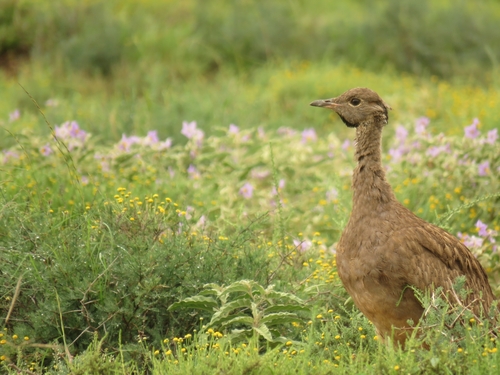 Karoo Bustard
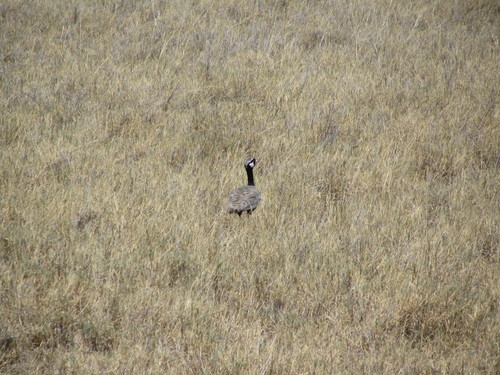 White-quilled Bustard
In breve
Il segno distintivo più affidabile per separare questi due bustardi è la presenza di grandi macchie bianche primarie sulle ali del Karoo Bustard (Heterotetrax vigorsii) — sorprendenti in volo e visibili anche quando posati, specialmente nei maschi. Al contrario, il Karoo Bustard (Heterotetrax vigorsii) ha ali uniformemente marroni senza pannello bianco. I maschi adulti di Karoo Bustard sono audacemente neri e bianchi sopra e sotto, mentre i Karoo Bustard sono molto più sobrii, con toni grigio-marroni e bianco-rosato. Le femmine di entrambe le specie sono meno contrastanti, ma il bianco nell'ala di Afrotis è ancora un separatore chiave. Entrambe le specie si trovano nell'Africa meridionale arida, ma il Karoo Bustard preferisce la vegetazione più densa e cespugliosa del Karoo, mentre il Karoo Bustard favorisce le praterie aperte e i cespugli.
Consigli di identificazione
- Pannello primario bianco nell'ala (tutte le età, entrambi i sessi): In volo, il Karoo Bustard mostra una grande macchia bianca sulla parte superiore dell'ala formata dalle piume primarie. Le ali del Karoo Bustard sono uniformemente marroni. Questo è il segno distintivo più affidabile.
- Piumaggio maschile (riproduzione/adulto): Il maschio del Karoo Bustard è drammaticamente nero sulla testa, collo e parti inferiori, con barre nere e bianche sopra. I maschi di Karoo Bustard sono molto più opachi, con testa, collo e petto grigio-marroni, e un mento/gola neri bordati di bianco.
- Piumaggio femminile: La femmina del Karoo Bustard è barrata o a scacchi in nero e buff sopra, con un ventre nero. La femmina del Karoo Bustard è più semplice grigio-marrone, con meno nero sulla gola e senza barre audaci o ventre nero.
- Colore del becco e delle gambe: Entrambi i sessi del Karoo Bustard hanno un becco rosso e gambe gialle brillanti, che possono essere visibili a distanza ravvicinata. Il becco e le gambe del Karoo Bustard non sono descritti come colorati vivaci.
- Colore del ventre: Il Karoo Bustard ha un ventre bianco-rosato (entrambi i sessi), mentre il Karoo Bustard (soprattutto le femmine) ha un ventre nero.
- Schema della testa e del collo: Il Karoo Bustard ha una testa e un collo grigio-marroni, con un mento/gola neri bordati di bianco nei maschi. I maschi del Karoo Bustard hanno una testa e un collo neri; le femmine sono barrate o a scacchi.
- Contesto dell'habitat: Il Karoo Bustard si trova in habitat più densi e cespugliosi del Karoo, a volte nel fynbos; il Karoo Bustard preferisce praterie aperte e cespugli. Se l'uccello si trova in prateria aperta, è più probabile che sia un Karoo Bustard.
- Comportamento quando disturbato: Il Karoo Bustard spesso si alza a una maggiore distanza e mostra bianco nelle ali; il Karoo Bustard tende a accovacciarsi o congelarsi in copertura più densa, e se disturbato, mostra ali marroni.
- Dimensione: Il Karoo Bustard è leggermente più grande e pesante, ma questo è sottile e inaffidabile nel campo a meno che entrambe le specie non siano affiancate.
- Differenze sessuali: Entrambe le specie mostrano dimorfismo sessuale, ma solo i maschi del Karoo Bustard sono audacemente neri e bianchi; i maschi del Karoo Bustard sono solo leggermente più marcati delle femmine.
- Variazione delle sottospecie: La sottospecie del Karoo Bustard H. v. namaqua è più grigia sulla gola e sul petto, ma questo non si sovrappone con il bold black-and-white del Karoo Bustard.
- Trappole del piumaggio: I Karoo Bustard immaturi e femminili possono apparire meno contrastanti, ma il bianco nell'ala è sempre presente. Il Karoo Bustard non mostra mai bianco nell'ala a nessuna età.
- Viste posate: Anche quando posato, il pannello primario bianco del Karoo Bustard può essere visibile come una macchia chiara sull'ala piegata; l'ala del Karoo Bustard è sempre marrone.
- Jizz: Il Karoo Bustard appare spesso più eretto e appariscente in terreno aperto, mentre il Karoo Bustard è più segreto e si fonde nella copertura cespugliosa.
- Quando in dubbio: Aspetta che l'uccello voli o cambi posizione per controllare il bianco nell'ala — questo è diagnostico a tutte le età e stagioni.
Taglia
Entrambe le specie sono piccoli bustardi, ma il Karoo Bustard è leggermente più grande e pesante. I maschi del Karoo Bustard raggiungono circa 60 cm di lunghezza e pesano fino a 1.600 g, mentre le femmine sono intorno ai 1.350 g [wikipedia]. Non sono fornite misurazioni dirette per il Karoo Bustard, ma è generalmente considerato più piccolo e leggero. Sul campo, la differenza di dimensione è sottile e facilmente mascherata dalla postura o dalla distanza, quindi non è un separatore primario.
Piumaggio
La differenza di piumaggio più diagnostica, visibile a tutte le età ma soprattutto in volo, è il modello dell'ala: il Karoo Bustard (tutte le età e i sessi) mostra grandi piume primarie bianche, formando un audace pannello bianco sulla parte superiore dell'ala, mentre il Karoo Bustard ha ali completamente marroni senza bianco. I maschi adulti di Karoo Bustard sono sorprendentemente neri sulla testa, collo e parti inferiori, con barre nere e bianche sulla schiena e sulle ali; le femmine sono barrate o a scacchi in nero e buff sopra, con un ventre nero. I maschi e le femmine del Karoo Bustard sono entrambi molto più semplici: testa, collo e petto grigio-marroni (con un mento/gola neri bordati di bianco nei maschi), ventre bianco-rosato e ali marroni. La sottospecie H. v. namaqua è leggermente più grigia sulla gola e sul petto. Le femmine del Karoo Bustard hanno meno nero sulla gola rispetto ai maschi, ma non mostrano mai il contrasto audace in bianco e nero di Afrotis. Entrambi i sessi del Karoo Bustard hanno un becco rosso e gambe gialle brillanti, che possono essere utili se viste bene.
Comportamento
Entrambe le specie sono terrestri e camminano con un passo eretto e deliberato tipico dei bustardi. Il Karoo Bustard è più probabile che venga visto in aree aperte, spesso in piedi in modo appariscente o alzandosi con un forte battito d'ali che lampeggia le primarie bianche. Il Karoo Bustard tende a rimanere più in basso in cespugli più densi, muovendosi in modo più segreto e facendo affidamento sul camuffamento. Entrambe le specie possono congelarsi o accovacciarsi quando disturbate, ma il Karoo Bustard è più probabile che si alzi a una maggiore distanza, rivelando il suo modello d'ala.
Habitat
Il Karoo Bustard è strettamente legato agli habitat aridi e cespugliosi del Karoo e regioni simili, preferendo aree con 10–50 cm di copertura e a volte si verifica in fynbos simile al karoo. Il Karoo Bustard si trova in praterie più aperte e cespugli, spesso in aree più secche e meno vegetate. È possibile una sovrapposizione in zone di transizione, ma il Karoo Bustard evita le praterie più aperte preferite dal Karoo Bustard.
Karoo Bustard · White-quilled Bustard · I miei uccelli difficili