

Motmot

ツミ 対 オオタカ

Tachyspiza gularis 対 Astur gentilis

ツミとオオタカのクイズ
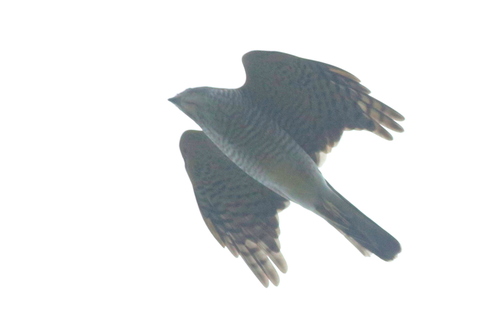
ツミ (Tachyspiza gularis) ツミ
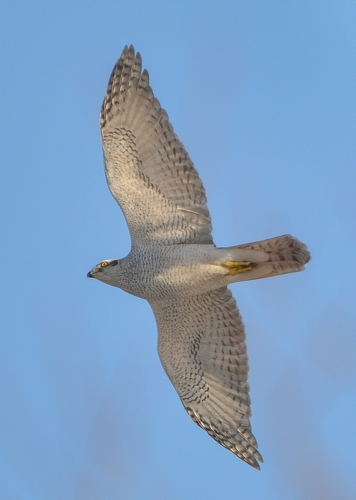
オオタカ (Astur gentilis) オオタカ

メディア

読み込み中…

要点

日本ツミとオオタカの最も信頼できるフィールドマークはサイズです:オオタカは非常に大きく、ずんぐりとした体型で、はるかに重い体格と、より深く、意図的な翼の打ち方を持っています。幼鳥はどちらも茶色の上面と横縞のある尾を示しますが、オオタカの下面はより重く、広く縞模様または横縞があり、成鳥は常に日本ツミにはない大胆な白い眉斑を示します。飛行中、ツミはよりコンパクトに見え、短く丸い翼と短い尾を持ち、一方でオオタカの翼はそのサイズに対して長く、尖っています。小さく、細身の猛禽類で淡い喉の縞模様と素早くひらひらとした飛行を見たら、それはおそらく日本ツミです;大きく、力強い鳥で強い白い眉斑と安定した深い翼の打ち方を持つのはオオタカです。

識別のコツ

  1. サイズが決定的:オオタカは日本ツミの約5倍から10倍の重さです。鳥がバズardまたはカラスのサイズに見えるなら、それはオオタカです;もしそれが鳩またはツグミのサイズなら、それはツミです。これはすべての年齢と性別に当てはまります。
  2. 眉斑:オオタカはすべての年齢で大胆な白い眉斑を示し、特に成鳥では明らかです。日本ツミは幼鳥では目の上に淡く細い薄い線しか持たず、成鳥は強い眉斑を欠いています。
  3. 下部の模様(幼鳥):幼鳥のツミはクリーム色の下部に細い赤褐色の縞模様と斑点があります;幼鳥のオオタカは暗いシナモン色の縞模様または横縞がはるかに重く、広くあり、しばしば下部が全体的にかなり暗く見えます。
  4. 尾の横縞:両者とも横縞のある尾を持っていますが、オオタカでは模様がより目立ち、横縞が広いです。日本ツミの尾の横縞は細く、対比が少ないです。
  5. 成鳥のオスの羽毛:日本ツミのオスは上面がスレートブラックで、胸に淡い赤褐色の洗いがかかっています;成鳥のオオタカは上面が青灰色または茶色がかった灰色で、下部には濃い灰色の横縞が密にあり、強い白い眉斑を持っています。
  6. 成鳥のメスの羽毛:メスのツミは上面がより茶色で、下部にはより重い茶色の横縞がありますが、それでもオオタカよりはるかに小さく、細身に見えます。メスのオオタカは巨大で、似たような横縞の模様を持っていますが、常に大胆な白い眉斑があります。
  7. 喉の縞模様:両種とも喉の縞模様を示すことがありますが、日本ツミのメスではより明らかです。オオタカの喉は通常、白く清潔で、眉斑が顔の模様を支配しています。
  8. 目の色:成鳥のオスの日本ツミは赤橙色の目を持ち、メスは黄色です;オオタカの目は幼鳥では淡い黄色から成鳥ではオレンジまたはオーカーに変わります。これは近距離で役立つことがあります。
  9. 飛行スタイル:日本ツミは素早く、ひらひらとした翼の打ち方と短い滑空を持ちます;オオタカの翼の打ち方はより深く、遅く、力強く、長い、安定した滑空と頻繁な上昇を伴います。
  10. 翼と尾の形:ツミの翼は短く丸みを帯び、尾は短いです;オオタカの翼はそのサイズに対して長く、尖っており、尾は広げると長く、より四角くなります。
  11. 脚とくちばし:オオタカはより太い脚と足指、より頑丈なくちばしを持っています;ツミの脚は長く細く、くちばしは小さく、より繊細です。
  12. 止まっている姿:ツミは細身で直立し、軽やかに見えます;オオタカはずんぐりしており、より水平で、威圧的に見えます。
  13. 生息地の文脈:オオタカは大きく成熟した森林を好みます;ツミは小さな森、エッジ、または移動中に開けた国にいる可能性が高いです。
  14. 鳴き声:もし聞こえたら、日本ツミのおしゃべりな「キキキキキ...」や「クウ」という声が役立つかもしれませんが、フィールドでは声は診断的であることは稀です。
  15. 落とし穴:小さなオオタカのオスは大きなメスのツミと混同されることがありますが、それでもオオタカのサイズ、体格、眉斑は特徴的です。常に複数の特徴、特にサイズと顔の模様を使用して、自信を持って同定してください。

大きさ

サイズは最も明確な違いです:オオタカは真のヘビー級で、平均的な成鳥の質量は約926g [wikidata]であり、日本ツミははるかに小さいです(成鳥のオスは92–142g、メスは最大193g [wikipedia])。たとえ日本ツミのメスであっても、最小のオオタカのオスに比べて小さく見えます。オオタカは単に重いだけでなく、はるかにずんぐりとした体、太い脚と足指、より頑丈なくちばしを持っています。フィールドでは、止まっているオオタカはしばしばカラスまたはバズardのサイズに見えますが、日本ツミは大きなツグミまたは小さな鳩に近いです。このサイズの差は、特に両種が同じ地域で見られるとき、遠くからでも目に見えます。

羽色

幼鳥の日本ツミは上面が暗い茶色で、胸に赤褐色の縞模様があり、腹部には斑点があり、側面には横縞があります。彼らは薄い、淡い眉斑と喉の縞模様を持ち、尾には細い横縞があります。幼鳥のオオタカも上面は茶色ですが、下部は暗いシナモン色の縞模様または横縞がはるかに重く、広く、時には白い基部をほぼ覆っています。オオタカの眉斑は常に目立ち、白く、幼鳥でもそうです。尾には3–5本の大胆な暗い横縞があります。成鳥の日本ツミ(オス)は上面がスレートブラックで、胸に淡い赤褐色の洗いがかかり、細かい茶色灰色の横縞があります;メスは上面がより茶色で、下部にはより重い横縞があり、より明らかな喉の縞模様があります。成鳥のオオタカは上面が青灰色または茶色がかった灰色で、白い下部には濃い灰色の横縞が密にあり、常に大胆な白い眉斑を持っています。目の色も異なります:成鳥のオスのツミは赤橙色の目を持ち、メスは黄色です;オオタカの目は幼鳥では黄色から成鳥ではオレンジまたはオーカーに変わります。

行動

飛行中、日本ツミは素早く敏捷で、頻繁にひらひらと羽ばたき、短い滑空を行い、しばしばコンパクトで軽やかに見えます。対照的に、オオタカは深く力強い翼の打ち方と長く安定した滑空を持ち、時には長時間の上昇を行います—これはツミがほとんど行わないことです。止まっていると、ツミは細身で直立して見えますが、オオタカはずんぐりしており、より水平で、しばしばより威圧的に見えます。両者とも、波打つようなまたは円を描くパターンでディスプレイ飛行を行うことができますが、オオタカの飛行は常により力強く、意図的です。

生息環境

両種は森林の猛禽類ですが、オオタカはより大きな成熟した森林を好み、広大な森林や森林の端で見られる可能性が高いです。日本ツミも森林地域で繁殖しますが、小さな林地や時にはより開けたまたはエッジの生息地、特に移動中に見られることがあります。重複する地域では、オオタカはツミが狩りをする小さな孤立した林で見られる可能性がはるかに低いです。

声

両種とも鋭い鳴き声を出すことができますが、日本ツミは時々ディスプレイ中におしゃべりな「キキキキキ...」や「クウ」という音を出すことがあります。オオタカの鳴き声は提供されたメモには記載されていませんが、一般的により深く、共鳴するものです。実際には、鳥が繰り返し鳴いて近距離でない限り、声は診断的であることは稀です。

より良い説明を送る

比較と同じ項目を使ってください。文章はすぐに公開されます。

The most reliable field mark between Japanese Sparrowhawk and Eurasian Goshawk is size: the goshawk is vastly larger and bulkier, with a much heavier build and deeper, more deliberate wingbeats. For immatures, both show brown upperparts and barred tails, but the goshawk's underparts are more heavily and broadly streaked or barred, and adults always show a bold white supercilium (eyebrow) absent in Japanese Sparrowhawk. In flight, the sparrowhawk appears more compact with shorter, rounder wings and a shorter tail, while the goshawk's wings are longer and more pointed for its size. If you see a small, slim raptor with a faint throat stripe and quick, fluttery flight, it's likely a Japanese Sparrowhawk; a large, powerful bird with a strong white eyebrow and steady, deep wingbeats is a Eurasian Goshawk.

  1. Size is decisive: Eurasian Goshawk is about five to ten times heavier than Japanese Sparrowhawk. If the bird looks buzzard- or crow-sized, it's a goshawk; if it's pigeon- or thrush-sized, it's a sparrowhawk. This holds for all ages and sexes.
  2. Supercilium (eyebrow): Goshawk of all ages shows a bold white supercilium, especially obvious in adults. Japanese Sparrowhawk has only a faint, thin pale line above the eye in juveniles, and adults lack a strong eyebrow.
  3. Underpart pattern (juveniles): Juvenile sparrowhawks have cream underparts with fine red-brown streaks and spots; juvenile goshawks are much more heavily and broadly streaked or barred with dark cinnamon-brown, often making the underparts look much darker overall.
  4. Tail barring: Both have barred tails, but the pattern is more striking and the bars broader in goshawk, with 3–5 bold dark bars. Japanese Sparrowhawk's tail bars are thinner and less contrasting.
  5. Adult male plumage: Japanese Sparrowhawk males are slate-black above with a faint reddish wash on the chest; adult goshawks are blue-grey or brownish-grey above with dense grey barring below and a strong white supercilium.
  6. Adult female plumage: Female sparrowhawks are browner above and have heavier brown barring on the underparts, but still appear much smaller and slimmer than any goshawk. Female goshawks are massive, with a similar barred pattern but always with a bold white eyebrow.
  7. Throat stripe: Both species can show a throat stripe, but it's more obvious in female Japanese Sparrowhawk. Goshawk's throat is usually clean white with the supercilium dominating the facial pattern.
  8. Eye color: Adult male Japanese Sparrowhawks have red-orange eyes, females yellow; goshawk eyes change from pale yellow in juveniles to orange or ochre in adults. This can help at close range.
  9. Flight style: Japanese Sparrowhawk has quick, fluttery wingbeats and short glides; Eurasian Goshawk's wingbeats are deeper, slower, and more powerful, with longer, steadier glides and frequent soaring.
  10. Wing and tail shape: Sparrowhawk's wings are shorter and rounder, tail shorter; goshawk's wings are longer and more pointed for its size, tail longer and more squared-off when spread.
  11. Legs and bill: Goshawk has thicker legs and toes, and a more robust bill; sparrowhawk's legs are long and slim, bill smaller and more delicate.
  12. Perched jizz: Sparrowhawk looks slim, upright, and light; goshawk is bulkier, more horizontal, and imposing.
  13. Habitat context: Goshawk prefers large, mature forests; sparrowhawk is more likely in small woods, edges, or even open country on migration.
  14. Vocalizations: If heard, Japanese Sparrowhawk's chattering 'kiki-kik-kik...' or 'kwu' calls may help, but voice is rarely diagnostic in the field.
  15. Pitfalls: A small male goshawk can be confused with a large female sparrowhawk, but even then, the size, bulk, and supercilium of the goshawk are distinctive. Always use multiple features, especially size and facial pattern, for a confident ID.

Size is the most clear-cut difference: Eurasian Goshawk is a true heavyweight, with an average adult mass around 926 g [wikidata], while Japanese Sparrowhawk is much smaller (adult males 92–142 g, females up to 193 g [wikipedia]). Even a female Japanese Sparrowhawk is dwarfed by the smallest male goshawk. Goshawk is not only heavier but also has a much bulkier body, thicker legs and toes, and a more robust bill. In the field, a perched goshawk often looks crow- or buzzard-sized, while Japanese Sparrowhawk is closer to a large thrush or small pigeon. This size gap is visible even at a distance, especially when both species are seen in the same area.

Juvenile Japanese Sparrowhawks are dark brown above with cream underparts marked by red-brown streaks on the breast, spots on the belly, and barring on the sides. They have a thin, pale supercilium and a throat stripe, with thin bars on the tail. Juvenile Eurasian Goshawks are also brown above, but their underparts are much more heavily streaked or broadly barred with dark cinnamon-brown, sometimes nearly covering the white base. The goshawk's supercilium is always prominent and white, even in juveniles, and the tail shows 3–5 bold dark bars. Adult Japanese Sparrowhawks (males) are slate-black above with a faint red-brown wash on the chest and fine brown-grey barring; females are browner above with heavier barring below and a more obvious throat stripe. Adult goshawks are blue-grey or brownish-grey above, with white underparts densely barred with dark grey, and always have a bold white supercilium. Eye color also differs: adult male sparrowhawks have red-orange eyes, females yellow; goshawks' eyes shift from yellow in juveniles to orange or ochre in adults.

In flight, Japanese Sparrowhawk is quick and agile, with frequent, fluttery flapping and short glides, often appearing compact and light. Eurasian Goshawk, by contrast, flies with deep, powerful wingbeats and longer, steadier glides, sometimes soaring for extended periods—something sparrowhawks rarely do. Perched, the sparrowhawk looks slim and upright, while the goshawk is bulkier, more horizontal, and often appears more imposing. Both can perform display flights with undulating or circling patterns, but the goshawk's flight is always more forceful and deliberate.

Both species are forest raptors, but Eurasian Goshawk prefers larger tracts of mature woodland and is more likely to be found in extensive forests or at the forest edge. Japanese Sparrowhawk also breeds in wooded areas, but can be found in smaller woodlots and sometimes in more open or edge habitats, especially on migration. In areas of overlap, the goshawk is much less likely to be seen in small, isolated groves where sparrowhawks may hunt.

Both species can give sharp calls, but Japanese Sparrowhawk is sometimes heard giving a chattering 'kiki-kik-kik...' or 'kwu' sounds, especially during display. The Eurasian Goshawk's calls are not described in the provided notes, but are generally deeper and more resonant. In practice, voice is rarely diagnostic unless the bird is calling repeatedly and at close range.

変更を破棄しますか?

保存していない編集があります。今離れると失われます。

ツミ · オオタカ · 苦手な鳥